






Brief Update No 24/011 Date: 12 – Dec – 2024
STATEMENT
This document has been approved for distribution by Sea Guardian S.G. Ltd / Operations Department. The provided Intel and information derive from open sources, the Institute for the Study of War (ISW), the Joint Maritime Information Center (JMIC) and United Kingdom Maritime Trade Operations (UKMTO) respective WebPages and products. All rights reserved. No part of this Risk Assessment may be reproduced in any form: electronic, mechanical, or other means without written permission by Sea Guardian S.G. Ltd. Under no Circumstances can Sea Guardian S.G. Ltd be held responsible for any loss or damage caused by a reader’s reliance on information obtained by this Assessment.
Objectives
The purpose of this brief is to provide the Maritime Industry and the Security Stakeholders with:
- Major maritime security incident summary and analysis for the time period 04 Nov – 11 Dec 2024
- Threat assessment updates concerning military operations – terrorism – piracy and also cargo theft, smuggling, stowaways
- Overview of risk assessment and relevant information, in order to support operational planning

RECENT KEY DEVELOPMENTS
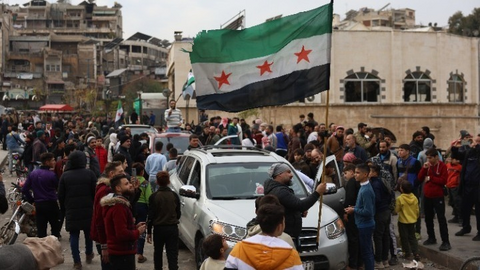
- On Dec 05, nine days after the beginning of their surprise offensive, the Syrian rebels spearheaded by the HTS captured the city of Hama after capturing the country’s second-largest city, Aleppo on Dec 03.
- Between 05-07 Dec, the Syrian rebels pushed their advance south and on Dec 07 managed to take control of Homs, the last bastion of Syrian Arab Army (SAA) forces before Damascus. During Dec 07, the offensive continued and at dawn on Dec 08, the SAA forces also lost the capital Damascus. The same day Bashar al Assad left Syria fleeing to Moscow where he has been admitted and provided with sanctuary. The Syrian opposition forces toppled the Bashar al Assad regime after only 11 days of fighting.
- On Dec 06, British experts presented UN diplomats with weapons from Iran, underscoring their role in destabilizing the Middle East and supporting Russia’s war in Ukraine.The report included advanced Iranian missile systems, UAVs and other weapons seized by the Royal Navy recently or recovered from battlefields. These included components of Iranian cruise and ballistic missiles (such as the Qiam and Project 351 series), surface-to-air missiles (Project 358) and UAVs (Shahed-136).


- On Dec 07, sources reported the movement of the Russian S-400 battery stationed at the Khmeimim Air Base, in northwestern Syria, towards the port of Tartus, where a large Russian naval base is located.
- On Dec 08 as rebels entered Damascus, the elected US President Mr Trump wrote on social media that the country was “a mess” and that the United States “should have nothing to do with it”. “This is not our fight. Let it play out. Don’t interfere,” Mr Trump wrote, in capital letters.
- Between Dec 08 and 09, the United States conducted airstrikes against more than 75 ISIS targets in central Syria. US officials emphasized that they would prevent ISIS from reconstituting and exploiting the instability in Syria amid the collapse of the Syrian regime.
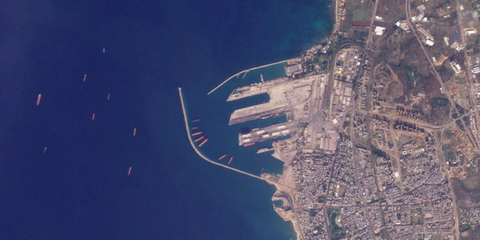
- On Dec 09 according to Russian sources, Syrian rebels who toppled President Bashar al-Assad’s rule, have guaranteed the security of Russian military bases in Syria. On the same day images show Russian navy ships leaving the Russian base in Tartus on the Syrian coast and some of the ships dropping anchor in the open sea after rebel forces toppled Bashar al-Assad’s regime. According to sources, there are indications that Russia may be starting the evacuation of its naval vessels and military assets from Syria.
- On Dec 09, the Syrian rebels stated on their Telegram channel that have granted amnesty to all military personnel who enlisted during the rule of ousted President Bashar al-Assad.
- On Dec 09, White House national security spokesman John Kirby, stated that the United States is in close contact with Turkey and the Kurdish-led Syrian Democratic Forces (SDF) over the control of the disputed northern city of Manbij following the advance of Turkish-backed rebels.
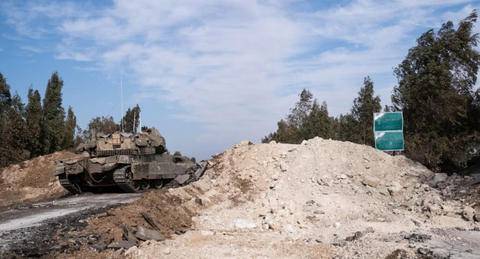
- Between Dec 09 and 10, worried about Assad’s arsenal falling into the wrong hands, Israel has launched hundreds of air strikes over the past 24 hours across Syria, hitting SAA military facilities – including weapons depots, ammunition depots, airports, naval bases and research centers where the Iranian-backed chemical weapons and missile program was being developed. In addition, the IDF deployed units to establish a buffer zone in Syria along the Golan Heights

On Dec 10, the rebel leader Abu Mohammed al-Jolani, head of the Islamist group Hayat Tahrir al-Sham (HTS), made a statement to Britain’s Sky News in an effort to assuage fears about how Syria would be governed after the Assad regime. He promised that Western fears of instability in the region were unnecessary as Syria did not want to get involved in any more wars.

- Since Dec 10, HTS under Jolani leadership has begun to consolidate power in Damascus and across formerly regime-controlled territory.
- On Dec 10, Mohammed al-Bashir has been appointed by HTS as prime minister of a transitional Syrian government and will hold office until March 1, 2025. Till the fall of the Assad regime, al-Bashir headed the so-called Salvation Government installed by rebels from their stronghold in the city of Idlib, in northwestern Syria.

- On Dec 10, U.S. Secretary of State Antony Blinken stated that “The United States fully supports the political transition process in Syria and wants it to lead to credible, inclusive and non-sectarian governance that meets international standards of transparency and accountability. The Syrian people will decide the future of Syria. All countries must commit to an inclusive and transparent process and refrain from any outside interference. He also assured that the US “will fully recognize and support the future administration” that will emerge from this process.
- On Dec 11, Iran’s leader Ayatollah Ali Khomenei, whose country was a staunch supporter of the deposed Syrian president stated that the fall of Bashar al-Assad will not weaken Iran.
- Till Dec 11, the situation in Syria is still quite volatile with three main factions trying to expand their control over previous Syrian army held territory. This also includes expansion over other group’s territory. The main group is the Hayat Tahrir al Sham (HTS) group which has incorporated several ex-terrorist groups and elements and it controls areas in north and western part of Syria including the capital and most major cities; This group according to sources, is in good terms with Turkey; The second group is the Turkish-backed Syrian National Army (SNA) and Turkish military which controls areas in northern Syria across the Turkish -Syrian border; Thirdly the Syrian Democratic Forces (SDF) which consists mainly of Kurdish forces and controls almost all territory east of the Euphrates river. Finally, there are other several groups in the central and south areas of Syria which operate on their own; HTS-affiliated forces appear to be taking control of the western bank of Deir-ez-Zor province, which the SDF had seized from the Syrian regime. The SDF clashed with the Turkish-backed SNA east of Aleppo City.

MARITIME SECURITY INCIDENTS: 04 – 11 Dec 241
| INCIDENT No | INCIDENT Type | INCIDENT TIME | INCIDENT DETAILS |
| – | – | – | – |
1 In accordance to JMIC and/or UKMTO sources


_________
1 In accordance to JMIC and/or UKMTO sources
THREAT ASSESSMENT UPDATE:
Military operations – terrorism – piracy and also cargo theft, smuggling, stowaways
Military Operations
The new front in northern Syria which opened on Nov 27, is added to the general military conflict and unrest that takes place in the middle east region, affecting also the East Mediterranean Sea. Though the Bashar al-Assad regime has fallen, it is highly almost certain that conflicts between rival rebel factions will resume over who will become the predominant force in the future Syria.
Terrorism – piracy and also cargo theft, smuggling, stowaways
- The reemergence of terrorists group associated with ISIS and Al Qaeda in Syria on Nov 27, has enhanced the terrorist threat level across East Mediterranean Sea.
RISK ASSESSMENT
- The risk of attacks or incidents in the East Mediterranean Sea and Northern Red Sea for the time being is assessed Low with the exception of all Israeli ports and the Syrian Coastline. Any port call should be arranged after a direct contact with the Israeli while it is not clear whether there are still any Syrian authorities or if they represent the newly establish government.
- The Bab-el-Mandeb Strait, the southernmost part of the Rea Sea and the eastern part of the Gulf of Aden are still assessed to be the most hazardous areas for the international shipping, with no significant incident occurring during last period.
- As targets of opportunity for the Houthis diminish due to the decrease of Marine Traffic through the Bab-el-Mandeb Strait, it is assessed that vessels with multiple layers of indirect associations to Israel, Us or UK will be targeted ever more frequently. Maritime industry stakeholders should take into account such associations when conducting threat and risk assessments.
- It is assessed that the US and UK airstrike campaign along with the naval USN and RN buildup in the area and the deployment of warships of international/EU maritime Operations “PROSPERITY GUARDIAN” and “ASPIDES”, have proved to be ineffective and have not mitigated enough the Houthi threat against merchant shipping, bringing the Bab-el-Mandeb Straits essentially under Houthi control. This goes hand to hand with the notion that the Houthis have found a way to monetize this blockade of the Red Sea for “safe passage” as a new “economic endeavor”.
- Taking into account the fact that the Houthis are essentially in control of two out of eight major choke points for marine traffic worldwide (Suez Canal & Bab-el-Mandeb Straits), it seems that the international community so far has shown little effort to fully comprehend and counter their threat.
- The new rise of terrorist groups in northern Syria could potentially be dangerous for merchant shipping security along the Syrian coastline and ports and destabilizes the security environment in the region even further.
- Conflict in the north of Syria between rival groups backed by Turkish lead rebels and Kurdish militias – show that it will highly likely be impossible to reach to an agreement on how to govern the country and that Syria will eventually become another “failed state” in the MENA region, following the footsteps of Libya and Iraq.
- With the sudden collapse of Bashar al-Assad’s regime, Iran’s foothold in the Middle East has been destroyed – first in Gaza, then in Lebanon, and now in Syria. It is assessed that, the “Axis of Resistance” in the Middle East, which consisted mainly of Iran, Syria and Hezbollah/Lebanon, Hamas and Houthi fighters and actively supported by Russia, has sustained a decisive blow and has now been broken.
- Assad’s removal will have critical consequences for all three of these allies. While Russia has lost its bridgehead in the Mediterranean Sea and access to Syrian ports and naval bases, Hezbollah and Iran have lost in Assad’s Syria a crucial pipeline for transporting weapons and materiel ashore.
- It is assessed that Iran’s and Russia’s support to the Houthis will decrease significantly due to recent setbacks in Syria and that the Houthi campaign of disrupting merchant shipping is now at risk, provided that the International Community will act more powerful and decisively.
- For the United States, ousting a leader backed by Moscow and Tehran is “a huge strategic move in the right direction,” as one official admitted. The United States has been seeking to replace Assad, through overt and covert means, since 2011. However, ISIS or other terrorist group reemerging through this turmoil is a daunting possibility that requires constant vigilance.
- Turkey is undisputedly the regional player who benefited most. In the north of Syria, Turkey is attempting on one hand to definitively dismantle the Kurds on its southern border and on the other hand to occupy more Syrian territory under the pretext of a safe zone.
- It assessed that Israel has also greatly benefited by the fall of the allied to Iran Assad regime and that this will assist its efforts to mitigate the threat of Hezbollah in Lebanon, now that the main routes of supplies and support from Iran have been cut off. Nevertheless, over the next weeks we will almost certainly see a new escalation in tensions between Israel and Turkey over the future of Syria, since their interests are colliding.
- The current situation around the seas of the Arabic Peninsula will continue the months to come to create risk for the shipping industry and will deter vessels to cross the Red Sea and the Suez Canal. It is assessed that the situation will not improve significantly, at least till summer of 2025.
Sea Guardian S.G. Ltd / Intel Department (www.sguardian.com / +30 6944373465) can support your operational planning, assist in determining the risk assessment and provide assistance in decision making by producing tailored made assessments upon request on ports in the region, on routes, on cargos and specific merchant vessels.
You can refer to our Threat & Risk assessment analysis brief No 24/001//10 Sep 24 for more information and background analysis on the events and situation in the region.
