






REGION: Persian Gulf – Gulf of OMAN – West Indian Ocean – Somalia – Bab El Mandab – Southern Red Sea
Reference: Joint War Committee, date 3rd March 2026, Circular reference JWLA-033
Issue date: Wednesday, March 11 08:00GMT, 2026
Source: SEA GUARDIAN Security Assessment and DaCoR system (provided near-real time information / you could follow up by logging-in the system)
Geopolitical Situation
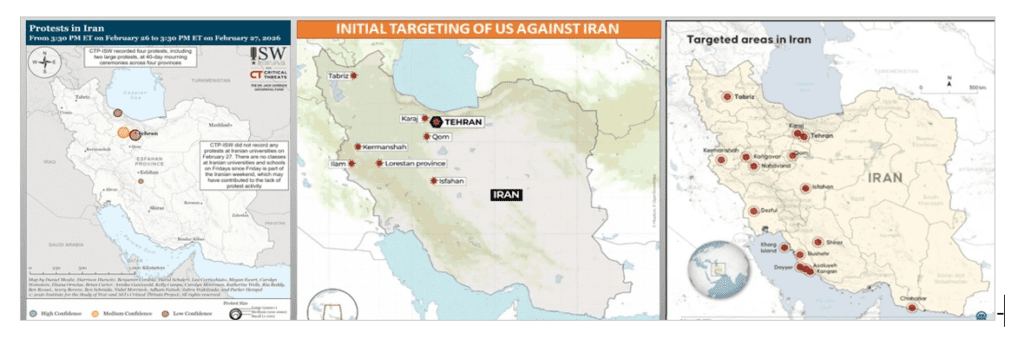
After the third round of US-Iran negotiations failed to achieve an agreement, the night of Feb 27 to 28, Israel and the US executed an attack in the northern regions near Tehran province amid the third round of protests in the area. Attacks, for now, seem to have Iran’s regime as a target more than nuclear installations.
In this sense, after having proved that Khamenei and more than 40 members of his supreme staff been exterminated, the escalation of war between the US/Israel and Iran was certain. At the same time, this conflict expanded to the sea, as well as to the neighboring countries in the Persian Gulf and states where the US maintain military bases/facilities. The outcome of this conflict is highly controversial, as the US and Iran have shown no signs, so far, of withdrawing from their positions as stated during the third round of negotiations in Geneva. There is no next step for escalation except for other countries such as China or Saudi Arabia would actively be involved in the war, while any sign for de-escalation would not be ensued shorter than the next 40 days when the supreme council would vote for Iran’s new supreme leader, considering that demonstrations and uprisings are not so huge to change the constitution.
Thus, the whole Persian Gulf and Hormuz are characterized as “an area of war” with high consequences to the shipping industry and its insurance fees.
Joint War Committee on March 3rd issued a circular ref. JWLA-033, in order to suggest underwriting conditions and beyond characterizing the Persian gulf in practice very high war risk area, expanding its limits until Pakistan approaches.
In the rest of the area the situation remains as it is with the threats of piracy, safety and security hazards remaining stable, so far.
Recent -Key Developments
Sunday 8, March 2026: Somalian President Hassan Sheikh Mohamud has slammed Israel’s “interference” in his country, saying its recognition of the breakaway region of Somaliland has further increased instability and weakened international order. In an exclusive interview with Al Jazeera broadcast on Saturday, Mohamud said Somalia “will never allow” the establishment of an Israeli base in Somaliland and will “confront” any such move. He also warned that the proposed Israeli base could be used as a springboard to attack neighbouring countries (GULF OF ADEN – SOMALIA / SOMALILAND POLITICAL).
Sunday 8, March 2026: It was published that the effective closure of the Strait of Hormuz has triggered the most severe disruption to Gulf container shipping in decades, with Evergreen, Maersk, CMA, CGM and others suspending services, invoking force majeure and stranding cargo across the region, as Washington unveils a $20bn insurance backstop (HORMUZ Strait – SOUTHERN PERSIAN GULF TRANSPORTATION ROUTES AND RESOURCES).
Sunday 8, March 2026: Thick smoke has filled the sky over Tehran after Israeli air strikes hit Iran’s oil facilities for the first time since the war started, killing at least four people. Joint attacks on Iran by Israel and the United States continued for a ninth day, killing more than 1,300 people in Iran and about 300 in Lebanon. About a dozen people have been killed in Israel, according to officials (NORTHERN PERSIAN GULF / IRAN MILITARY / PARAMILITARY ACTIONS – TERRORISM).
Tuesday 10, March 2026: Ukraine has dispatched drone interceptors and military personnel to Jordan, as Middle Eastern countries fend off Iranian strikes on infrastructure and United States military assets during the US-Israel war on Tehran. President Volodymyr Zelenskyy confirmed that a Ukrainian team departed last Friday for Jordan, which has US military assets at its Muwaffaq Salti Air Base. The move followed a previous request from the US, Zelenskyy said, as Washington seeks cheaper technology for intercepting Iranian missiles targeting Israeli and US defence assets, as well as other infrastructure across Qatar, Kuwait, Bahrain, Saudi Arabia and the United Arab Emirates (SUEZ CANAL / NORTHERN RED SEA MILITARY / PARAMILITARY ACTIONS – TERRORISM).
Wednesday 11, March 2026: Secretary Chris Wright has posted, then deleted, a claim that the United States military provided protection for an oil tanker travelling through the Strait of Hormuz, a critical waterway for the global energy trade. The White House later addressed the post in a news briefing, affirming that it was false. The flip-flop happened early on Tuesday afternoon, when Wright posted on social media around 1:02pm US Eastern time (17:00 GMT) a message, he then deleted within about a half hour. Shortly afterwards, White House Press Secretary Karoline Leavitt denied that a military escort had occurred, walking back the post entirely (HORMUZ Strait – SOUTHERN PERSIAN GULF TRANSPORTATION ROUTES AND RESOURCES).
JWC_PERSIAN_GULF
Risk Level: VERY HIGH
Last Updated: Mar 10, 2026 at 19:38 UTC
Most Important Threat
{MILITARY / PARAMILITARY – TERRORISM/ORGANIZED CRIME} {HIJACKED – FIRED UPON – AND/OR CREW LIFE LOSSES} [VERY HIGH / 25]
Assessment
NORTHERN PERSIAN GULF / IRAN: —–>Key Threats: Iranian missile/drone attacks on vessels and energy infrastructure escalating Iran-Israel-U.S. conflict GNSS disruption. Operational Advice: Avoid high-risk areas near Strait of Hormuz and offshore facilities. Maintain 24/7 watch, AIS, and radar monitoring. Prepare emergency drills for fire, missile/drone attacks, and evacuation. Use backup navigation in case of GNSS interference. Coordinate with maritime authorities and naval forces. Summary: Vessels face very high risks; strict vigilance, safe routing, and preparedness are essential.
HORMUZ Strait – SOUTHERN PERSIAN GULF: ———>Operational Advice: Avoid high-risk zones such as Iranian coastal waters and the Strait of Hormuz. Maintain 24/7 bridge watch, monitor maritime warnings, and ensure alternative navigation systems are operational. Implement Ship Security Plan (SSP) for attacks, boarding attempts, or suspicious approaches. Prepare crews for emergency procedures, including evasive maneuvers, mustering, and communication protocols. Coordinate with insurers and flag states for guidance and coverage contingencies. Factor rerouting, delays, and demurrage risks into operational planning. Summary: High regional instability requires vigilance, avoidance of conflict zones, and readiness to respond to missile, drone, hybrid, or GNSS-related threats to mitigate operational and financial consequences.
Consultancy
NORTHERN PERSIAN GULF / IRAN: —–>Underwriting & Insurance: – Notify insurers of VERY HIGH risk status in the Strait of Hormuz and surrounding areas. – Expect higher premiums; negotiate coverage that explicitly includes war risks, piracy, and GNSS interference. – Consider war-risk clauses and clarify demurrage coverage for delays caused by conflict. Security Measures: – Strongly consider hiring armed or unarmed maritime security guards for transit through high-risk zones. – Implement ship hardening and vigilant watch routines to reduce vulnerability. Demurrage & Operational Risk Mitigation: – Plan flexible schedules to accommodate potential delays from attacks or port restrictions. – Maintain pre-agreed safe anchorages and emergency routing to avoid downtime. – Document all risk-related delays for claims and negotiations with charterers/insurers. Summary: Due to very high military and terrorism risk, shipping companies should enhance security, secure comprehensive war-risk coverage, and proactively manage operational delays to mitigate financial and safety exposure.
HORMUZ Strait – SOUTHERN PERSIAN GULF: ———>Underwriting / Insurance: – High military/paramilitary/terrorism risk increases premiums and may limit coverage. – Negotiate with insurers using evidence of risk mitigation measures, rerouting plans, and Ship Security Plans. – Ensure coverage includes missile/drone attacks, GNSS interference, and hybrid threats. Security Guards / Vessel Protection: – Consider hiring armed or trained security personnel for transits near high-risk zones. – Implement Ship Security Plans (SSP) and anti-boarding procedures. Demurrage & Operational Risk: – Plan for potential port closures, rerouting, and delays caused by conflict. – Include demurrage buffers in contracts and maintain flexible scheduling. – Maintain proactive communication with insurers and charterers to reduce financial exposure. Summary: High-risk maritime zones require a combined approach: secure insurance coverage, enhance onboard security, and plan operations to minimize delays and financial losses.
Threat Category Breakdown
Military / Terrorism: 37.3%
Piracy / Brigandage: 7.8%
Hijacking / Life Loss: 26.1%
GNSS / GPS Interference: 28.8%
GULF OF ADEN – SOMALIA
Risk Level: HIGH
Last Updated: Mar 9, 2026 at 12:04 UTC
Most Important Threat
Piracy/Brigandage.
Assessment
Operational Advice: Maintain heightened vigilance in piracy-prone waters. Use robust onboard security measures and secure communication protocols. Plan contingency routing to avoid high-risk coastal areas. Monitor regional security and political developments continuously. Summary: Somali and Somaliland waters present a medium maritime risk, mainly from piracy and hijacking. Strong security measures and situational awareness are essential for safe operations.
Consultancy
1) Underwriting & Insurance Expect higher war-risk premiums due to HIGH piracy and hijacking risk. Negotiation leverage: Highlight LOW military threat and ongoing international security support to moderate premiums. Policy coverage: Include piracy, hijacking/kidnapping, GNSS interference, and demurrage extensions for rerouting or security delays.
2) Security Armed Guards Embarked strongly recommended in high-risk corridors. Operational measures: Enhanced bridge watchkeeping, evasive routing, and coordination with African Union forces or private maritime security providers. Compliance: Ensure alignment with flag state and P&I Club requirements.
3) Demurrage & Delay Risk Mitigation Contracts: Include robust piracy, hijacking, and war-risk clauses. Operations: Minimize time alongside, pre-clear documentation, and maintain alternative ports/routes.
Threat Category Breakdown
Military / Terrorism: 22.0%
Piracy / Brigandage: 38.9%
Hijacking / Life Loss: 29.3%
GNSS / GPS Interference: 9.8%
BAB – EL- MANDEB straits / SOUTHERN RED SEA
Risk Level: HIGH
Last Updated: Mar 9, 2026 at 12:05 UTC
Most Important Threat
Piracy/Brigandage and Hijacking/Crew Life Loss.
Assessment
Operational Advice: Maintain heightened vigilance during transit. Keep navigation and communication systems fully operational. Plan contingency routing to avoid high-risk coastal zones. Summary: Bab el-Mandab and adjacent Red Sea waters present a medium maritime risk, with threats concentrated near coastal areas and shipping lanes. Standard precautions and situational awareness are required for safe navigation.
Consultancy
1) Underwriting & Insurance Moderate war-risk premiums likely due to regional tensions and piracy/hijacking risks. Negotiation leverage: Highlight LOW GNSS interference and operational mitigations (convoying, route adjustments) to limit premium increases. Policy scope: Include military, piracy, hijacking, and delay coverage, with demurrage extensions for security-related stoppages or rerouting.
2) Security Guards Situational deployment recommended for high-value cargo. Operational measures: Enhanced bridge watchkeeping, evasive routing, and coordination with multinational patrols in the area. Compliance: Ensure all measures comply with flag state and P&I Club rules.
3) Demurrage & Delay Risk Mitigation Contracts: Include war-risk, piracy/hijacking, and political delay clauses. Operations: Minimize anchorage time, pre-clear documentation, and maintain alternative routes or ports.
Threat Category Breakdown
Military / Terrorism: 15.4%
Piracy / Brigandage: 34.6%
Hijacking / Life Loss: 34.6%
GNSS / GPS Interference: 15.4%
SUEZ CANAL / NORTHERN RED SEA
Risk Level: LOW
Last Updated: Mar 9, 2026 at 12:06 UTC
Most Important Threat
Hijacking, crew life loss, and GNSS/GPS interference.
Assessment
Operational Advice: Maintain standard vigilance during transit. Ensure navigation and communication systems are fully operational. Monitor canal traffic updates and routine notices. Summary: Suez Canal operations carry low maritime risk, with standard precautions sufficient for safe navigation.
Consultancy
1) Underwriting & Insurance Negotiate from strength: Very low threat levels support minimal war-risk premiums. Policy coverage: Standard operational and delay coverage is sufficient; no additional surcharges expected. Demurrage clauses: Include limited extensions for canal traffic congestion or minor operational delays. 2) Security Guards Not required: Routine embarked security is unnecessary. Operational measures: Maintain standard bridge watchkeeping and comply with Suez Canal Authority procedures.
3) Demurrage & Delay Risk Mitigation Contracts: Include basic clauses covering operational delays or canal congestion. Operations: Pre-clear documentation, adhere to scheduled transit windows, and coordinate with canal authorities.
Threat Category Breakdown
Military / Terrorism: 0.0%
Piracy / Brigandage: 0.0%
Hijacking / Life Loss: 50.0%
GNSS / GPS Interference: 50.0%
Overall assessment and consulting
There is no additional special advice or assessment for the Persian Gulf beyond the situation itself, which has worsened after the spread of threats/risks throughout the Persian Gulf, leaving only the sea area south of the 24N parallel relatively safer.
SEA GUARDIAN advises shipping to take measures against the consequences of attacks, remain vigilant, and avoid situations that could disrupt communication with authorities and their companies. Readiness for crew evacuation plans should be maintained.
CY: +357 25 351125 | GR: +30 210 9703322 info@sguardian.com | www.sguardian.com
Sea Guardian SG Ltd Intel & Security
