





by Arietta Pouliou*,
Where the colours and scents of the island blend with human craftsmanship to create a truly dazzling landscape
Distinctive and remarkably unique among the Greek islands, Chios is one of those places that words and images alone can hardly capture. To truly understand it -to experience it in a meaningful way- you need to engage all your senses, beginning with your sense of smell, which quickly explains why the island is often described as ‘‘fragrant’’. Chios is indeed perfumed by the sweet aromas of its famed mastic, but also by the fresh, invigorating scent of its celebrated citrus fruits, which in spring burst into delicate white blossoms. Their fragrance is so intoxicating that it makes you want to breathe in deeply, to let the season take over completely.
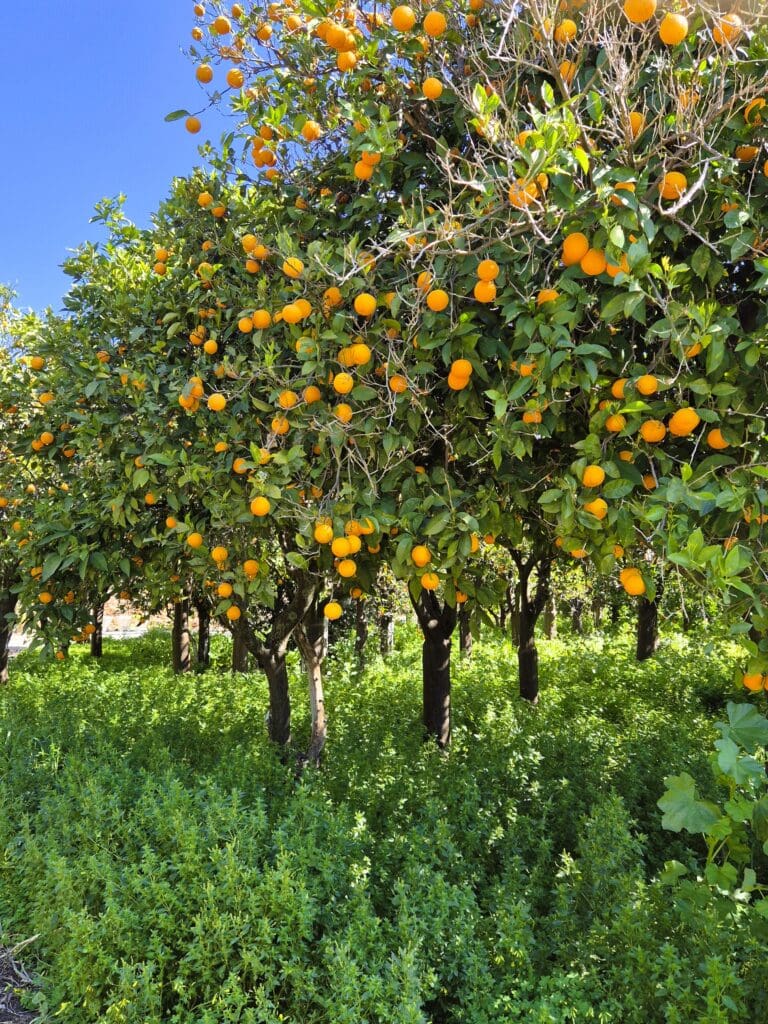
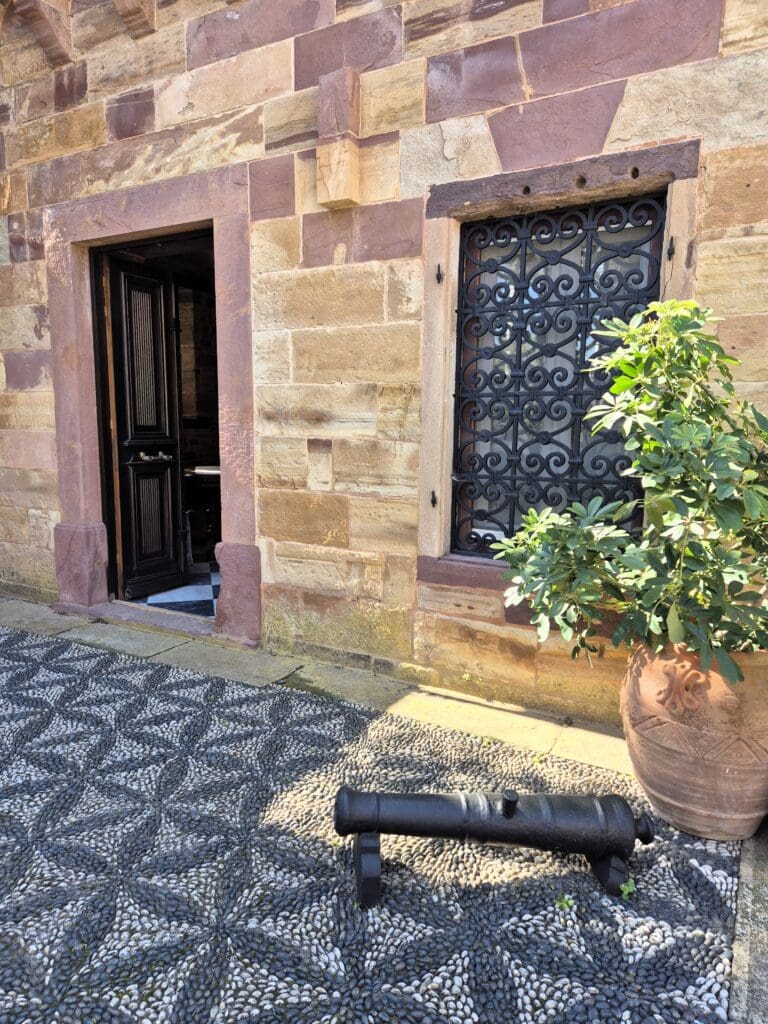
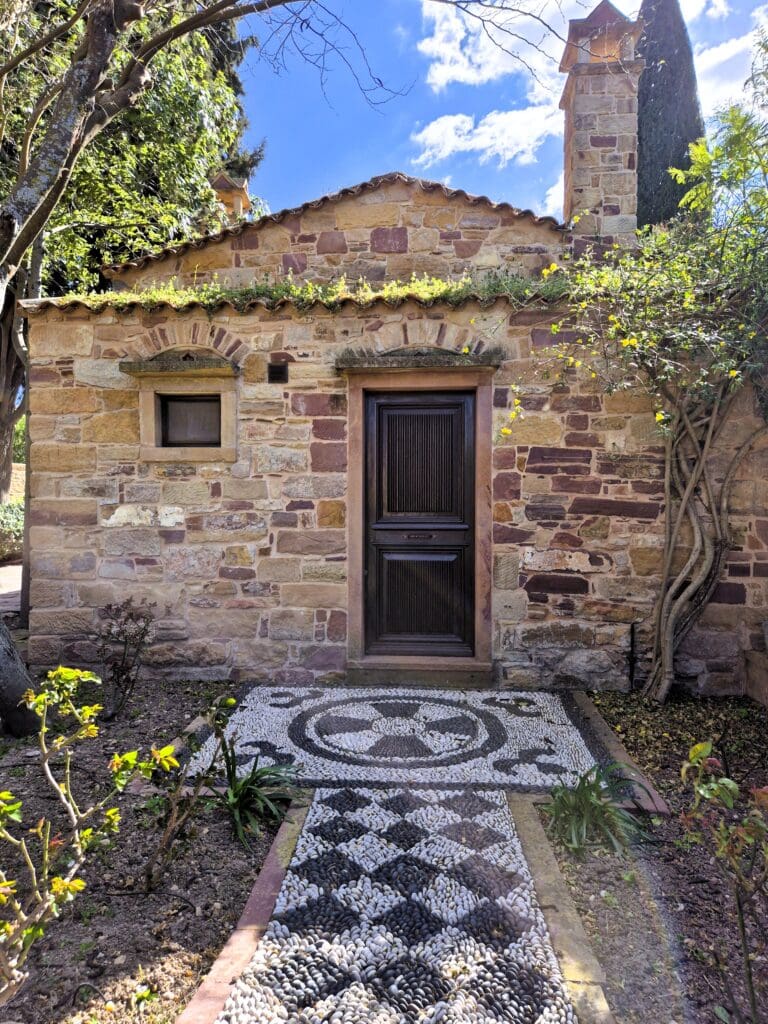
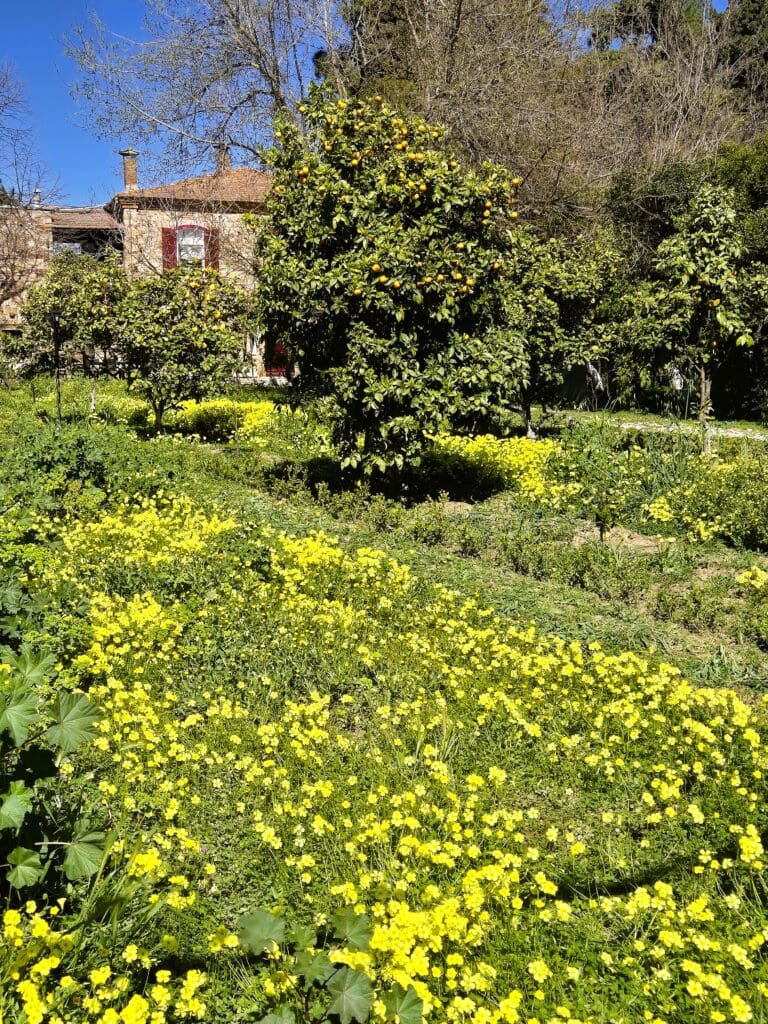
And what setting could be more fitting than Kampos, the historic district just outside Chios Town, where the cultivation and trade of the region’s prized citrus varieties, the stately mansions of the families who once lived here, and the stories of the people who laboured in the orchards, come together to form not only a landscape of singular beauty, but a narrative that continues to move and captivate. A simple walk through the maze of narrow lanes, lined with high stone walls behind which stand the renowned red-stone villas of Kampos, the striking pebble-paved courtyards and the carefully tended gardens heavy with fruit, is enough to transform a pleasant stroll into a journey back in time.
It was here, in Kampos -the largest and best-irrigated plain south of Chios Town- that the island’s trade in luxury goods once flourished. Mastic, local wine, silk textiles and the citrus fruits that thrived in the area’s favourable microclimate all played a role in this prosperity. Citrus fruits were introduced to Chios in the 15th century by the Genoese, when the island stood as an important commercial and cultural crossroads between three continents. First came the bitter oranges, followed two centuries later by mandarins. Since then, the history of Kampos has unfolded like “a lavish performance staged upon a one-of-a-kind set” as locals still fondly describe it.
- Architectural flourishing and the impressive mansions of Kampos
The prosperity brought by citrus cultivation, combined with the tax privileges granted by the Sultan, soon attracted Chios’s merchant elite to Kampos. Their presence led to the construction of some of the finest country estates on the island – villas built as summer residences that continue to define Chios’s architectural identity to this day. Even a few discreet glances -as far as the high enclosing walls allow- are enough to reveal the grandeur of these buildings, each surrounded by the extensive orchards that belonged to its family. This coexistence of residence and cultivation was, in fact, one of Kampos’s most distinctive characteristics, setting it apart from other settlements where living quarters and farmland were usually separated.
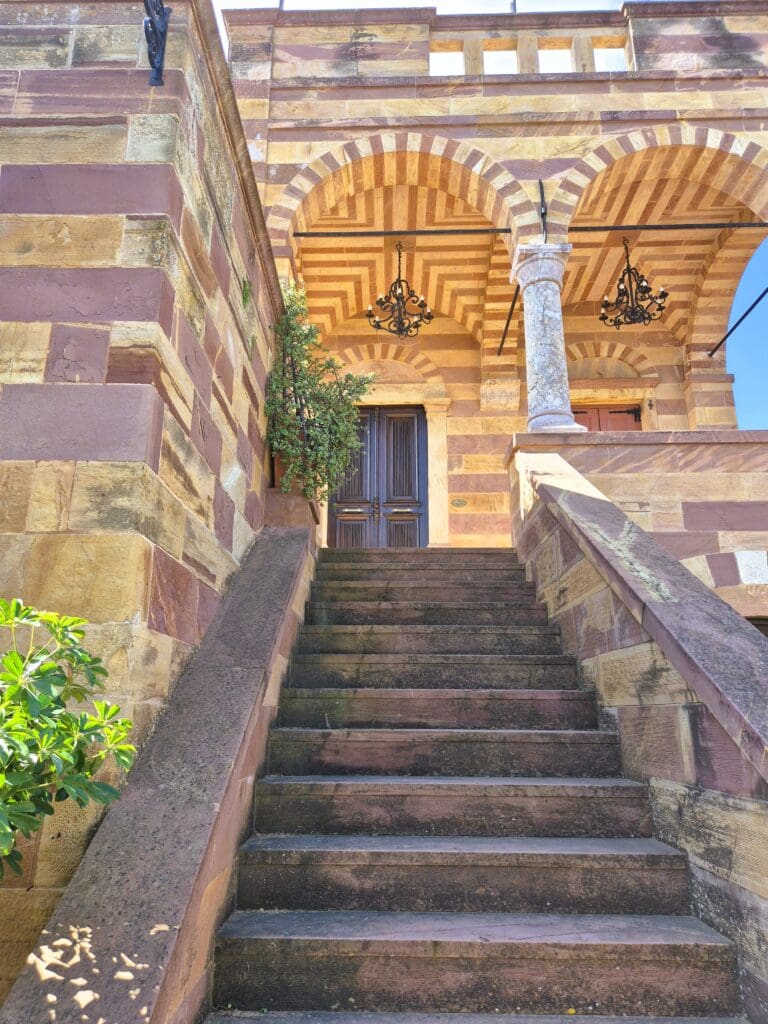
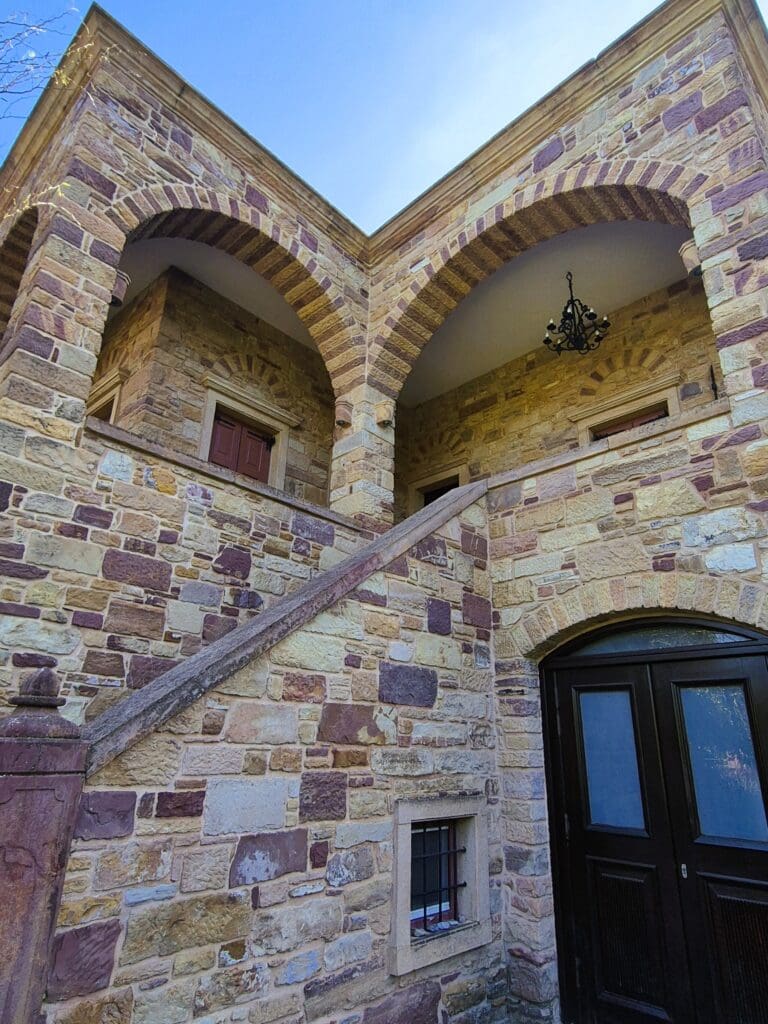
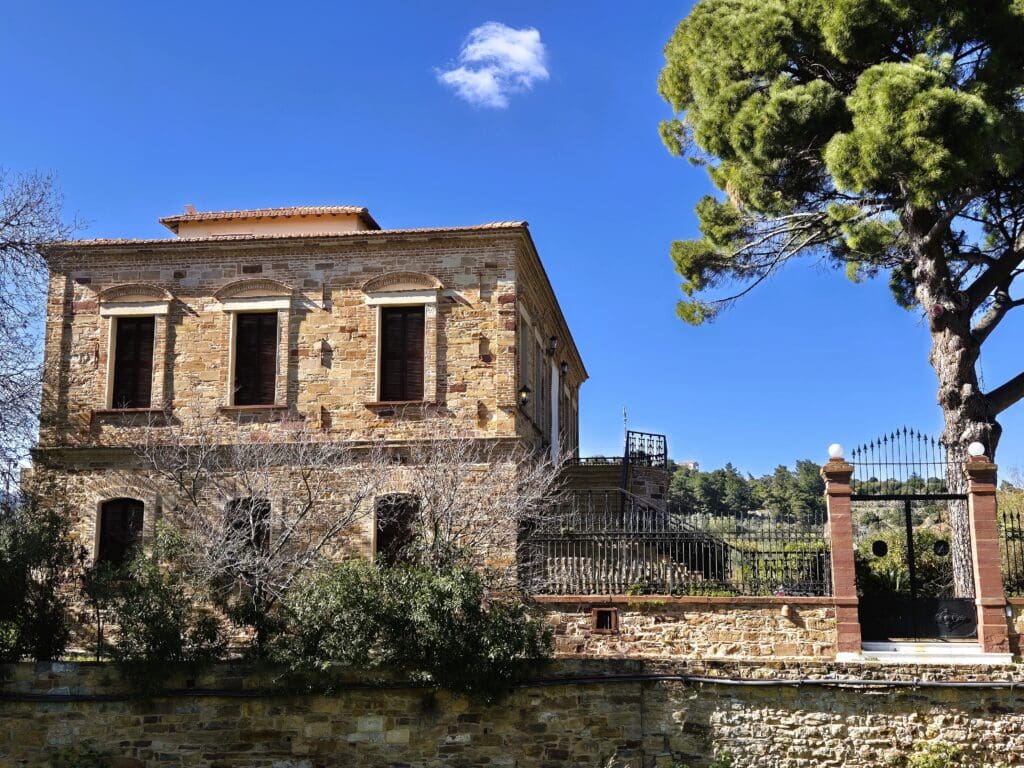
Three main types of buildings formed this unique architectural ensemble. Tower-like houses blended Ottoman elements with Genoese masonry, creating a distinctive local style. Eclectic and neoclassical mansions were later built by members of the Chian diaspora during the interwar period, introducing clear Western influences. Interspersed among them were the more modest farmhouses, which combined features of both styles with elements of local vernacular architecture. The unmatched beauty of these stone houses lies in the square-cut blocks and the warm reddish hues of the local Thymianousi stone, which can display up to ten different shades across a single façade. Equally important was the skill of the craftsmen and artisans who shaped this harmonious microcosm of exceptional aesthetic value. The same stone was used to build the tall walls that enclosed each estate, protecting not only the privacy of the households but also the valuable citrus trees from wind, frost and thieves. As those who lived through Kampos’s golden era recall, an atmosphere of profound tranquillity once reigned here. “Life in Kampos was peaceful,” they remember. “There were no cars passing by, only an occasional cart, driven by a carter standing upright, a neatly tied scarf on his head.” A sense of calm still lingers in the area today, although many of Kampos’s mansions collapsed in the great earthquake, while others were later absorbed into more recent constructions.
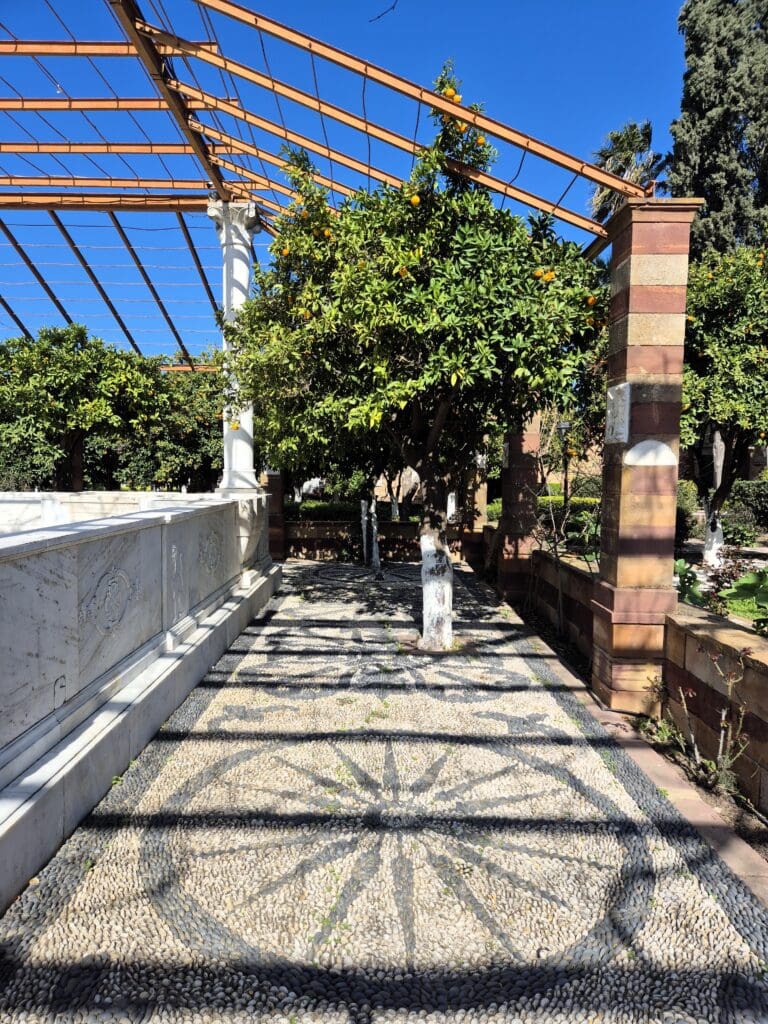
Among the best known -and perhaps the most dazzling of all- is the estate of the aristocratic merchant Argenti family. Known as Argentiko, this true 16th-century palazzo, with its arched doorways and medieval-style windows, remains a splendid testament to that era. Carefully restored while preserving its original grandeur -“we were even shy to walk past it,” some locals will tell you- the mansion operated for a time as a luxury boutique residence, offering its guests the rare sensation of stepping into a fairy-tale version of the past. Although it has remained closed since the pandemic, on the few occasions when its heavy gates open for special events across its 32-acre estate, visitors are granted a vivid glimpse into the customs and lifestyle of 18th-century Kampos.
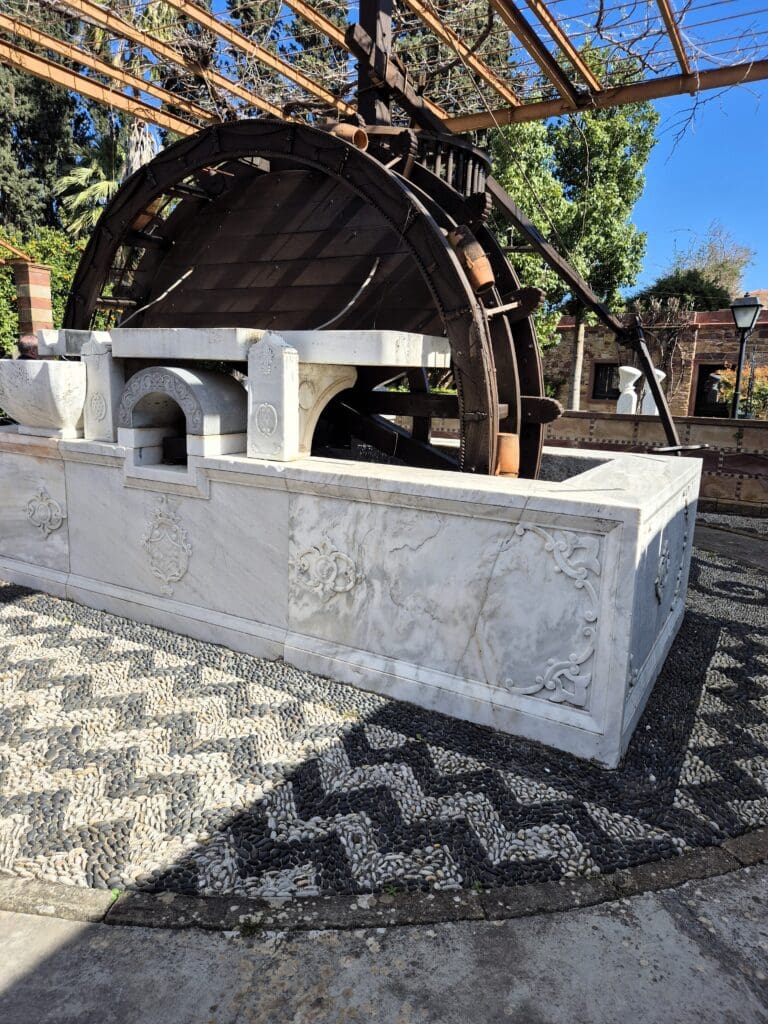
Like all the grand houses of the area, Argentiko was equipped with manganopigada -the traditional well systems known locally as ‘‘mangana’’- and it actually possessed two of them, adorned with marble, as was its impressive water cistern. Between them, and among flowerbeds filled with roses, jasmine and the vivid red spring ‘‘lalades’’-Chios’s native red tulips- the pebble-paved pathways have been preserved. These are genuine works of art in black and white tones, decorated with geometric and intricate patterns that even varied according to who walked upon them: simpler designs for the servants’ routes, and more elaborate ones for the owners and their distinguished guests. No mansion in Kampos was complete without a separate storage building, so essential that older residents still remark that “the warehouse was built first, and only then the house itself.” The saying reveals how everything here revolved around the trade of oranges and mandarins -not only at Argentiko, with its five buildings set within an orchard of 1.800 trees, but throughout this remarkably fertile region.
- Every Season a Celebration in Kampos
Spring may be the season that magically brings the Kampos plain to life, wrapping its gardens in colour and highlighting the reddish hues of the grand mansions, yet the orchards were a sight to behold throughout the year. The intoxicating fragrance of citrus blossoms that filled the air in spring would gradually give way to the summer months, a time devoted to digging, tending, and careful preparation. Natural fertilizer was spread across the groves, followed by the meticulous process known as ‘‘avlakisma’’, the carving of irrigation channels. All of this took place under the watchful eye of the ‘‘Anestatis’’, the overseer responsible for the entire estate, who enjoyed the trust and care of the landowning family and lived within the property with his own household. Specialized workers, known as ‘‘potistes’’, were tasked solely with guiding the water through the intricate network of channels, ensuring it flowed smoothly from the main trench -the ‘‘kefalopotistis’’– into the smaller branches that spread throughout the orchard. Older residents still describe this careful irrigation as “a kind of painting” so precise and methodical was the craft. In a few remaining estates, this traditional watering method is still preserved today, as it allows the trees to absorb ample water at longer intervals, making irrigation more efficient.
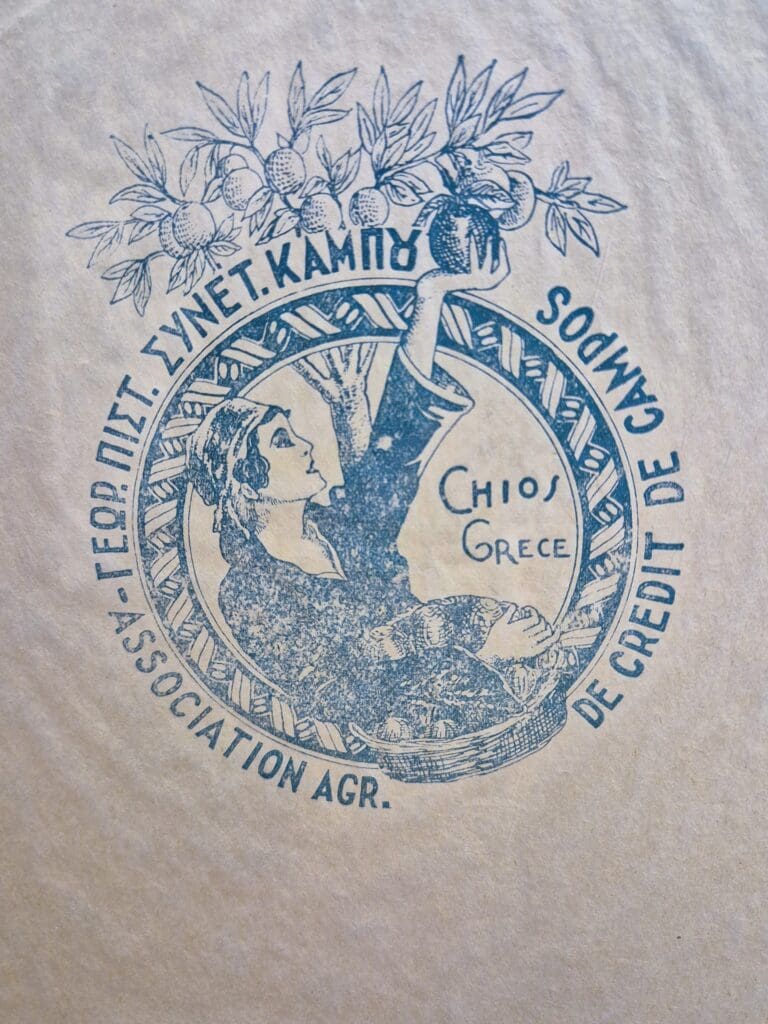
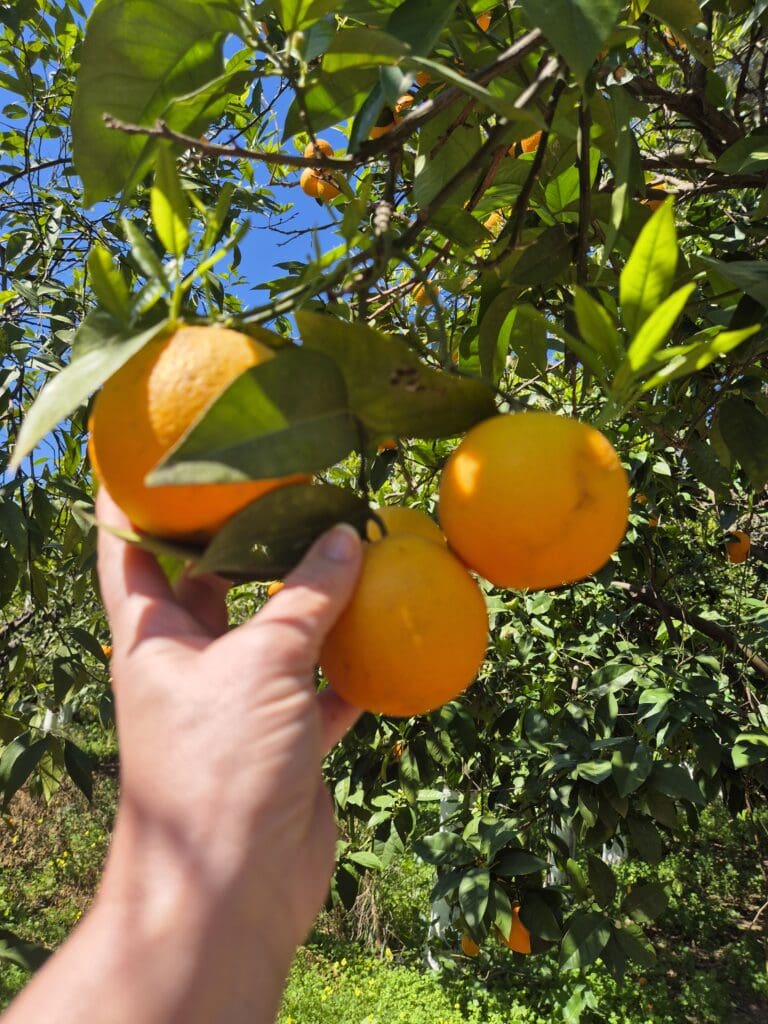
The appearance of the orchards was, by all accounts, immaculate – not a single stone out of place. When winter arrived and the trees stood heavy with fruit, resembling a living painting, the harvest season began. The cutting of the citrus fruits, known locally as ‘‘koma’’, was treated almost as a ritual, demanding patience and exceptional care. Mandarins in particular required delicate handling. I order to prevent damage to their thin peel and to preserve the essential oils responsible for their intense aroma, workers used special small clippers. Anyone with long fingernails was not allowed to take part in the harvest. Some particularly strict landowners were even said to inspect the workers’ hands at the end of the day, checking for yellow stains that might betray the temptation of having eaten some of the precious fruit. The wicker baskets were lined with burlap, and once the fruit was transported to each estate’s storage buildings and passed through the packing facilities, it would begin its journey abroad, always bearing the trademark of the merchant who exported it.
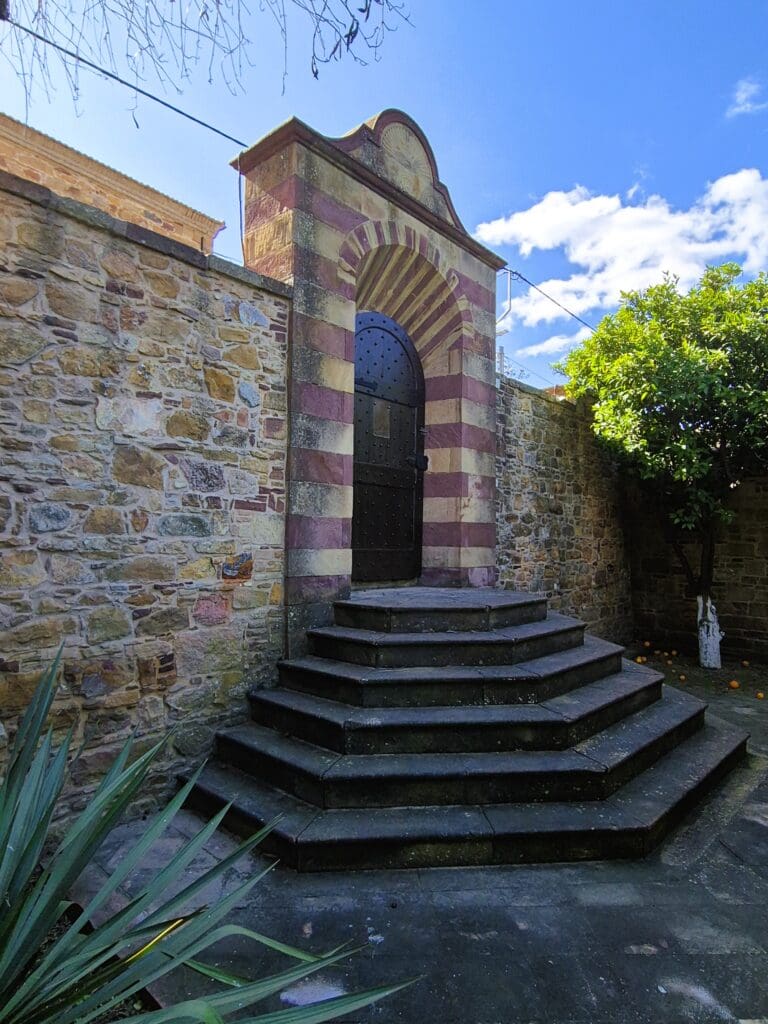
Although today sadly, hundreds of trees die each year or are replaced by other crops, for the older inhabitants of Kampos the trees were once like members of the family. As one elderly descendant of a landowning family recalled, “each tree was like another piece of my father’s clothing” a phrase that speaks volumes about the deep emotional bond between the people and their orchards.
• A remarkably profitable journey
Thanks to the island’s geographical position, which favoured trade relations between East and West, and to the exceptional quality of its local products, the citrus fruits first cultivated in Chios by the Genoese had already become renowned by the 17th century. They were unloaded fresh from large sailing ships at the ports of Smyrna and Constantinople, from where they were transported further east to distant markets. Official records from the 18th century show that spoon sweets and sherbets made from Chian citrus were already being exported. A century later, Chian trading outposts expanded through Marseille, Antwerp and Livorno as far as Amsterdam, London and Liverpool, and unprecedented wealth flowed into the island from the so-called “golden citrus fruits” which yielded approximately 500 gold pounds per 1.100 trees.
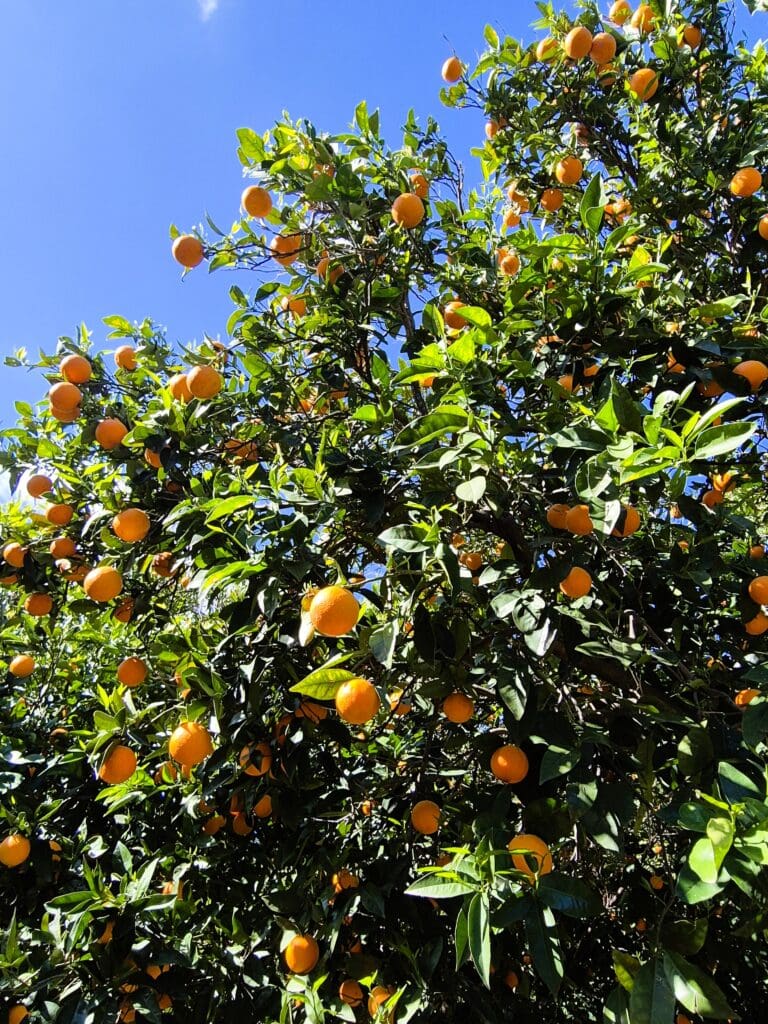
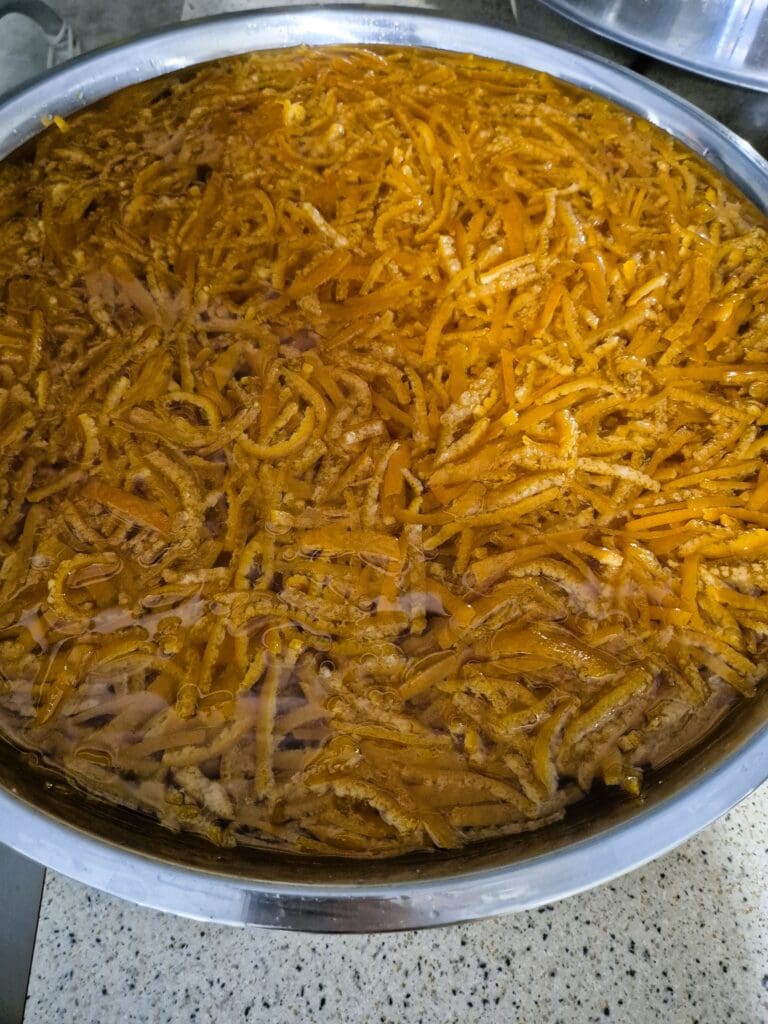
Yet the destructive conditions of the late 18th century -coming in the aftermath of the massacre of Chios- combined with a devastating frost and a catastrophic earthquake, dealt a lasting blow to the orchards. Much later, World War II and growing competition from other Mediterranean countries brought the end of an entire era. Today, however, the island’s highly active agricultural cooperative operates year-round, beginning with the harvest of the mandarins -now bearing Protected Geographical Indication (PGI) status– in December for juice production, followed by oranges and lemons. And although Chian mandarins are now scarce in the markets, the famous aromatic liqueur that was traditionally offered at celebrations and special occasions, remains a beloved treat in local homes and an ideal edible souvenir from the fragrant island of Chios.
- Scents and flavors of memory
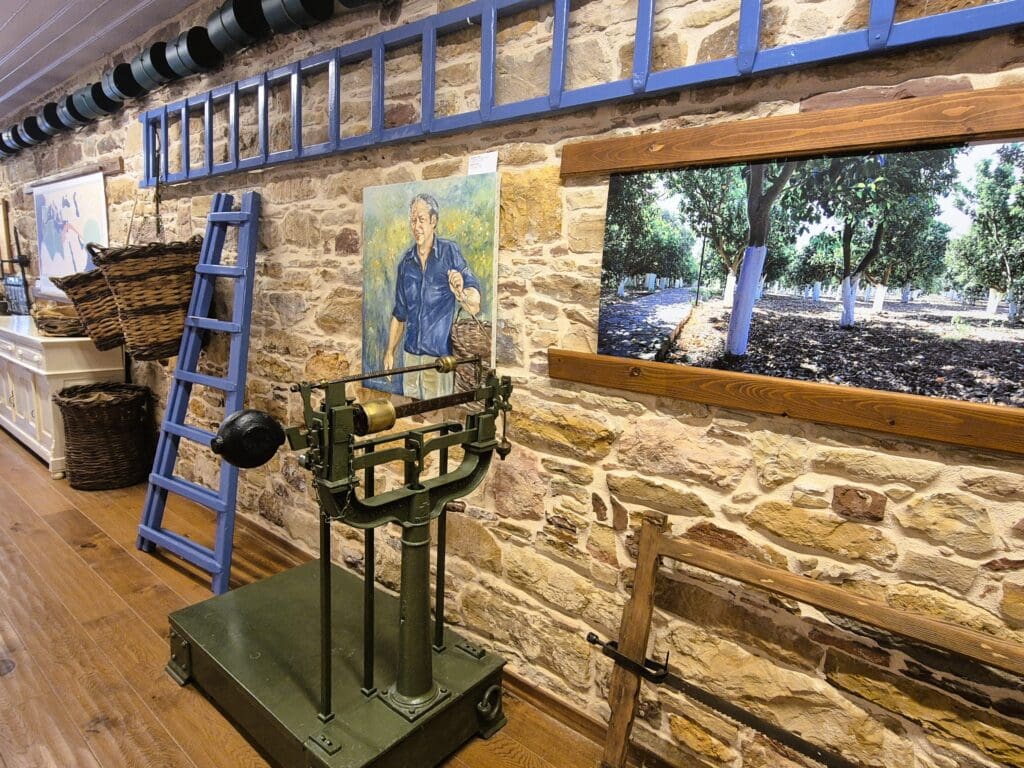
The flavours of Kampos -along with the memories and stories of this unique place- can be discovered at the Citrus Museum, located in the heart of the area, within the 1742 mansion of the Karalis family. It is an experiential cultural space where, beyond the impressive building itself and the serene café that occupies the courtyard and outbuildings -ideal both for sunny days and for colder weather in its cozy interior- a remarkable museum operates, dedicated to the history of Kampos citrus cultivation. Old agricultural tools, parts of the valuable household items once owned by aristocratic families, archives of commercial transactions, vintage packaging, the logos of all citrus exporters, maps of trading outposts, and a detailed model of a traditional packing facility, help visitors piece together the vivid picture of the plain in its days of prosperity and economic significance. Photographs of the region’s magnificent mansions -many of which no longer survive- are also displayed here, still remembered by the names of their wealthy owners, among them the Chiot-Genoese families of Kalvokoresis, Rallis, Roidis, Kardasilaris and Sekiaris, among many others.
At Citrus Museum shop, visitors will also find pure jams and spoon sweets under the museum’s own label ‘‘Perivoli’’, all produced at the Perleas agritourism unit, where since 1981 the first traditional guesthouse in the Kampos area—Perleas Mansion—has been in operation. Among heavily laden orange trees, a spacious stone-built courtyard and a full cistern, with branches and blossoms brushing against the shutters, three stone buildings dating back to 1640 have been transformed into eight luxurious guest accommodations. Staying here adds an entirely new dimension to a visit to the enchanting Kampos of Chios – where, as you touch nature and become intoxicated by its fragrances, you can still hear the whispers of past centuries and find yourself smiling at how vividly their traces remain alive.
*Arietta Pouliou is a Travel journalist, Fashion lover, Foodie, Dreamer, Arts and Sculptures lover, Ice cream addict, Wine enthusiast, you name it. A great contributor to allaboutshipping.co.uk on very special issues accompanied by great photos!
