





By James Brewer
George Stubbs devoted years to producing beautiful, finely wrought paintings of champion racehorses.
While doing so, the 18th century artist remarkably found time to compile a 50,000-word treatise on the physique of the genus.
An exhibition at the UK’s National Gallery highlights what a sensation his book was when published in London in 1766. His acute eye for anatomical perception enabled Stubbs to transform equine painting into a lodestar for many following generations. For the first time horses were depicted in their individuality, rather than purely as a slavish prop for aristocratic grandees or warriors.
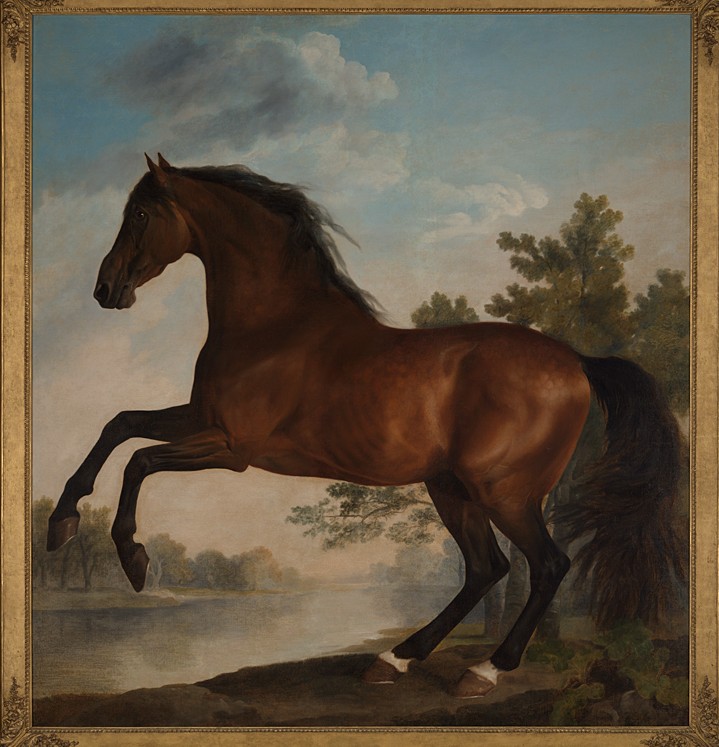
His technique enriched the string of commissions that came his way. The London show centres on a prime example, a spectacular painting from around 1762 of a rearing chestnut bay colt named Scrub (a canvas which incidentally at a later stage was almost ruined at sea while being shipped to India).
Stubbs (1724–1806) based his physiological conclusions on his working drawings of horses and on scrupulous dissections. He took nothing for granted: witness his manuscript’s thoroughgoing title The Anatomy of the Horse, including a particular description of the bones, cartilages, muscles, fascias, ligaments, nerves, arteries, veins and glands in Eighteen Tables, all done from nature.
The publication was rich with clinically detailed text and lettered and numbered diagrams alongside engravings. Unable to find a suitable master engraver, Stubbs had been undeterred. He taught himself, over six or seven years, to etch to a high degree of competence, working in between his many painting assignments. In his introduction, he described himself as a painter, writing that he hoped his treatise would be useful for “artists, farriers, anatomists and gentlemen who delight in horses.”
A contribution to both science and art, the book was an immediate success. It was republished many times, internationally acclaimed and translated into French. His reputation soared among eminent patrons involved in horse breeding and racing
One of those wealthy patrons, Charles Watson-Wentworth, 2nd Marquess of Rockingham (1730–82), owned Scrub. Foaled in 1751, Scrub is the only life-size horse portrait by Stubbs still in a private collection and has been seen on public display only once before.
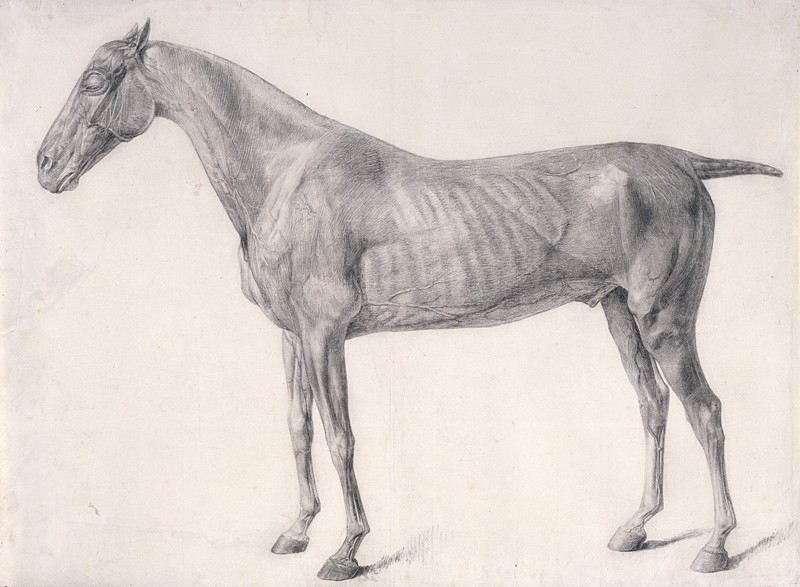
Ahead of the Scrub picture Stubbs had amassed an enviable level of knowledge of the bodily structure, external and internal, of horses. From 1756, working in a barn in Horkstow, a village in north Lincolnshire, he amassed for 18 months an unrivalled study of its kind, resulting in the most illustrious finished images ever recorded in Britain in this artistic field. His endeavours ensured that his representations of horses would be among the most accurate on record, while reflecting the character of individual animals and endowing each with a poetic resonance.
An original copy of his anatomical disquisition and six of his working drawings and finished examples for the book, all lent by the Royal Academy of Arts, provide exciting context to the National Gallery exhibition.
Rockingham was passionate about horse racing and breeding, and about collecting antique sculpture. He owned the winner of the first St Leger Stakes, said to be the world’s oldest classic horse race. He had been introduced to Stubbs probably by Sir Joshua Reynolds (1723–1792), portrait painter and first president of the Royal Academy.
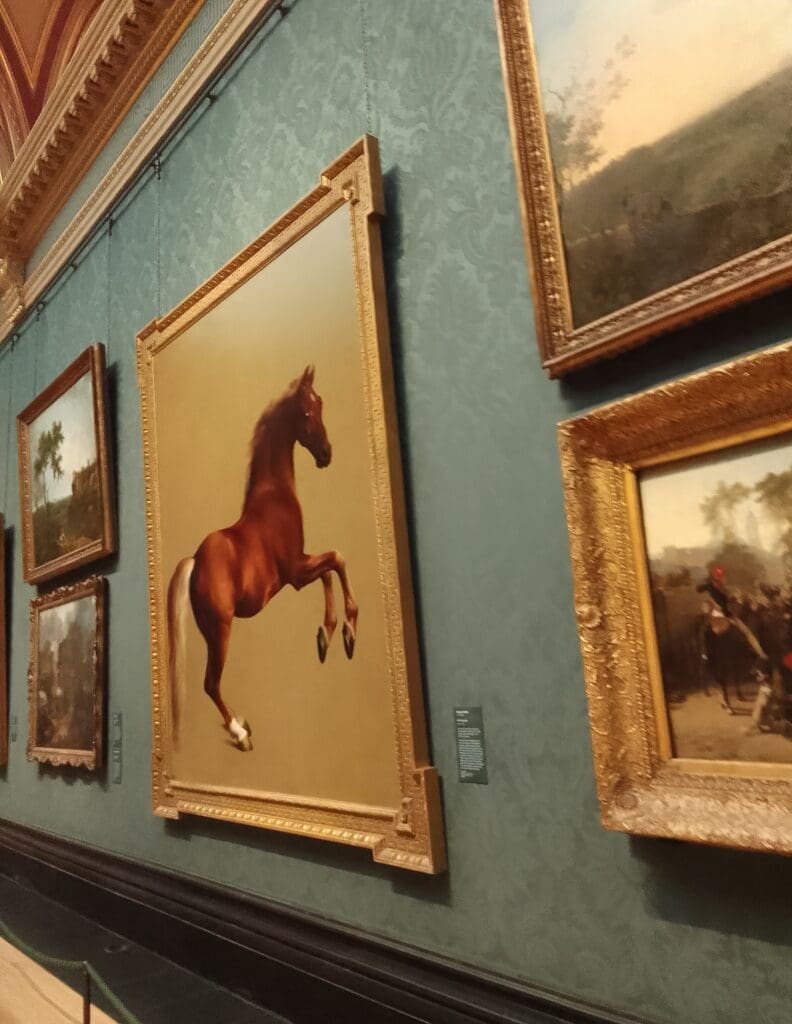
Before commissioning Stubbs to paint Scrub, Rockingham had tasked the artist with painting another of his horses, an Arabian chestnut stallion known as Whistlejacket, the latter gem now residing in the permanent collection of the National Gallery.
Whistlejacket was intended to be in a setting for a portrait of George III who had succeeded to the throne in October 1760. The picture would have hung in the Great Hall at Wentworth Woodhouse in South Yorkshire, complementing an equestrian portrait of the ruler’s late grandfather George II. Wentworth Woodhouse, one of the largest Georgian houses in England, was begun around 1725 for the 1st Marquess of Rockingham. When the portrait of Whistlejacket was presented to him, the 2nd marquess decided it should remain without rider or background. So he had another picture made that was meant to include the monarch, this time with Scrub.
In the event, the marquess decided not to buy the Scrub painting, his relationship with royal circles having been strained, as underlined by his resignation in 1762 as Lord of the Bedchamber (the courtier in closest attendance to the King).
The marquess had even been Prime Minister for two brief periods but fell from favour when he criticised government policy on the war with America.
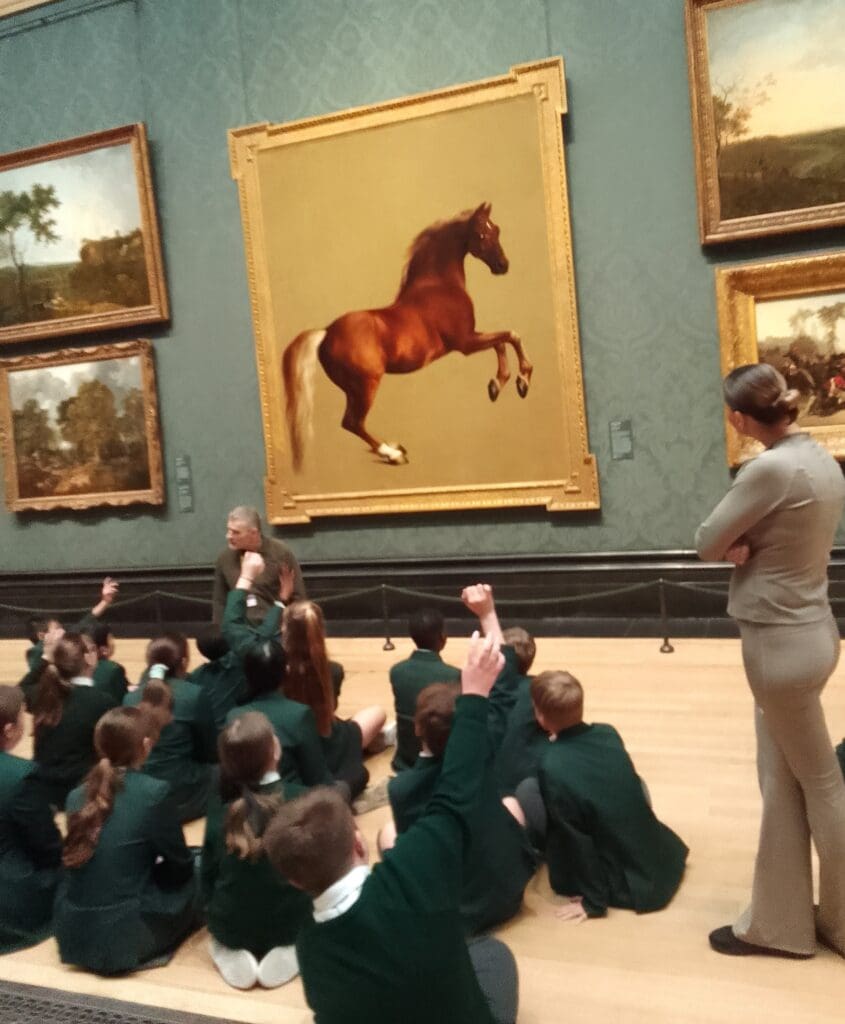
It is tempting and convenient now to draw comparisons between the two equine masterpieces, as Whistlejacket, popular with many visitors including school groups, is on magnificent display in National Gallery Room 34, a short walk from Scrub’s temporary home. The gallery bought the Whistlejacket picture in 1997 with the support of the Heritage Lottery Fund.
A significant contrast is that Whistlejacket is bereft of any background, while Scrub is shown beside a lake in an albeit subdued sylvan landscape. There is common ground, though: Scrub and Whistlejacket are thought to have been the first life-size portraits of horses without riders in British art.
With Rockingham dropping his plan for a royal portrait, the artist kept the picture of Scrub, selling it some 20 years later to William Wynne Ryland (1738–1783), a highly-skilled printmaker (at one stage official engraver to George III) but a forger. Ryland tried in vain to have the picture sold in India in a scheme involving the credit markets of London and Bengal. Damaged at sea, the painting was returned to Stubbs and disposed of in a studio sale after his death. Ryland was tried at the Old Bailey for forging bills of exchange, and hanged at Tyburn, the London gallows.
The Scrub picture is joined in the exhibition by other Stubbs paintings and works on paper.
Towards the end of his career, Stubbs was approached by an anonymous patron known as Mr Turf to create a series of portraits of the most storied racehorses in Britain, to chronicle 50 years of racing history.
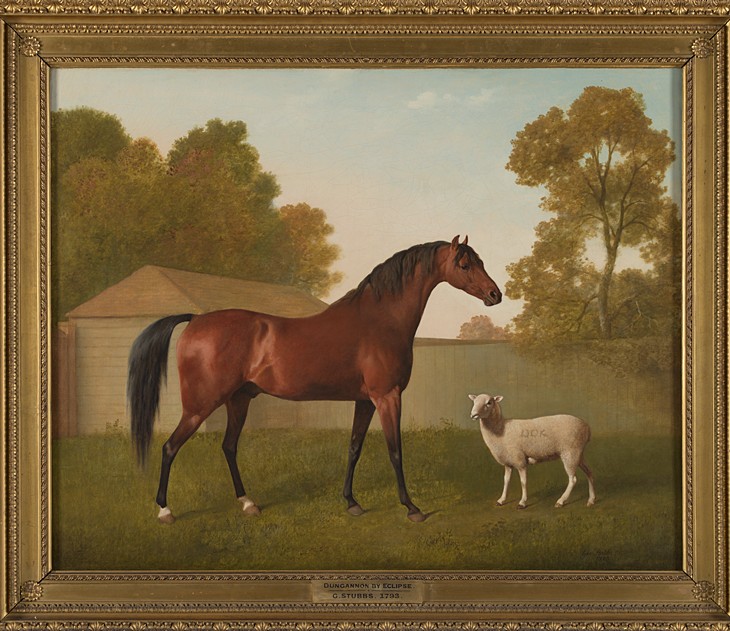
For that enterprise, 16 paintings were completed and exhibited in 1794 at the Turf Gallery in Conduit Street, Covent Garden, but the project was abandoned for lack of funding. In the series, Dungannon with a Lamb from 1793 evokes a feeling of tranquillity. It is a record of the attachment that the gentle thoroughbred Dungannon formed with a lamb that found a way into his paddock.
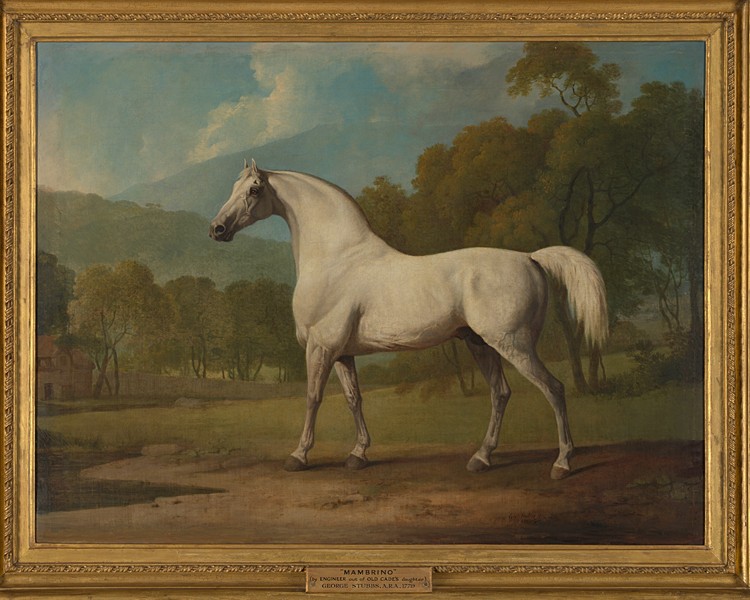
Also in the exhibition is Mambrino, from1779 or 1793. The painting of this handsome grey racing stallion was commissioned by the 1st Earl Grosvenor, a Cheshire landowner, politician, breeder of horses – winning the Epsom Derby three times and the Oaks Stakes, another major event, six times – and connoisseur of fine art.
Liverpool-born Stubbs was the son of a currier (a person who processes tanned hides) and spent his early years painting portraits and becoming engrossed by anatomy. At York, he supplied illustrations for a guide to midwifery; after his stay in Lincolnshire, he moved to London. His clients included society men who in 1750 founded the Jockey Club, which formulated the rules and standards of racing. Besides horses, Stubbs essayed superb portraits of other animals: zebra, kangaroo, rhinoceros, and antelope.
His lifelong experimentation with illustration in which he had unabated success included enamel painting on earthenware plaques for his great supporter, Josiah Wedgwood. The celebrated pottery manufacturer said at one stage he had been “labouring to furnish him [Stubbs] with the means of adding immortality to his excellent pencil.”
Introducing the Stubbs display, Dr Mary McMahon, associate curator of NG200 Collections, said: “Stubbs fundamentally changed the approach to depicting the horse in late 18th-century British art, combining his hard-earned knowledge and understanding of their anatomy with a desire to capture a distinct individual character.”
Images:
Scrub, a bay horse belonging to the Marquess of Rockingham. About 1762 Oil on canvas © Private Collection. Photo: The National Gallery, London.
Whistlejacket on display in Room 34, the National Gallery, London.
Schoolchildren admire the painting of Whistlejacket.
Finished study for ‘The First Anatomical Table of the Muscles, Fascias, Ligaments, Nerves, Arteries, Veins, Glands, and Cartilages of the Horse’ 1756-1758. By George Stubbs. Pencil and black chalk. © Royal Academy of Arts, London.
Dungannon with a Lamb, 1793. Oil on canvas. © Private collection. Photo: The National Gallery, London.
Mambrino,1779. Oil on canvas. © Private collection. Photo: The National Gallery, London.
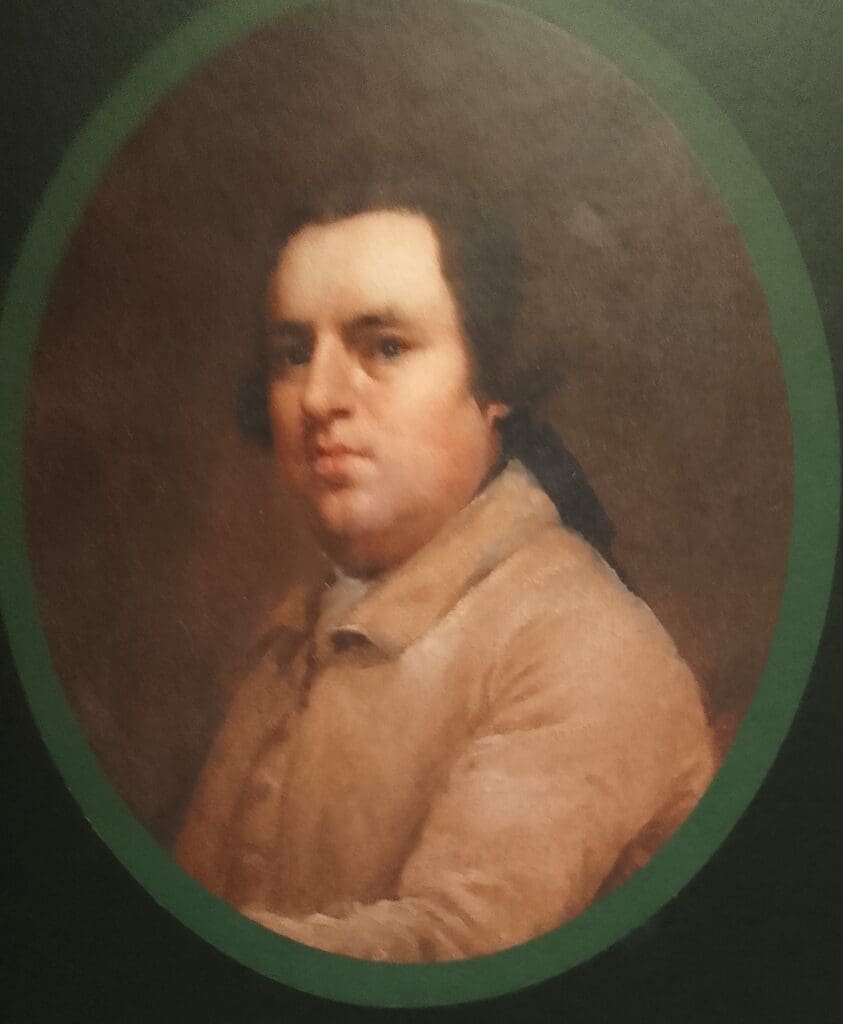
George Stubbs, self-portrait, about 1759. Oil on copper. Yale Center for British Art.
Stubbs: Portrait of a Horse is at the National Gallery, Room 1, until May 31st, 2026. Free entrance.
