




The U.S. Nuclear Regulatory Commission (NRC) and U.S. Coast Guard have signed a new Memorandum of Understanding (MOU) to strengthen coordination on civilian maritime nuclear projects. It replaces an agreement that had been in place since 1973, reflecting how the regulatory landscape is evolving alongside advances in maritime nuclear technology.
The updated MOU sets out how the two agencies will work together on licensing and oversight for nuclear-powered vessels, floating nuclear power plants (FNPPs) and other civilian maritime nuclear applications. By clarifying responsibilities, coordinating technical reviews and reducing duplication in the licensing process, it aims to create a more efficient and predictable pathway for future projects while maintaining robust standards for safety, security and environmental protection.
For CORE POWER, it is another positive sign that regulators are taking practical steps to prepare for the deployment of civilian maritime nuclear technologies. As the industry moves from concept towards implementation, clear and coordinated regulatory frameworks will be essential to bringing these technologies to market.
Academic Program End of Year Symposium
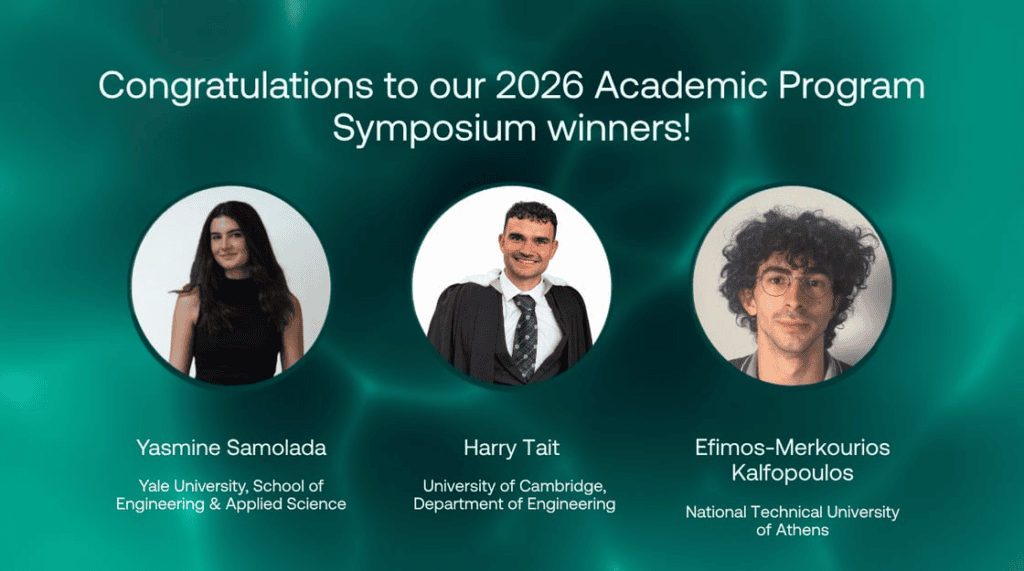
Wednesday’s Academic Program Symposium showcased the depth and diversity of research being undertaken by the next generation of maritime nuclear leaders. Students from leading universities presented innovative work spanning engineering, regulation, economics and policy, highlighting practical solutions to the challenges of deploying nuclear technologies at sea.
First Prize was awarded to Yasmine Samolada of Yale University for her research into radiation shielding concepts for floating nuclear power plants and nuclear merchant ships.
Second Prize went to Harry Tait of the University of Cambridge for his assessment of emergency planning zone sizes for floating nuclear power plants.
Third Prize and Best Presentation were awarded to Efimos Kalfopoulos of the National Technical University of Athens for his techno-economic analysis of a 15,000 TEU container vessel operating on the Asia-Europe route.
Congratulations to all of this year’s participants for their outstanding research, and thank you to everyone who joined us online.
To learn more about the Academic Program, click below.
Upcoming Events

On 14 July, the CORE POWER Convoy Program continues with Marine Fleet Futures: Vessels, Routes and Operating Models, exploring what it will take to deploy and operate nuclear-powered commercial ships.
Through expert presentations and a live panel discussion, participants will examine vessel design, operating models, early deployment opportunities, and the regulatory and governance frameworks needed to support commercial maritime nuclear.
The program now branches into two parallel pathways, with this session focusing on nuclear propulsion, while the next explores floating nuclear power plants and energy generation.
If your organization is assessing the role of nuclear in shipping, ports, or coastal energy infrastructure, click below to explore Convoy.
| New Nuclear in the NewsStay up to date with the latest news and insights on new nuclear developments below. |
| FeedbackHelp us improve future editions of the newsletter |
