





| By Elena Sendona on October 1, 2026 |
At Milan Fashion Week, The Phoenix Circle returned with Passport, an evocative collaboration between Ara Lumiere and contemporary artist Raghava KK, exploring the freedom to reclaim one’s image, embrace individuality, and write a personal narrative on one’s own terms.
What does it mean to truly own your image in a world so accustomed to defining people through appearances? During Milan Fashion Week in September 2026, that question became the starting point for an intimate artistic encounter at Galleria Gaburro, where fashion, contemporary art, and the deeply personal language of identity converged.
At the center of the occasion was Passport, a thought-provoking project conceived through a collaboration between ethical fashion atelier Ara Lumiere and contemporary artist Raghava KK. Presented as part of the second edition of The Phoenix Circle, the cultural initiative founded by Indian entrepreneur and philanthropist Kulsum Shadab Wahab, the exhibition invited audiences to reconsider the relationship between physical appearance, personal history, and the freedom to determine how one wishes to be seen.
Held on September 26, 2026, the gathering brought together members of the fashion and art communities for an exhibition and intimate dinner at Galleria Gaburro in Milan. Against the backdrop of the city’s Spring/Summer 2027 fashion week, the evening offered a compelling exploration of creative authorship and women’s empowerment.
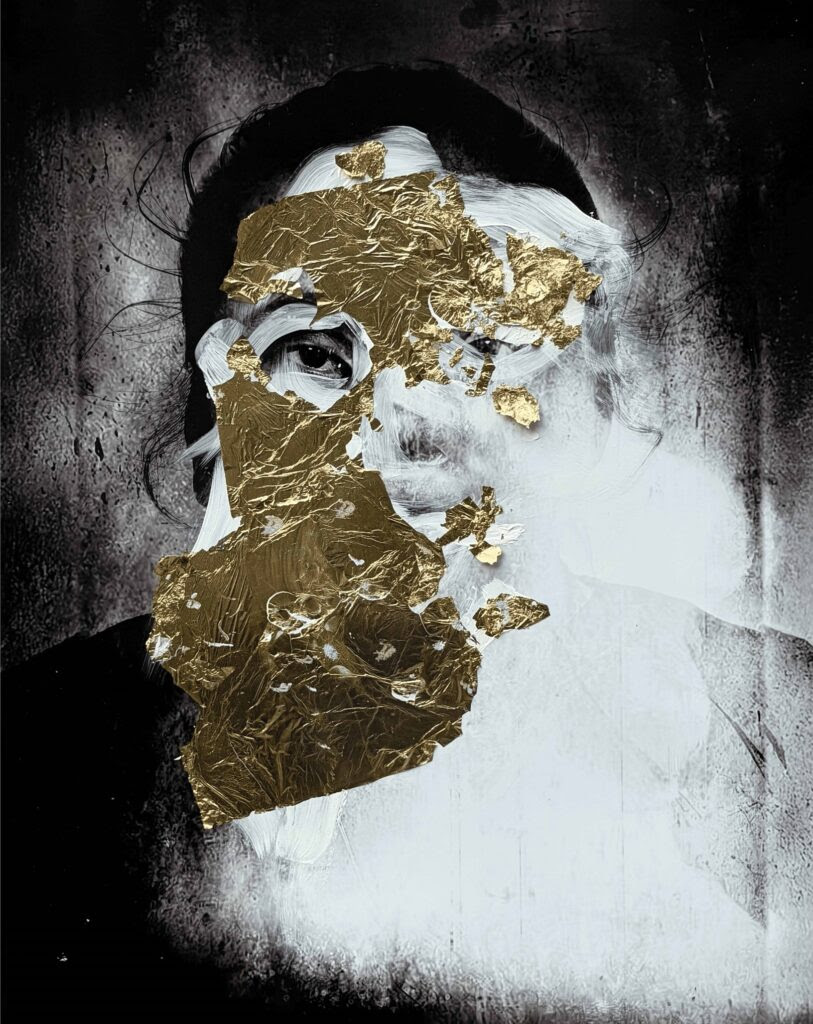
Passport: When a Photograph Becomes a Canvas for Identity
Few images carry the institutional authority of a passport photograph. Its purpose is straightforward: to identify an individual through a standardized representation of their face. Yet behind that seemingly objective image exists an infinitely more complex human identity, shaped by memories, aspirations, emotions, and experiences that no official document could possibly contain.
For Passport, Raghava KK transformed this familiar visual convention into the foundation of an artistic dialogue.
The creative process begins with a conventional passport portrait, which the artist reinterprets through a combination of digital and physical interventions. These altered images are subsequently presented to the women participating in the project, who select the portraits they wish to transform through painting.
Each resulting artwork carries three distinct layers of authorship: the original photograph, the artist’s interpretation, and the personal intervention of the woman portrayed.
The final creative decision belongs to the subject herself.
Through this process, the portrait becomes an intimate expression of agency, allowing each participant to engage with her own representation and decide how it evolves. The familiar boundaries between artist, subject, and observer begin to dissolve, opening a conversation about the authority society assigns to appearances.
There is a particular poignancy to this concept within the context of Ara Lumiere, whose work centers on women who have survived acid and burn attacks. For these women, the ability to reclaim their image carries profound emotional significance.
The Creative Courage of Akkiamma and Maria
One of the most moving dimensions of Passport emerged during its initial workshop, which brought Raghava KK together with Akkiamma, a survivor of an acid attack.
As she began working directly on her photographic portrait, the experience introduced an unexpected emotional shift. What initially felt like damaging an existing image gradually became an opportunity to take ownership of it.
Through painting, Akkiamma was able to approach her portrait as something she could interpret, alter, and ultimately make her own.
Maria, another survivor with a strong interest in art, also participated in the creative process, accompanying Akkiamma through moments of experimentation and discovery.
Their involvement reflects the collaborative philosophy at the heart of Passport. The women are active creators whose decisions shape the finished works.
For Raghava KK, whose multidisciplinary practice spans painting, performance, and artificial intelligence, the project extends a longstanding artistic investigation into identity and perception. His work frequently examines the relationship between the self and the narratives constructed around it, making the passport photograph a particularly resonant subject.
Originally trained as a cartoonist, the New York- and Bangalore-based artist has developed a career spanning traditional and digital media. His artistic projects include Guernica for the Siriocene, presented in Dubai in 2022 and acquired by the Kiran Nadar Museum of Art, and Impossible Bouquet, unveiled at India Art Fair in 2023.
With Passport, these investigations take on an intensely personal dimension, placing the participants’ creative choices at the center of the artistic experience.
Kulsum Shadab Wahab and the Vision Behind The Phoenix Circle
The philosophy underpinning Passport is inseparable from the work of Kulsum Shadab Wahab, founder of Ara Lumiere and executive director of the Hothur Foundation.
Established in 2025, The Phoenix Circle was envisioned as an annual cultural platform connecting fashion, contemporary art, philanthropy, and social engagement. Its name draws inspiration from the phoenix, the mythical bird associated with renewal and transformation.
Through the initiative, Wahab seeks to create meaningful opportunities for women who have experienced violence to express their individuality and participate in shaping their own futures.
The Phoenix Circle made its debut in Milan in September 2025, with an event at Portrait Milano. Its return in 2026 marked a further exploration of the relationship between creativity, dignity, and self-determination.
At the heart of Wahab’s vision is the understanding that physical recovery represents one dimension of a much broader journey.
For women who have survived acid attacks, rebuilding confidence, achieving financial independence, and developing a renewed sense of personal agency can be equally significant aspects of rehabilitation.
Passport gives visual form to these ideas, allowing women to explore their identities through an artistic process grounded in choice and self-expression.
The project also raises questions with relevance far beyond the exhibition itself. How much of an individual’s identity is shaped by the perceptions of others? Who has the authority to determine what a portrait communicates? And what happens when the person being represented becomes the author of that representation?
Within the intimate setting of Galleria Gaburro, these questions found expression through the women and their artworks.
Ara Lumiere: Where Ethical Fashion Meets Women’s Empowerment
The creative philosophy of The Phoenix Circle reflects the broader mission of Ara Lumiere, the ethical and sustainable fashion atelier founded by Wahab within the Hothur Foundation. The atelier works with women who have survived acid and burn attacks, providing opportunities to develop their creative abilities as designers and artisans.
Each handcrafted piece reflects a commitment to craftsmanship, individuality, and the economic empowerment of the women involved in its creation. Sustainability also plays an important role in the atelier’s approach. Through recycling, upcycling, and responsible material practices, Ara Lumiere incorporates environmental awareness into its creative process. Its fashion offering has also expanded to include the ready-to-wear line Ara Prêt.
The initiative connects artistic development with practical opportunities for independence, while the wider foundation provides medical, psychological, and financial support. The scale of this commitment is reflected in the Hothur Foundation’s work during the first six months of 2026, when it supported 132 reconstructive surgical procedures for survivors of acid and burn attacks.
These efforts illustrate the relationship between physical rehabilitation and the longer process of rebuilding a life according to one’s own aspirations. For Ara Lumiere, fashion provides a tangible space in which women can develop skills, contribute their talents, and participate in an international creative community. Through The Phoenix Circle, that philosophy enters a wider cultural conversation, connecting the experiences of the women with audiences across fashion, art, and philanthropy.
Indian Craftsmanship and Cultural Heritage in Milan
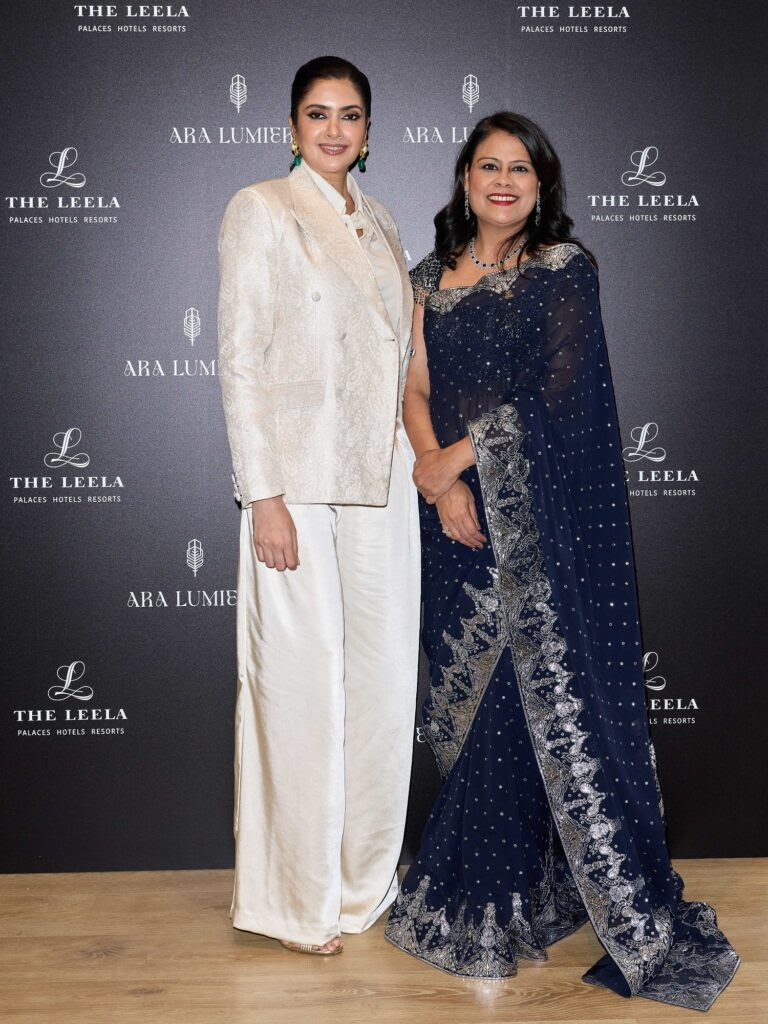
The Milan presentation also celebrated the enduring relationship between Ara Lumiere and The Leela Palaces, Hotels and Resorts, which supported the event as part of its ongoing partnership with the fashion initiative.
The collaboration, now in its third consecutive year at Milan Fashion Week, brings together a shared appreciation for Indian craftsmanship, cultural heritage, and women’s empowerment.
Founded in 1986, The Leela marked its 40th anniversary in 2026, a milestone reflecting four decades of Indian luxury hospitality rooted in art, architecture, gastronomy, and traditional hospitality.
Its involvement in The Phoenix Circle provided a cultural connection between India and Milan, highlighting the role of creative partnerships in bringing conversations about social responsibility to international audiences.
The evening’s international communication and event production were supported by Negri Firman PR & Communications, under the leadership of Silvia Negri Firman, contributing to the presentation of Passport within the Milan Fashion Week calendar.
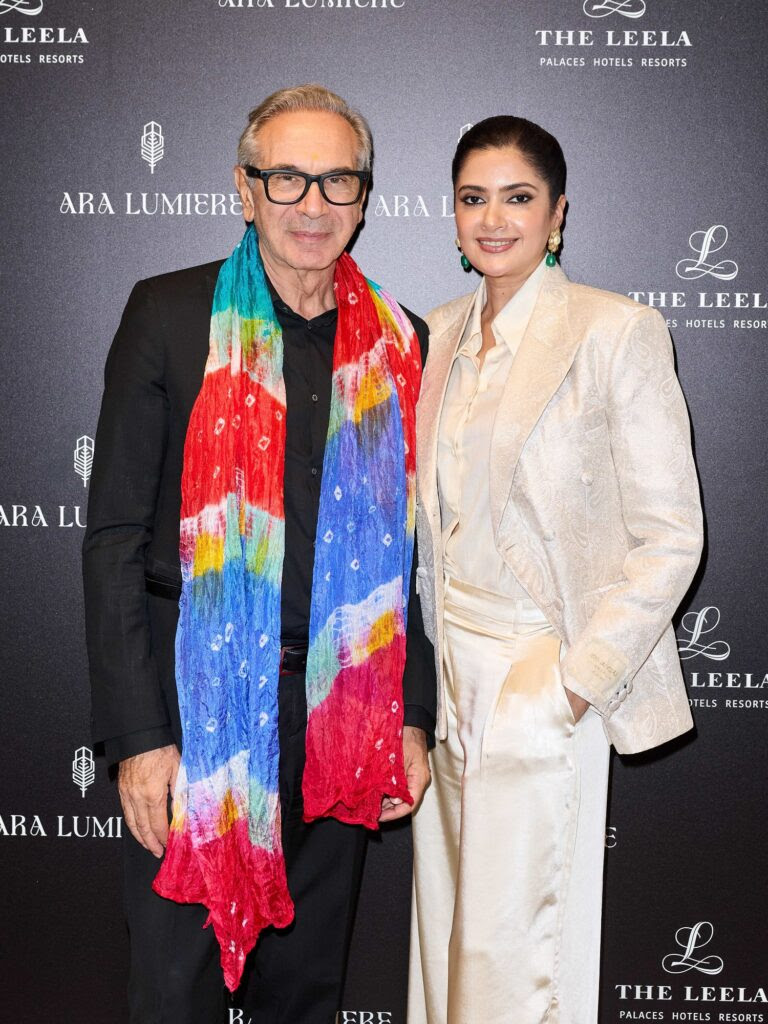
The gathering also welcomed voices from the wider fashion community, including Sabina Belli and Carlo Capasa, extending the discussion to the responsibilities of cultural institutions, the importance of solidarity, and the potential of creativity to inspire change.
The Freedom to Be Seen on One’s Own Terms
There is something deeply intimate about the act of painting over one’s own photograph. A face that once existed within the strict parameters of an official document becomes a space for imagination. Color, gesture, and personal interpretation introduce dimensions of identity that the original photograph could never express.
In Passport, this transformation carries particular emotional weight. The women participating in the project have experienced circumstances in which their physical appearance became inseparable from the way others perceived them. Through their artistic interventions, they are invited to reconsider that relationship and exercise control over their own representation.
The significance lies in the creative freedom itself. A portrait can be altered. An image can evolve. A personal narrative can continue to develop beyond the circumstances that once shaped it.
By bringing this conversation to Milan Fashion Week, Kulsum Shadab Wahab and Raghava KK have created a space in which fashion and contemporary art engage with questions of visibility, dignity, and individuality.
The Phoenix Circle’s second edition reveals the cultural possibilities of an initiative that places women’s voices and creative agency at the center of its vision.
Fashionality.nyc © 2026.
