





Sustainable Aquaculture, Coral Reef Conservation and a New Frontier for International Investment
By Verónica Vallarino*
Panama, 23 rd October 2026
For more than a century, Panama has occupied a privileged position in international maritime commerce. Its geographical location, connecting the Atlantic and Pacific Oceans, has made the country one of the world’s most strategically important maritime nations.
Yet beyond the Panama Canal and the established shipping industry lies another opportunity deserving greater international attention: the sustainable development of Panama’s Caribbean marine economy.
Along the Caribbean coastline of Colón, particularly around the historic community of Nombre de Dios, tropical marine ecosystems, coral reefs and existing maritime infrastructure present an interesting opportunity to explore the relationship between aquaculture, scientific research, environmental conservation and private investment.
The challenge is not simply to extract greater economic value from the sea. It is to develop economic activities that contribute to its long-term protection.
The Caribbean’s Natural Capital
Coral reefs are among the most biologically diverse ecosystems on Earth. They provide essential habitats for marine species, support coastal fisheries, help protect shorelines and contribute to tourism economies.
Panama possesses an important share of the Caribbean’s coral reef ecosystems. According to the country’s Ministry of Environment, approximately 770 square kilometres of coral reefs exist within Panamanian waters, with more than 97 per cent located in the Caribbean.
This natural wealth represents both an environmental responsibility and an economic opportunity.
As global demand grows for responsibly produced seafood, marine biotechnology and sustainable ocean-based industries, countries with valuable coastal ecosystems have an opportunity to position themselves within the expanding blue economy.
Panama should be part of that conversation.
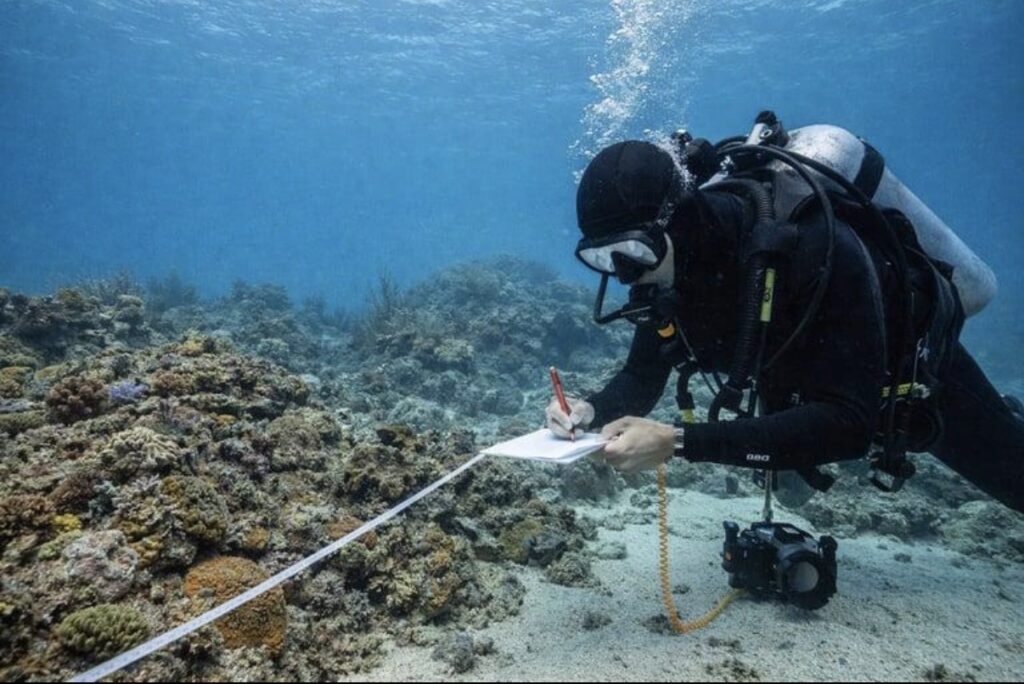
Sustainable Aquaculture: An Industry Worth Exploring
Aquaculture — the cultivation of aquatic organisms under managed conditions — has become an increasingly important component of global food production.
For Panama’s Caribbean coast, several possibilities deserve scientific and commercial investigation.
Native seaweed cultivation could potentially support applications in food production, cosmetics, agriculture and marine biotechnology.
Appropriately selected shellfish species could offer opportunities for small-scale commercial cultivation, subject to environmental suitability and food-safety requirements.
Marine fish farming may also warrant consideration in suitable offshore locations, provided that operations can demonstrate environmental compatibility, appropriate water circulation and responsible waste management.
These possibilities should not be confused with established commercial projects in Nombre de Dios. Their feasibility remains to be demonstrated through scientific surveys, economic assessments and regulatory review.
Importantly, living coral reefs should not be regarded as sites for intensive aquaculture. Their ecological value demands protection, and any proposed cultivation must avoid damaging reef structures, seagrass habitats or other sensitive ecosystems.
The most promising development model would combine commercial innovation with measurable environmental safeguards.
Turtle Cay Marina: Existing Infrastructure and Future Possibilities
Within this wider regional opportunity, Turtle Cay Marina offers an interesting example of an established coastal property whose potential extends beyond conventional tourism.
Located near Nombre de Dios, on Panama’s Caribbean coast, the property incorporates an operational marina, marine refuelling facilities, road access, hotel accommodation, restaurants, swimming pools and recreational coastal facilities.
The Macolla Beach Hotel provides 14 guest rooms, while the surrounding property offers beach access and proximity to coral reef environments.
These existing facilities could potentially support marine researchers, visiting scientific teams, environmental organisations, specialist investors and entrepreneurs conducting preliminary studies into sustainable coastal activities.
A functioning marina may provide logistical support for marine surveys, diving expeditions, environmental monitoring and scientific fieldwork.
Hotel accommodation and hospitality services could facilitate extended research visits, training programmes and specialist workshops.
Equally important, the property’s established tourism infrastructure offers opportunities for educational marine tourism, reef interpretation and environmentally responsible visitor experiences.
Turtle Cay is not being presented as an approved aquaculture development or as a site with established marine farming concessions.

Rather, it illustrates how existing coastal infrastructure could potentially support a wider range of sustainable maritime activities, subject to the appropriate studies and authorisations.
For investors considering the acquisition of an established Caribbean coastal property, this diversity of possible uses merits further investigation.
Conservation and Commercial Development: A Shared Responsibility
The future of the blue economy will depend on recognising that healthy marine ecosystems are economic assets in their own right.
Coral reefs face mounting pressures from rising sea temperatures, pollution, sedimentation, overfishing and poorly managed coastal development.
Panama has already recognised the importance of protecting these ecosystems through legislation and marine conservation initiatives.
The country’s Law 304 of 2022 establishes a framework for the protection of coral reefs and associated ecosystems.
This framework provides an important foundation for future investment decisions.
Rather than viewing conservation as an obstacle to economic development, investors should recognise that long-term commercial value depends on maintaining the environmental quality of the surrounding marine ecosystem.
A sustainable coastal investment strategy could therefore combine reef monitoring, scientific collaboration, responsible tourism and carefully assessed aquaculture opportunities.
The objective should be to create economic activity without compromising the natural resources upon which that activity ultimately depends.
Panama’s Emerging Blue Economy Agenda
Recent developments indicate growing institutional attention to the country’s fisheries and aquaculture sectors.
In May 2026, Panama established an interinstitutional technical working group involving the Ministry of Agricultural Development, the Ministry of Environment and the Aquatic Resources Authority.
Its agenda includes fisheries regulation, environmental standards and improvements to administrative procedures affecting the sector.
Such initiatives reflect an opportunity to strengthen the regulatory foundations for responsible marine investment.
However, investment confidence requires more than favourable policy announcements.
International investors need transparent procedures, predictable regulatory decisions, credible environmental standards and access to reliable scientific information.
Aquaculture proposals involving coastal waters or seabed areas require careful consideration of concessions, environmental approvals, navigation, existing fishing activities and the rights of local communities.
The development of a competitive blue economy must therefore be accompanied by sound governance.

The Role of Scientific Research and International Collaboration
Panama’s Caribbean coastline could benefit from stronger collaboration between marine scientists, universities, conservation organisations and private enterprise.
Before identifying suitable areas for aquaculture, research should establish the environmental conditions of the proposed locations.
These assessments should include water quality, currents, bathymetry, marine biodiversity, seasonal conditions and the proximity of sensitive habitats.
Scientific partnerships could also explore coral reef restoration, marine ecosystem monitoring, sustainable seafood production and the economic value of healthy coastal environments.
Existing hospitality and marina infrastructure could reduce some of the logistical challenges associated with conducting fieldwork in coastal locations.
In this context, properties such as Turtle Cay Marina may offer useful facilities for visiting researchers and specialist organisations.
The longer-term objective would be to develop evidence-based projects capable of attracting responsible investment while supporting environmental stewardship.
A Broader Opportunity for International Investors
International interest in sustainable infrastructure, food security, marine technology and nature-positive investment is creating new opportunities for coastal economies.
Panama combines a strategic geographical position with maritime expertise, international commercial connectivity and access to two oceans.
These advantages provide a basis for exploring opportunities beyond traditional port operations, shipping and tourism.
The Caribbean coast of Colón deserves particular attention.
Its future economic development need not depend exclusively on large-scale construction or conventional resort tourism.
Smaller, scientifically supported marine enterprises, conservation initiatives and specialist maritime services may also contribute to economic diversification.
For buyers evaluating established coastal properties, the availability of existing infrastructure can be an important consideration.
Turtle Cay Marina, offered as an integrated property and operating project, represents one such opportunity for investors seeking exposure to Caribbean hospitality and maritime activities, with additional marine-economy possibilities that warrant independent assessment.
Any future aquaculture activity would remain subject to environmental feasibility, regulatory authorisation and commercial viability.
Looking Beyond the Panama Canal
Panama’s maritime identity has traditionally been defined by the movement of ships between two oceans.
The next chapter could also involve the responsible development of the resources and scientific opportunities found within those oceans.
The Caribbean coastline offers a compelling setting in which to explore that future.
Sustainable aquaculture, coral reef conservation, marine research and responsible tourism need not be treated as unrelated industries.
With the right scientific evidence, regulatory safeguards and investment, they could become complementary elements of a diversified coastal economy.
For Panama, the opportunity is not simply to attract more capital.
It is to attract investment that recognises the long-term value of its natural environment.
The future of Panama’s blue economy should not be measured solely by what can be produced from the sea, but also by what can be preserved for generations to come.
⸻
*Verónica Vallarino
Former Consul General and Commercial Attaché of the Republic of Panama at the Embassy of Panama in the United Kingdom
International Investment & Property Enquiries
