





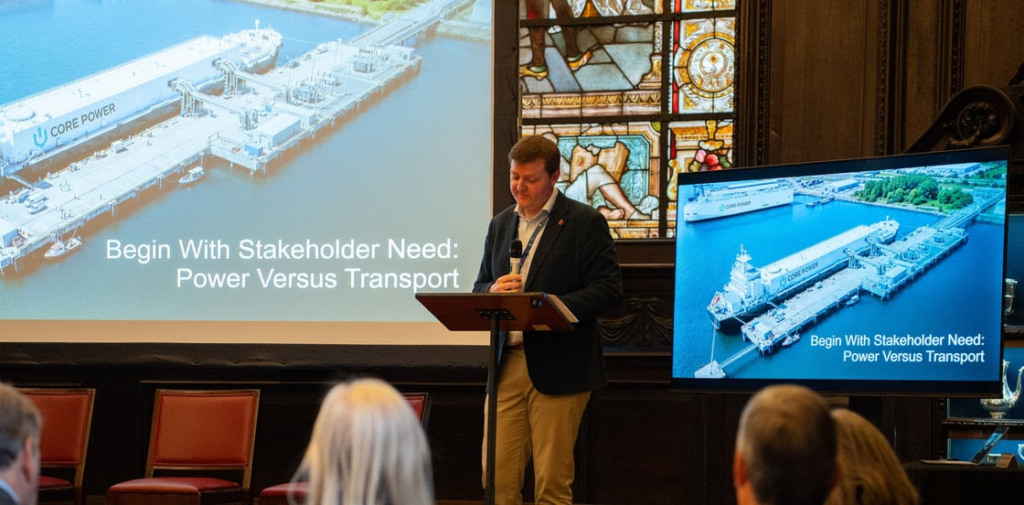
Nuclear propulsion is proven at sea. The harder question is how to turn that experience into a commercial system that can operate at scale.
That was the focus of CORE POWER Senior Principal Marine Engineer Rob Chaplin’s keynote, “From Reactor to Fleet: Engineering the Next Era of Maritime Nuclear,” at the Royal Institution of Naval Architects’ President’s Invitation Breakfast Lecture this week.
Rob’s presentation looked beyond the reactor itself, exploring how vessel design, technology choice, safety, security, regulation, liability and the wider supporting infrastructure all need to come together to enable commercial maritime nuclear.
A central theme was that regulation is not a single certificate or approval. Moving from concept to fleet requires an integrated system of permissions, alongside the ports, crews, maintenance, safeguards and lifecycle support that make commercial operation possible.
Rob also joined the panel discussion, helping connect these engineering and regulatory questions with the practical steps needed to move maritime nuclear from isolated projects towards a repeatable fleet model.
When ports become energy hubs

| Ports are no longer only moving goods and vessels. Increasingly, they are also having to plan for the energy needs of terminal operations, visiting ships and nearby industry. That creates a bigger question for maritime nuclear: could one energy system support multiple demands across the port ecosystem? CORE POWER COO Charlotte Vere explored this at the IAPH World Ports Conference 2026, joining the panel “Energy transition pathways for ports – action without clarity.” The discussion focused on the practical steps for ports can be taken even when the long-term energy mix is still evolving: understanding where future demand will come from, identifying infrastructure that can serve multiple users and building the partnerships needed to turn demand into investable projects. For ports, the opportunity is not simply to consume energy more efficiently, but to think more strategically about the role they could play in future energy systems. |
| New nuclear in the news Stay up to date with the latest news and insights on new nuclear developments below. |
| Feedback Help us improve future editions of the newsletter |

