





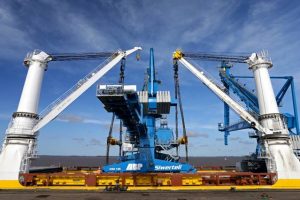
Innovation: Continuous Ship Unloaders are delivered to the Port of Immingham
Associated British Ports (ABP) has been named Business of the Year at the Rail Freight Group awards last night.
Judges hailed ABP’s record of innovation in the freight sector, particularly the Immingham Renewable Fuels Terminal (IRFT) on the Humber, the UK’s most technically advanced biomass handling facility.
The £130m terminal was also runner up in the Technical Development award category.
Tony Berkeley, RFG Chairman, said: “ABP is a well-deserved winner of the business of the year award. Its renewable fuels project at the port of Immingham is helping propel the biomass sector and is important in continuing to develop the future growth of biomass traffic on rail. ABP’s success is typical of many RFG members that are leading the way in innovation in the freight sector. Biomass innovation is particularly important as the coal market continues to see declining volumes.”
ABP Chief Executive James Cooper said: “Ports like Immingham are a vital part of the supply chain for businesses up and down Britain, facilitating trade and helping protect national energy security.
“Rail is key to allowing ports fulfil this role by providing an efficient and environmentally friendly means of moving goods and commodities to and from our ports. Together with our customers, ABP generates around one quarter of the UK’s rail freight.
“Helping to deliver the most efficient and effective rail services connecting our ports is an important part of our commitment to providing the highest standards of customer service and to promoting sustainable transport.”
About ABPABP is the UK’s leading ports operator with 21 ports and other transport related businesses creating a unique national network capable of handling a vast array of cargo.ABP contributes £5.6 billion to the UK economy every year and supports 84, 000 jobs. Our current investment programme promises to deliver an extra £1.75 billion for the economy every year.ABP…
Our five year investment programme is worth £837 million. Our investment is designed to respond to the needs of our customers whose business relies on our ports for access to international and, in some cases, domestic markets. |
