





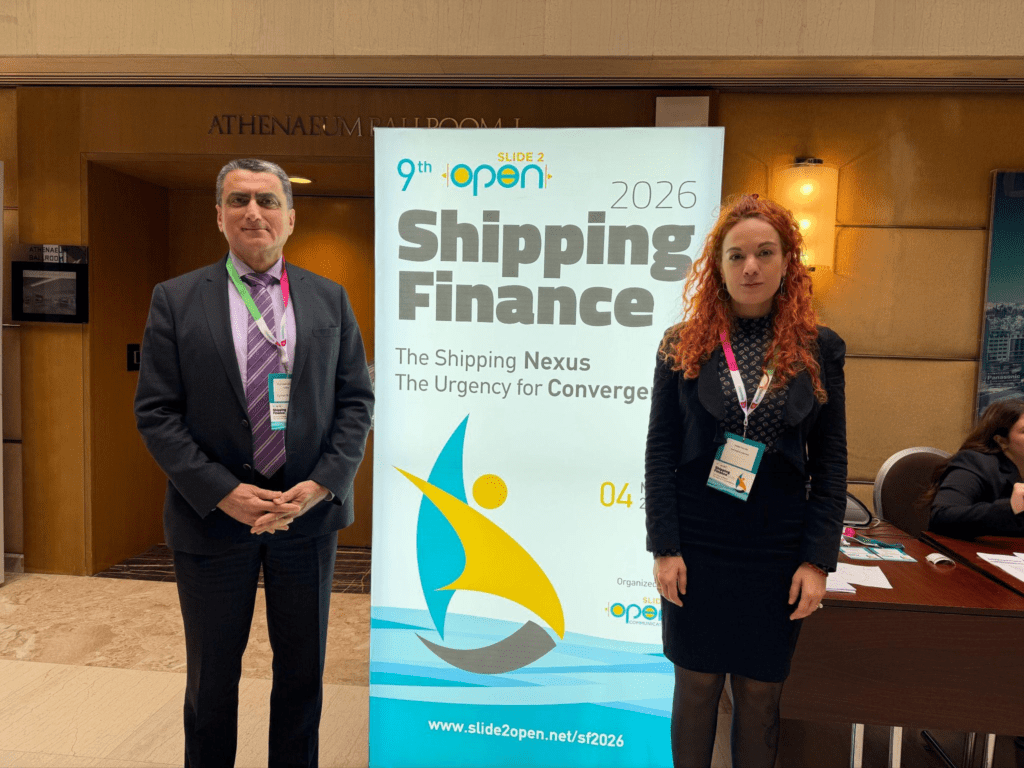
by Emma Collier, Founder and Partner, Strategy & Ventures at Further & Further
Convergence was Despina Travlou’s theme for the ninth Slide2Open Shipping Finance Conference — the urgency for it, specifically — and it was the right word, though not only for the reasons she had in mind when she chose it.
The convergence on everyone’s mind that day was of course the effective closure of the Strait of Hormuz as insurers withdrew war-risk cover and commercial traffic halted, and the evolving situation of the war in Iran triggered by Operation Epic Fury. Unlike the Red Sea, there is no meaningful rerouting from Hormuz at scale; when it stops, consequences do not spread across alternative paths but concentrate, pooling at the very point where so much of the world’s energy trade converges and could, for the moment, go no further, with very few exceptions.
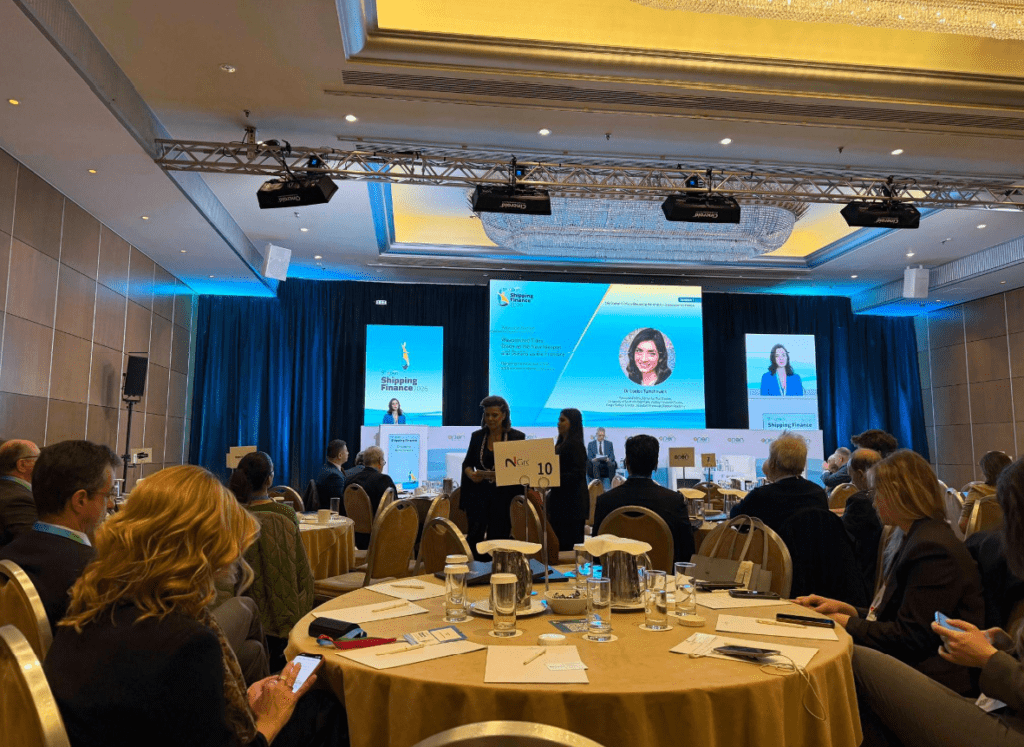
The areas of urgent convergence the conference had originally gathered to address were substantive on their own terms. The collision between stalled global frameworks and accelerating regional mandates. Whether capital, available fuels and operational reality could be brought into meaningful alignment before the investment window closes. The Greek fleet’s particular predicament: owners asked to commit to a decarbonised future while the fuel, the regulation and the financing conditions remain unresolved. More than nine hundred participants filled the room, with an online audience spanning a hundred and thirty-three countries. Antonis Faraklas, Fedon Tomazos, Haralambos Fafalios, George Xiradakis, George Alexandratos, Leonidas Eugenides, Theo Kourmpelis and Louise Tumchewics among others spoke candidly, often arguing opposing viewpoints.
Of all the convergences on the table that day, the one that stayed with me most was Athanasios Platias’s argument that we are in a second Cold War, which felt less like a provocation than a long-overdue acknowledgement of what the room already knew but had been reluctant to say plainly and which, at its core, was a story about convergence too, though of an inverted kind. The world, he suggested, is structurally bipolar: only two actors possess comprehensive economic and military power, the United States and China, with everyone else, India and Japan included, trailing at around four percent of global GDP. We tell ourselves a more multipolar story because it is more comfortable, though the underlying arithmetic points stubbornly toward bipolarity.
What distinguished this Cold War from its predecessor was the thirty-year interlude between them, during which globalisation wove the two rivals into such profound economic interdependence that conflict between them came to seem almost self-defeating. That convergence, the great project of the unipolar era, is now the primary battlefield.
Ukraine, Greenland, Panama, Venezuela: Platias connected them not as a catalogue of crises but as a single coherent project — his interpretation of the United States methodically dismantling Chinese leverage point by point before the gap narrows further. And unlike its predecessor, which played out across Central European land borders, this Cold War has gone to sea: the Black Sea, the Baltic, the Indian Ocean, the South China Sea, the Arctic — the chokepoints where the world’s trade physically converges now serving as the front lines of great-power competition.
Eighty percent of world trade moves by sea. It is, in the end, always about the ships.
Travlou settled on her theme months before the latest and most urgent convergence. Whatever theme she reaches for next year, I suspect the world will once again find a way to mean it more than she intended.
*Link to this year’s complete agenda: https://www.slide2open.net/en/shipping-finance-2026/agenda/
