





by Robin Russel, CEO SATVA TRUST, Co-founder of Further & Further, for allaboutshipping.co.uk
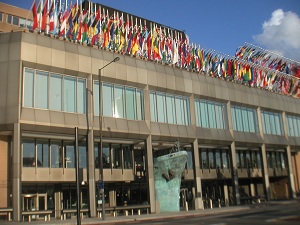
The International Maritime Organisation (IMO) convened an extraordinary session of its Council over Wednesday and Thursday this week to discuss the situation in the Middle East. Of particular focus was the plight of seafarers trapped in and around the Persian Gulf, the Strait of Hormuz and the Gulf of Oman, as well as broader issues of freedom of navigation in the current conflict.
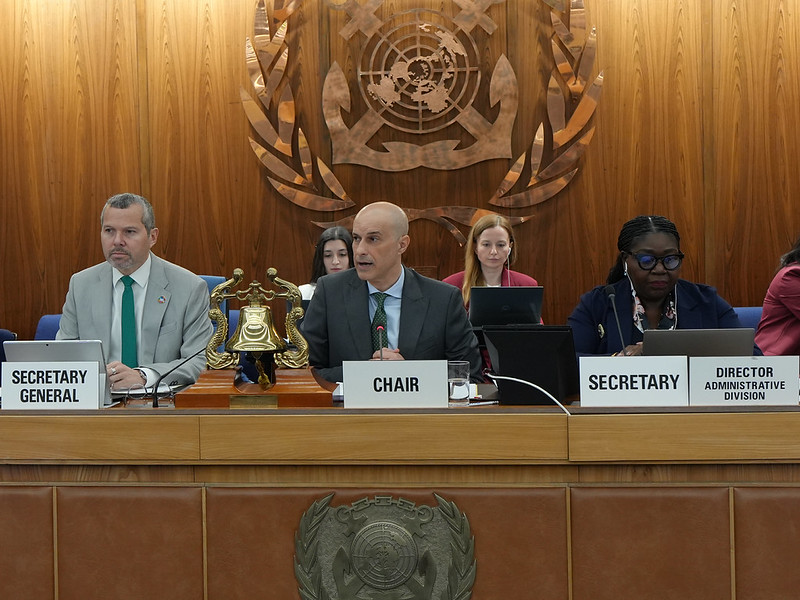
Fully one whole day was spent with one delegation after another reaffirming the reality and seriousness of the humanitarian situation unfolding for the 20,000 seafarers concerned. Increasingly running short of food and water, as well as fuel and medical supplies, crew rotations at a standstill and the constant threat of sporadic targeted hostile fire hanging over them, these seafarers are enduring truly terrible conditions entirely divorced from the true nature of their jobs and the choices they, ship owners, operators, charterers and flag states have taken. Listening to the delegations, it has been heartening that the human element of the situation has received such central and extended focus from such a wide cross section of the world’s nations and industry bodies. Together with this core message were sincere expressions of condolences to the families of the 7 seafarers who have already lost their lives as a result of the hostilities.
Alongside the 40 delegates that are members of the IMO Council and approximately the same number again present as observers, the following trade bodies were present and spoke on these themes: International Chamber of Shipping; Federation of National Associations of Ship Brokers and Agents; International Association of Ports and Harbors; International Bunker Industry Association; International Harbour Masters Association; International Maritime Pilots’ Association; International Port Community Systems Association; World Association for Waterborne Transport Infrastructure; International Transport Workers’ Federation; International Maritime Rescue Federation; International Labour Organization; and International Association of Independent Tanker Owners. It was clearly an opportunity for the trade bodies and charities to join the common effort and they grasped if fully.
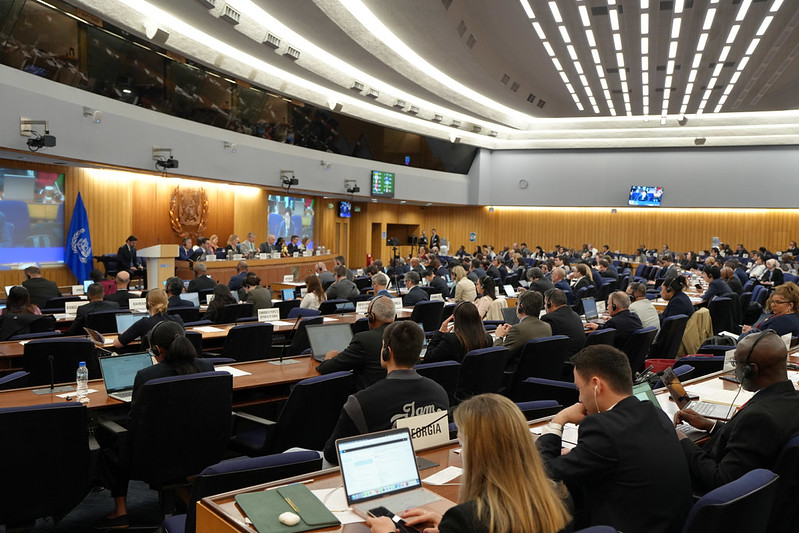
As the first day wore on I became increasingly amazed, and more than a bit frustrated, that with a small number of exceptions the delegations were each taking their turn to say essentially the same thing as everyone else. Then in dawned on me that this was precisely the point. A large proportion of the world’s governments found it a good use of time, focus and money for senior members of their civil service to spend a whole day being there, at the IMO, repeating the same message to the world. This was an amplification: a coming together to be heard and to be on record saying. Because if they hadn’t done that, it would not have been said – and the world needs to hear it.
Together with the seafarers, the central importance of freedom of navigation to the world’s economy in goods and energy as well as humanitarian aid was raised at length, and concern was also voiced about risks to the marine environment and biodiversity.
On one level there was unanimity on all these points, as well as what should be done about it: de-escalation of tensions, the establishment of a framework to create a safe corridor through the Strait of Hormuz through voluntary measures, the provision of supplies and support to seafarers to promote their welfare.
Where some views differed, of course, was on the immediate cause of the situation – which the aggressors, which the victims, which the legal and which the illegal. This predictable split marks the challenge for anyone trying to resolve the topics covered during this session in isolation to the wider conflict.
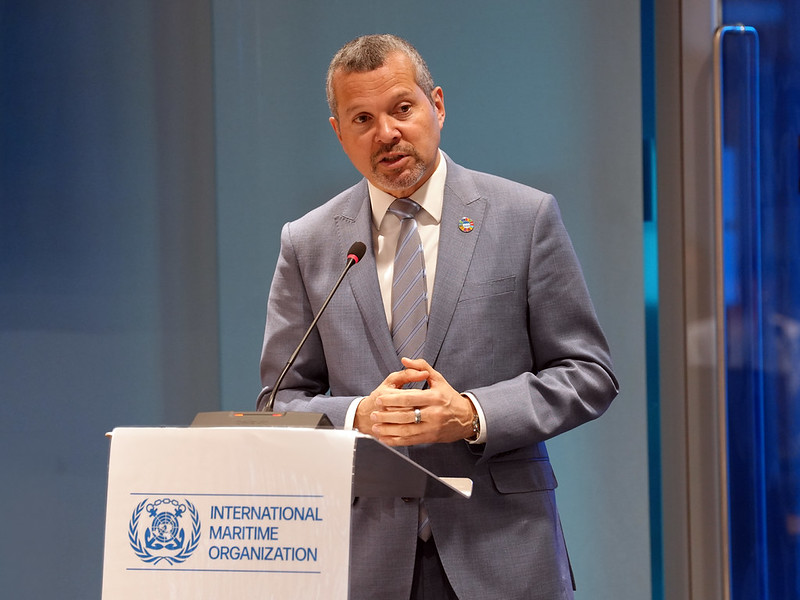
It is clearly not in the remit of a technical UN body like the IMO to encroach on matters more appropriate for the UN Security Council and other bodies – a point made by several delegates and reaffirmed by Mr Arsenio Dominguez, IMO Secretary-General, during his closing address and in the subsequent press briefing.
The core message was that there can be no rationale supporting the deliberate targeting of civilian commercial shipping. This rang loud and clear: it never is and cannot be an act of self-defence.
The IMO has no enforcement powers it might bring to bear, but with the decisions of the Council at the end of this extraordinary session it now has a formal mandate to engage with all stakeholders to actively champion the welfare of seafarers and freedom of navigation in this narrow theatre. Through diplomacy, a commitment to multilateralism and the continuing work of its technical committees it can work to positively influence outcomes, up to and including the aims outlined by its members over the last two days.
Addressing the delegates, Mr Domingez said: “These decisions must not remain within this room. I urge you to take them back to your capitals, elevate them to the highest levels of your governments, and engage with the relevant UN agencies. Everyone needs to be aware of the risks to innocent seafarers, how imperative the freedom of navigation is for the benefit of all in the world, especially for global food and energy security.”
That may seem relatively dull and potentially ineffectual to some ears, but it is real and the IMO has a track record of influencing wider situations. The alternatives to fully engaging in this are a great deal worse.
