


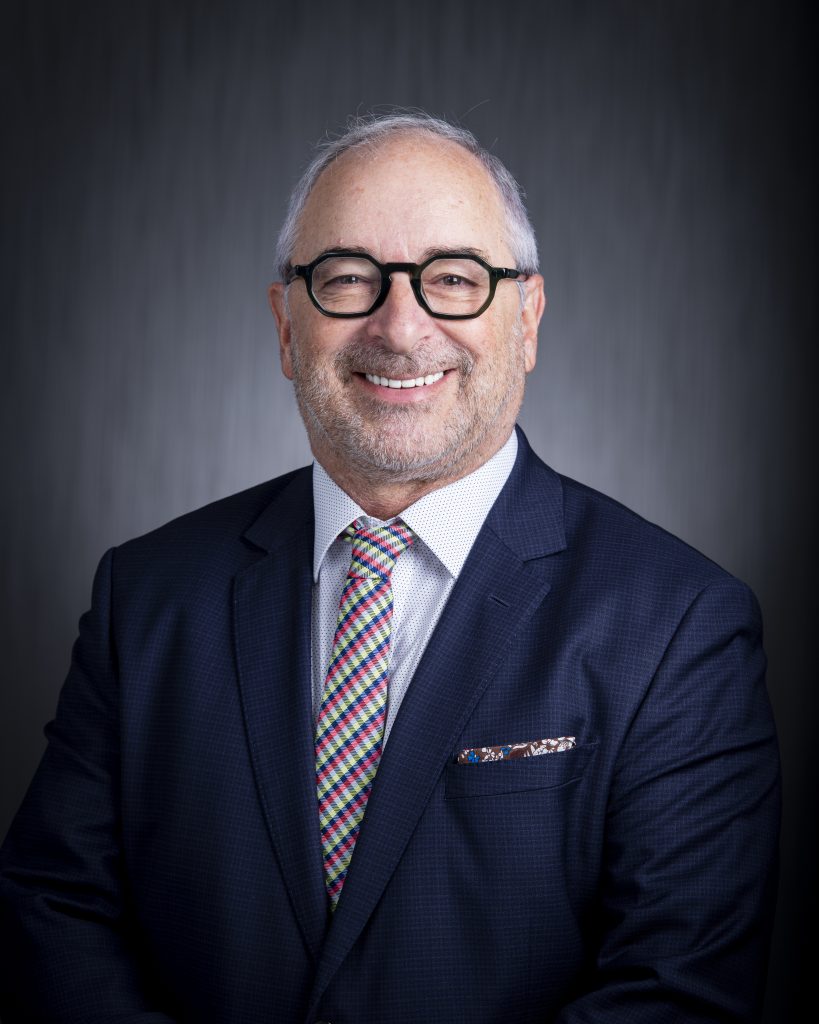
A timely keynote speech by Vassilios Kroustallis, ABS’ Chief Commercial Officer, at Singapore Maritime week at TradeWinds Shipowners Forum:
Ladies and gentlemen, thank you for your time today.
Let me start with a simple observation: the way capital is being deployed in shipping tells a different story from the one our industry often tells about itself.
If you look carefully at what kinds of ships are being ordered, how they are designed, and crucially what is not being ordered, you see a different picture emerging.
Our language is still cyclical. We talk about tightness and oversupply. We ask whether rates will hold and when markets will normalise.
But recent investment behaviour tells a different story.
It suggests shipping has accepted a fundamental change. And adapted, pragmatically.
I want to look at what that behaviour tells us about the direction of our industry. And why it deserves to be understood as strategic adaptation.
Look at ordering activity, which remained strong through 2025 after the highs of 2024.
Container ship contracting alone reached roughly 600 vessels in 2025, one of the highest years on record. Across all segments, investment did not retreat.
But when you look at what was ordered in recent years, a clear pattern emerges. By the end of 2025, around half of all newbuild tonnage on order was alternative‑fuel capable, and the global alternative‑fuel orderbook had grown to just under 2,000 vessels.
These are not speculative bets. They are, almost without exception, risk‑managed assets.
Owners have largely favored dual-fuel over single-fuel, fuel-ready over fuel-locked, and layered efficiency over dependence on any one technology pathway. In other words, they are paying for optionality.
And in shipping, optionality is not just a financial choice. It is also an operational and safety choice. It reduces the risk of locking fleets into technologies that may outpace fuel availability, infrastructure readiness, crew competence, or the maturity of global standards.
At the same time, recent ordering has shown just how sensitive capital has become to regulatory timing. Over the past year, contracting has moved back toward conventional HFO‑based designs, not because the industry is changing direction, but because it is becoming more decisive about when fuel choices should be locked in.
As of April 2026, around 44 percent of the global orderbook is alternative‑fuel capable, down from 52 percent a year earlier, with the pullback most evident in container ordering. Many of these HFO vessels are being ordered with the expectation that carbon intensity will be managed through efficiency and biofuels, even as supply constraints remain real.
The broader signal is unambiguous. Capital is separating long‑term emissions reduction from near‑term asset commitment, preserving flexibility until policy, fuel supply and commercial incentives become clearer. In an environment where certainty keeps shifting, that is not hesitation. It is disciplined risk allocation.
Investment is no longer about peak performance in perfect conditions. Boards are now asking a harder question: which assets remain viable, resilient, and safe across various possible future regulatory, financial, and trade conditions?
And that shift explains much of what we see in fuel choice, technology adoption and vessel design.
Fuel choice is the clearest expression of it. Most alternative-fuel-capable vessels on order are LNG-ready, with methanol emerging as a secondary pathway and other fuels retaining option value.
Why? Capital is being allocated to configurations that limit downside from regulatory and fuel uncertainty, while preserving the ability to adapt as assumptions change. LNG offers infrastructure now. Methanol offers promise, but limited reach today. Ammonia may play an important role in future, but significant safety, supply, and operational questions remain unresolved.
Geopolitical uncertainty, regulatory timelines, infrastructure build‑out and fuel availability do not justify narrow bets at fleet scale.
The rational response is to keep multiple pathways open. This is why we see the renewed emphasis on HFO.
While fuel debates dominate headlines, possibly the most consequential capital deployment of the last two years has gone into energy efficiency.
The introduction of the Carbon Intensity Indicator made something very clear very quickly. Ratings now affect commercial outcomes. In response, owners did not wait for perfect fuel clarity. They acted. Hull and propeller optimisation became standard. Waste heat recovery gained scale on large vessels. Air lubrication systems were designed into newbuilds. Digital performance platforms were deployed fleet‑wide.
These investments share three important characteristics. They deliver results immediately. They work regardless of fuel. And they improve compliance under almost every scenario. They also reduce operational stress on vessels, systems and crews, directly supporting safer operations alongside better performance.
Efficiency is no longer a secondary lever. It is the industry’s north star in an uncertain world.
The same logic appears in vessel size decisions. By the end of 2025, the global container ship orderbook stood at roughly 8 to 8.5 million TEU. A historic figure. But again, composition tells the real story. Ordering growth has concentrated in the 8,000 to 14,000 TEU range, alongside strong growth in feeder and sub‑Panamax segments.
Ultra‑large container vessel ordering has remained comparatively measured. This reflects a subtle but important recalibration. Very large ships maximise efficiency in stable environments. Medium‑sized ships maximise flexibility when conditions fragment.
Neither is inherently better. But the industry is no longer assuming stability as the default. It is pricing flexibility explicitly.
In the middle of all this, we find ourselves operating in what can fairly be described as a geopolitical enigma. Not because disruption exists. Shipping has always operated with tension in the background. But because the persistence and interaction of multiple stresses have become harder to predict.
Route reliability has deteriorated. Capacity transiting Suez is materially lower, while arrivals around the Cape of Good Hope surged by nearly 90 percent.
That is not marginal adjustment. It is structural rerouting. And this has mechanical consequences. UNCTAD estimates global ton‑mile demand rose around 3 percent, with container ship demand up roughly 12 percent, purely due to rerouting.
This helps explain why markets can appear tight even when orderbooks look heavy.
What differentiates this period from previous disruptions is carbon pricing. Because distance now has a financial signature.
For a 20,000 to 24,000 TEU vessel on the Far East–Europe trade, rerouting alone can add around $400,000 per voyage in EU ETS cost.
That figure concentrates minds. Routes are no longer neutral operational choices. They carry regulatory and financial exposure.
The rules of the system have changed. And the investment behaviour we see, especially around efficiency and optionality, reflects that awareness.
At the same time, regulatory frameworks have reduced operational slack.
EU ETS coverage is expanding. CII ratings tighten year by year. The system has become less forgiving even as conditions have become more volatile.
The industry’s response has been adaptation.
One final point. Rerouting absorbs capacity. Efficiency initiatives can reduce speed. Regulation penalises distance.
History reminds us to be careful. Past disruptions produced short‑term scarcity signals that led to over‑ordering, followed by prolonged overcapacity. The challenge for the industry now is to distinguish between genuine demand and disruption‑induced absorption as a strategic necessity.
It was the Greek philosopher Epictetus who said: “We cannot control events that happen around us, but we can control our reactions to them.”
Shipping cannot control geopolitics, fragmenting regulation or the pace of fuel availability. What it can control is how intelligently it allocates capital in response. The evidence is already clear. The industry is no longer betting on a fuel. It is investing in optionality, efficiency and resilience so that assets remain compliant, competitive and safe across a wide range of outcomes.
That is not a bet on the future. It is preparation for it. And in the current environment, that may well be the safest strategy available.
Thank you.