





By Elena Sendona
Dr. Petros Efthimiou swapped the Manhattan skyline for the Aegean light — and in doing so, became the face of a new, borderless medicine.
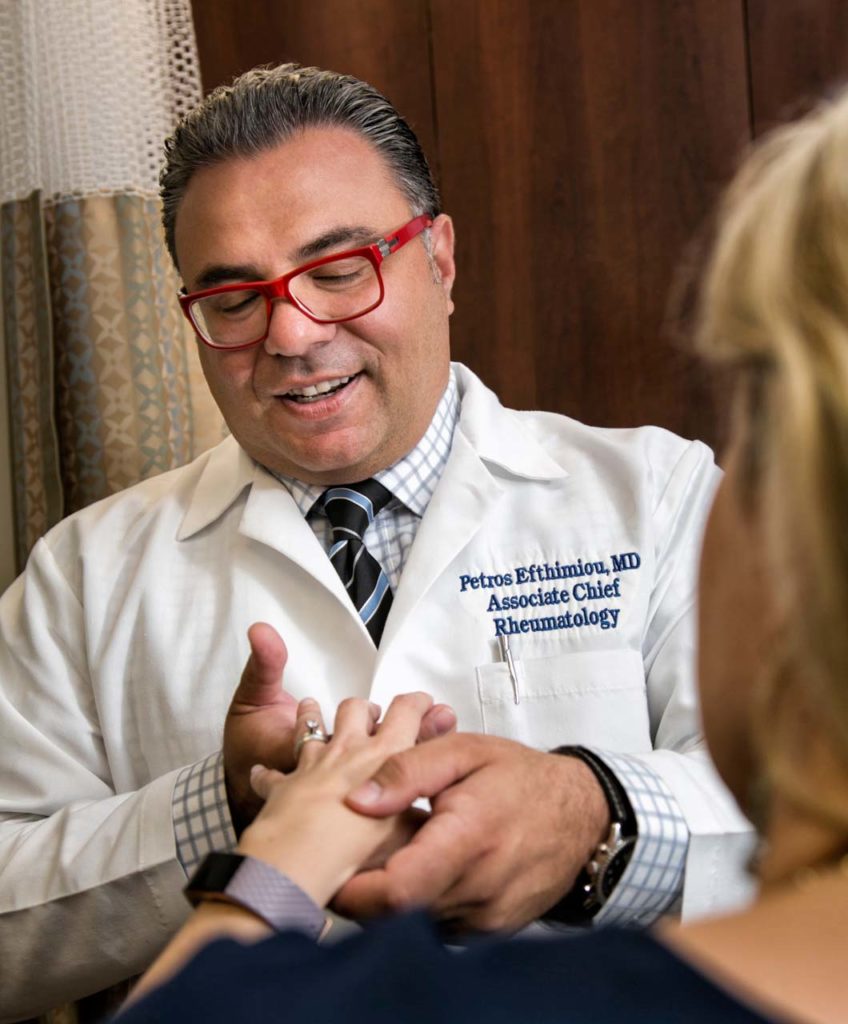
He treats patients in New York from his home in Athens. He flies between continents the way most doctors commute between offices. He shapes global medical knowledge through research, textbooks and international conferences — and then comes home to the Mediterranean light that, as it turns out, is also one of the best things a doctor can prescribe. Dr. Petros Efthimiou has built something that matters: a truly borderless practice, one that moves as fluidly as the globalized world his patients live in. His story is also Greece’s story — of a country that lost its talent to a financial crisis and is quietly, powerfully, winning some of it back. We sat down with one of rheumatology’s most decorated minds to talk about the future of medicine, the science of living well, and why coming home turned out to be his most radical professional decision yet.
ES: You built an extraordinary career in New York — repeatedly named a Top Doctor, a Super Doctor, one of the best rheumatologists in the city. And then you moved back to Greece. What happened? What made you say: it’s time to go home?
PE: Honestly, it didn’t feel like leaving so much as completing a circle. New York gave me everything a physician could want — extraordinary patients, brilliant colleagues, the recognition you mentioned. But somewhere along the way I realized that the career I’d built had quietly become portable. I could do the academic work, the research, the writing, and even much of the clinical care from anywhere. So the real question stopped being “can I afford to leave New York” and became “why am I raising my children somewhere other than the place whose values I most want them to inherit?”
I wanted my kids to grow up with the Greek ideals I grew up with — the sense of family as the center of life, the long table full of people, the idea that time spent together is not time stolen from work but the whole point of the work. Coming home wasn’t a retreat. It was the most deliberate decision of my professional life: to prove that you can practice medicine at the highest international level without sacrificing the things that actually make life worth living.
ES: Greece lost so many talented people during its financial crisis — the “brain drain” became a defining wound of that era. Now some are coming back, and you’re among them — part of what people are calling a “brain gain.” Does your return feel like a homecoming, a statement, or something else entirely?
PE: I’m wary of turning my own choice into a slogan, because the brain drain was a genuine tragedy — a generation of talented people who left not because they wanted adventure but because the country couldn’t hold them. That was a wound, and we shouldn’t romanticize it.
But I do think something real is shifting. For me personally, this is a homecoming first — I came back for my family, for my parents, for the light and the food and the rhythm of life here. If my return also says something larger, it’s this: you no longer must choose between Greece and a global career. The technology and the structures now exist to do both. I didn’t have to abandon my American patients or my academic life to come home. That’s the part that feels new, and that’s the part I’d want a younger Greek physician abroad to notice.
ES: You still have an active practice in the US, with active licenses in New York, New Jersey and Florida — but you’re spending considerable time in Greece. How does that actually work, day to day? Walk us through what your working life looks like now.
PE: It works because I never actually closed any doors — I stayed licensed and in active practice in both countries. I hold active medical licenses in the United States and in Greece, and I keep my practice running in the US. The time difference, which everyone assumes is the obstacle, it actually is an ally. When my American patients are starting their day, I’ve already had my morning here. My afternoons and evenings in Greece line up neatly with the American clinical day.
Day to day it looks like this: mornings are often for the Greek side of the practice, for research, for writing and editing. Then as the Atlantic wakes up, I shift to telemedicine consultations, reviewing labs and imaging, coordinating with colleagues across three states. Several times a year I’m physically back in the US for the hands-on work that needs to be done in person. Therefore, it is not that I do everything remotely — it’s that I’ve designed the practice around the parts that genuinely require my hands versus the parts that require my judgment. Judgment travels at the speed of light. Hands still need a plane ticket.
ES: More and more people today live between cities — they work from Athens for three months, then London, then New York. Medicine has always been one of the last professions to catch up with that reality. Do you think telemedicine has finally changed that for good?
PE: I think the pandemic forced a decade of change into about eighteen months, and there’s no going back. But I’d push gently against the idea that telemedicine “replaced” the office. What it really did was let continuity of care follow the patient.
Think about the people I treat — they have a rheumatic autoimmune or autoinflammatory condition, something chronic and complicated, and they also have lives that span continents. A patient might be studying in London, then spending the summer with family in Athens, then working in New York. With a disease that needs constant fine-tuning, that mobility used to mean fragmented care — a different doctor in every city, none of whom had the full picture. Technology lets me be the constant. The patient moves; the care doesn’t fracture. That’s the real revolution. Not convenience — continuity.
It’s also why it’s not uncommon for me to care for several generations of the same family. The mother and the grandmother might be my patients here in Greece, and then the granddaughter leaves for postgraduate studies at NYU. Instead of being dropped into a foreign and frankly unforgiving medical system on her own, she keeps the same physician who already knows her family’s history. She enjoys genuine continuity of care, and just as importantly, she has someone who understands the American system from the inside to help her navigate it — a system that’s full of obstacles even for the people who grew up in it. For a young person far from home with a complex condition, that’s an enormous source of security, and for the family back in Athens, it’s peace of mind.
ES: Alongside your traditional practice, you also offer patients a more personal, subscription-based concierge approach — one that allows for a more holistic and preventative style of care, outside the constraints of the insurance system. How does that model work, and what does it offer patients that the conventional path often can’t?
PE: The conventional, insurance-driven model is built around the acute visit: something is wrong, you come in, we code it, we bill it, you leave. It’s reactive by design. For complex autoimmune disease, that’s exactly the wrong tempo, because the most important medicine often happens in the quiet stretches between flares.
The concierge, subscription model frees us from that tempo. It means a patient can reach me when something feels off — not three weeks later at the next available slot, but in real time. It means I have the bandwidth to look at the whole person: sleep, stress, diet, movement, the early signals that a flare is brewing before it becomes a crisis. It’s preventative and holistic in the literal sense. What it offers that the insurance path often can’t is simply attention — sustained, proactive attention from someone who knows your whole history and is reachable. For someone managing a lifelong condition, that’s not a luxury. It’s the difference between managing the disease and being managed by it.
What’s interesting is how differently this translates in my two worlds. In New York, concierge medicine is a model that’s been steadily gaining traction — a deliberate, structured response to a system that had grown so industrialized that the relationship between doctor and patient was being squeezed out of it. People are essentially paying to buy back the access and attention that medicine used to take for granted. Being a Diplomate of two Board Certifications in the US (both Internal Medicine and Rheumatology) helps to address my patients’ needs. In Greece, the personal connection between a patient and their doctor was never really lost in the same way; it’s woven into the culture, the expectation that your physician knows you as a person. So, in a sense, what I’m doing brings together the best of both — the rigor and structure of the American concierge model, built on top of the warmth and continuity that Greek medicine never abandoned.
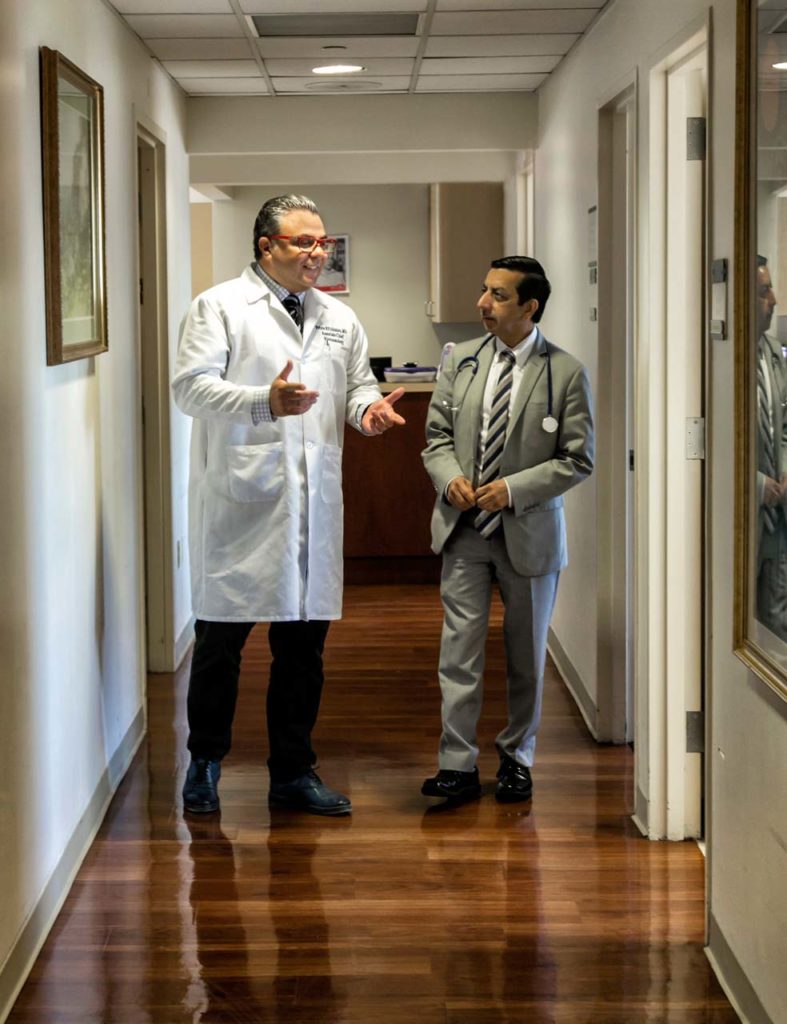
ES: Most people have never been to a rheumatologist and aren’t quite sure what one does. Can you explain it simply — what is rheumatology, who needs it, and why is it one of the most complex and fascinating areas of medicine?
PE: Rheumatology is the medicine of the immune system turned inward, and of the connective tissue that holds the body together. When your immune system — which exists to defend you — gets confused and starts attacking your own joints, skin, blood vessels, kidneys, even your brain, that’s our territory. Rheumatoid arthritis, lupus, vasculitis, the autoinflammatory syndromes: these are diseases where the body misreads itself.
What makes it the most fascinating field in medicine, to me, is that it’s the great integrator. A rheumatologist has to think like an immunologist, a detective, and an internist all at once, because these diseases touch every organ. There’s rarely a single test that hands you the answer. You assemble a picture from clues — a rash here, a lab value there, a pattern of pain — and you reason your way to a diagnosis. It’s the closest thing in modern medicine to genuine clinical detective work, and it rewards a lifetime of curiosity.
And precisely because these diseases touch every organ, no one solves them alone — the complex cases demand a whole network of expertise. That’s one of the real advantages of how I practice. I can pick up the phone to the world’s top experts in the major academic medical centers in New York City, where I’ve held several academic appointments over the years, and in the same week sit down with the leading clinicians at the largest private medical center in Greece. So a patient with a difficult, multi-organ case effectively gets the benefit of both worlds — the depth of American academic subspecialty medicine and the excellence of Greece’s premier clinical institution, brought to bear on a single problem. For the most complicated diseases in medicine, that kind of collaboration across two of the best systems in the world isn’t a luxury. It’s often what makes the difference.
ES: Stress, bad sleep, sitting at a desk all day, eating on the run — this is just modern life for millions of people. But you see the medical consequences of that lifestyle in your patients every day. What is chronic stress and an unhealthy routine actually doing to our immune systems?
PE: Chronic stress is not just a feeling — it’s a physiological state, and a prolonged one is genuinely corrosive. When stress becomes constant, your body stays bathed in cortisol and inflammatory signals that were only ever meant to fire briefly, in an emergency. The immune system loses its sense of proportion. It becomes dysregulated — overreacting where it shouldn’t, underperforming where it should.
For most people that shows up as more infections, slower healing, worse sleep, which feeds the cycle. But in people with a genetic predisposition, that chronic low-grade inflammation can help tip a quiet susceptibility into active autoimmune disease. I see patients whose flares track almost perfectly with the worst periods of their lives — a divorce, a brutal work stretch, a bereavement. The body keeps the score. Poor sleep, a sedentary day, eating on the run — none of these is dramatic on its own, but stacked together, year after year, they’re a slow tax on the immune system. And the immune system always collects.
ES: Longevity is everywhere right now — podcasts, books, wellness retreats, biohacking. As someone who has spent decades studying how inflammation works in the body, what do you make of this movement? Are people asking the right questions, or are they missing the point?
PE: I’m genuinely glad people are paying attention to inflammation and longevity, because the underlying science is real and it’s where I’ve spent my career. Chronic inflammation does sit upstream of an enormous amount of age-related disease. So the instinct is correct.
Where the movement sometimes loses the plot is in the search for a single hack — the one supplement, the one device, the one protocol. Biology doesn’t work that way. The unglamorous truth is that the levers with the strongest evidence are the oldest ones: sleep, movement, what you eat, your relationships, your sense of meaning. The interesting question isn’t “what can I buy?” It’s “what can I build into my life and sustain for forty years?” People are asking the right general question — how do I stay healthy longer — but often shopping in the wrong aisle for the answer.
That’s actually a problem I’m trying to solve directly. There’s a real gap between the longevity conversation and rigorous, evidence-based medicine, and it’s especially wide for patients with autoimmune and autoinflammatory disease — the group whose biology is most entangled with chronic inflammation in the first place. So I’m working to build the right ecosystem for them: collaborating with a state-of-the-art facility on the Athenian Riviera to develop evidence-based clinical longevity protocols tailored to people living with these conditions. The idea is to take the longevity field out of the realm of trends and put it on a proper clinical footing — measuring what actually matters, intervening on what the evidence supports, and doing it in a setting built for that kind of careful, sustained, preventative care. For my patients, that means longevity stops being a thing other people do and becomes part of how their disease is managed.
ES: Give us an optimistic picture: how has the treatment of autoimmune diseases changed during your career, and what does the pipeline of new therapies look like? What would you tell a patient who has just been diagnosed with any of them about the future that awaits them?
PE: This is the part of my career that fills me with real optimism. When I started, for many autoimmune diseases we essentially had blunt instruments — steroids and broad immunosuppression, which worked but at a real cost. The patient I diagnosed twenty-five years ago and the patient I diagnose today are looking at completely different futures.
The biologic and targeted-therapy revolution changed everything. We can now interrupt the specific molecular pathways that drive a given disease, rather than carpet-bombing the whole immune system. Many patients reach genuine remission. The pipeline is even more exciting — more precise targeted therapies, and a move toward truly personalized treatment, matching the drug to the individual’s biology rather than the diagnosis on the chart.
So to a patient just diagnosed, I say this honestly: I know it’s frightening to hear, and I won’t minimize that. But you have been diagnosed in the best era in the entire history of medicine to have this disease. The tools we have now are extraordinary, and the ones arriving are better still. For the overwhelming majority of people, this is a condition to be managed and lived well alongside — not a sentence.
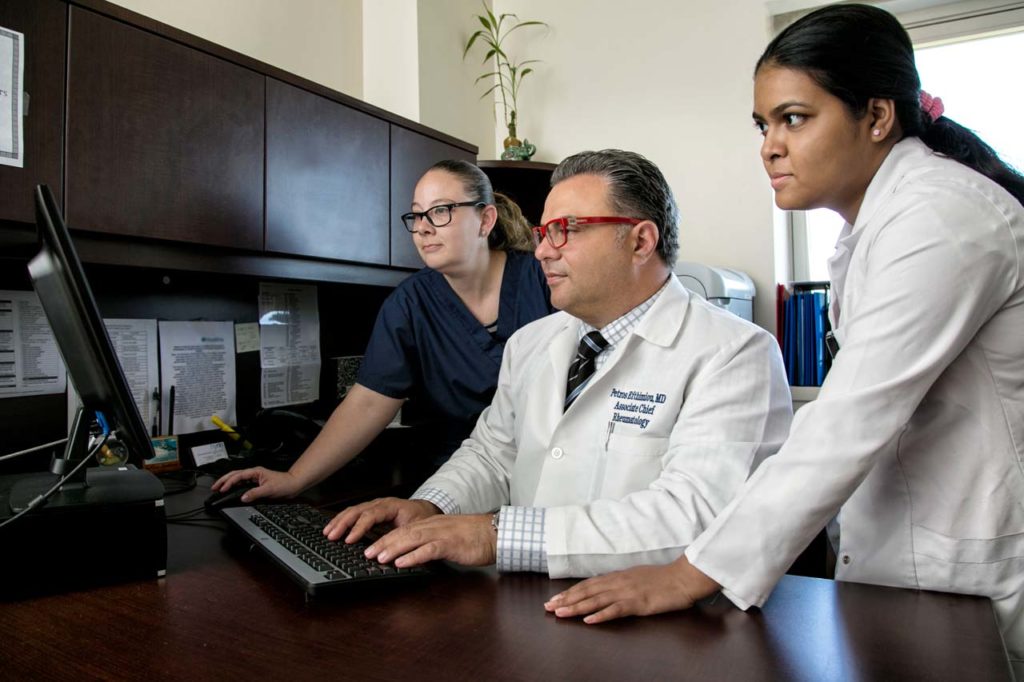
ES: You’ve written or edited major medical textbooks published by Springer-Nature, one of which was named among the best rheumatology books of all time. You publish research, speak at international conferences, and still see patients. How do you hold all of that together — and why does it matter to you to do all of it?
PE: I hold it together because, to me, they’re not actually separate jobs — they’re one vocation seen from different angles. The textbooks and the research and the conferences for Springer-Nature aren’t a hobby alongside the clinic; they’re how I make sure that what I do in the clinic reflects the best of what the whole field knows. And seeing patients keeps the academic work honest. The day you stop treating real people is the day your writing starts to drift away from reality.
Why does it matter to me to do all of it? Because medicine advances on two legs — knowledge and care — and I never wanted to amputate one. Editing a textbook lets me influence how thousands of physicians I’ll never meet think about a disease. Treating a single patient lets me influence one life completely. I want both.
ES: The American College of Rheumatology publicly recognized you for inspiring the next generation of doctors to enter the field. You’ve mentored residents and moderated major conferences. What is it about passing knowledge on that feels so important to you?
PE: Being recognized by the American College of Rheumatology for that meant more to me than almost any clinical honor, and I’ve thought about why. I think it’s because knowledge that dies with you is, in a sense, wasted. Everything I know was handed to me — by mentors, by patients, by colleagues who took the time. I’m just a temporary custodian of it.
When I sit with a senior medical student, a resident, a rheumatology fellow, or a junior faculty member and watch the moment a complex case suddenly makes sense to them, I’m watching the field continue past my own lifespan. That’s a kind of immortality that’s available to anyone willing to teach and this is why I keep my Academic Appointment at a major US Medical School. Being the Co-Chair of the Abstract Selection Committee for the largest Rheumatology Meeting in the World, moderating a major session in the upcoming US Rheumatology conference, mentoring someone through their first difficult diagnosis — it’s the same impulse. You’re not giving anything away by passing knowledge on. You’re multiplying it.
ES: You split your time between Athens and New York. When you are in Greece, you eat Greek food, you’re surrounded by the Mediterranean lifestyle that scientists keep pointing to as one of the healthiest in the world. Does living it change how you think about it — and how you talk about it with your patients?
PE: Completely. There’s a difference between knowing something as a citation and knowing it in your own body. I spent years telling patients the Mediterranean pattern was protective, pointing to the studies. Now, for a good part of the year, I get to live inside the study rather than just cite it.
And what living it teaches you is that it was never really about a list of foods. It’s a whole way of being — eating slowly, eating with other people, food that’s in season and close to its source, the long lunch that’s as much about the company as the meal, the walking, the sun, the lower background hum of stress. The science keeps confirming what this culture worked out over millennia. The contrast is actually part of what makes it so clear to me: I spend time in New York too, in a faster, more pressured rhythm, and then I come back to Greece and feel the difference in my own body. So when I talk to patients now, I talk about it less as a diet and more as a life. “Eat more olive oil” is a tip. “Build a life with these rhythms in it” is medicine. I can say that with more authority now because I’m not prescribing it purely from the outside — I’m describing something I get to live.
ES: Give us the practical version: if someone wants to protect their immune system, reduce inflammation, and genuinely age well — what are the most important things they can do, starting tomorrow?
PE: Let me give you the version you can actually start tomorrow, because I think people are paralyzed by feeling they need to overhaul everything at once.
First, protect your sleep as if it were a prescription, because it is one — that’s when your immune system does its repair and recalibration. Second, move your body every day; it doesn’t have to be punishing, but the sedentary day is genuinely inflammatory, so break it up and walk. Third, shift your plate toward the Mediterranean pattern — more plants, olive oil, fish, less ultra-processed food and sugar — not as a strict diet but as a default. Fourth, take stress as seriously as you take cholesterol, because chronic stress is doing measurable damage; build in real recovery, real connection, real time with people you love. And fifth, don’t do any of it alone and don’t do it perfectly. The Greek insight, if there is one, is that health is social — it lives at the table, in the walk with a friend, in a life that has room in it. Start with one of those tomorrow. Then add the next.
For more information about Dr. Petros Efthimiou and his practice, visit:
