


LONDON, July 7th 2026: Having partnered with the International Chamber of Shipping (ICS) to produce its flagship Maritime Barometer report since its inception, Intent Communications is proud to announce the publication of the latest edition, that provides a snapshot of how C-suite maritime leaders are responding to a rapidly changing and volatile operating landscape.
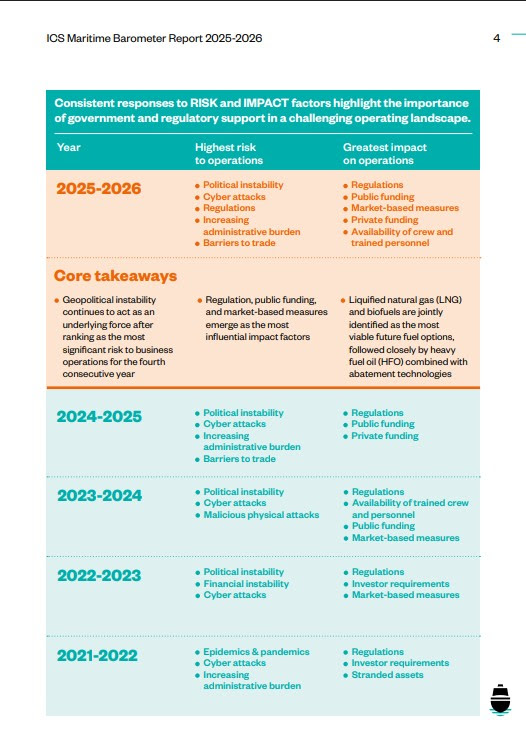
The ICS Maritime Barometer report 2025-2026 report contains insights gained from five years of data and reveals significant shifts in industry sentiment, largely driven by unprecedented global instability. ‘Geopolitics and political instability’, ‘Cyber attacks’ and ‘Regulations’ are the highest risks on the minds of maritime executives, while ‘Regulations’, ‘Public funding’ and ‘Market-based measures’ were the leading impact factors on operations.

Namrata Nadkarni, Founder and CEO of Intent Communications (pictured above), says: “The Maritime Barometer is a data-driven tool for the industry to use to advocate for greater support from relevant stakeholders, including governments, financial institutions, and the general public. The year on year information about the shared touchpoints in the global maritime operating landscape outline gaps that need addressing as well as areas where action has paid off and thus attention can be refocused. Maritime leaders have made it clear that profound uncertainty is the permanent backdrop against which all business decisions must be made, which is a testament to our resilience, but carries a risk of slowing progress towards modernisation in favour of predictable and more established ways of operating.
This is most evident in the insights from the fuels section, as the market appears to be swinging towards known fossil fuels, with LNG and Biofuels taking the lead as viable fuels for the next decade, followed by HFO. All three fuels are what I would largely consider traditional fuels, and a focus on these for the next decade could mean that emerging low-carbon fuels may not be able to increase their market share in a meaningful way to achieve 2050 emission reduction targets.” Industry professionals, policymakers, and the wider public are encouraged to review the full findings to better understand the challenges and priorities of maritime leadership today.
To read the whole report, please visit the ICS website: https://www.ics-shipping.org/resource/ics-maritime-barometer-report-2025-2026/