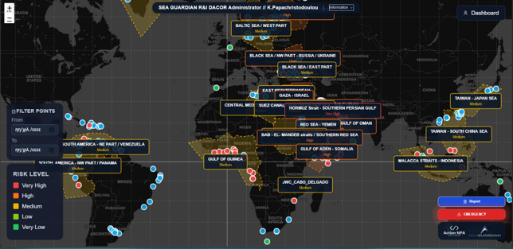
Outlooks regarding security in the Horn of Africa and Red Sea region remain ambivalent. Increasing involvement of Egypt in areas bordering Somalia and the Red Sea brings both the potential for deterrence as well as for escalation, whereas efforts by Somaliland to reach out and new transit links under development, contribute towards additional governance progress in important transit areas. Careful re-entry into the Suez route by Maersk and Hapag-Lloyd shows greater optimism in the use of the Red Sea route.
News finds this week (top three most important)
Escalating US–Iran clashes, including strikes linked to the Jordan attack and Chabahar, sharply increase threat levels to Gulf energy sites, traffic through Hormuz and US military infrastructure in the Middle East. Houthi attacks on Saudi targets and drones on Black Sea oil export infrastructure heighten risks to key tanker routes and further tighten energy markets. Cautious carrier returns to Suez, alongside Arctic technology pressure and competition, are reshaping routing options but creating new geopolitical and technical chokepoints.
Corporate conclusions
Threats to regional security and commerce are growing due to increased US-Iranian rivalry, attacks against key export channels for energy, and great power competition for critical shipping channels and technology.
The observer
According to the observer, the coming week should see high and unstable risks in the vicinity of key Middle Eastern bottlenecks, with no safe routes possible via Hormuz and the Red Sea. The current confrontation among the US, Iran, and their allies makes it quite possible that there will be further missile and drone attacks, or even harassment of shipping by any of these parties. In addition, the Somali piracy potentially used as a political tool for further pressure to global commerce, will complicate matters further, creating another level of danger in the region.
Viewers can find here below the link to the weekly report uploaded to the SEA GUARDIAN official page: