





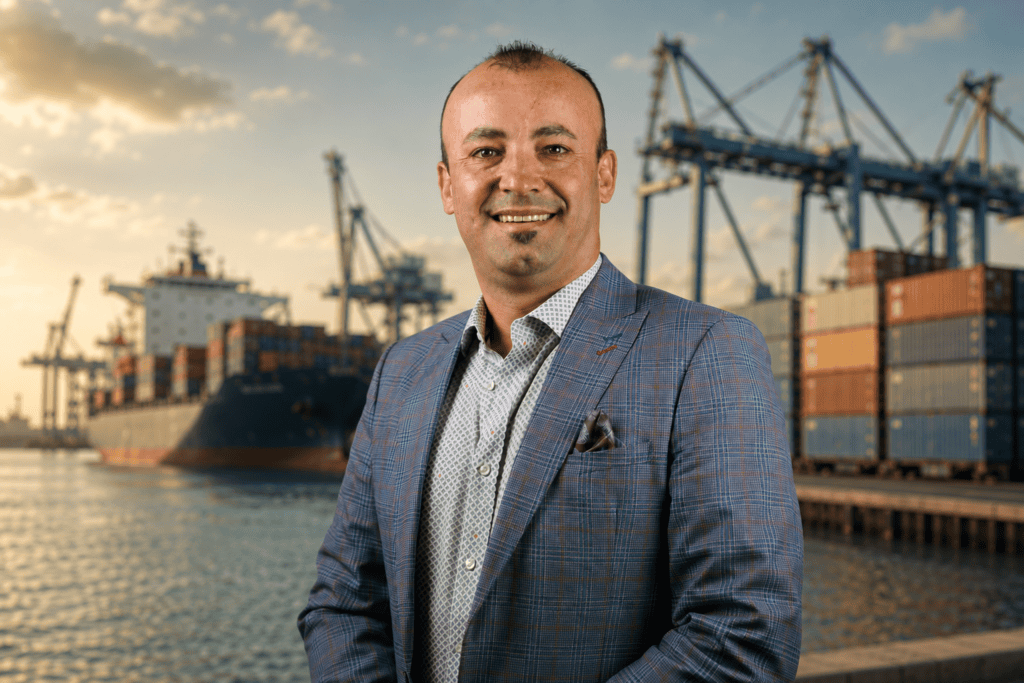
By Koce Gjorgjiev, Eagle Transportation Group
With the most recent developments between Iraq and Turkey, more attention is being brought to alternative oil export routes from the Middle East. At this moment, Iraq depends on its southern export terminals and the Strait of Hormuz, however, the existing Kirkuk-Ceyhan pipeline is an important northern alternative through Turkey to the Mediterranean. Could the existing infrastructure become the foundation for a new energy corridor connecting Middle Eastern oil directly to the Black Sea and Eastern Europe? One possibility would be a stronger north-south pipeline inside Iraq, connecting the oil-producing regions around Basra with Kirkuk and a new pipeline from Kirkuk to Trabzon on Turkey’s Black Sea coast. This is not an existing or planned project, but a concept based on connecting new infrastructure with existing and previously proposed pipelines and ports.
How can we reduce dependence on the Strait of Hormuz
The Strait of Hormuz still remains one of the most important chokepoints in the world. A significant amount of oil produced in Iraq and other Persian Gulf countries must pass through this narrow maritime passage before reaching international markets. In normal conditions, this works efficiently, but vulnerability is more obvious when we see geopolitical tensions in the region. Any serious disruption around Hormuz can affect oil prices, vessel availability, insurance costs and freight rates far beyond the Persian Gulf. Iraq has an important geographical advantage because it already has another option. The Kirkuk-Ceyhan pipeline moves crude north through Turkey and reaches the Mediterranean without going through the Hormuz. Can this northern option eventually be expanded much further as an alternative to the Hormuz and the Iraq’s southern terminals when geopolitical or market conditions make alternatives valuable.
From Basra to Kirkuk and the Black Sea
Most of the Iraqi oil production is concentrated in the southern region of Basra. A future north-south pipeline network could open an opportunity to move part of this production toward the Kirkuk region instead of just toward Persian Gulf terminals. Once crude reaches Trabzon, tankers would only need to complete a relatively short journey across the Black Sea toward European ports such as Constanța or Burgas. Now, would this automatically make transportation cheaper? Not necessarily. The cost of construction, pipeline tariffs, financing, terminal charges, and tanker rates would be the deciding factor in bringing this option to life. However, this route will have the potential, under certain market conditions, to become competitive, especially during times when traditional maritime routes become expensive or risky. Possibly the biggest advantage may not be the cost, but the flexibility and time. This could matter for Eastern Europe, because the European side of this concept may be its strongest argument. Eastern and Central European countries spent the last several years trying to diversify both their sources of energy and the routes used to receive them. Romania, Bulgaria, Serbia, Hungary, Slovakia, Croatia, Austria and the Czech Republic could potentially benefit from another source of crude entering Europe through the Black Sea.
Port of Constanta in the mix Constanta could play a particularly important role among the western Black Sea ports. Its advantage is not simply its geographical location. Constanta port combines maritime infrastructure with oil handling facilities, storage, railways, roads and access to the Danube River. Crude arriving from Trabzon would enter a logistics system that extends far beyond Romania. This could strengthen Constanta’s position not only as a major cargo and container gateway, but also as an energy gateway serving Eastern and Central Europe. This is where an older European infrastructure proposal can become interesting again, the PEOP. The Pan-European Oil Pipeline (PEOP) was proposed more than two decades ago as a pipeline connecting Constanta with Trieste through Romania, Serbia, Croatia and Slovenia. Instead of looking at PEOP as an isolated pipeline, it could become the European section of a much larger corridor, from Basra-Kirkuk-Trabzon-Black Sea-Constanta-PEOP-Trieste to Central Europe. A system like this could connect Middle Eastern production with European markets without requiring it to pass through the Strait of Hormuz.
The Potential of the New Corridor
Initially, Iraq would be the foundation of such a corridor, but its long-term potential could extend beyond one oil producer. A high capacity north-south Iraqi pipeline could potentially create opportunities for future regional connections if political conditions and commercial agreements allowed them. There is a greater longer-term opportunity involving Persian Gulf producers like Kuwait and Saudi Arabia, who are geographically close to southern Iraq. These projects are not current and can not be seen as short-term expectations, but they demonstrate an important characteristic of corridor infrastructure, where it can serve several producers and several markets.
A Kirkuk-Trabzon pipeline would be a major infrastructure project because of Turkey’s mountainous geography, which will increase construction complexity and cost. Also, security, environmental approvals, land acquisition and cross-border coordination need to be addressed. Ultimately, the economics will need to justify the investment.
Alternative to the Straight of Hormuz, not replacing it
Connecting Basra with Kirkuk, Kirkuk with Trabzon, Trabzon with Constanta and potentially Constanta with the long-discussed PEOP could create something much larger than another oil pipeline. It could form a Middle East-Black Sea Energy Corridor, connecting one of the world’s most important oil producing regions with Eastern and Central Europe. Such a corridor would not replace Ceyhan, Iraq’s Persian Gulf terminals or the Strait of Hormuz. Its value would come from providing another option. Iraq and Turkey are reconsidering their energy relationship and Europe has spent years discussing energy diversification. Eastern Europe continues to seek more secure supply options, PEOP has remained on the drawing board and Constanta has become increasingly important to European trade. Probably, these should no longer be viewed as separate discussions. Europe has traditionally considered transport corridors and energy corridors separately and a possible option would be bringing the two together. The future of energy security may depend not only on where oil is produced, but how many reliable ways are available to move it from producer to consumer. In an uncertain geopolitical environment, the ability to choose between several route options could be the greatest strategic value of such a corridor.
