





By James Brewer
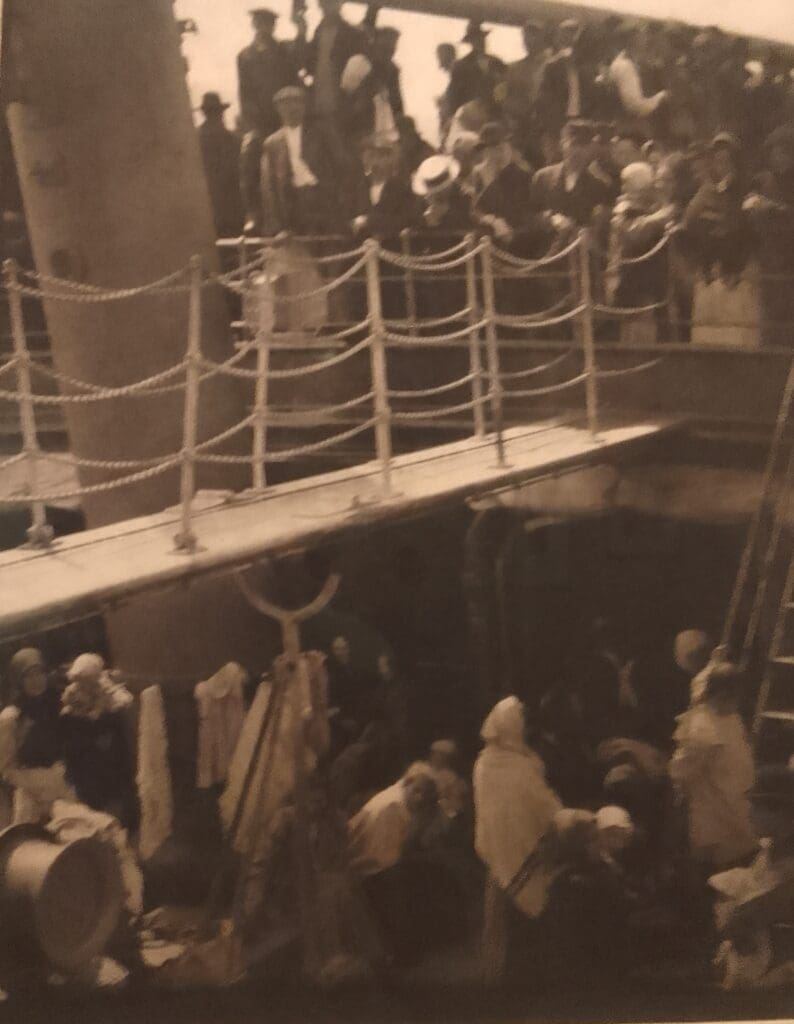
Voyaging to Europe on the ocean liner Kaiser Wilhelm II in 1907, the American photographer Alfred Stieglitz took what many consider to be the first modernist photograph. It was an unforgettable image of the over-crowded steerage, the cheapest quarters on any passenger ship.
While the focus on passengers returning to Europe (some perhaps because of failed attempts to migrate to the US) inevitably lent his photograph a political edge, Stieglitz’s framing of the ship’s architecture and the mesh of machinery and mankind equally caught the eye.
His talent behind the lens is a highlight of Dulwich Picture Gallery’s exhibition Portrait of a City: A Century of American Photography (28 July – 4 October 2026) with its more than 100 stand-out efforts by some of the most influential photographers of the 20th century.
Opportunistically coinciding with the 250th anniversary year of the Declaration of Independence, the exhibition charts the transfiguration of American city life between the early 1900s and the end of that century, by way of images from New York, Los Angeles, Chicago and San Francisco. The works are all drawn from the Norway-based collection of the DNB Saving Bank Foundation.
The distinctive creation of Stieglitz’s The Steerage was thanks to the cameraman’s lightning reflexes. He made the photo after looking down from the first-class deck and seeing families gathered beneath a tangle of gangways, ropes, and shadows.
On vacation at the time, he was carrying only one unexposed plate. “Could I catch what I saw and felt? I released the shutter, my heart thumping. If I had captured what I wanted, the photograph would go far beyond any of my previous prints,” he was to recall of his snap judgment. Of the subsequent rest of his career, he would treasure The Steerage above all.
Whatever the exact purpose of each of the many travellers on the ship, the picture pointed vividly to the plight of immigrant labourers and to the class status. of those, wrapped in warm coats, in the cheapest accommodation.
Over his half-century career, Stieglitz (1864 – 1946) propelled photography into a form of fine art, wielding the medium to illustrate daily life, as did the modernism of European painting and sculpture that he imported and exhibited in his New York gallery.
At the start of his career, Stieglitz had favoured carefully arranged compositions to give his photographs the look of paintings. Now Picasso approved of the Stieglitz style: remarking on the seeming kinship with collage and the profundity of the perspectives.
Returning from his European journeys to New York, he recorded the rapid changes in its streets and buildings, emphasising the drama by printing his images as atmospheric photogravures.
Taking a broader view, Dulwich Picture Gallery’s Portrait of a City traces how photography has shaped the collective understanding of the American city. It demonstrates how rapid urban expansion catalysed the medium’s rise to document changing conditions.
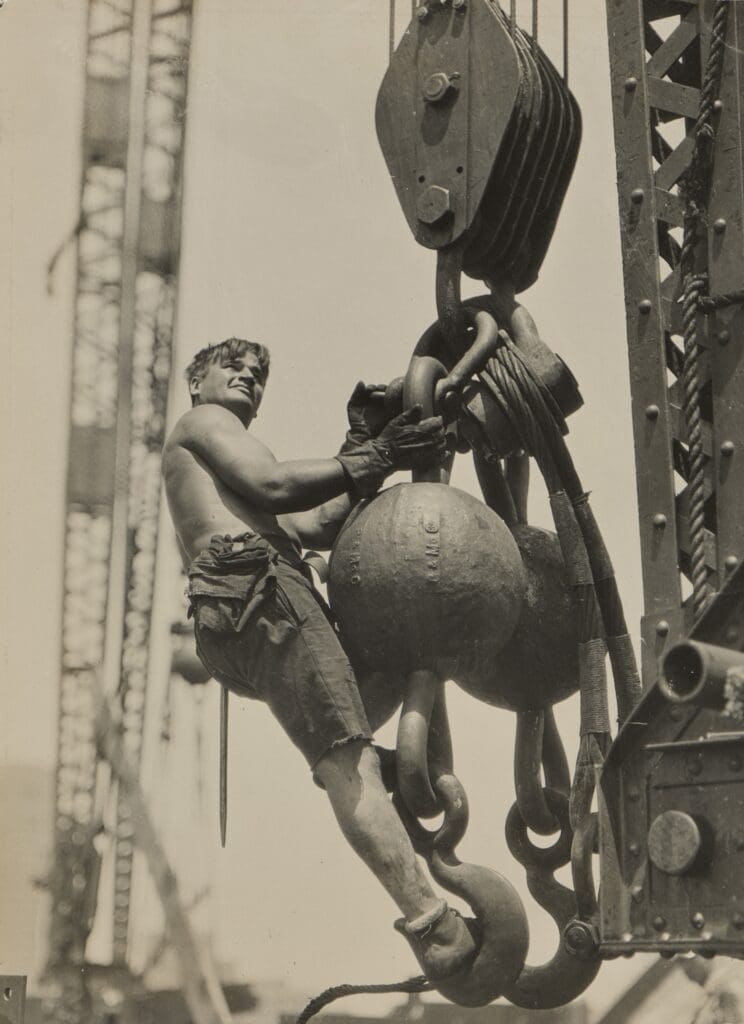
The exhibition opens in the early 1900s, when American cities expanded rapidly through mass immigration, industrial growth, and new forms of labour. Evolving skylines became symbols of change, captured in works such as Lewis Hine’s Riding the Ball High up on Empire State, 1930.
After the Wall Street Crash in 1929, photography turned to recording mass unemployment, poverty and migration. Works, including Dorothea Lange’s White Angel Breadline, San Francisco of 1933 and Margaret Bourke‐White’s Augusta, Georgia three years later echoed the reality of the Great Depression across the country.
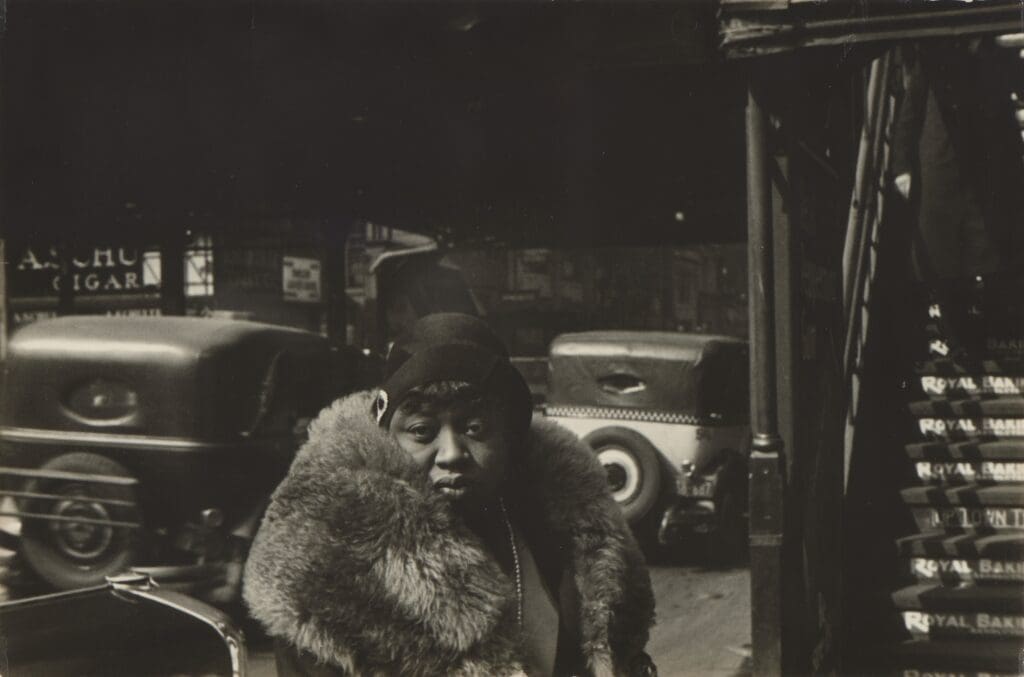
Walker Evans was among those securing the place of photography in the modern art world. One of his best-known works, 42nd Street and Sixth Avenue, from 1929, appears to show a more comfortable middle-class street scene than those that attracted any of his contemporaries.
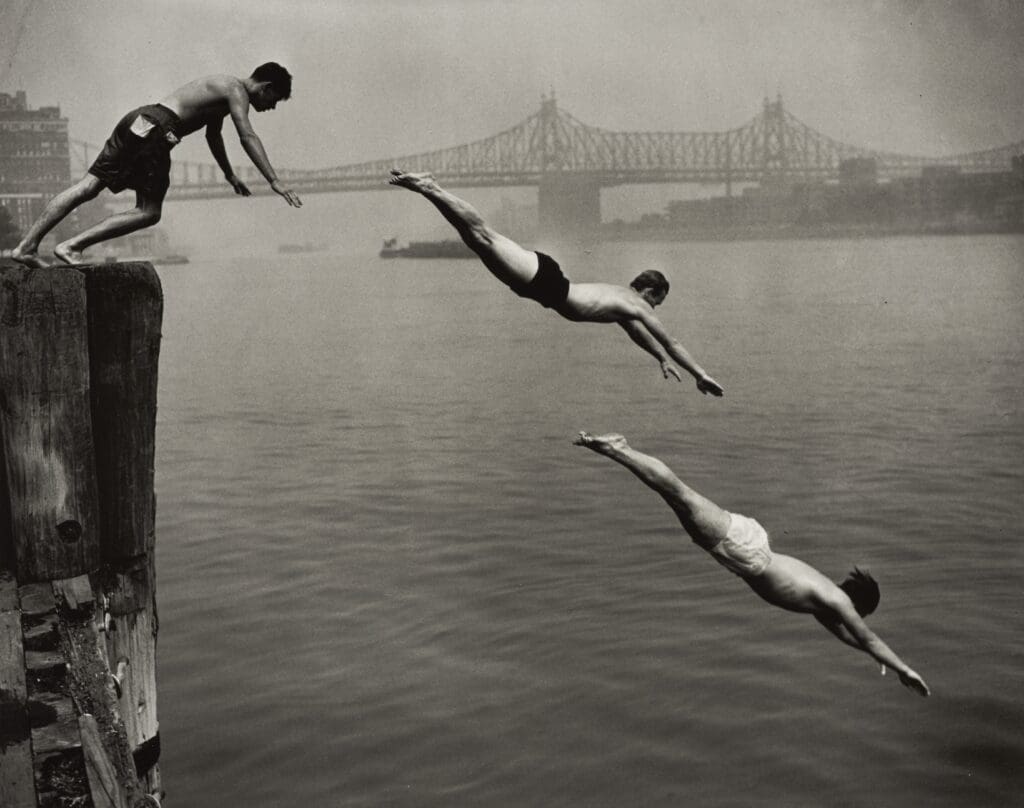
Arthur Leipzig’s Divers, East River, 1948 captures how some people made use of any available urban spaces for leisure and community.
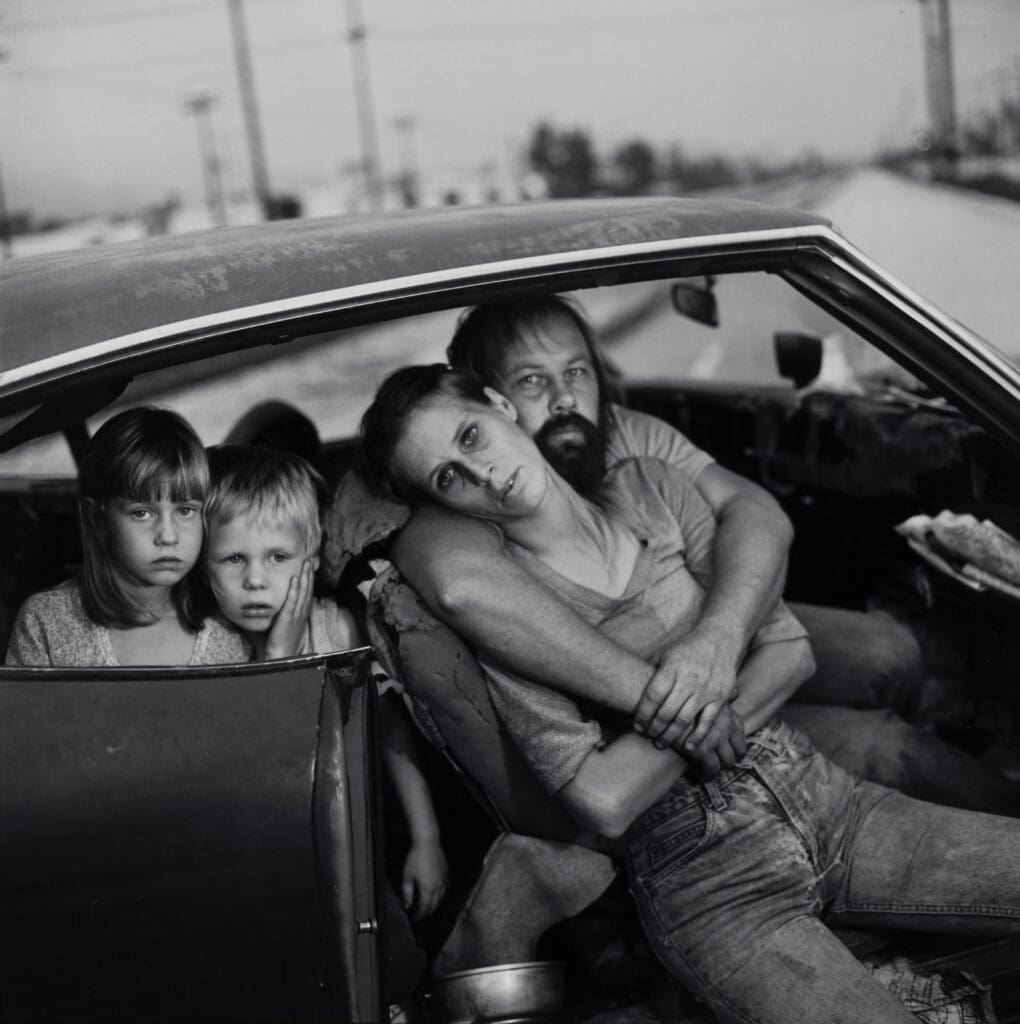
Powerful depictions of poverty came from among others Mary Ellen Mark. The Damm Family in Their Car, Los Angeles, 1987 was a study of forlorn homelessness with the family squeezed into their refuge, their car. After studying painting and photojournalism in Pennsylvania Mary Ellen Mark (1940-2015) had moved to New York in the mid-1960s and began photographing demonstrations, street life and marginalised communities.
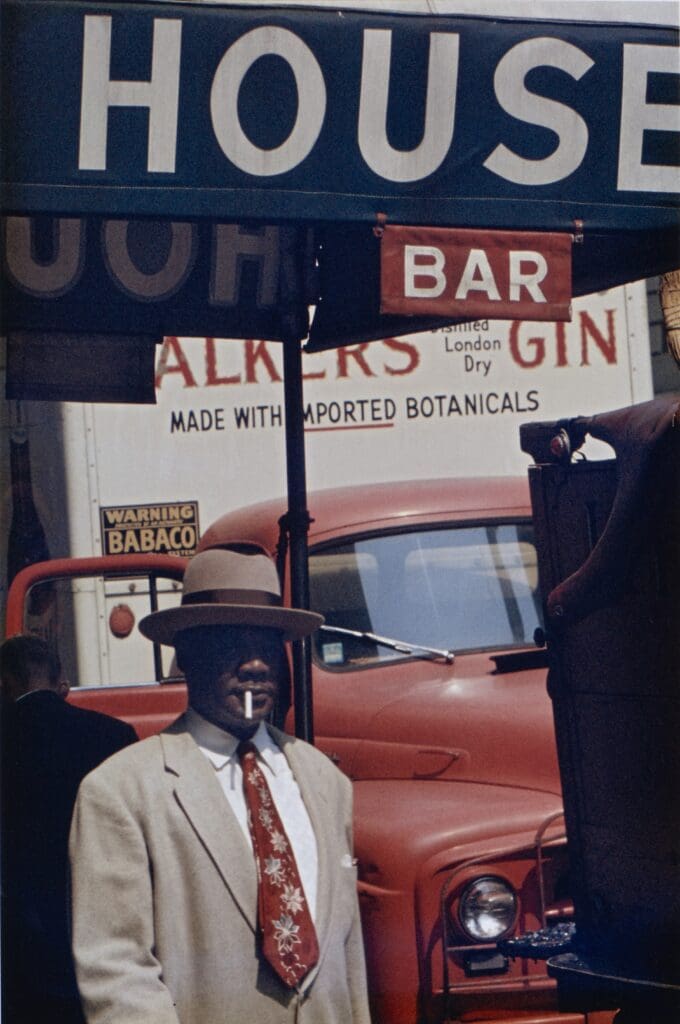
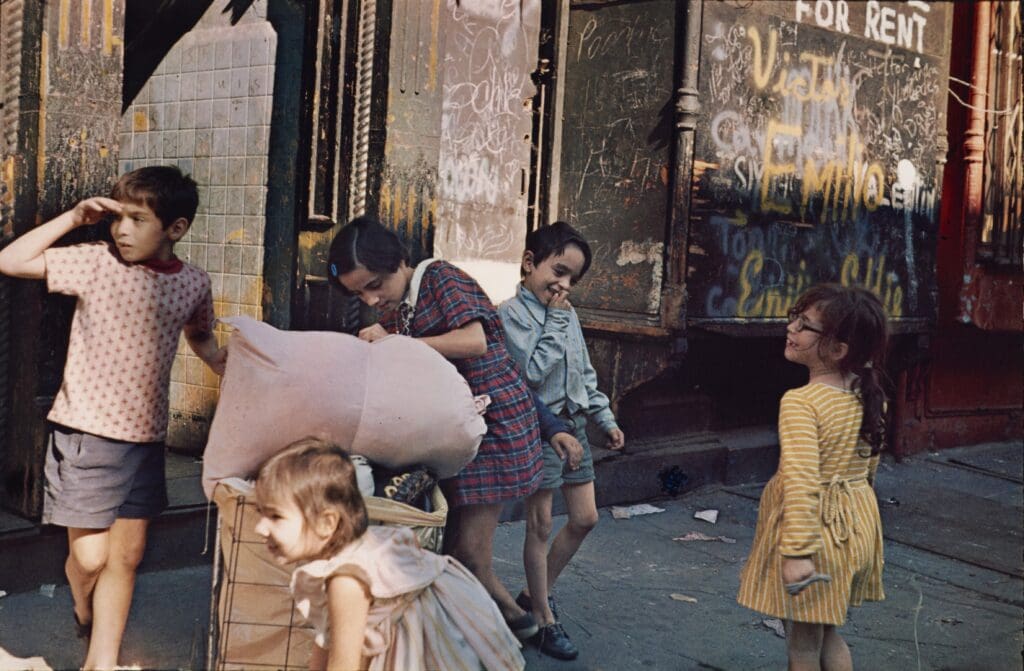
Other portrayals of marginalised street life came from Helen Levitt and Saul Leiter, and Roy DeCarava’s representation of Black life in Harlem.
Portrait of a City concludes with Bruce Davidson’s Subway series, 1980–85, the subway a world of its own in diversity, individuality and graffiti.
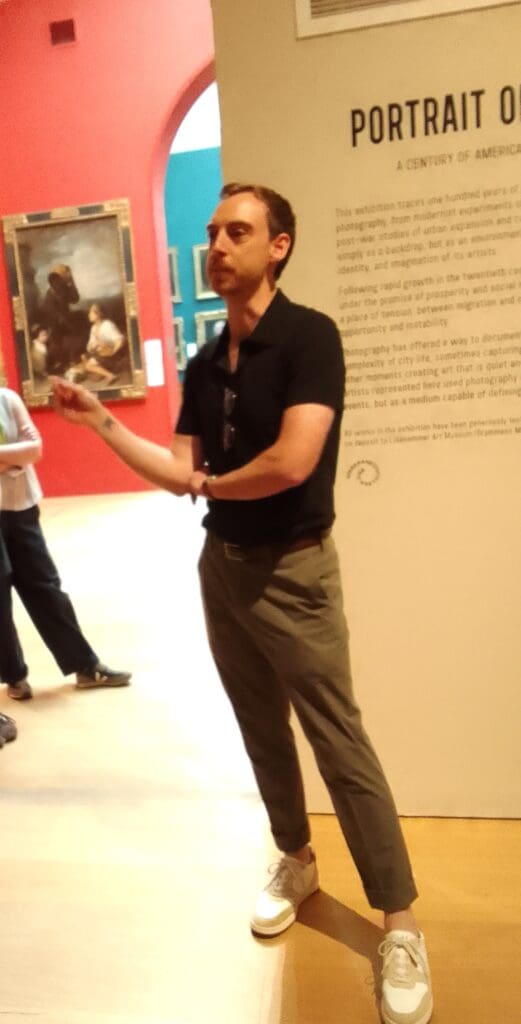
Alexander Moore, creative producer, Dulwich Picture Gallery and curator of the exhibition, said: “American photography offers one of the most vivid and influential records of the modern city, and by bringing this remarkable collection to London, we invite audiences to reflect on how the rhythms, challenges and possibilities of urban life continue to echo through our own – a century of human stories told with extraordinary immediacy and invention.”
Anders Bjørnsen, manager, Art & Culture, DNB Savings Bank Foundation, said: “These photographs capture the profound social and cultural changes that have shaped the modern American city.” The independent foundation says that it directs its financial distributions, governance, and philanthropic focus toward long-term community enrichment rather than short-term commercial returns.
Jennifer Scott, director of Dulwich Picture Gallery, added: “The spirit, aspiration, and reality of the 20th Century are captured in these photographs. Meticulously collected over the past ten years by the DNB Savings Bank Foundation, the exhibition is testament to this outstanding Norwegian art collection and creates exciting visual links to the landscape paintings in our Collection.”
Images:
The Steerage, 1907. Photograph on vellum by Alfred Stieglitz .
The Damm Family in Their Car, Los Angeles, California, 1987. By Mary Ellen Mark © Mary Ellen Mark, courtesy of The Mary Ellen Mark Foundation.
Divers, East River, 1948. Photograph by Arthur Leipzig. © Estate of Arthur Leipzig, Courtesy of Howard Greenberg Gallery, New York.
Harlem, 1960. Photograph by Saul Leiter. © Saul Leiter Foundation.
New York, 1972. Photograph by Helen Levitt © Helen Levitt, courtesy of Galerie Thomas Zander, Cologne.
Riding the Ball High up on Empire State, c 1930. Photograph by Lewis Hine.
42nd Street and Sixth Avenue, 1929. Photograph by Walker Evans. © Walker Evans Archive, The Metropolitan Museum of Art.
Alexander Moore, creative producer, Dulwich Picture Gallery, and exhibition curator.
