





| By Elena Sendona on September 29, 2026 |
There are evenings in fashion when a runway becomes a passage through geography, memory and generations of craft. On September 23, 2026, the Oriental Fashion Show returned to Milan during Milan Fashion Week, bringing together three distinctive couture visions from Oman, Morocco and Turkmenistan within the historic setting of the National Museum of Science and Technology Leonardo da Vinci.
The Milan presentation placed cultural heritage at the center of the fashion conversation. Yoland, from the Sultanate of Oman, RENA, rooted in Moroccan craftsmanship, and Turkmen designer Göwher Pirkułyýewa Gouvernet each approached traditional dress and artisanal knowledge through a contemporary couture vocabulary. Together, their collections traced an evocative route across cultures historically connected to exchange, craftsmanship and the broader story of the Silk Road.
For the Oriental Fashion Show, this international perspective is deeply embedded in its identity. Founded by Hind Joudar, the platform has spent more than two decades championing Oriental couture and creating encounters between designers, artisans, cultural traditions and international audiences. Over the years, its presentations have traveled through fashion and cultural destinations including Paris, Milan, Marrakech, Dubai, Baku and Istanbul, establishing fashion as a language through which heritage can continue to evolve.
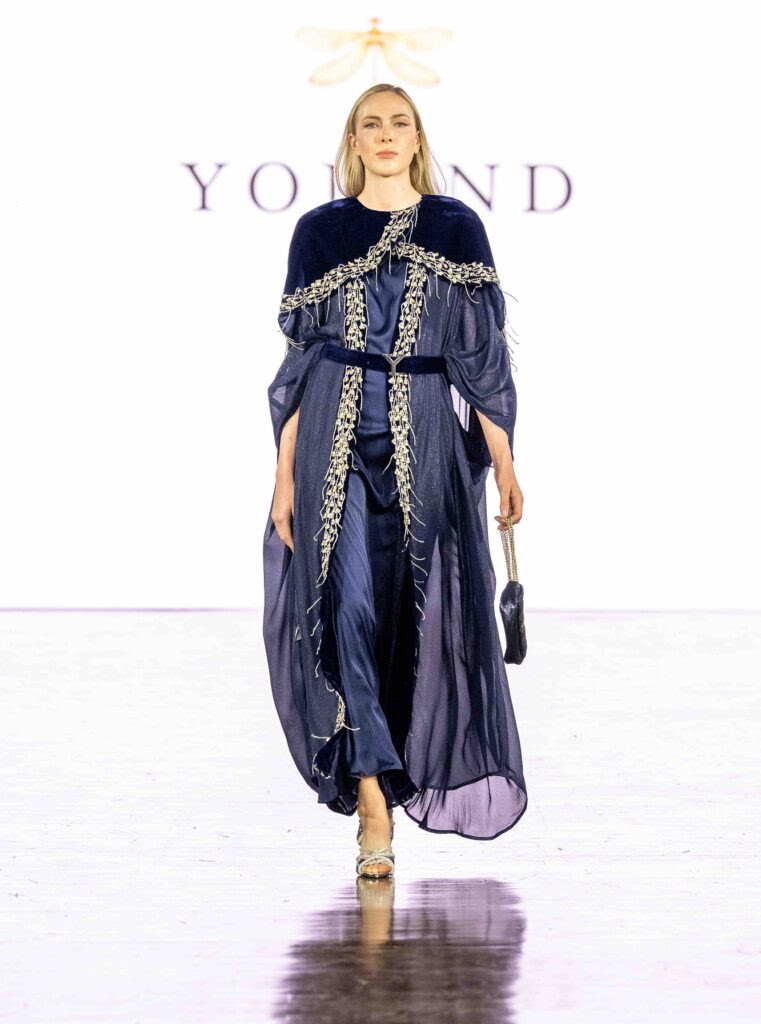
Yoland: The Omani Abaya Enters A Couture Conversation
For Yoland, the Milan runway became a stage for the abaya, approached through the precision and ornamentation of haute couture. The Omani designer and founder of Yoland Fashion House looked toward the cultural landscape of Oman and, more specifically, the artisanal heritage of Dhofar.
Dhofar carries a particularly resonant place in Omani cultural history, long associated with frankincense and trade routes that connected southern Arabia with distant markets. Within Yoland’s collection, that sense of inheritance emerges through embroidery, ornamental detail and meticulous handwork, translated into a contemporary interpretation of one of the Gulf and Middle East’s most recognizable garments.
Rather than treating the abaya as a static symbol, Yoland explores its capacity for transformation. Couture construction and decorative workmanship give the silhouette a heightened presence, while its cultural identity remains legible. The result reflects a broader idea at the heart of the Milan presentation: tradition can remain alive precisely because designers continue to engage with it, reinterpret it and carry its visual language forward.
Yoland’s appearance also continues an existing relationship with the Oriental Fashion Show and Milan. The fashion house participated in the platform’s Milan Fashion Week presentation in 2025, reinforcing the designer’s growing international presence.
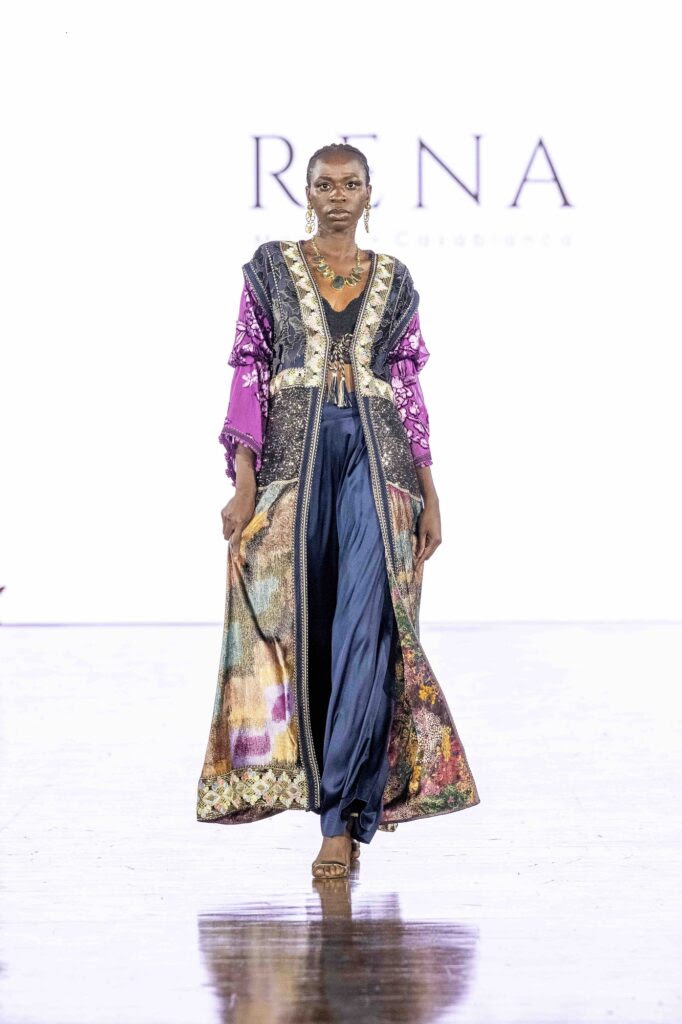
Rena: The Moroccan Caftan As A Personal Heirloom
If Yoland begins with the abaya, RENA turns to another garment with a profound cultural lineage: the Moroccan caftan.
The Casablanca-rooted brand carries an unusually intimate origin story. Its name looks back to Renata, the founder’s mother’s couture maison, which operated for 40 years. RENA also draws meaning from ideas of renaissance and reconnection, language that feels particularly apt for a house concerned with bringing inherited craftsmanship into contemporary wardrobes.
That philosophy takes physical form in the caftan. RENA’s own account of its beginnings describes a creative life shaped by Casablanca alongside years spent in European cities including Paris, London, Madrid and Milan. Returning to Moroccan heritage consequently becomes both a design proposition and a personal homecoming.
The first collection reimagines the Moroccan caftan as something adaptable, individual and intensely crafted. Pieces are conceived in Casablanca and entrusted to a maalem, a master artisan whose knowledge embodies generations of Moroccan savoir-faire. The extended process of handcraft gives each garment the character of an object intended to be treasured.
There is an almost jewel-like sensibility to this approach. Embroidery, embellishment, proportion and surface become part of the garment’s emotional value, allowing the caftan to occupy a space between clothing, craftsmanship and collectible design. RENA’s current identity continues to emphasize Moroccan handcraft and a creative axis between Casablanca and European fashion capitals, while preserving the artisanal hand at the heart of the house.
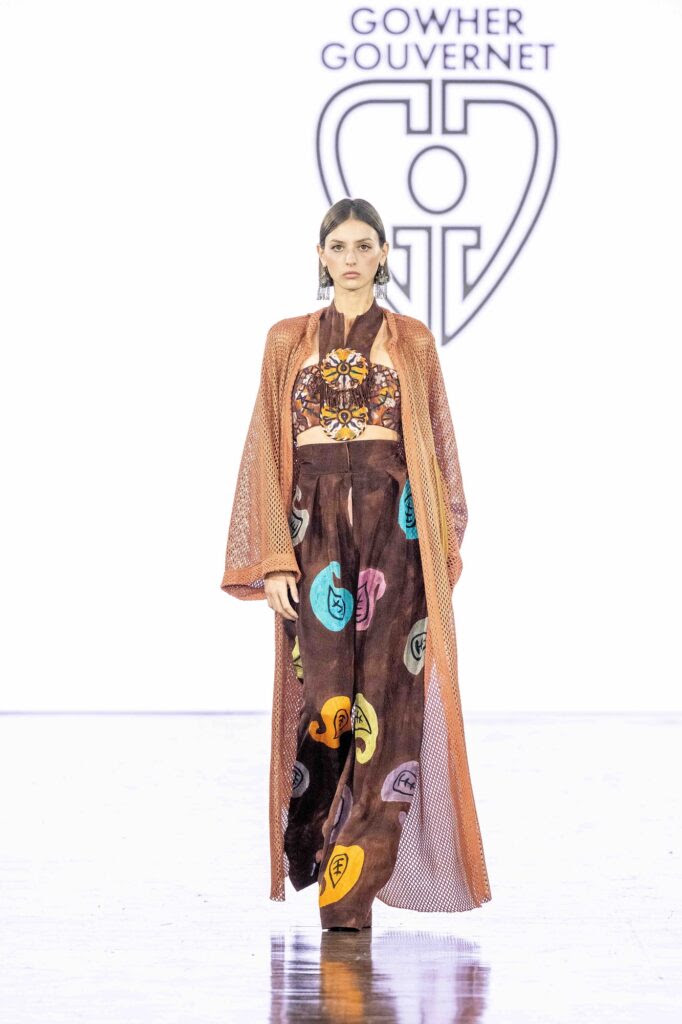
Göwher Gouvernet: Turkmen Heritage Through A Parisian Lens
With Göwher Pirkułyýewa Gouvernet, Milan encountered a creative language shaped between Turkmenistan and France.
The Turkmen designer has developed a career that crosses fashion, costume and the performing arts. Her education includes fashion studies in Paris and costume design in Saint Petersburg, while her professional path has included teaching at FORMAMOD in Paris and work connected to haute couture. She founded her own maison in Turkmenistan in 2022, placing the preservation and contemporary interpretation of Turkmen cultural traditions at the center of her practice.
Her work is particularly compelling in its attention to keshde, traditional embroidery, ornament and textile knowledge. These elements enter into conversation with disciplined construction informed by her Paris experience, giving cultural motifs a contemporary architectural framework.
The designer’s international trajectory has continued to expand. Her collections have appeared at Oriental Fashion Show presentations and fashion events in Europe and the Middle East, and in June 2026 she presented at Tanger Fashion Week in Morocco. That same month, her work was also connected to Turkmentextile Expo 2026 in Ashgabat, where her creative language once again placed Turkmen textile heritage in an international context.
Her relationship with performance adds another dimension. Gouvernet has worked with stage and costume design as well as fashion, an experience that can be felt in the way clothing becomes a vehicle for narrative. Embroidery carries memory; construction introduces modernity; ornament becomes a visual archive of place.
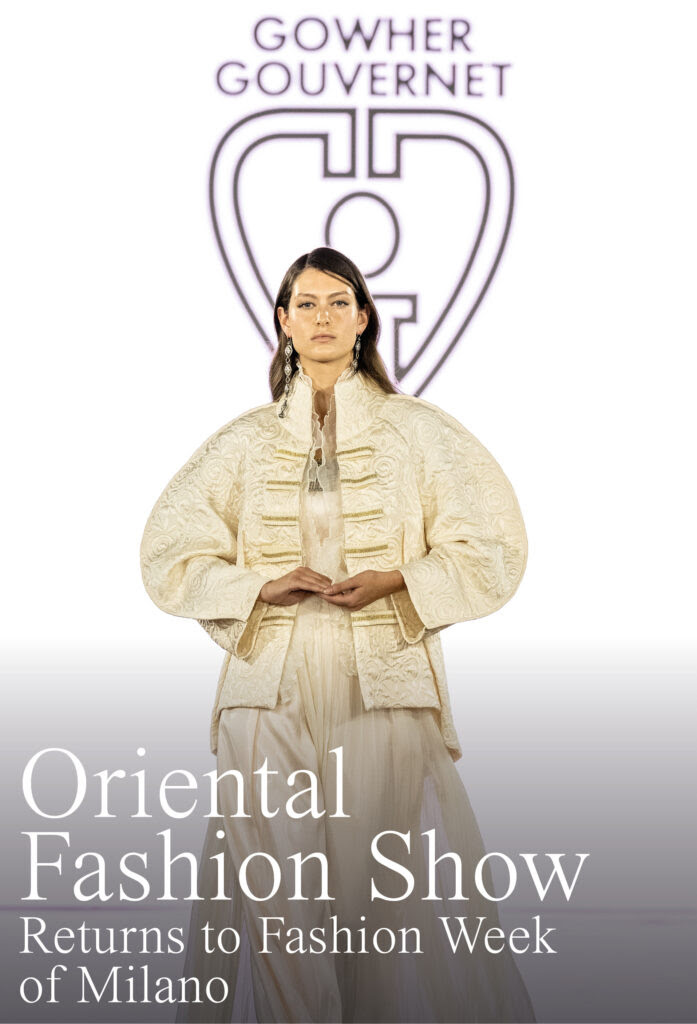
Milan, Through The Eyes Of The Silk Road
Bringing these three houses together in Milan created a compelling portrait of couture as cultural continuity. Oman’s abaya, Morocco’s caftan and Turkmenistan’s embroidery traditions arrived with their own histories and meanings, interpreted by designers whose work exists firmly in the present.
The location added another layer to the evening. Staged at Milan’s National Museum of Science and Technology Leonardo da Vinci, the September 23 presentation unfolded in a city synonymous with design and craftsmanship, while the collections looked outward toward cultural territories stretching from North Africa and the Arabian Peninsula to Central Asia.
That movement between places feels essential to the Oriental Fashion Show’s philosophy. Since its creation by Hind Joudar, the platform has used the runway as a meeting point for fashion traditions that can be highly specific to their countries of origin yet increasingly visible to an international audience.
In Milan, craftsmanship spoke in several languages. It appeared through an Omani abaya transformed by couture detail, through a Moroccan caftan shaped by the hands of a maalem, and through Turkmen embroidery framed by Göwher Gouvernet’s experience between Ashgabat and Paris.
What emerged was a vision of heritage with movement in it. These traditions have histories, yet their stories are still being written. In the hands of Yoland, RENA and Göwher Gouvernet, the Silk Road became less a reference to a distant past than an evocative thread connecting craftsmanship, identity and contemporary couture in Milan.
Fashionality.nyc © 2026.
