





By James Brewer
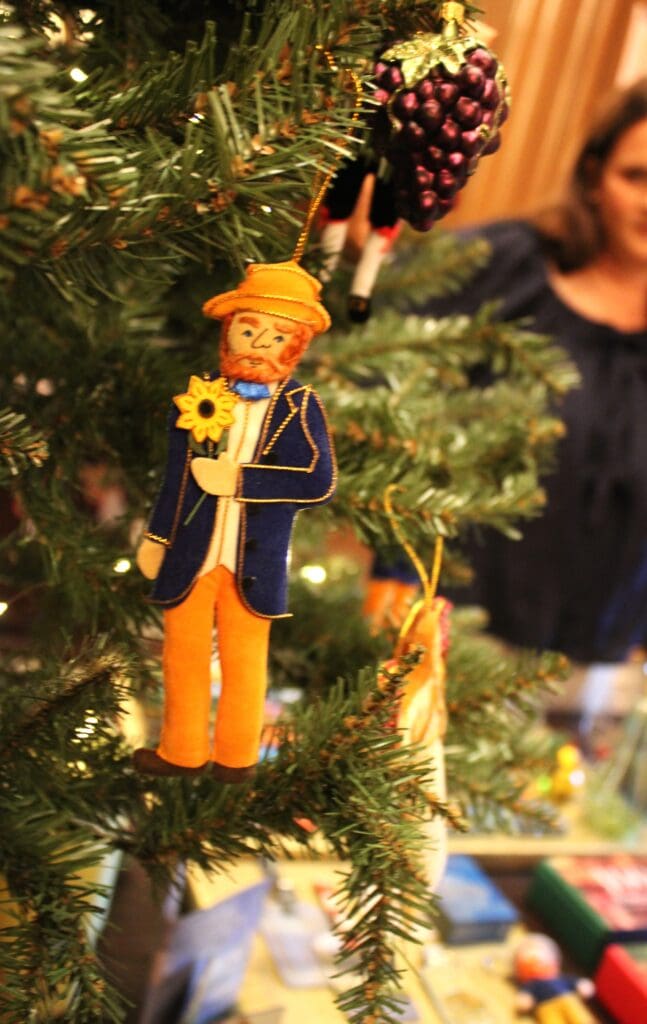
Vincent van Gogh is back at London’s National Gallery. Of course, he never went away, but he appears in ever more manifestations, whether in sketchbook cover, calendar, apparel or as a Christmas tree ornament.
Yes, shopping for art – or, the art of shopping – is tempting after cruising the engrossing collections.
The Trafalgar Square super-gallery is making an early start to Christmas 2025 – “Christmas in July” as organisers of its four – yes, four – gift shops on its extensive, and just refurbished site put it during a preview for journalists. Don’t exit these gift shops until you have taken a leisurely stroll among the wealth of reminders of, among others, the ubiquitous Dutch genius.
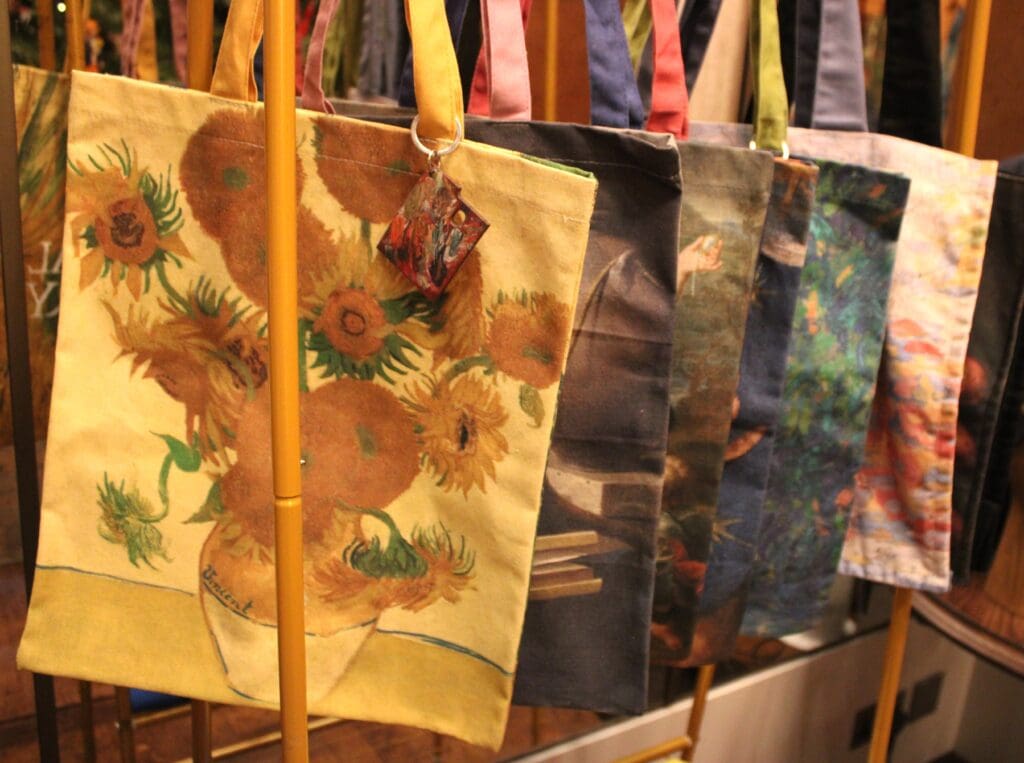
Van Gogh retains enormous popularity, but other artists are plentifully available, as might be expected – the galaxy of mementos includes Renoir, Caravaggio, Monet, Leonardo, Rembrandt, Titian, Holbein, Van Eyck, Cezanne, Gainsborough, Michelangelo, Rubens and Morisot.
Yellow, yellow, yellow. The tenant of the Yellow House in Arles could not get enough of the colour. Sunflower pictures were among the first oil paintings he produced in the French town in his signature expressive style. Has any other artist been so closely associated with a specific flower? The pattern is anchored in Van Gogh’s most cherished works.
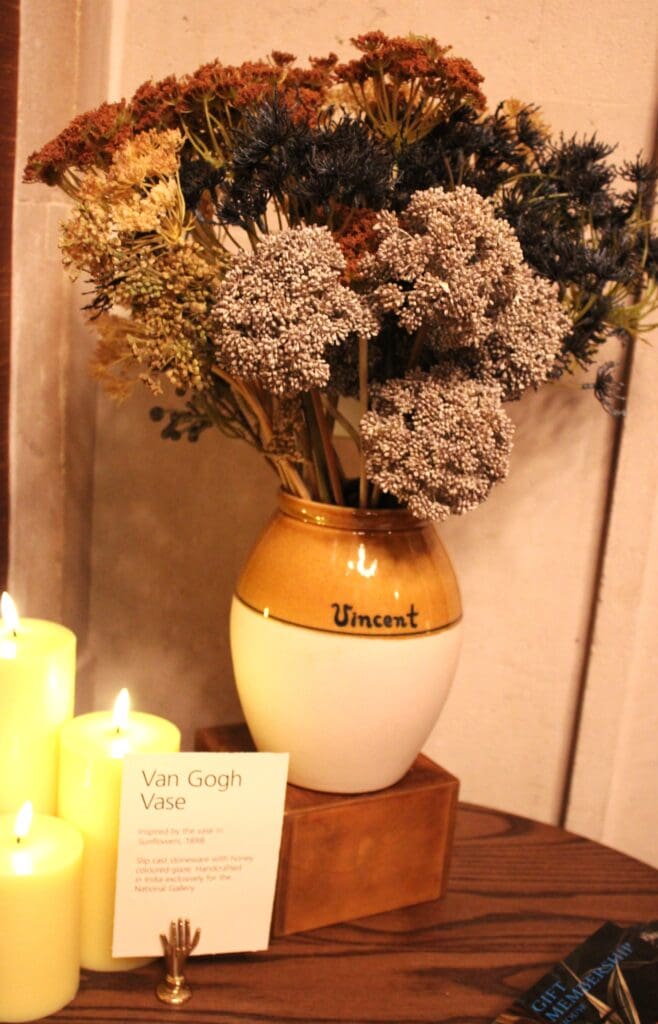
Pots (!) of ingenuity are going into souvenirs celebrating the master and other West European adepts of the past half a millennium. Among them, replicas of Van Gogh’s stoneware vase, inspired by the receptacle in his 1888 Sunflowers. “The sunflower is mine,” Van Gogh once declared, and it can be yours too for sunflower and other arrangements as you fancy.
Made from slip-cast stoneware with a textured glaze on the lower half, and a honey-coloured glaze dip on the top and inside, each pot is embellished with a reproduction of Vincent’s signature, exactly as seen in Sunflowers. To produce this vase the National Gallery partnered with Be Home, an enterprise that supports homeware handicraft of local artisans, in this instance from Khurja, known as the “ceramic city” for its rich history of pottery making in the Indian state of Uttar Pradesh.
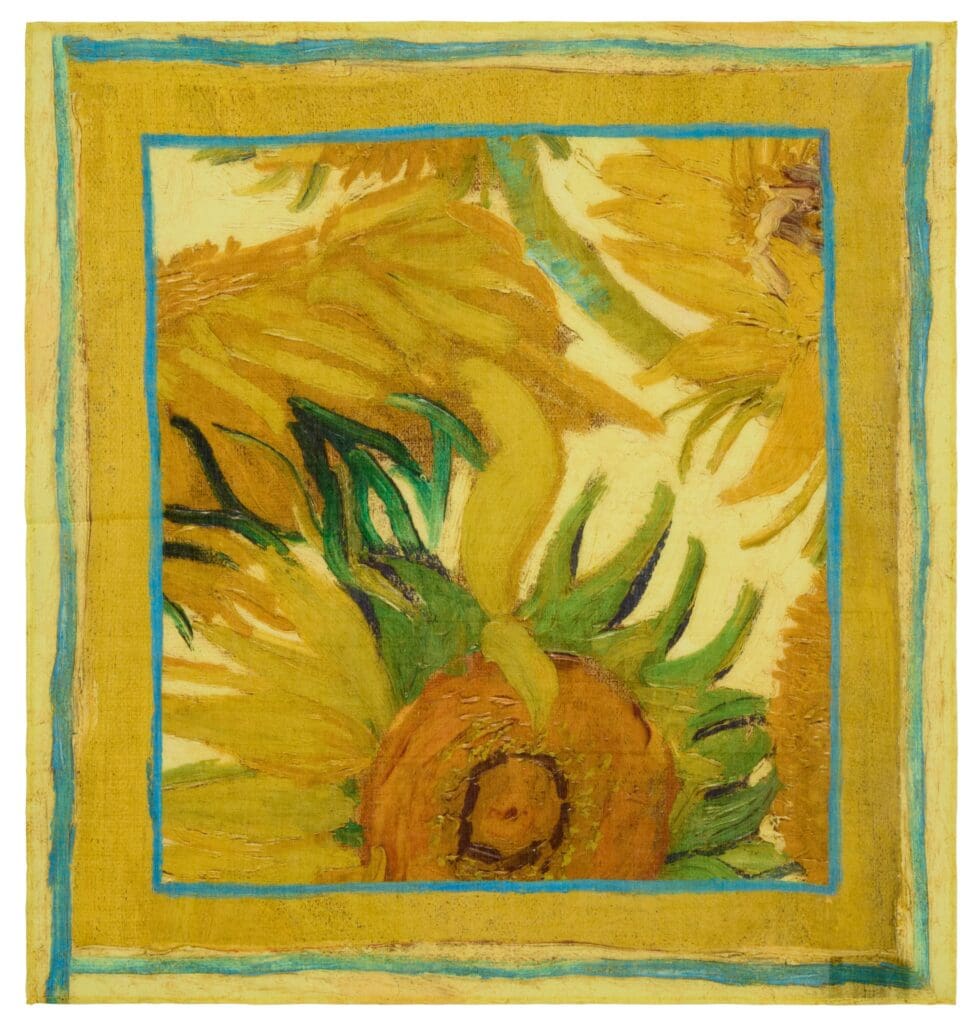
Furthering the Van Gogh brand recognition (as if it were needed – what would he have made of all this ado?), there are scarves, tea towels, tote bags featuring olive trees or sunflowers, mounted prints of oleanders, a crochet key ring; even a Van Gogh-style palette as a wooden coaster.
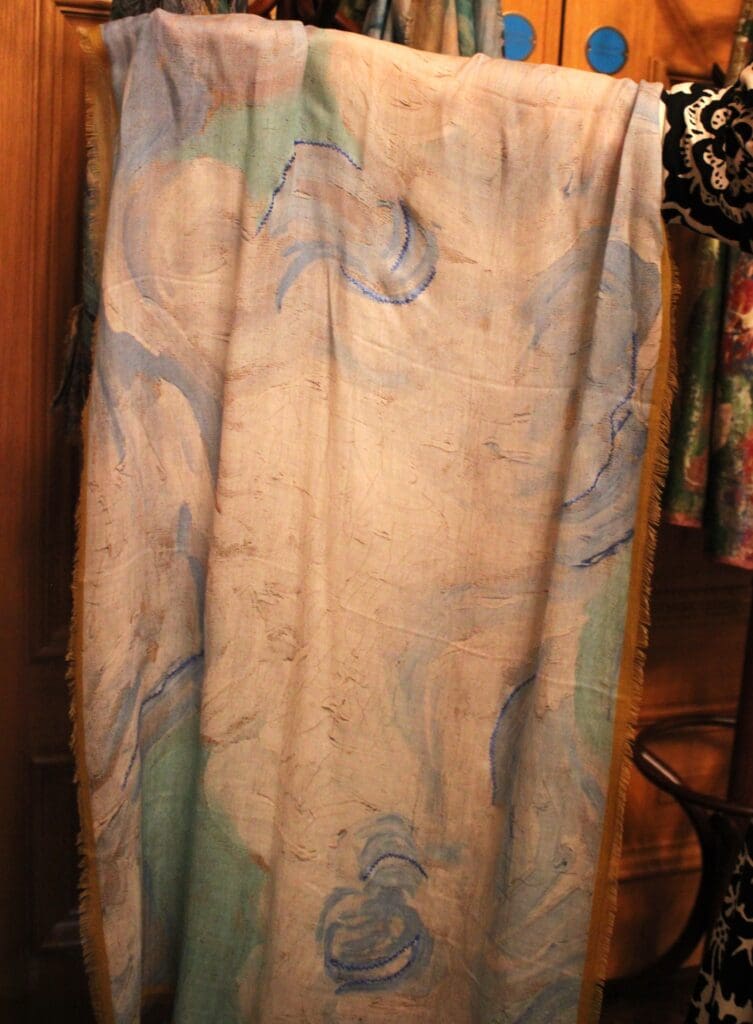
In addition to being a reminder of a great artist, scarves with iconic design give tactile essence to connectedness to nature – just as happens when we contemplate many of Van Gogh’s outdoor pictures. One large scarf features a detail from A Wheatfield, with Cypresses and with his dynamic, swirling brushstrokes. This is another item produced in India for the National Gallery. It is of embroidered modal fabric (a semi-synthetic made from beech tree pulp), eco-friendly and described as easy to maintain.
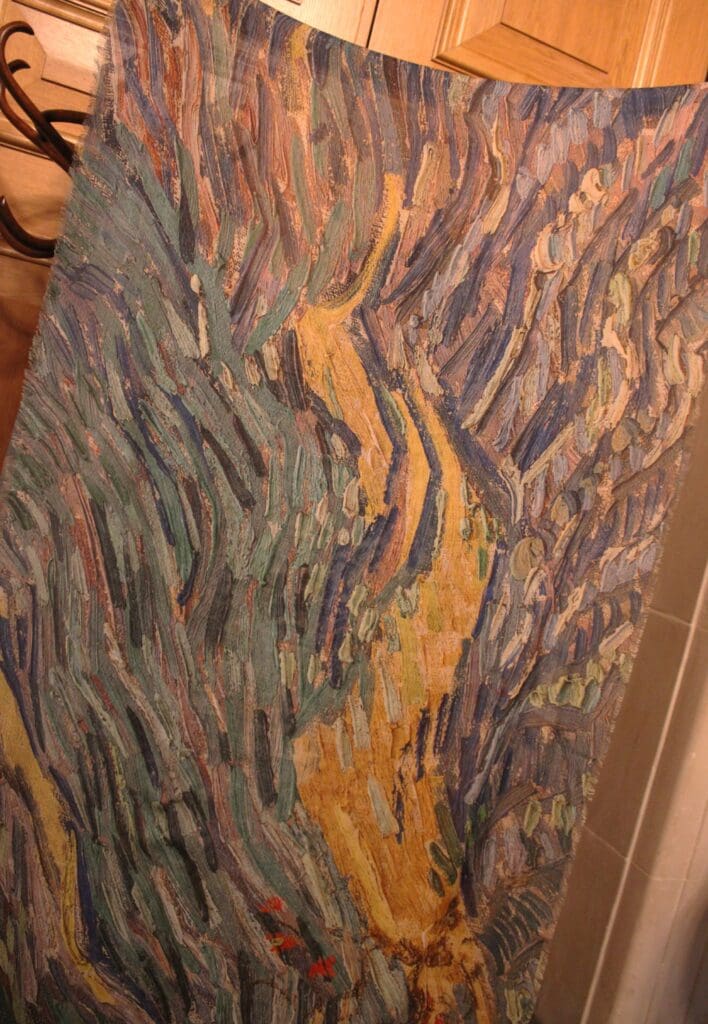
A large wool and silk blend scarf features a detail from Long Grass with Butterflies, suggesting the artist’s clusters of brushstrokes. Again, this is produced in India, using artisanal techniques. So too is a large soft scarf of fine silk, with embroidered detail from Landscape with Ploughman. A square scarf shows the passionate, distinctive strokes that made for Sunflowers, the material being 20% silk, 80% cotton.
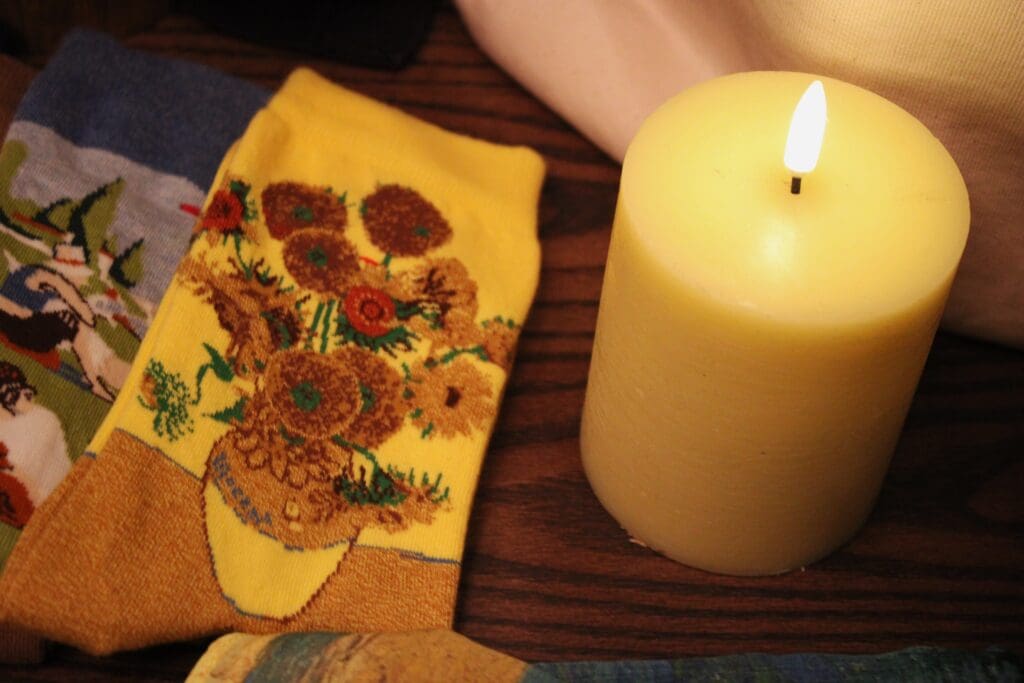
Other stylish pieces “for those who live and dress creatively,” include Van Gogh socks (or pairs based on the paintings of bathers by Seurat and by Cézanne).
To add something different to the Christmas tree, decorations hand-crafted in Cambodia by female artisans celebrate the great artists of the National Gallery – among them (of course) Van Gogh, and Caravaggio (at £15 apiece). Then there are soaps and hand creams “traditionally made in Sussex” tricked out in details from National Gallery paintings.
Encouraging creativity, is a good choice of sketchbooks, palettes and art materials.
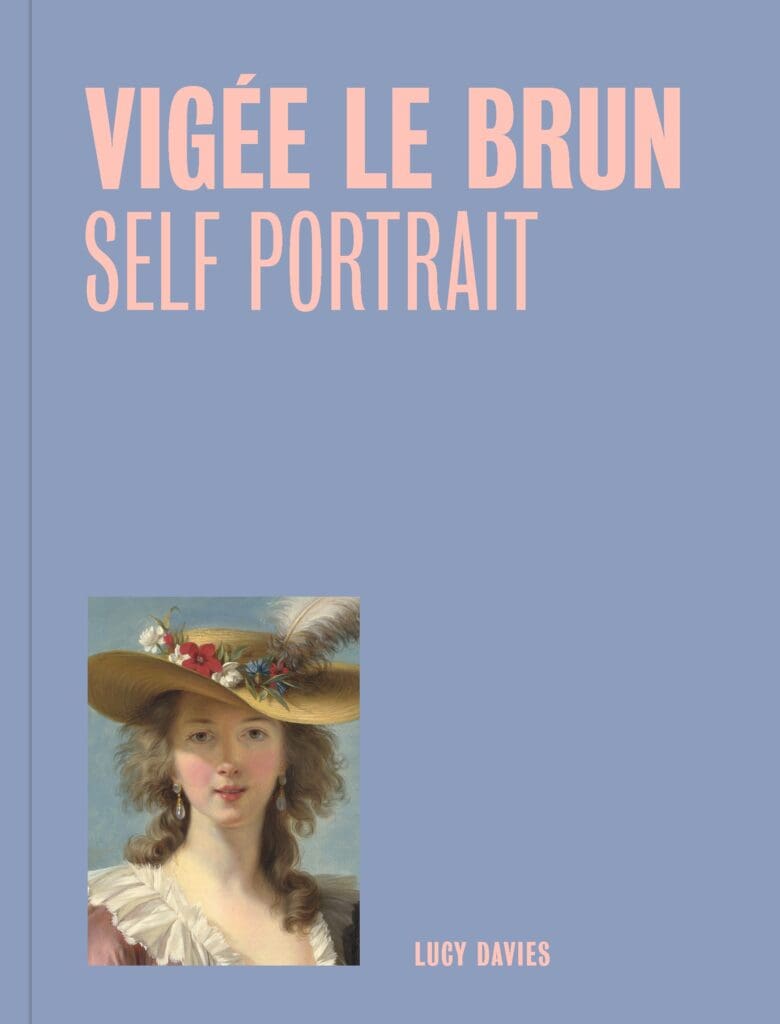
Focusing more clearly on art history is the paperback series One Painting, One Story, published by National Gallery Global and distributed by Yale University Press. One of the most fascinating studies is Vigée Le Brun: Self Portrait in a Straw Hat by specialist arts writer Lucy Davies. This refers to one of the Gallery’s most captivating paintings in which, looking at us directly and holding her palette and brushes, Élisabeth Vigée Le Brun presents herself as a fashionable Parisienne as well as an accomplished artist. Patronised by Queen Marie-Antoinette, the artist rose to become a supremely successful society portraitist. She fled the French Revolution, travelling around Europe and Russia before returning to a transformed Paris.
Elsewhere in the shops… children’s items include a tongue painting pack – sweets that colour the tongue, blue being a trendy colour.
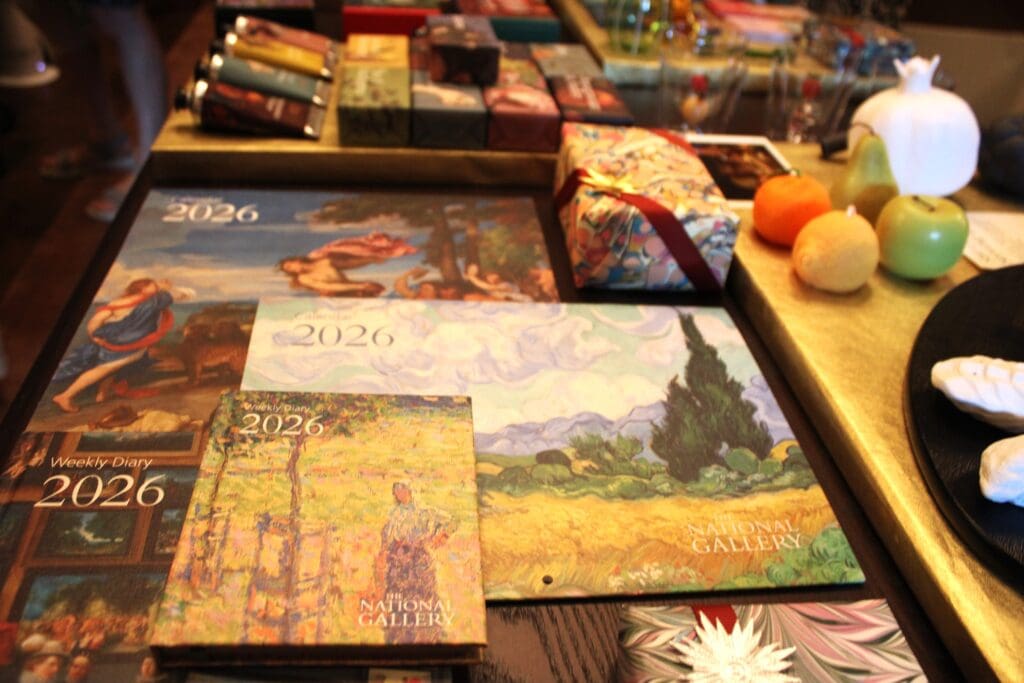
The Gallery said: “Following the landmark reopening of the Sainsbury Wing in May, shopping at the Gallery has never been more inspiring. With two newly opened retail spaces and a host of new products – many designed in-house and available exclusively through the National Gallery – this year’s Christmas range reflects a bold new chapter for our shop. Every purchase directly supports the Gallery’s work, helping to care for the collection and share it with future generations.”
Christmas decorations can be purchased in the National Gallery shops; and online at shop.nationalgallery.org.uk from October 2025.
