





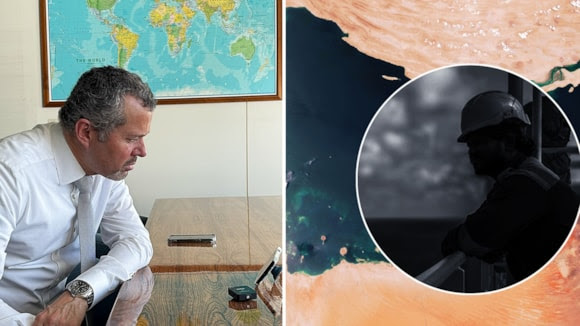
| Seafarer shares first-hand account with IMO about being stranded in the Persian Gulf. |
| IMO Secretary-General Arsenio Dominguez has called on all Member States to support efforts to address the situation in the Strait of Hormuz, where around 20,000 seafarers remain trapped and unable to leave. In an informal briefing to Member States and industry representatives, Secretary-General Dominguez confirmed that several vessels had been seized and detained in the region over the past few days. He urged maximum caution, considering potential mines present throughout the Strait and threat of further attacks on ships. “My call is to release the seafarers because they are not at fault,” he said. “The situation is not improving. I reiterate: there is no safe transit anywhere in the Strait of Hormuz.” He highlighted that 29 attacks on vessels in the Persian Gulf and around the Strait of Hormuz had been verified by IMO since the beginning of the conflict, resulting in the death of at least 10 seafarers and damage to the vessels. Around 20,000 seafarers on around 1,600 vessels remain in the Gulf. Seafarers’ welfare With the conflict now in its eighth week, Secretary-General Dominguez warned that supplies on ships stuck in the Persian Gulf – including water, food and fuel – will start running short. He appreciated the ongoing support from countries in the region in providing essential supplies and provisions. Secretary-General Dominguez urged all flag States, NGOs, industry bodies and the States of nationality of the seafarers to offer any assistance, including through remote support, helplines and keeping families informed. He also highlighted the importance of fair treatment of seafarers in terms of welfare and payment of wages. “I spoke to a seafarer who had been trapped in the Persian Gulf for more than six weeks. Aside from the exhaustion and toll on mental health of the crews, they feel invisible, that they are not valued. There is much more we need to do,” he told delegates. Watch video here |
Maritime evacuation plan
IMO is working with Member States and partners on an evacuation plan for seafarers, ready to implement once it is safe to do so. This includes compiling a list of affected vessels and prioritizing them based on humanitarian needs.
For the evacuation to proceed, all parties involved in the conflict would need to agree to refrain from attacks on maritime assets during the operation.
Mr. Dominguez also called for coordination among flag States, shipowners and operators to use the internationally recognized Traffic Separation Scheme (TSS) as an evacuation corridor, once safety guarantees are in place.
He underscored that the TSS, adopted by the IMO in 1968, remains the only recognized route through the Strait.
He said the IMO will continue to engage with Iran and Oman, which have been coordinating transit operations in the corridor. He also acknowledged the support offered by France, the United Kingdom and other countries for the evacuation process.
IMO will further update the UN Security Council on Monday 27 April 2026 on developments.
- For more information, visit: Middle East
