





The scale of the maritime industry continues to shape the conversation around future energy systems, as activity builds across key international forums this month. Regulatory, policy and technical discussions are increasingly focused on how new energy solutions can meet the demands of global shipping in practice.
Last week’s IMO Legal Committee (LEG) provided an early signal of how regulatory frameworks are evolving, particularly in areas such as liability, reinforcing the need for continued industry engagement as approaches are developed across emerging technologies.
Attention now turns to the ongoing Intersessional Working Group on Reduction of Greenhouse Gas Emissions from Ships (ISWG-GHG 113) discussions and the upcoming Marine Environment Protection Committee (MEPC 84) meeting, where the direction of shipping decarbonisation will be further shaped. With work continuing on the IMO Net-Zero Framework and lifecycle assessment guidelines, these discussions are helping define how future fuels will be assessed and regulated at scale.
Alongside this, next week the IAEA’s INPRO Technical Meeting on Transportable Nuclear Power Plant (TNPP) deployment scenarios will focus on how these systems can be deployed across different use cases, from national applications to international export models, with increasing attention on practical and scalable pathways.
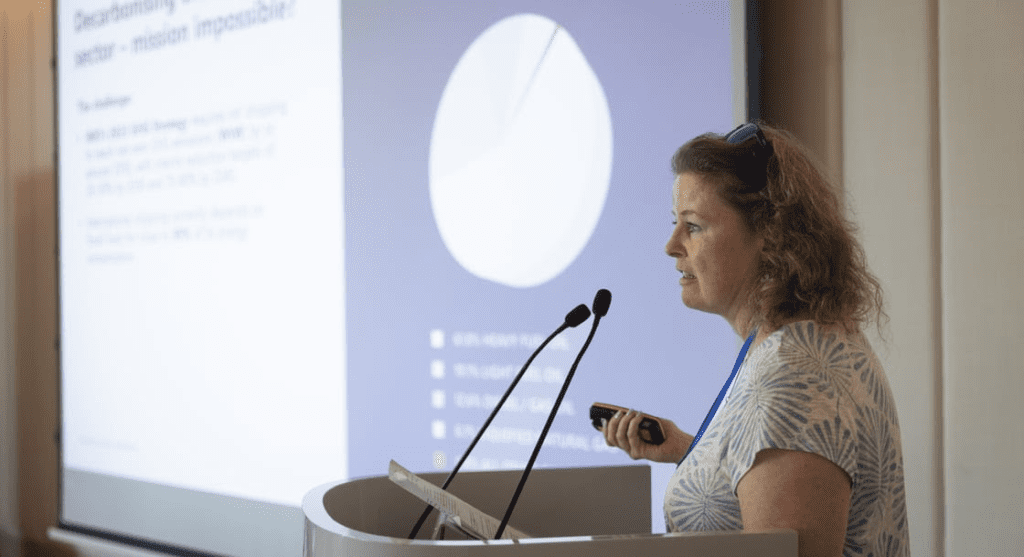
Industry engagement continues in parallel through events such as PHYSOR, where CORE POWER representatives are contributing to technical discussions on reactor physics and advanced nuclear technologies, including presentations in sessions on nuclear criticality and safety. Taken together, these developments point to a shift in focus across the industry, from establishing technical feasibility to defining how maritime energy solutions can be deployed at the scale required, as policy, regulation and industrial capability begin to align.
Stay tuned for next week’s deep dive from PHYSOR.
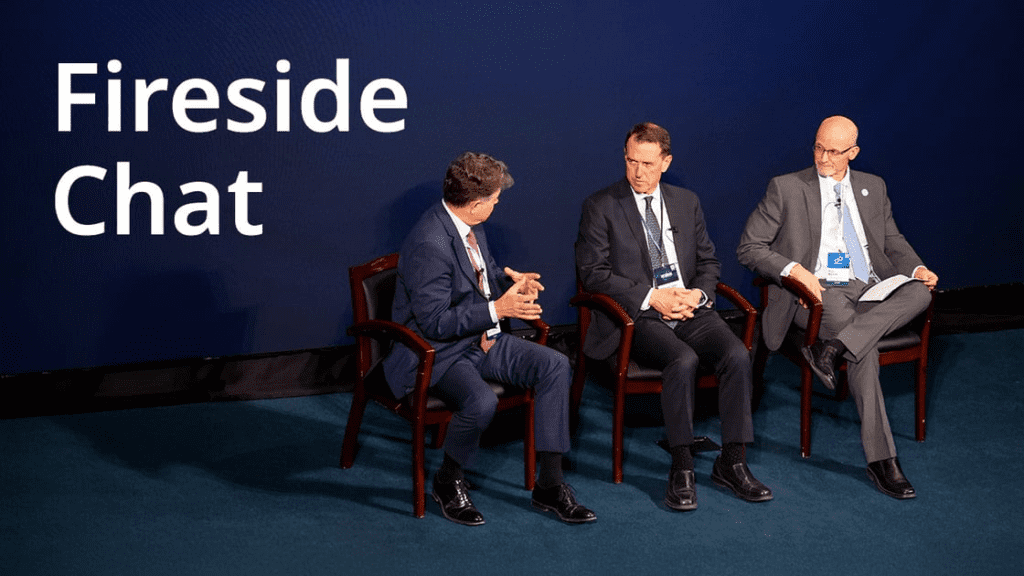
Hear Mikal Bøe, Phil Malone (CORE POWER) and Admiral John Richardson discuss how maritime nuclear can move from concept to real-world deployment.
From technology selection and regulatory readiness to civil liability and international collaboration, the panel explores what it will take to deploy scalable nuclear solutions in the near term.
Watch the full panel discussion now on YouTube.
Upcoming events
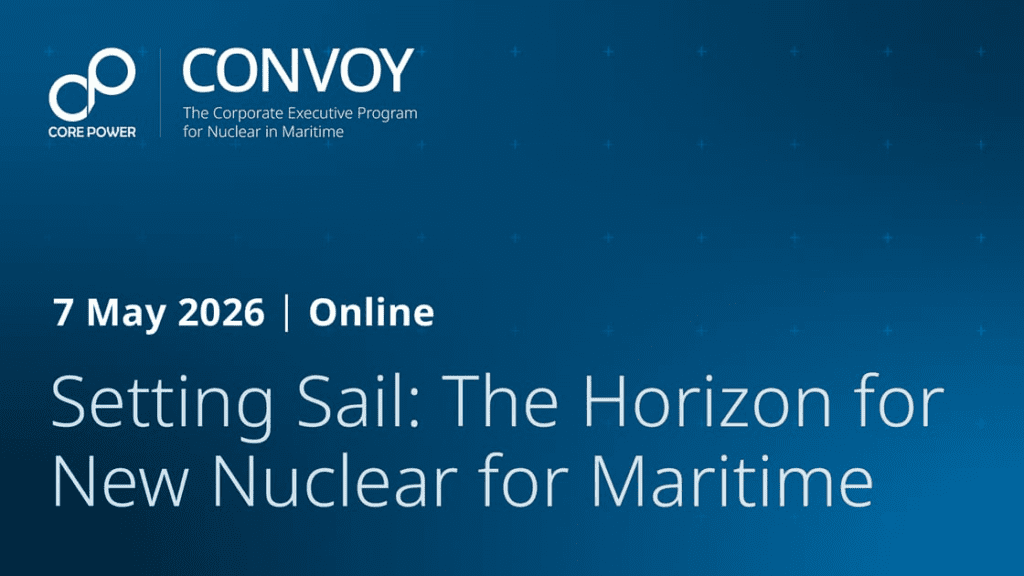
With the first session approaching, CORE POWER’s CONVOY Program will open its series with “Setting Sail: The Horizon for Nuclear in Maritime,” focusing on how nuclear is moving from early momentum toward practical deployment at sea.
Charlotte Vere, Group Head of Market Development, will outline the current state of the sector and the signals driving momentum.
Thomas Davies, Director of Analytics, will examine where value is created across propulsion and floating nuclear energy.
Scott Edwards, VP of Regulatory Development, will explore how regulatory frameworks are shaping early deployment decisions.
Members are now being pre-registered as the series gets underway. If your organisation is assessing the role of nuclear in shipping or coastal energy, explore CONVOY and register your interest.
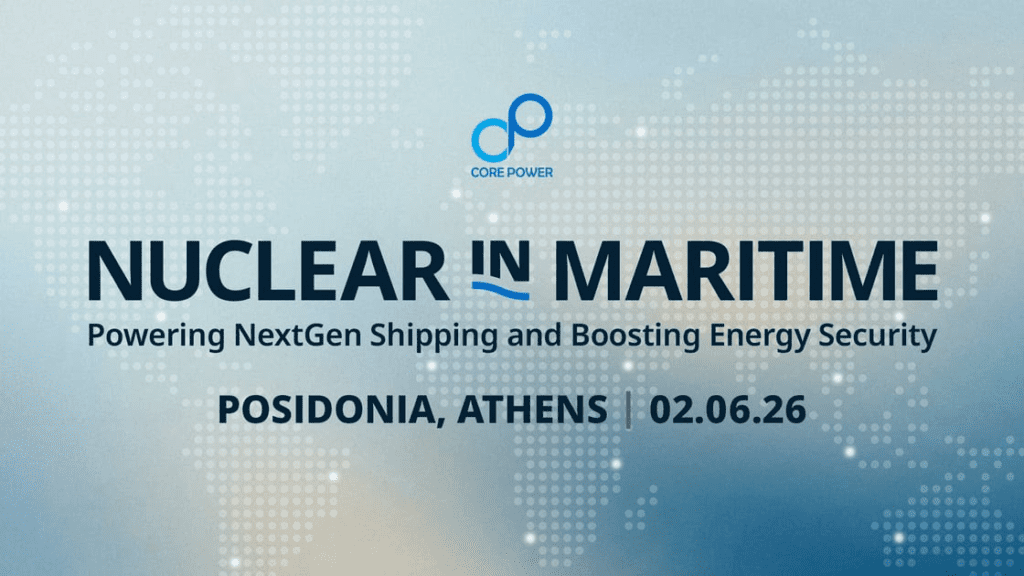
11:30 – 11:45 | Designing Nuclear for Maritime
Designing nuclear for maritime goes beyond engineering – it requires integrating propulsion into ship systems and aligning naval architecture with regulatory and safety frameworks.
During our seminar, CORE POWER’s Senior Principal Marine Engineer, Rob Chaplin, will explore what this means in practice, and why collaboration across shipyards, classification societies and regulators is critical.
As deployment approaches, the session will examine how these elements come together to make nuclear viable in commercial shipping.
With under two months to go, the focus is shifting from whether nuclear has a role in maritime to how it can be deployed in practice, as CORE POWER brings industry leaders together in London for “Accelerating Nuclear for Energy Generation and Shipping.”
Across Europe, rising electricity demand and pressure on industrial competitiveness are forcing a re-evaluation of how nuclear can be delivered at pace, while shipping faces growing pressure to maintain performance amid evolving regulation and uncertainty around fuel pathways.
Maritime nuclear is moving from concept toward real-world delivery, with the focus shifting to execution – how projects are structured, financed and deployed at scale.
This summit will examine what it takes to move from concept to deployment, bringing together those shaping the next phase of energy and maritime systems.
| New nuclear in the news |
| Stay up to date with the latest news and insights on new nuclear developments below: – Reuters: South Korea, Vietnam agree to boost nuclear energy, high-tech cooperation – Pillsbury Law: NRC Part 53 Final Rule Offers More Flexibility for Different Reactor Technologies |
