





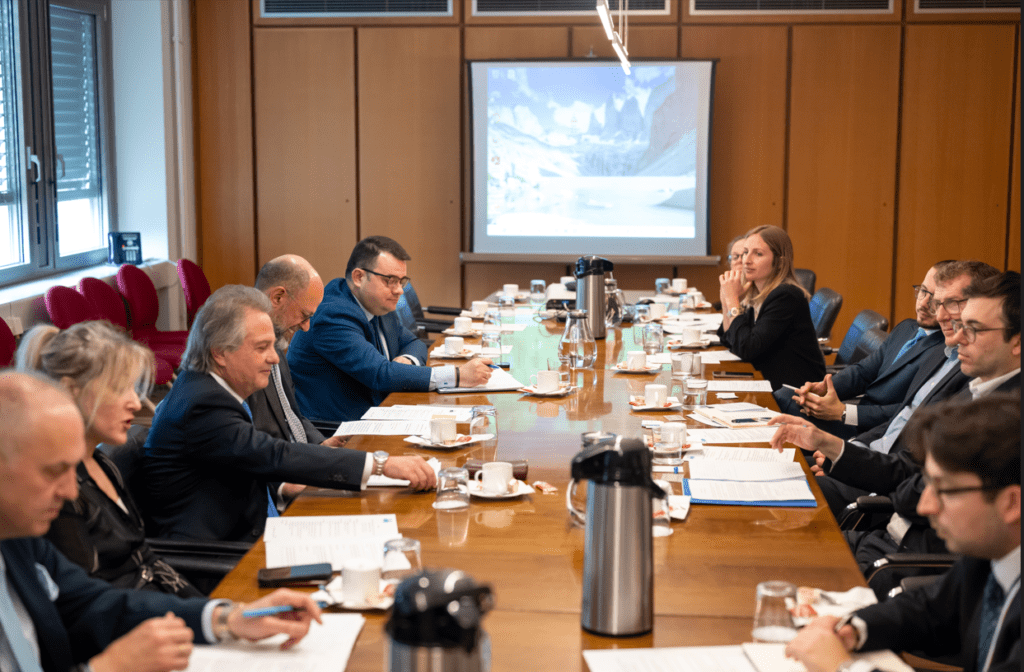
Tuesday, May 12th, 2026, 11.00 – 13.00 hrs.
Permanent Representation of GREECE to the E.U. 19-21, Rue Jacques de Lalaing – 1040 Bruxelles
EU Recognizes the Strategic Contribution of Shortsea Shipping and Moves Forward on Competitiveness, Resilience and Sustainability Goals
The European Union fully recognizes the pivotal role and strategic importance of shortsea shipping in advancing the green transition while safeguarding the high-quality standards of maritime transport services. This was the key takeaway from the highly productive policy workshop organized by the European Shortsea Network (ESN) on Tuesday, 12 May, attended by EU officials, representatives of European shipowners’ associations, the European Shipowners | ECSA, Members of the European Parliament, and national Shortsea Promotion Centers.
The event was hosted at the premises of the Permanent Representation of Greece to the European Union in Brussels. Opening the workshop, Ambassador Ioannis Vrailas, Permanent Representative of Greece to the EU, delivered welcoming remarks emphasizing that the significance and contribution of shortsea shipping — as well as the role of the ESN itself — are now widely acknowledged and firmly established within the European agenda.
The keynote address by Charalampos Simantonis, President of the European Shortsea Network and President of the Hellenic Shortsea Shipowners Association, set the stage for the core issues currently shaping the future of shortsea shipping. He highlighted ESN’s mission as a European platform for cooperation and information exchange, dedicated to promoting and developing shortsea shipping through practical initiatives and to strengthening its integration within the intermodal transport chain.
Mr. Simantonis explained why shortsea shipping remains essential to the competitiveness, resilience and sustainability of the European economy, while also reinforcing Europe’s security and geopolitical standing. However, on the road to green transition and compliance with multiple — and often overlapping or conflicting — international and European environmental regulations, the sector itself is increasingly facing challenges that directly affect both its competitiveness and long-term viability.
In particular, the “Fit for 55” package and the EU ETS framework are creating a complex operating environment for the shortsea fleet, placing significant financial burdens on operators that are often disproportionate to the expected benefits. Nevertheless, a positive shift is clearly emerging: both European institutions and international bodies increasingly recognize that revenues generated through environmental measures must be reinvested to support the sector’s transition toward decarbonization. In this context, there is growing consensus that shortsea shipping deserves targeted support to successfully navigate this transition.
This shared understanding was also reflected in the interventions of the other participants, including Lorenzo Matacena, Confitarma SSS Committee Chair & ES-ECSA SSS Working Group Chair (online); Evina Fodiadou, Director for Shipping Policy and Communications at ECSA; Cecare Crocini, Head of EU Office at Assarmatori, the Italian Shipowners’ Association; Claudia Vella Casagrande, Secretary of the Malta International Shipowners Association and SPC Malta; Paul Brewster, EU Policy Advisor at the Irish Maritime Development Office and SPC Ireland; Roberto Mencarelli, Head of EU and National Programmes at RAM and SPC Italy; Elissavet Vozemberg-Vrionidi, Member of the European Parliament and Chair of the TRAN Committee; and Foteini Ioannidou, Director of Directorate D – Waterborne Transport at DG MOVE.
Ms. Fodiadou underlined that: a) European strategic policies clearly recognize the vital contribution of shortsea shipping to the European economy, particularly in strengthening competitiveness; and b) the green transition comes with substantial costs, making adequate financing mechanisms indispensable for the successful implementation of related initiatives.
Along the same lines, Ms. Vozemberg stressed that shortsea shipping is steadily gaining prominence on the EU public policy agenda and remains a key pillar in Europe’s broader transport and sustainability strategy.
Concluding the workshop, ESN President Charalampos Simantonis stated:
“We are extremely satisfied with the outcome of the discussions. It is now evident that Europe — its institutions, organizations and the European Commission alike — fully understands the importance of shortsea shipping for the European economy and society. We were particularly encouraged by the convergence of views among all participants, which clearly demonstrates that we share common objectives and strong allies on the challenging path toward green transition. The EU appears more prepared than ever to support the development of a realistic, economically viable and competitive shortsea shipping sector. The next step is to translate these strategies into concrete implementation measures, with measurable results and clear timelines.”
