




by Dr. Sofia Mavrikou*
Europe’s seas have long connected nations through trade, culture and scientific exploration. Today, they are also becoming a driving force for innovation, sustainability and economic growth. At the heart of this transformation stands marine biotechnology—an interdisciplinary field that combines biology, biotechnology, engineering and environmental sciences to develop sustainable solutions for health, food production, aquaculture, blue bioeconomy and environmental protection.
This vision was vividly demonstrated during the EU-CONEXUS Marine Biotechnology Graduation Week, hosted by the Agricultural University of Athens (AUA) from 6 to 10 July 2026, bringing together students, academics, university leaders, researchers, industry representatives and policymakers from across Europe.
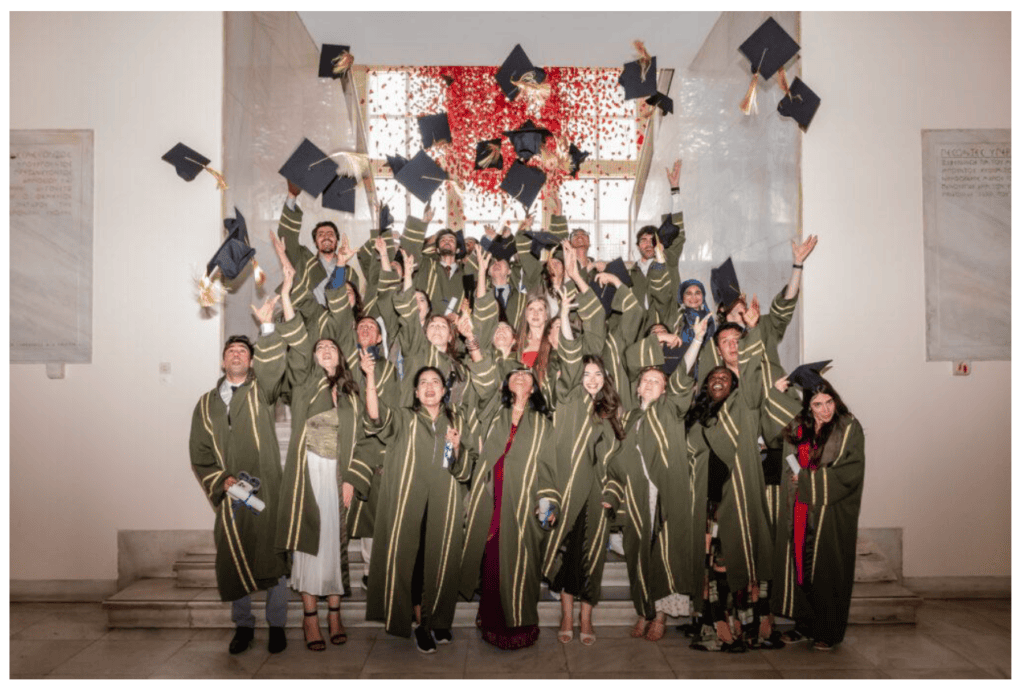
The week culminated in the Graduation and Diploma Awarding Ceremony for the third cohort of the EU-CONEXUS Joint Master’s Programme in Marine Biotechnology (JMPMB), celebrating not only the academic achievements of its graduates but also the growing success of one of Europe’s flagship Erasmus Mundus programmes.
A truly European Master’s Programme
The Joint Master’s Programme in Marine Biotechnology represents an outstanding example of European higher education integration.
Rather than studying at a single institution, students experience an international academic journey across six universities:
•Agricultural University of Athens (Greece)
•Catholic University of Valencia (Spain)
•La Rochelle University (France)
•University of Zadar (Croatia)
•Klaipeda University (Lithuania)
•Technical University of Civil Engineering Bucharest (Romania)
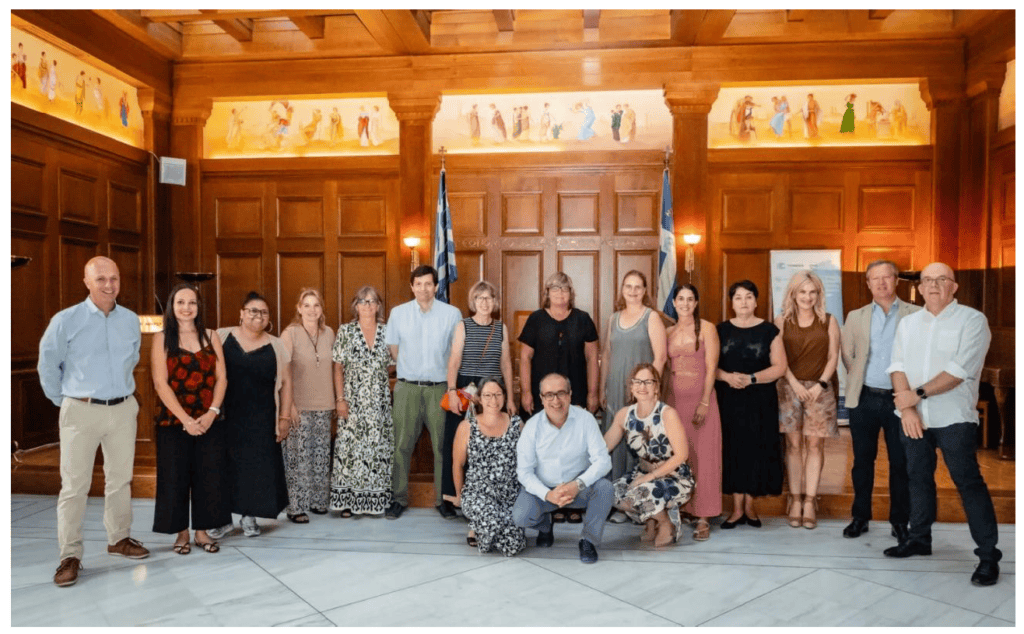
This collaborative model allows students to combine expertise from different scientific disciplines while experiencing different research environments, cultures and innovation ecosystems.
The programme offers specialised pathways in:
•Aquaculture Biotechnology
•Marine Biorefineries
•Blue Biomass
•Innovative Marine Bioproducts
Graduates develop advanced scientific knowledge while gaining practical experience through collaborations with research institutes, industry partners and public organisations working across the blue economy.
Celebrating international excellence
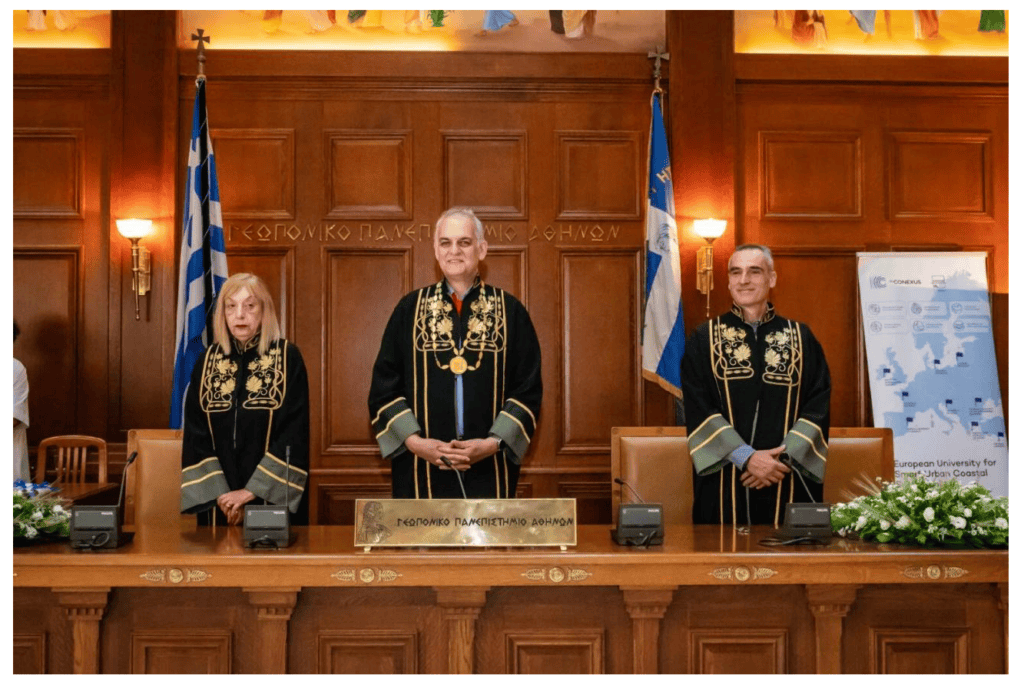
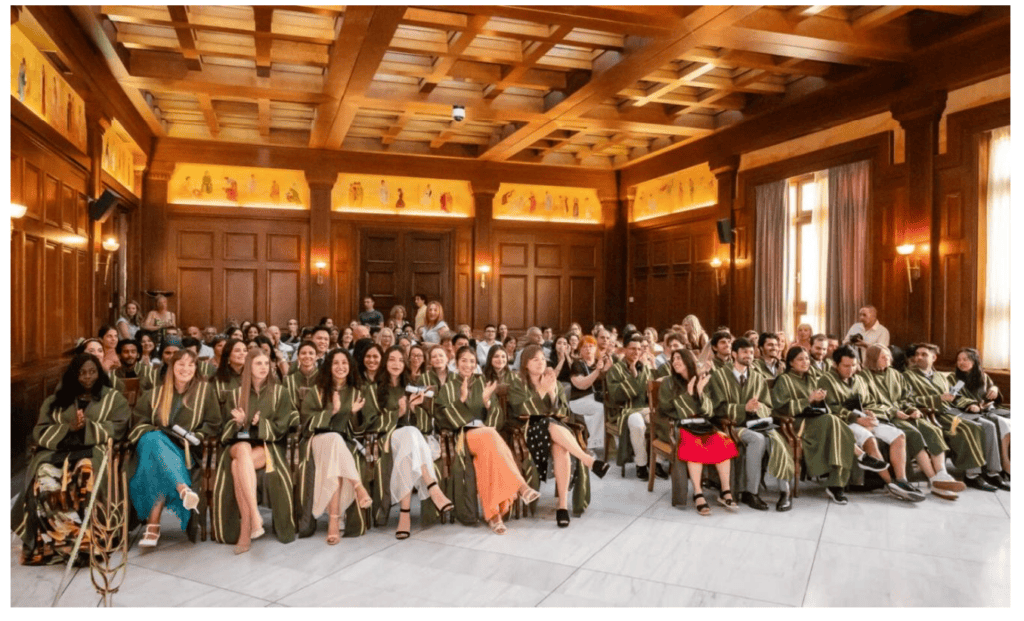
The graduation ceremony, held at the Agricultural University of Athens, reflected the truly international character of the programme.
Thirty-two graduates representing 20 different countries received their Master of Science diplomas before an audience that included university rectors, vice-rectors, professors, family members and institutional representatives from all partner universities.
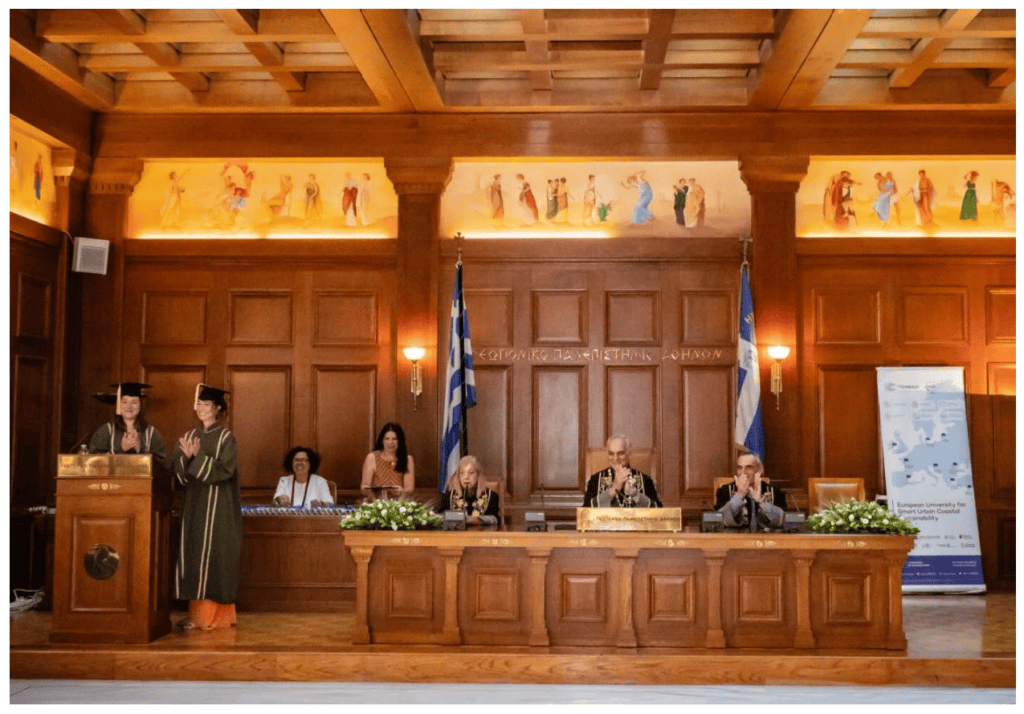
Graduate representatives shared their personal experiences, highlighting that beyond academic excellence, the programme had provided lifelong friendships, multicultural understanding and international professional networks that will accompany them throughout their careers.
The ceremony concluded with a musical performance by the AUA Music Club, symbolising both celebration and the cultural diversity that defines the European University Alliance.
Blue Innovation Day: where science meets industry
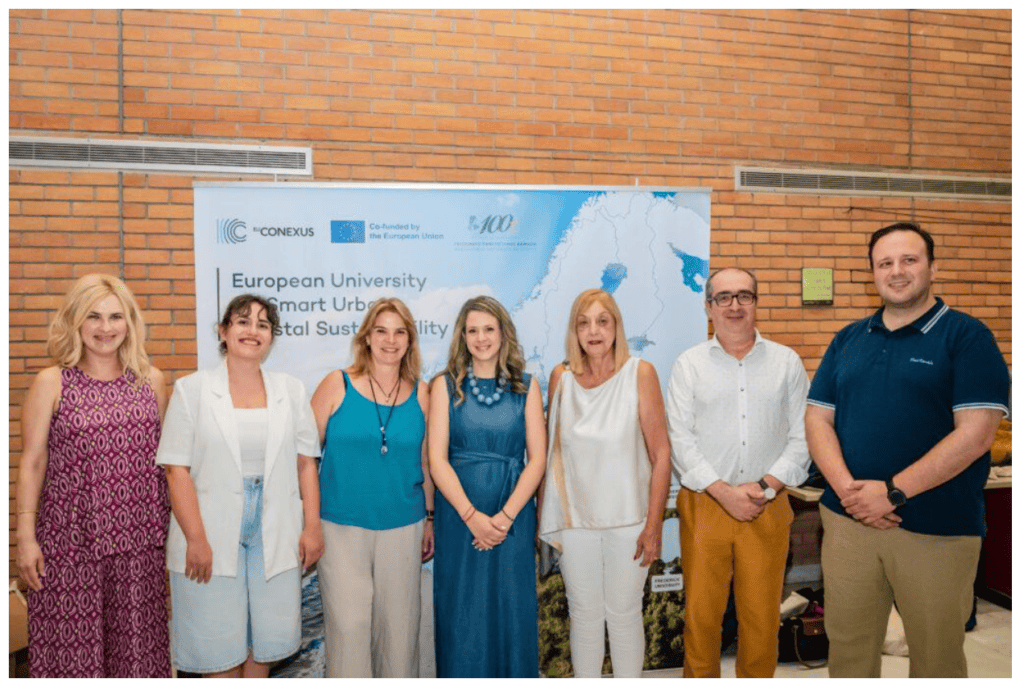
A particular highlight of Graduation Week was Blue Innovation Day, organised on 9 July 2026.
Rather than being a conventional academic conference, the event successfully brought together researchers, entrepreneurs, aquaculture companies, policy makers and students, demonstrating how scientific discoveries can be translated into practical solutions for society.
Presentations covered topics ranging from selective breeding in Mediterranean aquaculture and alternatives to antibiotics, to marine genomics, environmental sustainability, ESG principles, urban biorefineries and European marine research infrastructures.
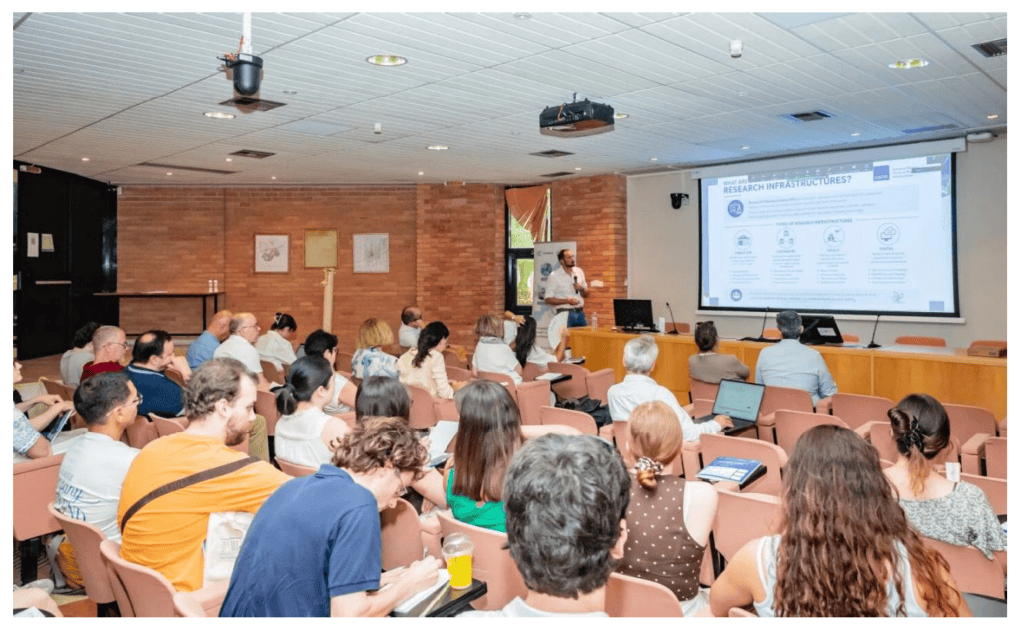
Among the speakers were experts from AVRAMAR, the Hellenic Centre for Marine Research (HCMR), Aquatic Biologicals, ITS ALIVE, and EMBRC-ERIC, illustrating the programme’s strong links with industry and research organisations.
Equally important was the networking environment created throughout the day. Students had the opportunity to engage directly with potential employers, entrepreneurs and scientists, reinforcing one of the programme’s key objectives: preparing graduates not only for academic research but also for careers in innovation and industry.
European recognition for academic excellence
While Graduation Week celebrated past achievements, Brussels simultaneously delivered another major milestone for the programme’s future.
The EU-CONEXUS Joint Master in Marine Biotechnology became one of the first European University programmes to receive the Joint European Degree Label, awarded by the European Commission.
The label recognises programmes jointly designed, governed and delivered by universities from different European countries according to common European quality standards.
It confirms that students are not simply studying abroad, but participating in a genuinely integrated European curriculum built upon shared governance, academic excellence, mobility, multilingualism and common European values.
For graduates, the label enhances international recognition of their qualifications while further strengthening their employability within the rapidly growing blue biotechnology sector
Continued investment in Europe’s blue future
The programme’s success has also been recognised financially.
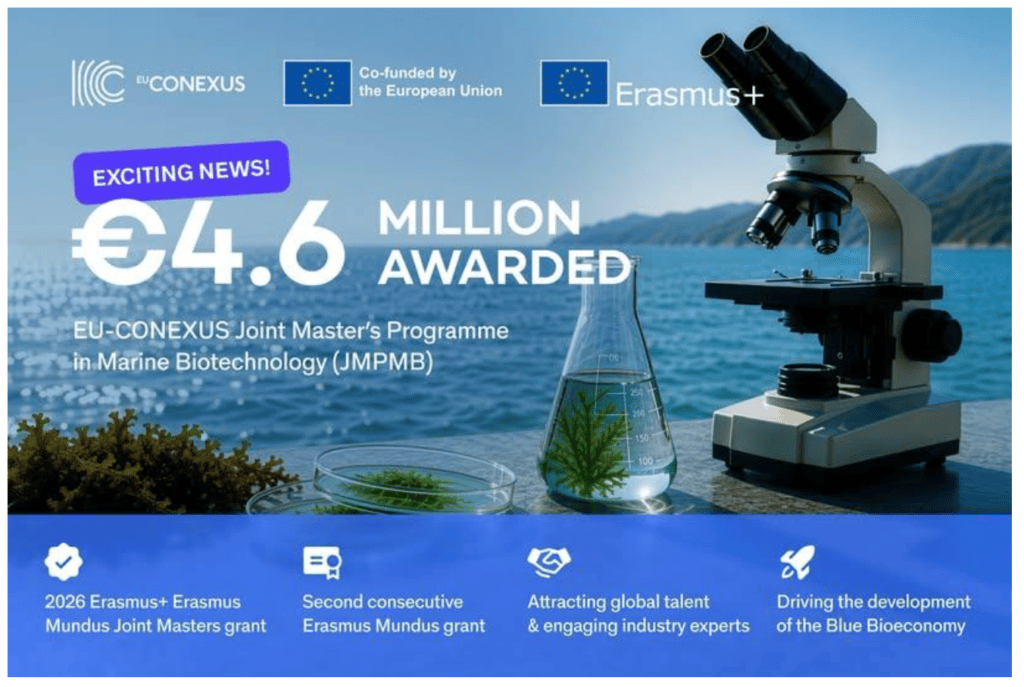
Following a highly competitive evaluation, the European Commission awarded the consortium €4.6 million under the 2026 Erasmus+ Erasmus Mundus Joint Masters Call, marking the programme’s second consecutive Erasmus Mundus grant.
This substantial investment will support new student scholarships from Europe and around the world while further strengthening collaboration between universities, research organisations, industry and public authorities.
The next phase of the programme will continue expanding its Academia–Industry–Public Administration–Society ecosystem, ensuring that graduates acquire not only scientific excellence but also the entrepreneurial, digital and interdisciplinary skills increasingly required within the blue bioeconomy.
Looking beyond Graduation: the next chapter of EU-CONEXUS
The momentum extends well beyond the Marine Biotechnology programme itself.
The EU-CONEXUS Alliance recently achieved another important milestone through its LevelUP initiative, which has successfully passed the European evaluation stage and entered Grant Agreement Preparation.
LevelUP represents the next phase of development for the European University Alliance, aiming to deepen institutional integration, strengthen cooperation between partner universities and create even more opportunities for students, researchers and regional stakeholders.
For students, this means greater international mobility and richer educational experiences. For universities, it strengthens joint research, innovation and shared governance. For society, it reinforces collaboration with coastal regions and local ecosystems, supporting sustainable development through education and research.
A model for the future of European Higher Education
The events hosted in Athens during July 2026 illustrate something much broader than the graduation of a Master’s cohort.
They demonstrate how European universities can work together to create integrated educational programmes that combine academic excellence, international mobility, research, entrepreneurship and societal impact.
Marine biotechnology itself embodies this philosophy. Addressing challenges such as sustainable aquaculture, marine biodiversity conservation, blue bioeconomy, climate resilience and innovative marine products requires interdisciplinary knowledge and international cooperation.
Through initiatives such as the EU-CONEXUS Joint Master’s Programme in Marine Biotechnology, Europe is investing not only in educating highly skilled scientists but also in preparing a new generation of professionals capable of transforming scientific discoveries into practical solutions for society.
As Europe continues to strengthen its Blue Economy, programmes like EU-CONEXUS demonstrate that the future of higher education lies not within national borders, but in collaborative, interdisciplinary and internationally connected learning ecosystems that prepare graduates to address global challenges together.
___
* Dr. Sofia Mavrikou is an Assistant Professor at the Laboratory of Cell Technology, Department of Biotechnology, Agricultural University of Athens, specializing in bioelectrical biosensors. She obtained her B.Sc., M.Sc. and Ph.D. from the Agricultural University of Athens, where she specialized in cell-based biosensors and in vitro toxicology.
She is also Co-Founder and CEO of Ce.B.Tec. P.C., an academic spin-off company of the Agricultural University of Athens developing innovative biosensors and advanced cell-based testing platforms. Her research focuses on biotechnology, food safety, environmental monitoring, toxicology, sustainable development, and One Health approaches, while she actively participates in national and European research and innovation initiatives.
Dr. Mavrikou is actively involved in EU-CONEXUS (European University for Smart Urban Coastal Sustainability), contributing to education, research and international collaboration for the sustainable development of Europe’s coastal and island regions. She also serves on the Board of Directors of the Hellenic Biotechnology Cluster (HBio), promoting biotechnology innovation and entrepreneurship, and on the Board of Directors of the Hellenic Association of University Women (ELEGYP), supporting Diversity, Equity and Inclusion (DEI) in science and higher education.
With family roots in Karpathos, Rhodes and Skyros, she has developed a lifelong connection with the sea and the Greek islands, inspiring her scientific interest in the contribution of biotechnology and agricultural sciences to food security, marine environmental protection, sustainable shipping, the blue economy, and the sustainable development of coastal and island communities.
