





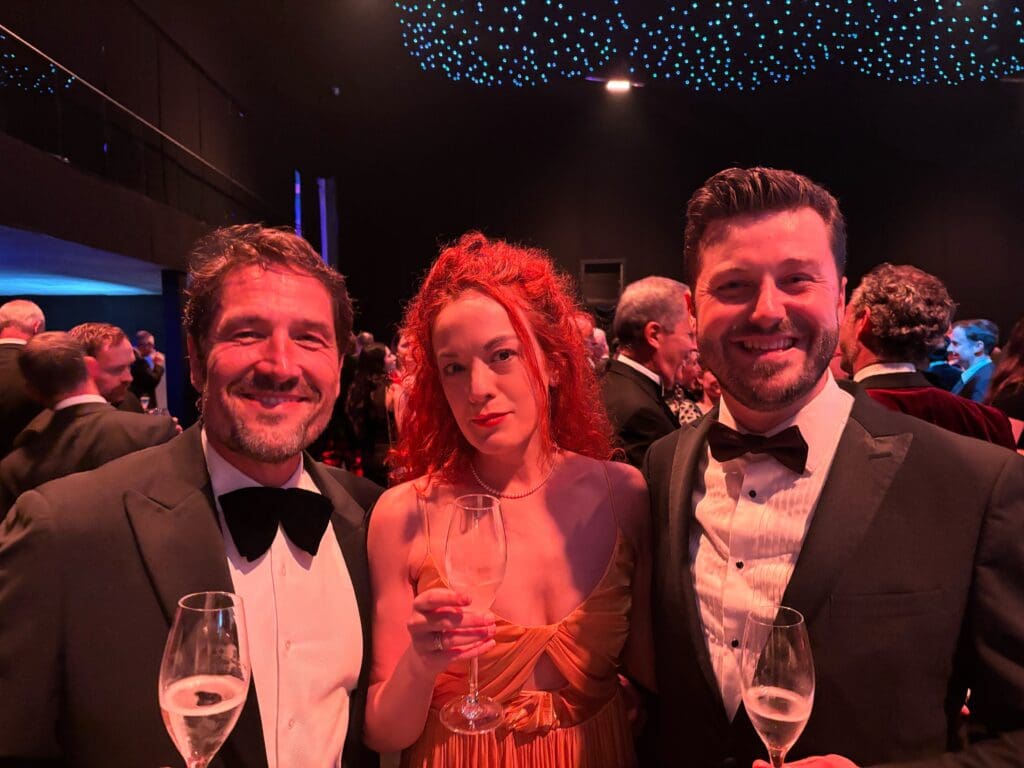
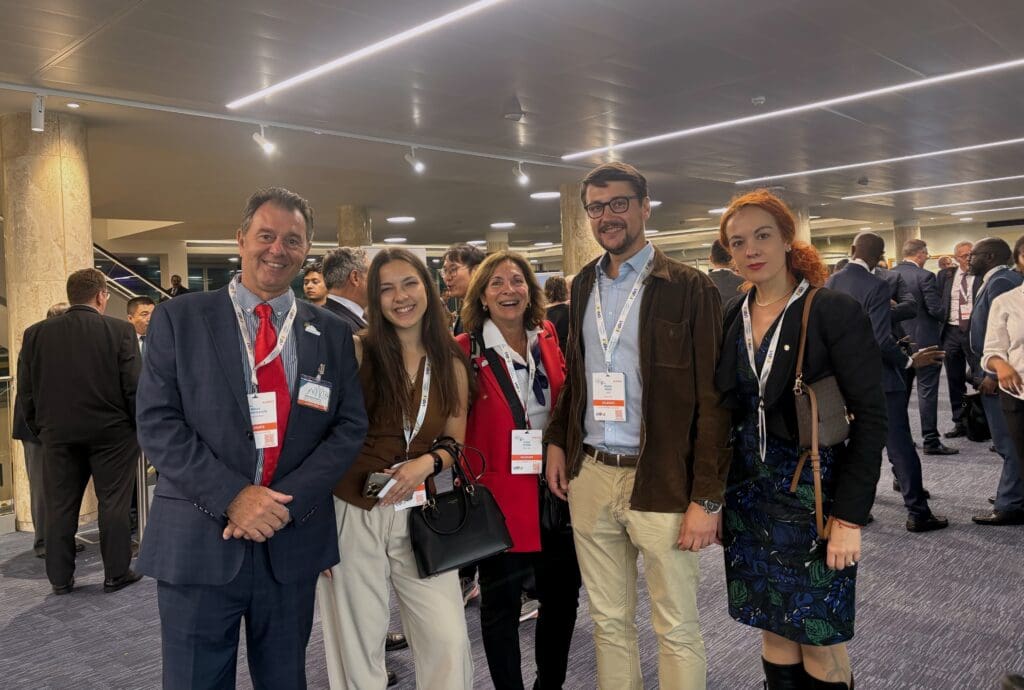
by Emma Collier of further & further at London International Shipping Week 2025 representing us and attending, most of the events…
Collaboration showed up in almost every conversation I had during LISW — specifically, that we need much more of it.
What took longer to surface was that we often weren’t talking about the same thing at all.
Throughout the week, the terms collaboration, cooperation, and partnership were used seemingly interchangeably in my tiny mic sessions, across panels, and in many of my sidebars, and it became evident rather quickly each of them held a spectrum of varied and frequently opposed meanings for the people wielding them. Since I’m long overdue to write about the week, I thought I’d take a swing at clarifying a few of the different shapes I see collaboration taking based on the exchanges I had.
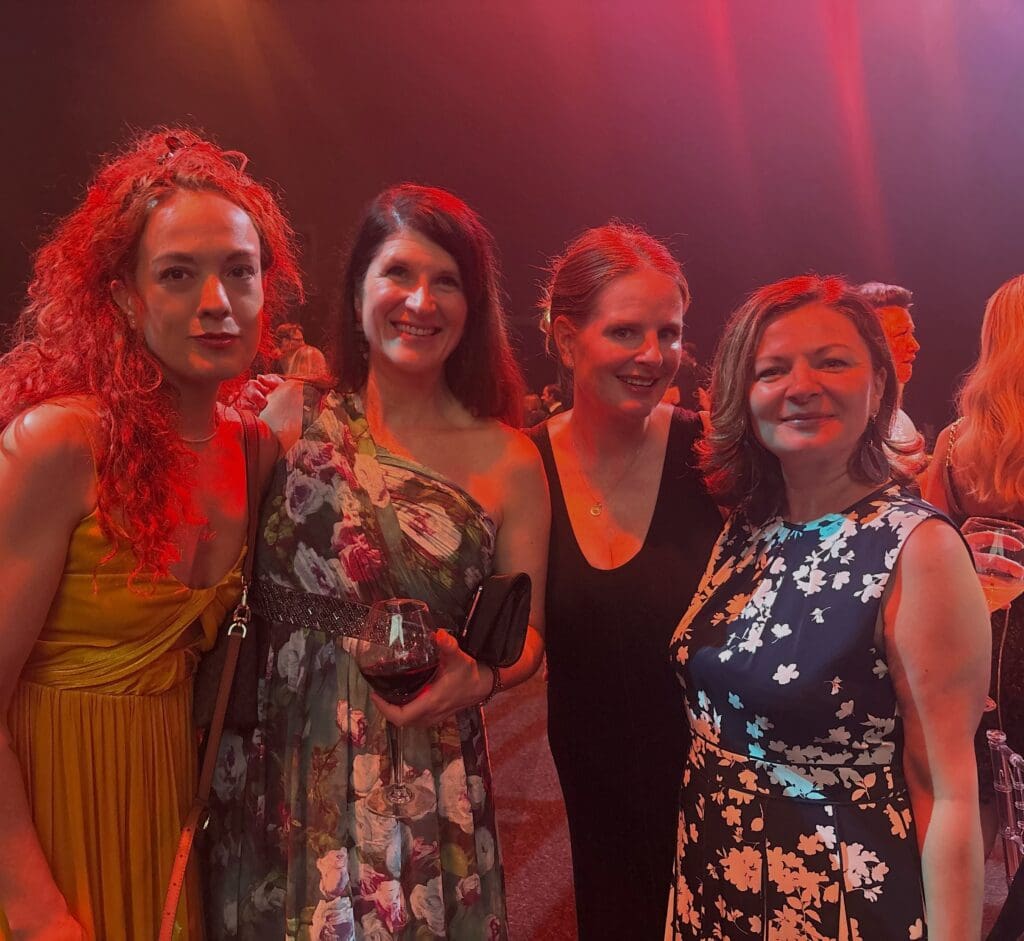
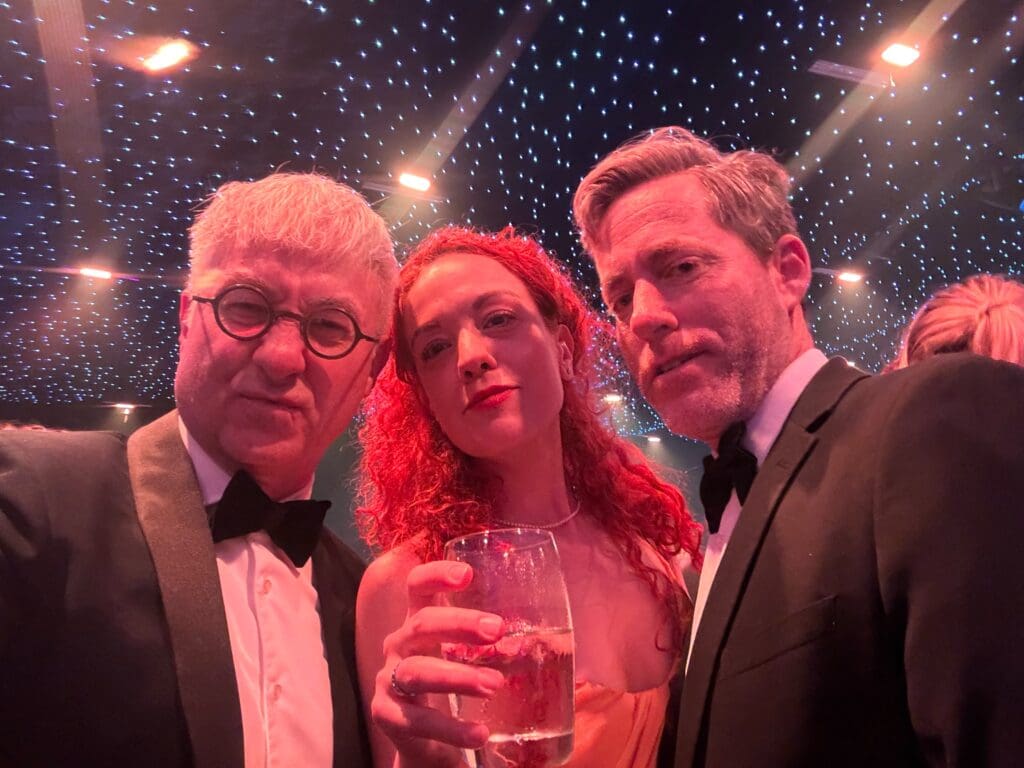
As the gala was winding down on Thursday, I happened to mention to my good friend, Nir Gartzman, that I was fairly sure we didn’t have the same thing in mind when we said we wanted more collaborations and asked for his take on this since he has about a thousand times as many conversations as I do. He agreed: most people, he said (and mistakenly, in his opinion), think collaboration is a version of turning up to meet new people from a company you admire at a bar and hoping they’ll pay for the drinks so you all can just have a good time. If there is a value for you to turn up in the first place, he said, you need to expect to pay for it and likewise, if you have something you think I’ll want, sell it to me and then boom — we’re collaborating. His partners that invest capital into theDOCK fund so they have capital to deploy? Collaboration at its finest.
If you’ll permit me to have a little fun here, I’d like to run with the drinks example to show how I see this working across maritime.
Commercial Collaboration: “Welcome to my Margarita bar. I sell margaritas and they cost this much. How many would you like?”
Let’s say you have a bar with the best margaritas in all of London (otherwise known as Café Pacifico, in case you’re wondering). I come to your bar because I’m not very good at making margaritas or can’t be bothered and would prefer to pay you for them.
In maritime, these are vendor relationships: you’ve built a product that solves a need or problem I have, I buy or license it and get on with things, or you offer a service, so I can enlist the help of an expert to smooth out some sharp edges in company dynamics, for example. It’s transactional in the best sense of the word.
Reciprocal Collaboration: “Stellar Margaritas, but instead of bringing cash, can I bring my Taco Truck instead?”
If I can find another way to get what I want besides spending money, there’s a chance I’ll at least give it a shot. After all, I’m an entrepreneur, just like you. You’ve already got this bar set up and rather than continue to rack up a tab, I decide to try my luck and roll in with my taco truck. No money changes hands between us; we just agree tacos and margaritas are better together. Your customers stay longer, mine eat more. We both benefit from being beside each other, still running our own businesses.
In maritime, this is Luis Benito wanting more people to approach saying “I have an idea, can we do this together?” and then embark on the exploratory joy of finding what mutual value each party can bring. It could be purely commercial and transactional, or something else entirely. It’s Lidia Selivanova calling for partnerships that create synergies across cybersecurity, crew welfare, data, and decarbonization, with the focus on the benefits of shared strengths and what can be accomplished together first, commercial upside second. It’s also the EU ETS surplus pooling Reinis Ābele and Ralf Garrn describe: sharing resources so everyone avoids penalties, each serving their own compliance needs while helping others do the same.
New Infrastructure / Ecosystem Development Collaboration: “Margaritas & Tacos Present: The Agave Love Festival”
Mutually beneficial proximity evolves beyond a parallel play to designing something together that allows us to level up and create a third profit stream that we’ll split because, like everyone else, we want more money and enjoy the challenge of new, well-constructed adventures — in this case, a festival. We agree to share the expenses to pull it off, name and brand it up, curate the drinks and food menu, hire musicians, additional chefs, invite brands to contribute new products for the tastings, and sell tickets. If it’s a success, we now have a blueprint we can shop around and reproduce it. If it’s not, we look at what fell over and conceive another version.
In maritime, this is Isabelle Ireland describing what infrastructure actually requires: ports, suppliers, shipowners all ready to go with their interdependent pieces built as soon as it’s show time because no country or company can do this alone. It’s tech providers like Frank Rellou who aren’t scared of sharing their vulnerabilities, knowledge, data, or challenges, as well as what’s working, so it can work better for everyone. It’s voices of reason like Martin Crawford-Brunt establishing a baseline for what good looks like, which could allow us to do things like set up performance-based contracts and stop wrestling with regulation that frustrates existing contracts and mostly makes lawyers rich. Or Robin Russel’s angle that prescriptive, absolute targets tend to trap us in arguments about numbers, while comparable approaches could give the market room to drive improvement itself. If we can’t agree on what good looks like to begin with, how can we cohesively build toward better?

In Infrastructure/Ecosystem Development Collaboration, everyone is contributing capital to build their part in the newness, but there’s a framework around it and hypotheses already tested in our parallel play about why it will work, so it’s a more calculated, interconnected risk.
Network / Community Building Collaboration: “Introducing the Tiny Mic Agave Sessions hosted by 50 Cent, Robert Greene, and Carlos Camarena, Master Distiller”
Network / Community collaboration mixes all of the above to allow choice of voices, composition, and the shape the narrative takes to provoke other outcomes.
In this imagined session, we have:
- 50 Cent (rapper, entrepreneur, built empire from survival instincts, co-wrote The 50th Law with Robert Greene)
- Robert Greene (author of power dynamics and human behavior including The 48 Laws of Power, Mastery, and The 50th Law, among others)
- Carlos Camarena (master distiller at El Tesoro, third-generation tequila maker, traditional tahona process)
Why listen to them in conversation?
50 Cent and Robert Greene co-wrote The 50th Law together to attempt to translate street survival into principles of power and fearlessness. Camarena is of a different discipline entirely: his family uses the tahona wheel to crush agave the traditional way, a craft magic that’s traveled through generations. In conversation together they’d open up three diverse relationships to craft: hustler, map maker, and maestro. Steer that to discussing collaboration and you’d end up with three different takes on inheritance: what you build from nothing, what you recognize from history, what you receive and choose to carry forward.
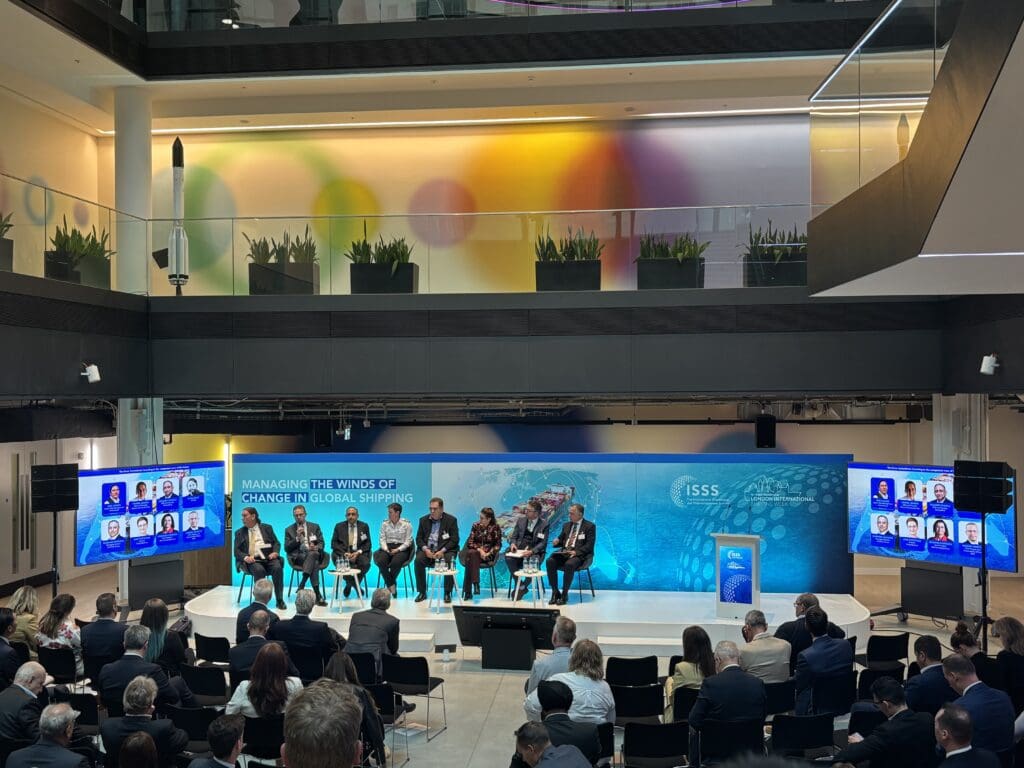
In practice in maritime, LISW saw some delightfully inventive sessions this year that included a Parliamentary-style debate with Breaking the Code of Silence: Maritime’s Data Dilemma , the electrically charged game show style of Strictly Decarb , and ShipMoney’s Fast Data, Smart Decisions: What Formula 1 Can Teach Maritime with Richard Buckley angling conversations toward broader organizational needs rather than fixating on what’s broken, Raal Harris shapeshifting formats and ways of juxtaposing perspectives to reimagine engagement, and Karen Martin drawing on stories, strategies, and the role of analytics through another high-performance environment as a parallel. Mix up the company, blur the lines between audience and speaker, introduce Chatham House rules or incite more dynamic, fluid energy, and you give people a reason to close their laptops and stop doom scrolling.
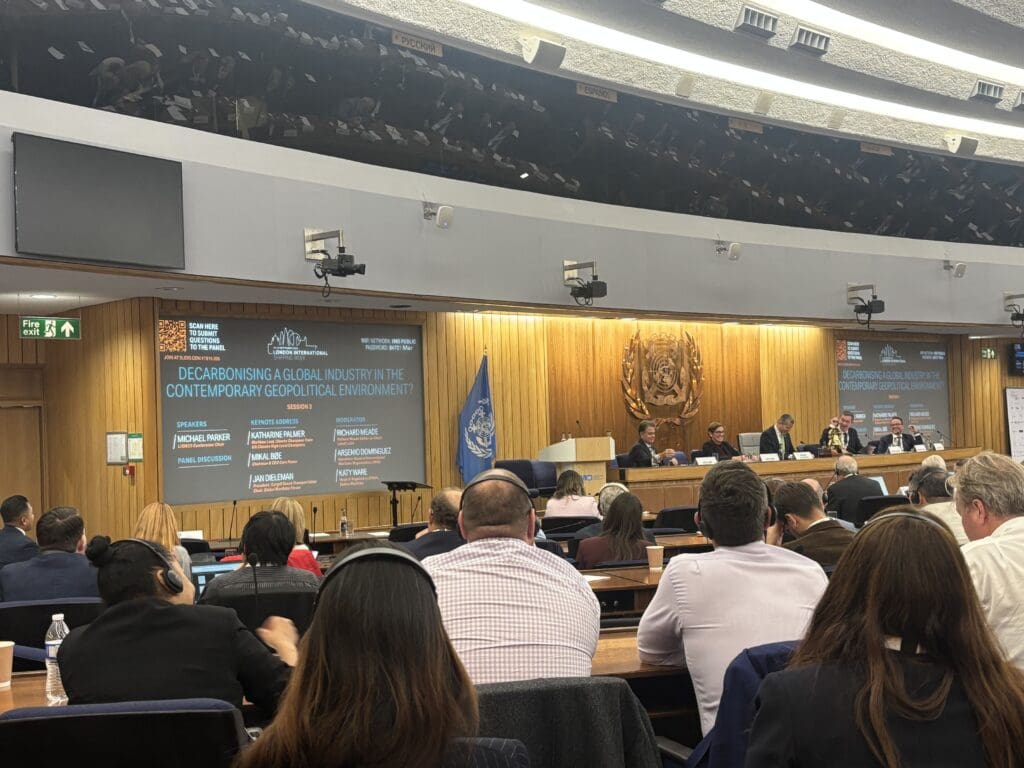
Llewelyn Bankes-Hughes and Sean Maloney created LISW to be exactly this kind of convening mechanism: where commercial deals are closed, reciprocal exchanges emerge, infrastructure gets plotted and sketched, and people stage events however they like: 350 official ones this year, to be exact. And as anyone can run them, the spectrum of what they contain covers just about anything you can think of: finance, cybersecurity, insurance, tech & AI, governance, seafarer welfare, even a few lovely surprises like neurodiversity among teams all found their way onto the calendar this year.
If you’ve been wondering where AI’s collaboration tier fits into all of this, I have it pencilled in softly but ultimately feel it deserves a separate piece. Better to get our own semantics straight first on what we mean when we speak up loudly for collaborations before we move to the human plus AI pairings. There are no wrong answers here, either; it all comes down to whether the person on the other side likes how you define it, or whether you can find your way to a middle ground where everyone is a little unhappy but ultimately stronger in agreement.
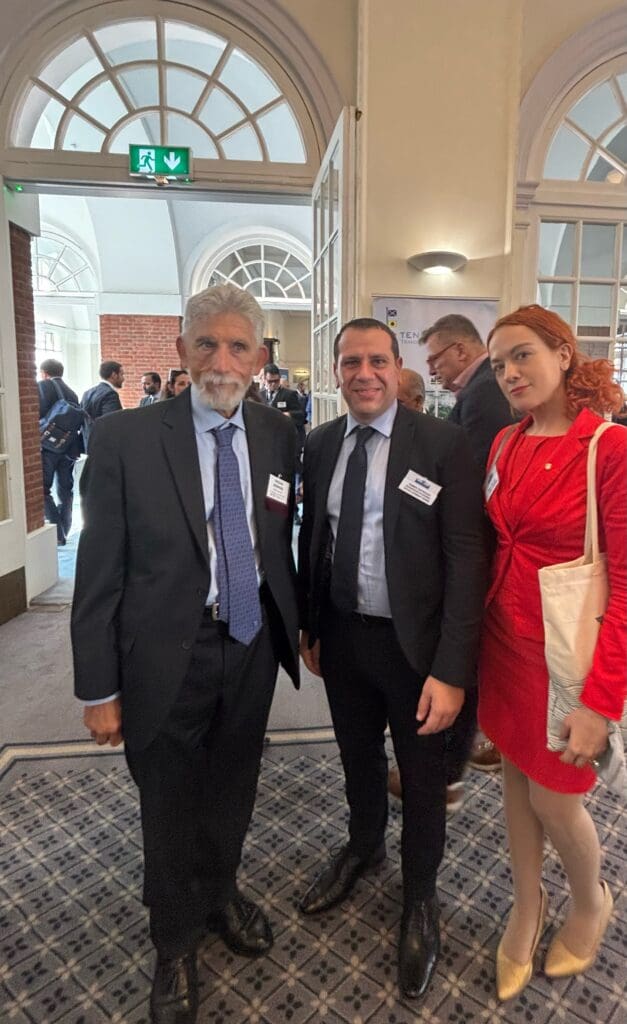
Luis told me it’s our shared homework to find the value for everybody in collaboration. Tricky, yes, but he thinks digitalization will break barriers to help us find it, and can become an indispensable tool for collaboration going forward. I’m with him (cautiously, optimistically), except with the caveat that the conversation and socialization around the use of digital tools needs to change first, in order for more of us to see this as something that can be enjoyed rather than blunt-force transformation we have to endure.
Maybe another piece of homework for all of us post-LISW and pre-whatever comes next is to look harder at the tools and ingredients for collaboration that may be lurking beyond the obvious ones. Their surfacing may be the real guide we have in whatever it is we finally do or don’t do.
* Cafe Pacifico (Covent Garden), 5 Langley St, London WC2H 9JA.
