


CORE POWER’s November 2025 CONVOY webinar on interfaces, shielding and containment for maritime nuclear systems brought together experts Bright Ahonsi, Oscar Hamilton and Robert Chaplin to examine how nuclear technology can safely adapt to the marine environment.
Ahonsi introduced a structured “demand pull–technology push” framework for managing design and integration challenges across safety, operational and structural domains—emphasising interfaces as the key link between technology and customer needs.
Hamilton explored the synergy between shielding and containment, explaining how a functional containment approach can reduce radiation exposure and enable smaller, risk-based Emergency Planning Zones (EPZs), a major advantage for floating nuclear power plants in port settings.
Chaplin addressed the complex regulatory landscape, outlining how nuclear regulators, flag states, ports and classification societies must coordinate to certify maritime nuclear assets—highlighting the need for new protocols as global standards evolve.
Together, the presentations underscored how engineering innovation, safety assurance and regulatory alignment form the foundation for the next generation of maritime nuclear power.
| New nuclear in the news |
| Stay up to date with the latest news and insights on new nuclear developments below: E&E News: Can US nuclear heavyweights catch Russia and China? Trump bets on it. Reuters: US strikes $80 billion deal for new nuclear power plants TradeWinds: HD Hyundai embraces defence and nuclear markets with AI and small reactor-powered ships |
Resource Hub
Take a look at this week’s latest additions:
We are excited to announce that the first batch of panel videos from ARGO: New Nuclear for Greek Maritime 2025 are now available on our YouTube channel.
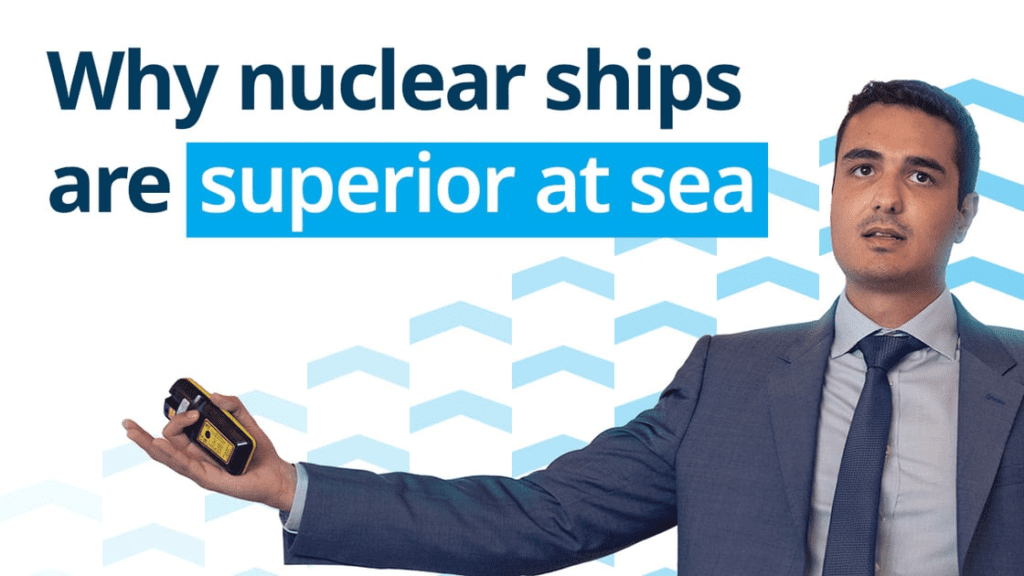
Delivering safe, scalable and modular solutions
In this session from ARGO: New Nuclear for Greek Maritime, Senior Nuclear Engineer Ioannis Kourasis explores how advanced reactors are being engineered for shipboard and offshore use. He outlines why nuclear can outperform conventional ships in endurance and efficiency, and how modern reactor designs bring strong inherent safety characteristics.
Ioannis also highlights CORE POWER’s work developing a molten chloride fast reactor (MCFR)—which has high efficiency and long refuelling cycles—and explains how integrated engineering across naval architecture, mechanical and electrical systems and regulatory development is shaping the next generation of maritime nuclear systems.

Building the business case for maritime deployment
In this session from ARGO: New Nuclear for Greek Maritime, Thomas Davies, CORE POWER’s Director of Analytics, sets out how advanced nuclear technologies are moving from speculation to a commercially credible pathway for global shipping.
He explores the sectors where nuclear can deliver real advantage — from large commercial vessels to ports, offshore platforms and energy-limited coastal regions — and outlines the business models, financing and insurability frameworks needed for deployment. Davies shows how long endurance, high energy density and lifecycle stability could offer ship operators a fundamentally new competitive edge.
| Upcoming events |