





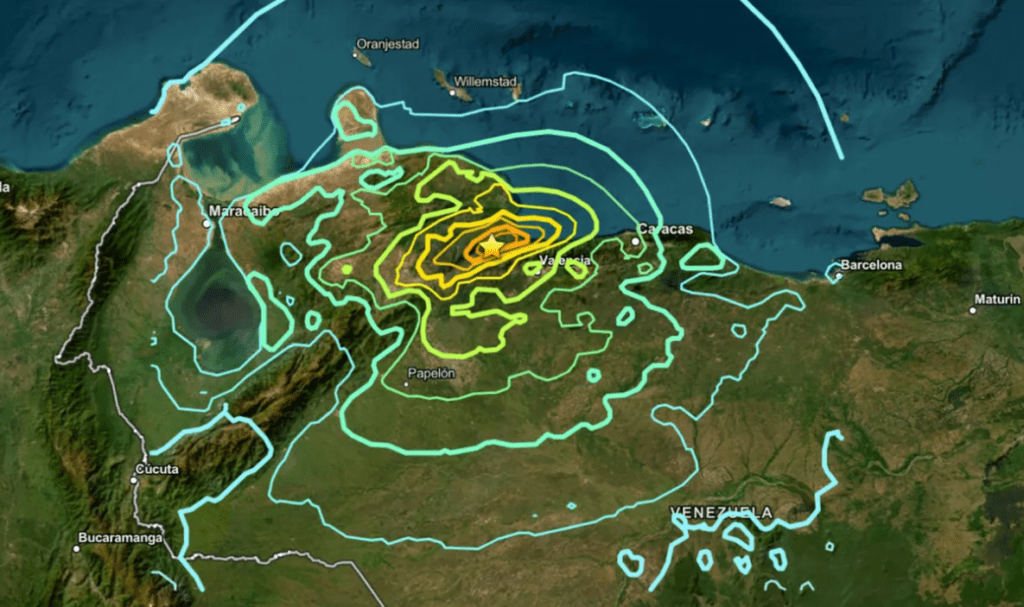
| Situation Report |
| Venezuela earthquake emergency and maritime operational outlook |
| As of 26 Jun 2026 / Information Cutoff 13:15 UTC |
Overview:
Following the magnitude 7.2 and 7.5 earthquakes that struck northern Venezuela on 24 June, the country’s principal commercial and energy ports remain operational under an elevated and rapidly developing risk environment. The overall port risk is assessed as Moderate, temporarily rising to Moderate to High at La Guaira, Puerto Cabello, El Palito, Morón, and nearby north-central coastal facilities.
The main maritime concern is not a nationwide port closure, but the possibility of short-notice disruption caused by continuing aftershocks, structural inspections, damaged road access, power and telecommunications outages, reduced staffing, and pressure on emergency-response resources.
Key Points:
Ports requiring priority verification: La Guaira, Puerto Cabello, El Palito, and Morón require direct confirmation of berth integrity, pilotage, tug availability, cargo systems, utilities, road access, and emergency-response capability before arrival.
Oil and cargo operations: Major export terminals remain operational, although power instability, infrastructure inspections, personnel limitations, and documentation delays may affect cargo handling and terminal continuity.
Crew and logistics exposure: Airport closure, damaged transport links, and reduced shore-side services may delay crew changes, medical evacuation, technicians, spares, provisions, and inland cargo movements.
Security and compliance: Strict access control, anchorage security measures, and enhanced sanctions, ownership, cargo, insurer, banking, and counterparty screening remain essential.
Recommended Action:
Operators with vessels calling or scheduled to call at Venezuelan ports should obtain written confirmation from agents and terminals before proceeding, covering port status, berth readiness, pilotage, towage, cargo operations, communications, utilities, customs, road access, and emergency-response arrangements.
Vessels should maintain additional fuel, stores, and schedule margins, minimize unnecessary anchorage exposure, defer non-essential crew movements in affected areas, and establish clear cargo-suspension, delay, diversion, and emergency-departure criteria.
Τo Access the Full Standing Risk Assessment – Click Here
