





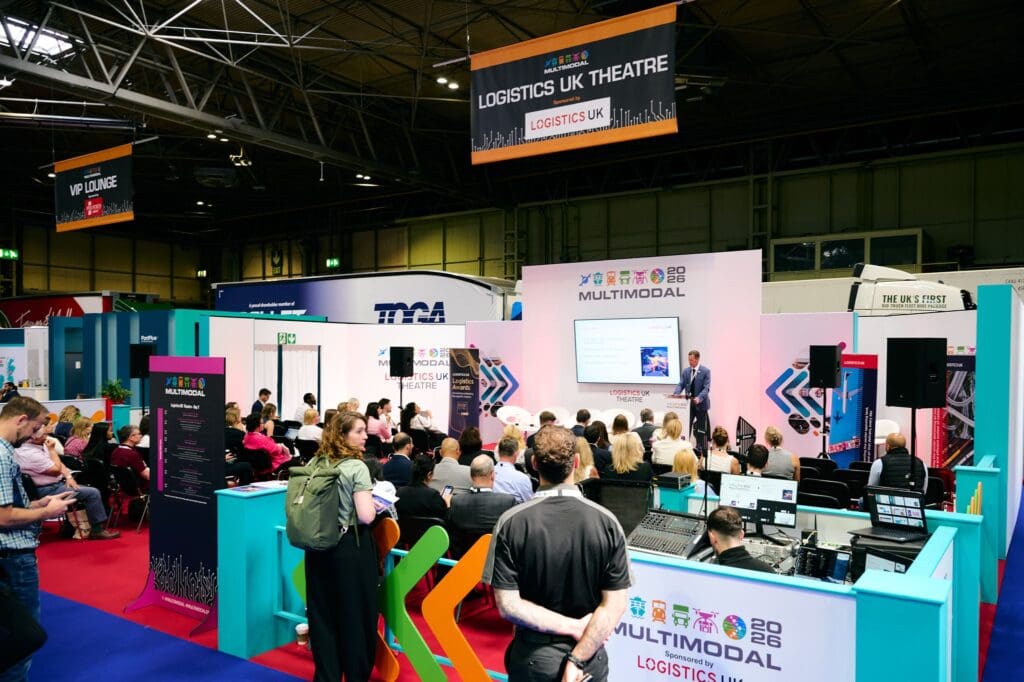
Day two of Multimodal 2026, the UK’s largest logistics event for transport and the supply chain, has been powered by lively debate and insight focused on a range of topics, from tax reform to the perishable supply chain.
The day kicked off with an expert panel debate on VAT reform and the future of corporate donations, following April’s legislative changes which removed VAT barriers to genuine, unconditional business donations to charities.
The debate was chaired by Karan Chhabra, Head of Policy, UKWA. He was joined on stage by Neighbourly CEO Steve Butterworth, and Dan Byam Shaw from the Felix Project. The group discussed what the VAT changes mean for logistics and warehousing businesses holding surplus stock, and how operators can design compliant processes while strengthening ESG credentials and reducing landfill.
Steve said: “CSR used to be activity-based, but not an obligation. The evolution of ESG has now shifted this conversation into the boardroom. We’ll see that the more you can remove the financial barrier and increase opportunities around a tax incentive, over time, will create behaviour change, shifting these decisions from a choice to a no-brainer.”
The lunchtime session in the Multimodal theatre focussed on measuring emissions, looking at why it still so rarely drives real change. John Murray, Head of Sustainability at CCL Techlogix, explained why reliance on averages limits progress, how strategies become disconnected from SBTi targets, and why understanding avoided emissions is essential to turning transport and supply chain data into measurable carbon reduction.
He said: “Measuring and reporting emissions are not the same as reducing them. The industry has to be honest about this distinction and drill down into the challenging questions. Measurement is only the beginning of the journey. To actually reduce your emissions, you need forward-thinking operational intelligence, where carbon sits alongside cost, service, and time.”
Resilience was a big part of the conversation in an afternoon keynote delivered by Nigel Jenney, Chief Executive of the Fresh Produce Consortium. Jenney looked at why the EU/UK reset could prove pivotal for the perishable supply chain, and outlined the practical changes needed to protect shelf life, safeguard margins and keep trade flowing.
Meanwhile, in the Logistics UK theatre, the conversation around decarbonisation continued from day one, with a lively panel debate hosted by Stephanie Haszczyn, Senior Policy Manager at Logistics UK. Her panel guests included Nicholas Mazzei, VP Sustainability at DP World, Marcus Connolly, Strategic Commercial Director – Container Division at Peel Ports Group and Sian McGuinness, Net Zero and Innovation Manager, from Forth Green Freeport.
During the debate, panellists discussed the key questions, opportunities and barriers facing an industry that must keep goods moving while transitioning to cleaner, greener transport.
On what the Government can do to support decarbonisation, Sian said: “It’s important to have alignment of policy but also alignment of regulation. Ensuring regulators and planners understand the technology and having regulatory enablers to push this through consenting is what will break down barriers.”
Robert Jervis, Event Director at Multimodal said: “Multimodal 2026 gives our delegates an opportunity to come together, in person, to share experiences and learn from our peers, which is what makes it such an inspiring place to be. Following yesterday’s 13,000 delegates, high numbers of visitors today have continued to create a real buzz out on the exhibition floor and the keynote theatres. One thing that’s been clear is the industry’s commitment to deliver more sustainable, efficient operations, not just for commercial gain, but because it’s the right thing to be doing.”
Find out more about Multimodal here: https://www.multimodal.org.uk/
Multimodal 2027 will take place from 29th June – 1st July 2027, at Birmingham NEC. Registration will be available from January 2027.
