


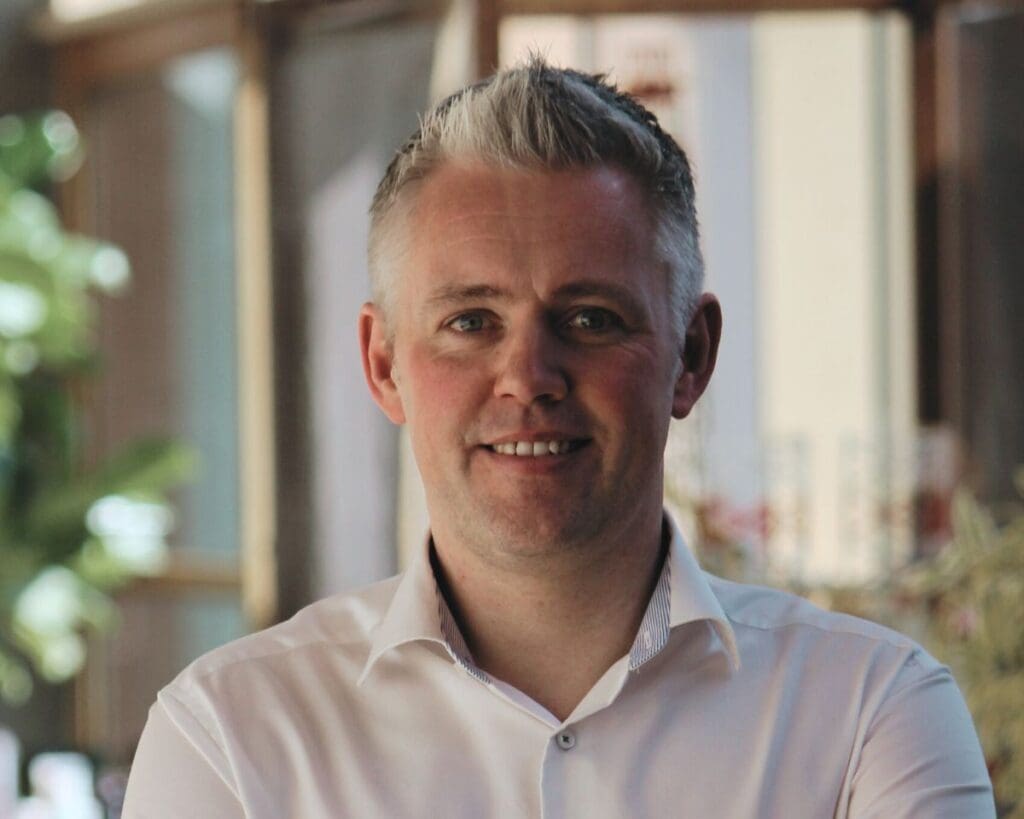
From scout troops to ship’s watch
Per Larsen’s leadership was shaped long before he set foot in an office. Two experiences run through everything he does: the scout movement, and more than ten years at sea.
Scouting taught him curiosity, and something he still leans on: children leading children, working in small teams toward a shared task. Then came the sea, first as a cadet, later as an officer. He remembers the first time he stood watch alone: an expensive ship, valuable cargo, a crew, and real consequences if something went wrong.
His years in Maersk Supply Service, running offshore operations with real inherent risk, gave him a principle he still uses today: ALARP, as low as reasonably practicable.
“Risk does not always have to be zero. I am actually quite comfortable operating with risk, but we need to understand what risk we are taking, what would be unacceptable, and what indicators tell us that the situation is changing.”
He calls it making risk informed decisions, a mindset that started on deck and now shapes how he runs a business.
Per has held around nine or ten roles across his 14 years at Maersk Training, starting as an instructor. That perspective never left him. Even now, his instinct is to ask what a decision actually means for a customer’s employees on the frontline.
One principle has stayed constant through every role: trust that people are specialists in their own work.
“If someone has responsibility for something, then in my mind they have it. I trust them to solve the task, like you would do if you took command on a vessel.”
His job, as he sees it, is to understand what support people need to succeed: sparring, removing obstacles, or providing cover when something doesn’t go exactly to plan.
Setting direction, staying close
As Managing Director for Denmark, Per describes his core responsibility simply: setting direction. He leads a team he calls capable and highly motivated, so he sees his role as making sure everyone understands where the organisation is going, not pushing them there.
He deliberately spends a significant part of his time close to the day to day business, with the teams delivering the training and the customers they serve. Staying close to both, he says, is how he understands what is working and where new opportunities are emerging.
“I like to know the people I work with by name and to know something about them as people, including their families. I believe that matters if you genuinely want to get close to a customer.”
Per is candid about a development area of his own: a natural curiosity that has, at times, meant launching too many ships at once. There is no single formula for prioritising, but three things guide it: the economics, whether an opportunity moves the business toward what it needs to become, and whether it builds capabilities the organisation will need. Per points to a handful of shifts shaping his planning: renewed focus on homegrown energy and energy resilience, decarbonisation of shipping, and growing electrification pushing Maersk Training further into high voltage, offshore wind and renewables, alongside the continued move toward blended learning. Artificial intelligence is a major opportunity too, through better adaptive learning and sharper internal processes. But the value, he is clear, has to show up somewhere real.
“The important thing for me is that the value should ultimately be visible to our customers, our course participants and end users, and of course also to our own employees.”
Still learning
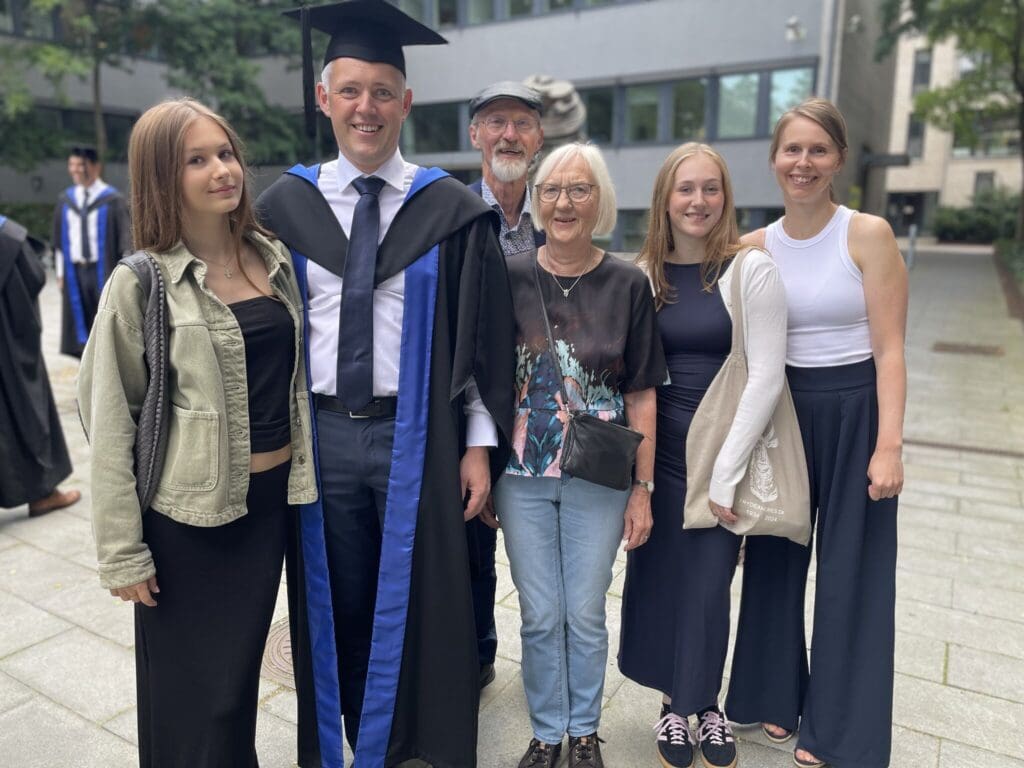
Per’s own commitment to growth extends to himself. He recently completed his Executive MBA through Copenhagen Business School’s Blue MBA programme, a two-year course built for the maritime and energy industry.
Years at sea and in specialist and leadership roles had already given him a strong practical foundation. What the programme added was new frameworks, sharper strategic thinking, and honest sparring with experienced peers, alongside a better understanding of his own impact as a leader.
For Per, that is ultimately where learning matters: when it changes how you think, the questions you ask, and the decisions you make.
One port at a time
One moment, in particular, taught Per something about confidence. Early in his time with Maersk Supply Service, he sat at the controls close to an offshore rig in poor weather. He drifted too close, called the captain in a panic, and had already brought the vessel back under control by the time help arrived.
What stayed with him was the captain’s reaction. He was less concerned with the paperwork than with whether Per had learned from the situation, and whether he could be trusted to handle it differently next time. Rather than taking control away, he gave it back.
That experience has stayed with Per as a leader: trust grows when people are given real responsibility, including the space to make mistakes, learn from them, and step up again.
Outside work, Per’s time belongs to his wife Annette and their two daughters, Ida and Sofia, the same steady support he credited for making room for his MBA.
“Assume best intentions” is advice from a former manager that has stuck with Per ever since. It is the question he reaches for whenever something looks like it is going wrong: what have I overlooked?
For anyone early in their career, his advice is the same one he would give himself.
“Have a direction, but don’t feel that you need to know the entire route. Focus on doing the job in front of you well, keep learning, and don’t be afraid to change course when you discover something new and exciting along the way. One port at a time. One voyage at a time.”