





By James Brewer
The sky… governs everything, said the great painter John Constable in response to those who criticised his constantly sketching the moods of the firmament, for to him these “were the keynote in landscape.”
His contemporary, JMW Turner, might have declared that the sea and rivers, or their blazing reflections of light, govern everything. He did not use such words, but the supposition jumps to mind highlighting the contrasts of emphasis — and sometimes the concurrences – with Constable.

Constable rebuffed criticism by determinedly redoubling his meteorological analysis, striving for authenticity, recording the time and day of atmospheric conditions, and sometimes the ensuing weather, on Hampstead Heath and elsewhere.
Turner and Constable were the greatest of rivals, but they had no need to be. Posterity has placed them in the sky-highest category of British artists. Tate Britain in its landmark exhibition Turner and Constable: Rivals and Originals offers a stunning array of their masterworks, which are consistently aesthetically compelling. It is the first major exhibition to enable a deep exploration of the near-parallel lives and legacies of Turner (1775–1851) and Constable (1776–1837). The exhibition – which in coverage of its epoch would be hard or impossible to surpass – demonstrates with brio how both artists developed distinct identities.
Here is a dynamic tribute to the two greatest British landscape painters. Landscape – but from Turner’s standpoint, often seascape. Constable at the same time was much more diverse in his subject range than the common assumption that he was bounden to a rustic narrative.
Their paintings were compared by the critics of the day to a clash of ‘fire and water’. There are fusillades of both elements throughout the exhibition, in which every one of the 170 paintings and works on paper is a showstopper.
Fire is the raging motif of Turner’s epic record of a London catastrophe. This is his momentous 1835 The Burning of the Houses of Lords and Commons, a dramatic oil painting not seen in Britain for more than a century. It is one of two of the same title he made of different views of the alarming conflagration.
He was among thousands of people who looked on aghast on the night of October 16, 1834, from the banks of the Thames at the fierce blaze that had quickly caught hold. Low tide hampered efforts to pump water onto the flames and impeded steamers towing firefighting equipment. The disaster destroyed most of the medieval Palace of Westminster, resulting in its eventual replacement in 1870 by the Gothic Revival building in the style now familiar to us (only for it to have to be rebuilt again after being bombed in World War II).

The prominence in this exhibition of Turner’s vista of the blaze has a topicality. The latest incarnation of the Palace is said in 2026 to be “falling to bits” and with a decision on what to do about it constantly delayed, one peer has warned of “a Notre-Dame fire in the making.” Misfunctions in the safety system of the Paris cathedral led to massive fire damage in April 2019. Climate change has added this century to fire risk globally on many cities, with properties built to shoddy standards.
The 1834 fire was the worst in London since the Great Fire of 1666. It started when workmen were asked to burn two cartloads of old wooden tally sticks (tax records) in furnaces under the House of Lords, accidentally setting alight the floor.
As the blaze spread, Turner wielded pencil and watercolour to record in two sketchbooks his impressions, some of them from aboard a rented boat. He exaggerated the height and possibly the intense colour of the flames, but not, it seems, the significance of it all..
Shown at the Tate for the new exhibition, the painting from the Cleveland Museum of Art collection views the fire downriver, near Waterloo Bridge, from the southeast bank of the Thames; a second version that remains at the Philadelphia Museum of Art conveys the confusion from across Westminster Bridge with golden flames consuming the buildings.
The Cleveland painting’s slashing depiction of the fire shows emergency boats being towed vainly towards the outbreak. Its composition might bring to mind Constable’s A Vivid Sunset of 1820, and it might have influenced Turner’s 1839 painting The Fighting Temeraire tugged to her Last Berth to be broken up, in which the said warship, a veteran of the Battle of Trafalgar. is towed along the Thames to Rotherhithe to be scrapped – as with the Parliament picture, spelling the end of an epoch. Turner’s 1799 self-portrait and the Fighting Temeraire painting have been since 2020 printed on the back of the UK £20 note, following a ‘public choice’ vote.
Turner left his sketchbooks (19 of which are on display) to the National Gallery as part of the Turner Bequest and are now held by the Tate. Some drawings, previously thought to be of the burning of Parliament, have been reassessed and may be of the fire that destroyed the Grand Storehouse at the Tower of London in October 1841.
Closely in tune with the technical progress of the age, Turner marked – in effect, celebrated – the boom in railways and its associated pollution with his Rain, Steam and Speed – The Great Western Railway, in which a hurrying train emits clouds of smoke into a swirling sky: a sky that takes up three-quarters of the canvas.. That is not in the Tate exhibition but can be viewed at the National Gallery.
Turner was all the while preoccupied by the historic rise and fall of empires, and he made 10 major paintings about Carthage. Hence Dido building Carthage, his 1815 depiction of the city inspired by Virgil’s epic, the Aeneid, which relates the doomed love affair of Dido, the city/s first queen, and Aeneas, the future founder of Rome. She is seen dressed in blue and wearing a diadem, while visiting the tomb being built for her husband, the priest Sychaeus, who was murdered for his wealth by the queen’s brother Pygmalion. That was the first of Turner’s paintings in the manner of the seventeenth-century French landscape master Claude Lorrain who worked from Rome. In the foreground under sunrise, young boys float toy boats in the water, a metaphor for the burgeoning seafaring power of Carthage.
Turner greatly admired Claude, who was noted for his Seaport series, (as did Constable) and like him would paint views from an angle looking directly into the dazzling sun. He stipulated in his will that the Dido painting hang at the National Gallery alongside works by Claude.
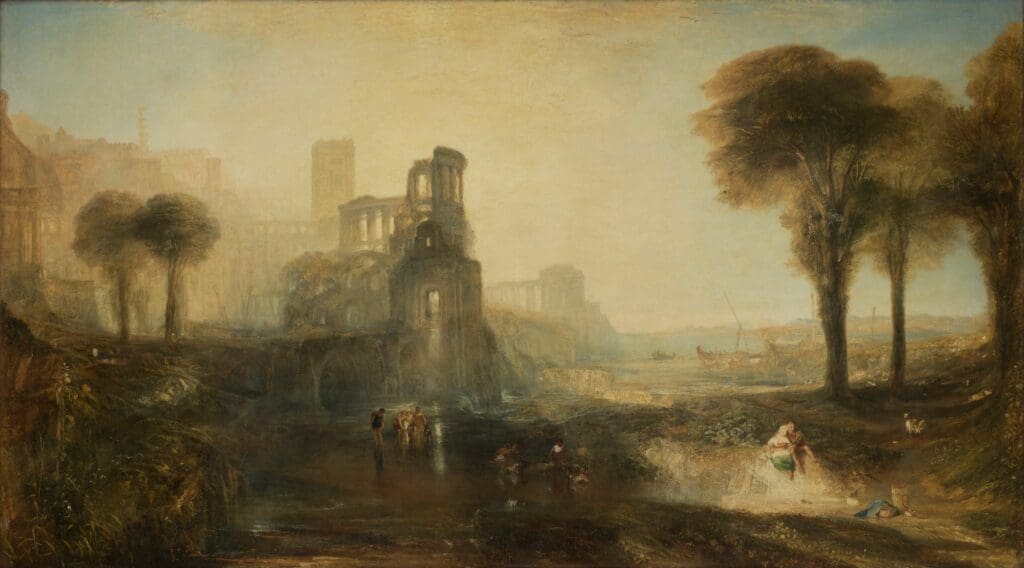
Turner turned his attention to his interpretation of Caligula’s Palace and Bridge. The Roman emperor is said to have ordered an enormous floating bridge. to be built across a bay near Naples. The artist sees the bridge as a crumbling ruin. At the Royal Academy exhibition of 1831, the picture was hung next to Constable’s Salisbury Cathedral from the Meadows, and the two men did almost come to blows over the juxtaposition, although stories of rivalry between can be overdone. In 1829 Turner had gone out of his way to congratulate the other man on gaining full membership of the RA.
Then at the 1832 Royal Academy exhibition Turner showily added a red buoy to his seascape Helvoetsluys: the City of Utrecht, 64, Going to Sea in an attempt to equal the visual ‘thunder’ of Constable’s monumental The Opening of Waterloo Bridge, leading Constable to exclaim: “He has been here and fired a gun.” Maybe he meant a ship’s gun, or a starting pistol, but his meaning is unclear, according to scholars.
The clash of the two titans is recalled in Mike Leigh’s 2014 film Mr.Turner, a clip from which is shown in the Tate exhibition. To our delight, Constable’s first oil sketch for the Waterloo Bridge picture is currently reunited here with his finished work.
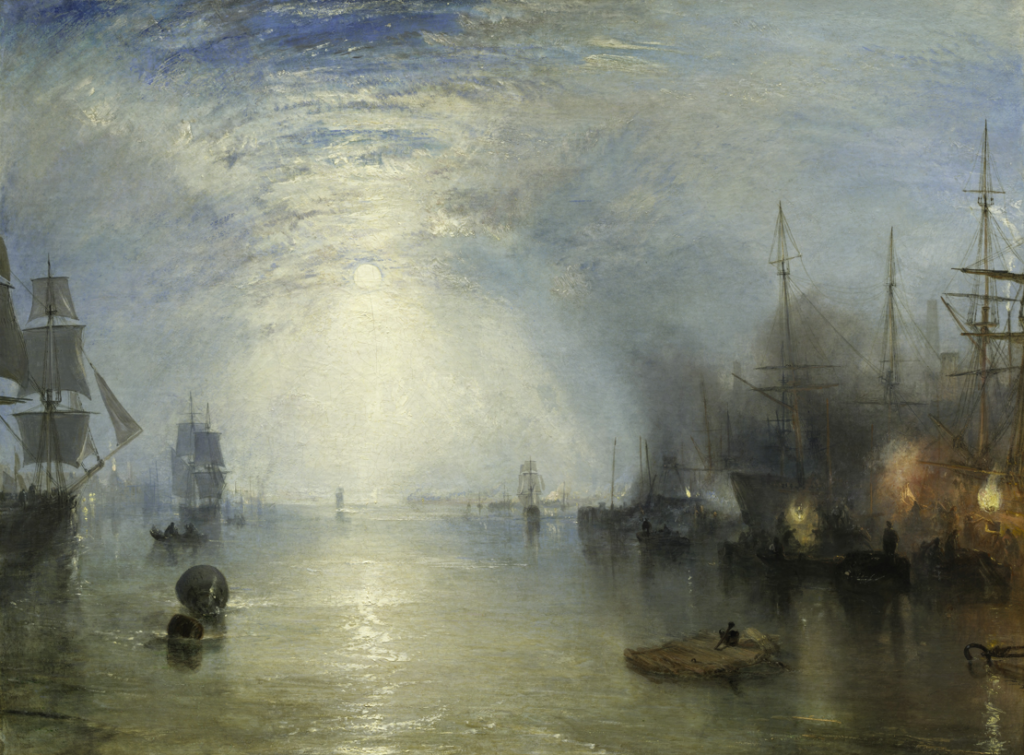
Waterloo! When he painted The Thames above Waterloo Bridge.(1830-35), which comes from Tate’s Turner Bequest, Turner must have had in mind Constable’s depiction of the same view (which in the new exhibition hangs nearby). With Turner, we can hardly make out the bridge through the smog and fumes. A large, dual-funnelled steamer is belching sickening smoke into air already contaminated by new industry. The first steamboat was built on the Thames in 1832, but the innovation was far from being a boon. It was a clash of the forces of construction and destruction. The new vessels were seen as a menace to water quality and to the stability of the riverbanks. Cholera epidemics were blamed on people drinking water poisoned by sewage.
Turner was never far in thought or deed from the Thames. As a boy, he lived for a time in the then market town of Brentford. In 1807 he bought a plot of land between Twickenham and Richmond Bridge, from where he made outings along the river for water-colour sketching. Views based on his familiarity with the Thames appeared in several of his oil creations, even in scenes of classical mythology.
An unfinished watercolour from 1822-24, Folkestone from the Sea, shows English smugglers receiving barrels of illicit gin from French sailors by moonlight. Turner pictured the operation with great accuracy, leading to suggestions that he must have witnessed something similar.
Many in the arts establishment could not grasp the essence of Turner’s powerful rendition of natural forces, and Queen Victoria pronounced one of his paintings “disgusting. A yellow mess.”
Joseph Mallord William Turner grew up in Maiden Lane, Covent Garden, where he sold his first sketches in his father’s barber shop. His first oil painting, exhibited at the Royal Academy when he was 18 years of age, has only recently been identified after being neglected and misattributed for 150 years. It is on display at the Tate and is called The Rising Squall, Hot Wells, from St Vincent’s Rock, Bristol, confirming his early attention to the moods of weather and helping explain why he quickly rose to acclaim.
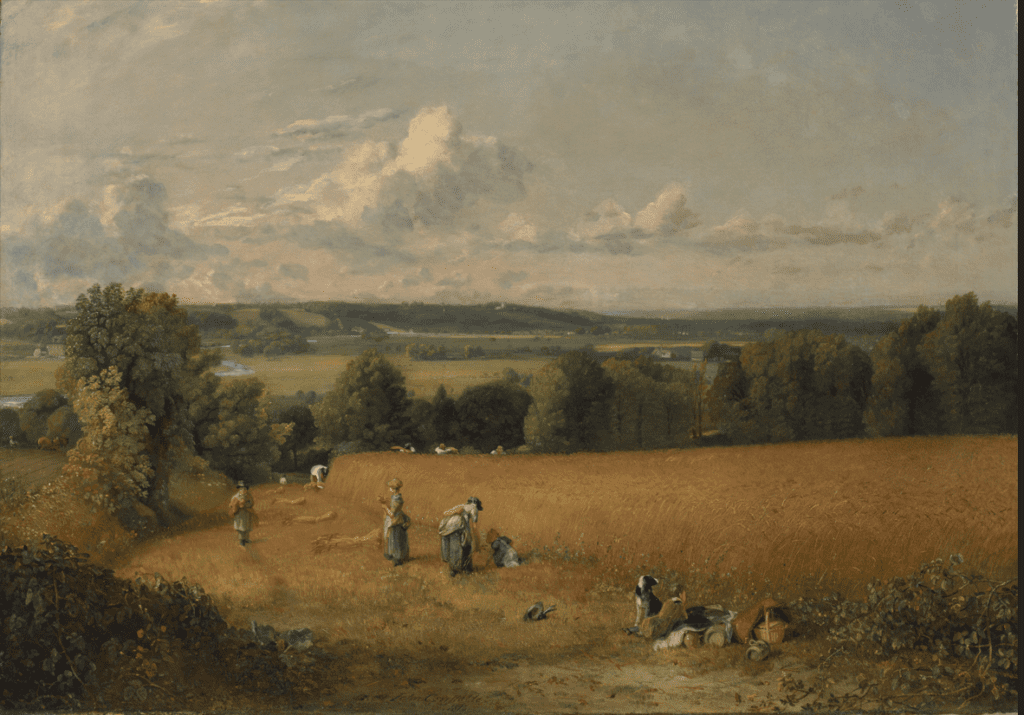
Constable, the son of a wealthy Suffolk merchant, was equally determined to carve out a future as an artist but faced a longer, more arduous path to fame. Largely self-taught, Constable took sketchbooks on his early watercolour and oil forays in Dedham Vale on the Suffolk/Essex border and along the River Stour, and the exhibition displays some of them, including drawings of boat-builders from his 1814 bound-leather book.
Tate Britain shows Constable’s portable painting box (thought likely to have included pig’s bladders sealed with string, the then clumsy method of storing paint before tin tubes with screw tops came into use in 1841) and folding sketching chair.
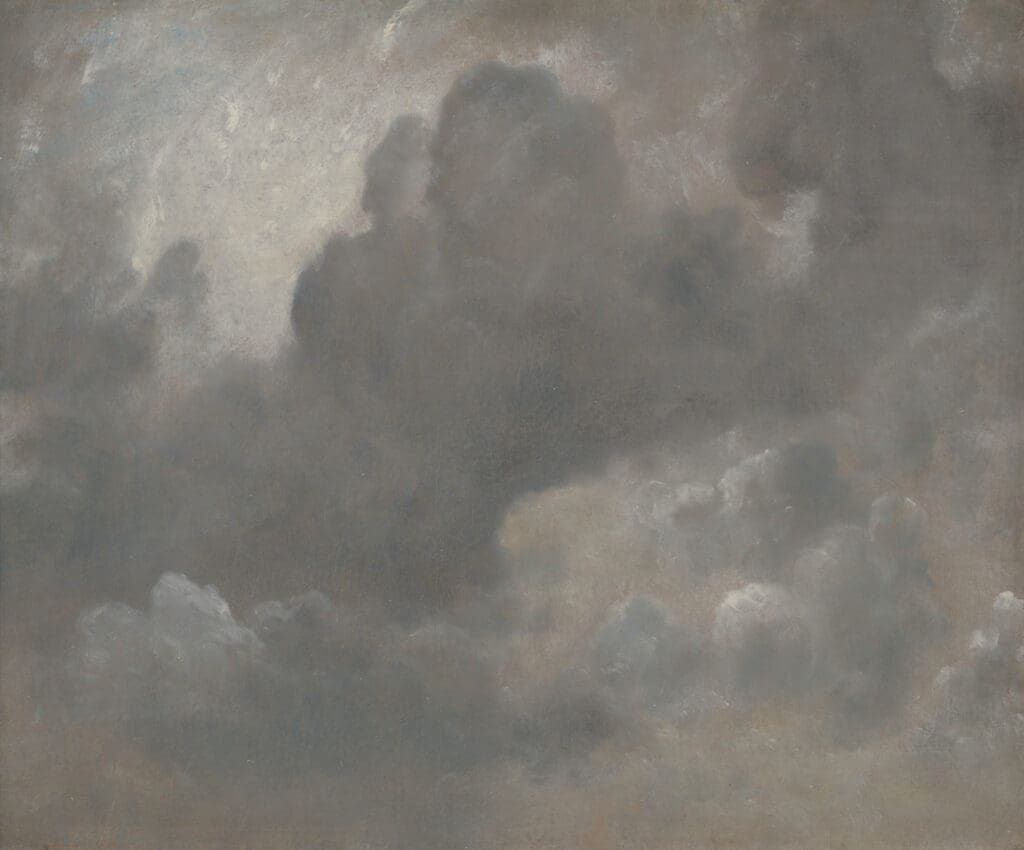
Between 1820 and 1823 Constable produced dozens of oil sketches of scudding clouds. He defended his “sky-ing” as he called it, writing that it was the “key note” in landscape, and made it an important emotional element of the skyscapes in his six-foot (1.8 metre) canvases and many other works. Late works such as Hampstead Heath with a Rainbow 1836 illustrate such virtuosity.
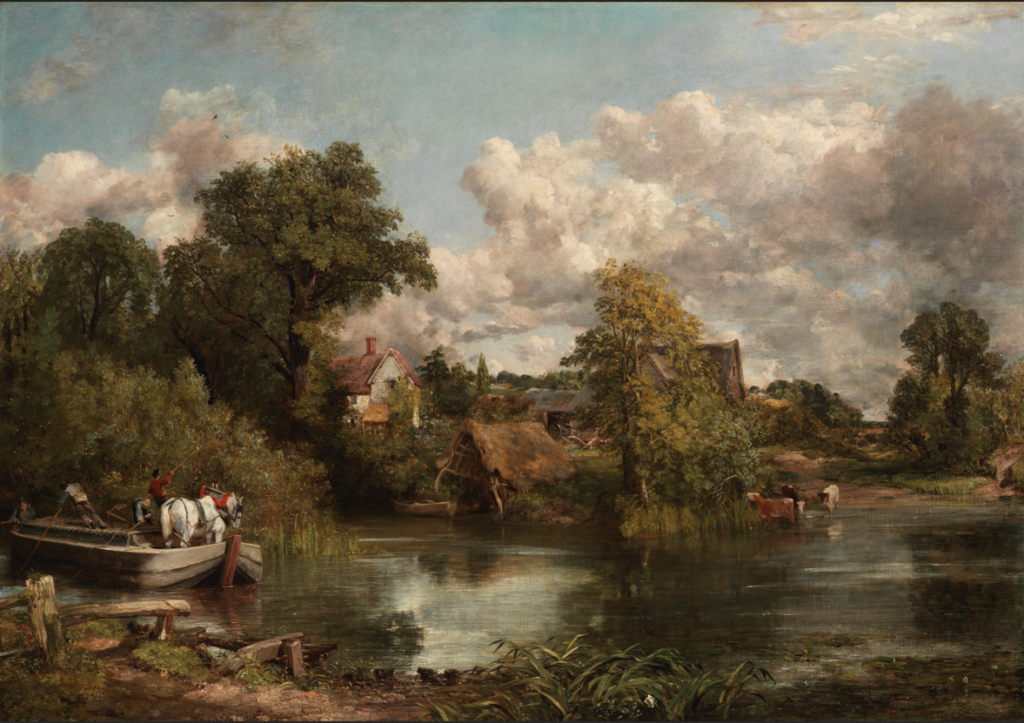
The White Horse, a large scene in which a barge carries a horse across the River Stour to its tow path on the other bank,was the first to draw direct comparison with Turner when Constable showed it at the 1819 royal Academy exhibition. A sketch the same size as the final painting (now in the Frick Collection in New York) was made to vie with the commanding large canvases of other artists. Last exhibited in London two decades ago, it points up Constable’s meticulous attention to detail and his ability to convey the changing effects of light and atmosphere.
This triumphheralded other Constable paintings of similar scale, including Stratford Mill in 1819–20; and The Hay Wain, one of his best-known works, in 1821. At Tate Britain, nine of Constable’s ‘six-footers’ are on display, the greatest number to be shown together in two decades.. (During 2026, the Hay Wain will be exhibited in Constable’s home county of Suffolk for the first time, — in Ipswich – as part of a celebration by local museums of his 250th birth anniversary).
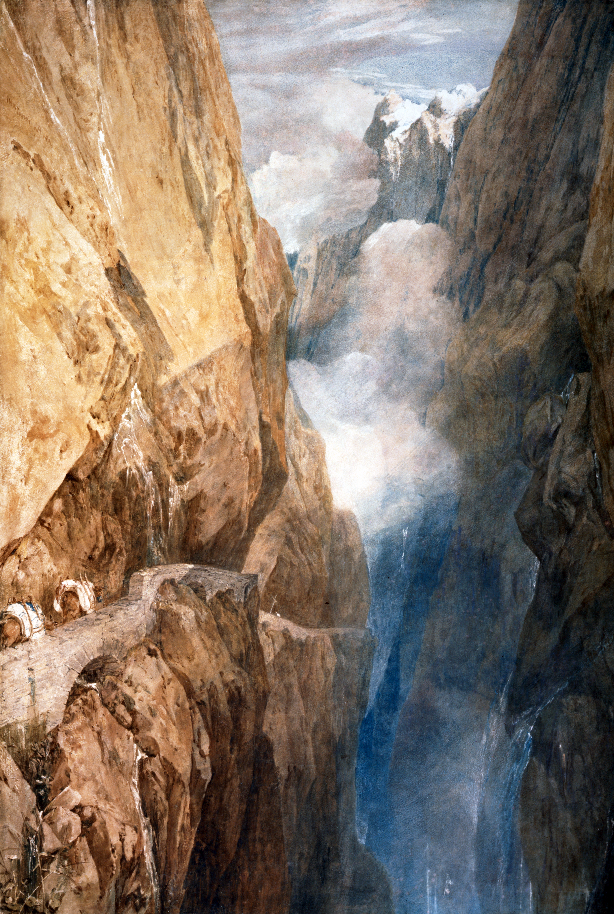
Constable never set foot outside England, but Turner documented scenes from his travels across Britain and Europe. Rugged Alpine terrain such as The Passage of Mount St Gothard from the Centre of Teufels Broch (Devil’s Bridge) from 1804 had particular appeal to him.
So, to end this review, we recount an inspiring story told in an interview in The Guardian of December 27, 2025, headlined “My cultural awakening: a Turner painting helped me come to terms with my cancer diagnosis.” A patient under treatment, Caroline Howarth, wrote: “Fear and feelings of intense vulnerability caused me to retreat into my shell, until I saw myself in an unlikely feature in one of the British master’s prints.” That was an 1808 sepia print of Mount St Gothard with a laden pack horse resting exhausted on a mountain path. Caroline compared the overburdened body of the horse to herself: “Turner’s horse… made it to the top of the mountain carrying all that baggage, and was going to go back down the other side and have that pack taken off. And so will I,” wrote Caroline, rejoicing that her medical care has proved successful.
The exhibition is curated by Amy Concannon, Manton senior curator of Historic British Art, with Nicole Cochrane, assistant curator, Historic British Art (1790–1850) and Bethany Husband, exhibitions assistant.
Turner and Constable is in partnership with LVMH. It is supported by the Huo Family Foundation and patron and collector of art James Bartos, whose legal career took him from his native New York to London in 1987. Before retiring from the law, he was a partner in a leading international law firm, specialising in capital markets transactions and corporate governance. He is chairman of the Gardens Trust.
Image captions:
The Burning of the Houses of Lords and Commons, 16 October 1834, 1835. By JMW Turner. Cleveland Museum of Art. Bequest of John L. Severance.
A Vivid Sunset, 1820. By John Constable. Private collection.
Caligula’s Palace and Bridge, exhibited 1831. By JMW Turner. Image courtesy of Tate.
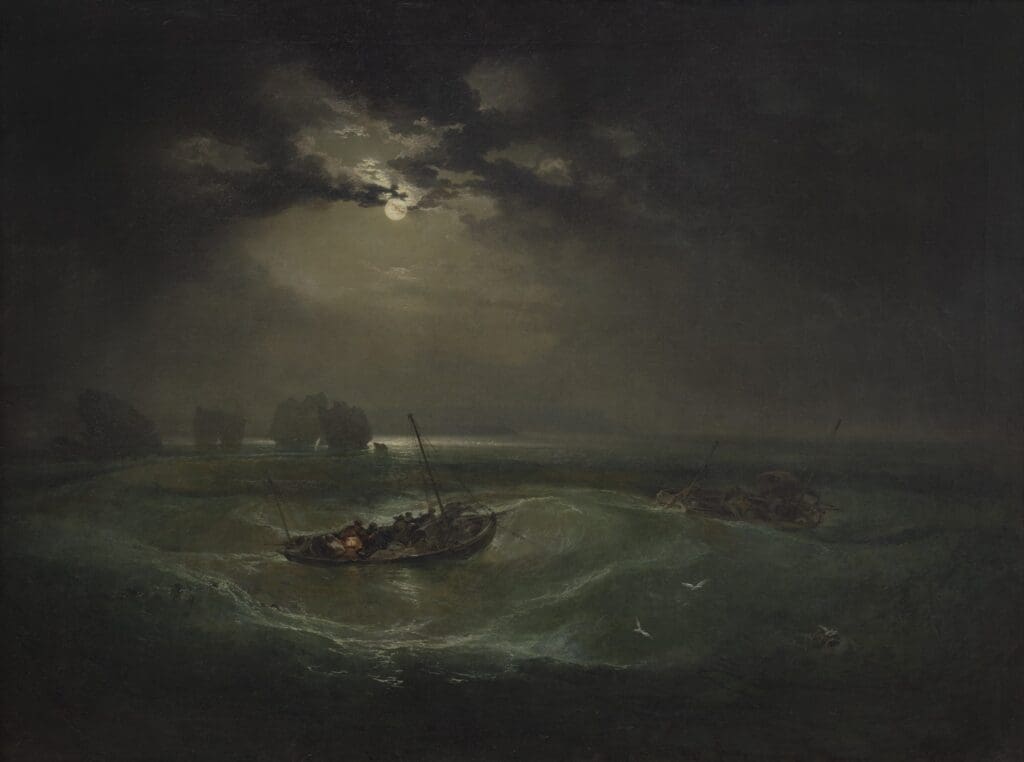
Fishermen at Sea, exhibited 1796. By JMW Turner. Image courtesy of Tate.
Dido building Carthage, or The Rise of the Carthaginian Empire, 1815. By JMW Turner. ©The National Gallery, London. All rights reserved.
The Passage of Mount St Gothard from the centre of Teufels Broch (Devil’s Bridge), 1804. By JMW Turner. © Abbot Hall, Kendal (Lakeland Arts Trust).
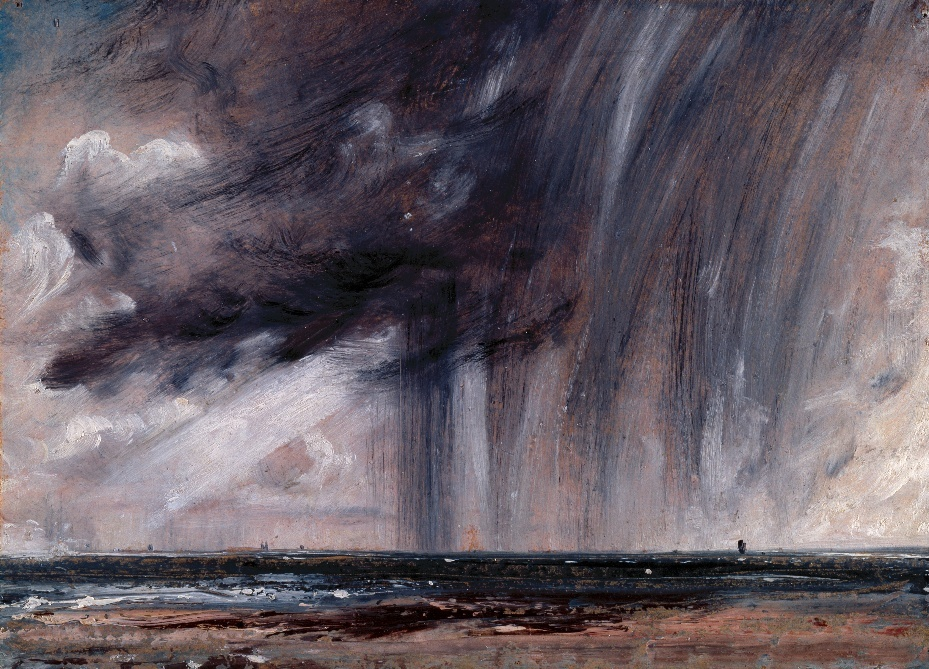
Rainstorm over the Sea, c. 1824-1828. By John Constable. © Photo Royal Academy of Art. Photo: John Hammond.
Cloud Study (with birds), 1821. By John Constable. Image courtesy Yale Center for British Art, Paul Mellon Collection.
The White Horse, 1819. By John Constable. © The Frick Collection, New York. Photo: Joseph Coscia Jr
Keelmen Heaving in Coals by Moonlight, 1835. By JMW Turner. National Gallery of Art, Washington, Widener Collection.
The Wheatfield, 1816. By John Constable. Image courtesy Clark Art Institute.
Turner and Constable: Rivals and Originals is at Tate Britain until April 12, 2026.
