



Dear readers,
Summer 2026 started early this year. Regardless of scorching temperatures, we continue our efforts for safe and environmentally sound recycling of ships worldwide.
What will you find in this issue?
 Shipbreaking Quarterly Update, focusing on global developments, accidents happening on the infamous shipbreaking beaches of South Asia, alongside important media coverage, recent research and relevant readings,
Save the date: Ship Recycling Lab 2026, our biennial flagship event gathering innovators, policymakers, and many more, this time coming to Marseille, France,
Massive Oil Spill at India’s ‘Model’ Hong Kong Convention-Certified Yard Exposes Fatal Flaws of Beaching.
Annual General Meeting of the NGO Shipbreaking Platform in Athens, Greece
Ship Recycling. The Hong Kong and Basel Conventions. Side Event Basel Convention Open Ended Working Group 15
EU updates: The Circular Economy Act and the European Ocean Act
EUROFER, Recycling Europe and the NGO Shipbreaking Platform urge the EU to put a stop to the double standards in the shipbreaking sector
Public exchange with GMS on circularity, and why the South Asian ‘beaching’ model misses the important social and environmental
Solidarity with Greenpeace over the SLAPP case
News from Horizon Europe projects the NGO Shipbreaking Platform is part of – SHEREC and CirclesOfLife
Enjoy the reading!
Shipbreaking Quarterly Update #2
In this quarterly format, we share important global developments in ship recycling, give an overview of accidents occurring in South Asian and Turkish yards, and suggest relevant media articles, research, and readings.
What will you find in this issue of the Shipbreaking Quarterly Update?
Shipbreaking records from the second quarter of 2026 – 71 ships dismantled worldwide, half of them in Bangladesh. Shipbreaking numbers remain low. We also follow up with the CERES I sanctioned ship, that was supposed to be dismantled in Pakistan, provide an overview of global developments in the sector, and write about the recent accidents in Bangladesh and Turkey.
Ship Recycling Governance: Moving beyond the false Basel-HKC dichotomy. The latest article by Dr. Ishtiaque Ahmed presents arguments as a response to a recent BIMCO article. The author states that framing ship recycling governance as a choice between the Basel Convention (BC)and the Hong Kong Convention (HKC) is a false and counterproductive debate
You can read the full issue here.
You can access all the previous Quarterly Updates here
Save the date: Ship Recycling Lab 2026 

The third edition of the Ship Recycling Lab is approaching! Inspiring keynote sessions, thought-provoking presentations and interactive panel discussions around ship recycling, all that will happen on 14-15 October in Marseille, France.
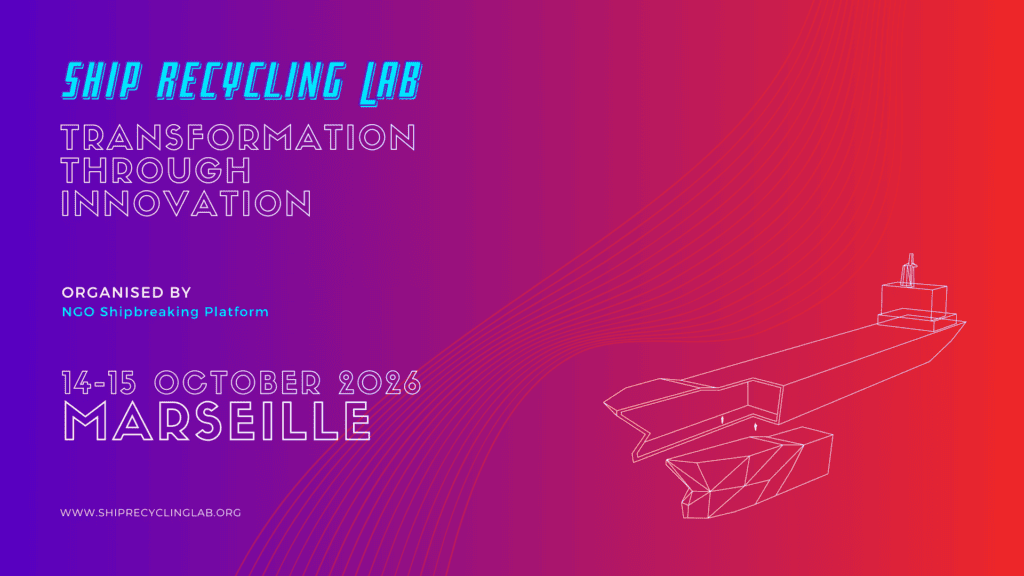
This is a one-of-a-kind event promoting new and sustainable solutions for ship recycling of the future – the future that is now! We aim to boost engagement and commitment to finance capacity building and innovation for a new standard of ship recycling. Important players such as CMA CGM or Hapag-Lloyd, policymakers, financial institutions and many others will be present at our flagship event.
Our thematic panels will cover important topics from circularity, finances, shipowners’ and shipyards’ readiness for the transition, and best practices to scale up.
https://us.list-manage.com/RgNdqF8oKB8?e=3cafddbd52&c2id=8d5f4d303a6b747738f3991d38f4a55e
Tickets available here!
Don’t forget to check the event website and the LinkedIn page.
Massive Oil Spill at India’s ‘Model’ Hong Kong Convention-Certified Yard Exposes Fatal Flaws of Beaching
We have been warning about the inherent flaws of beaching for years. And the recent serious accident sadly proves that we have been right, even when it comes to ‘model’ HKC-compliant shipbreaking yards. An accident that occurred in June at Priya Blue shipbreaking yard in Alang, Gujarat, India, caused a tank rupture and a heavy fuel oil release into the sea, causing a significant contamination of the Gujarati seashore.
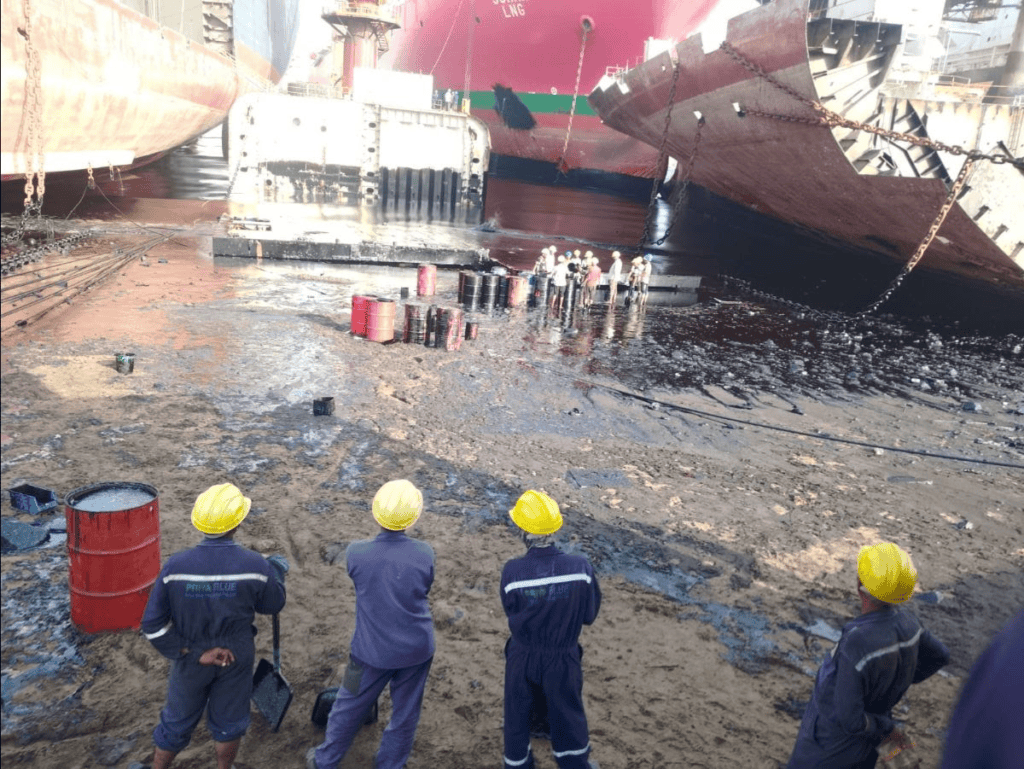
The accident strips away the illusion behind what industry claims as “safe and environmentally sound” recycling practices. Priya Blue has actively sought inclusion on the EU List of ship recycling facilities. The recent events show clearly that no beaching facilities, regardless of their ‘compliance with the Hong Kong Convention’ and state-of-the-art infrastructure, are safe.
Priya Blue subsequently published an Incident Investigation Report claiming ‘trained personnel wearing full PPE’ responded immediately. Our sources tell the shocking story of workers cleaning up the spill without protective clothing or equipment, standing barefoot directly in oil, and the heavy fuel spill reaching villages located kilometres from the Alang shipbreaking area.
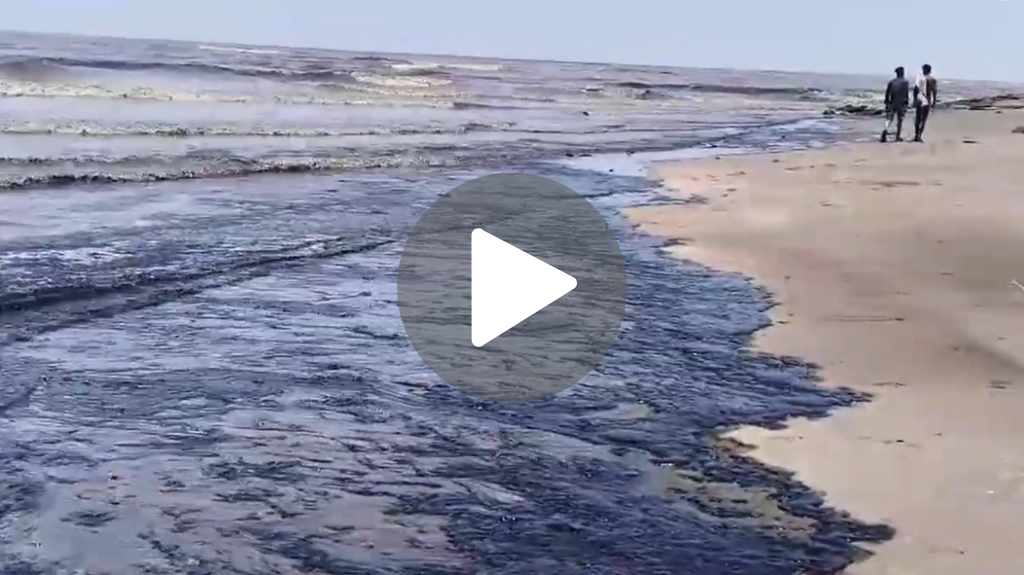
Heavy oil washing ashore. Mithi Virdi, Gujarat, India.
https://ci3.googleusercontent.com/meips/ADKq_NbxgcUzbLikL5mJB5blEJmubbpljqR764wUCnsbkE8G3_jpTIy3zMsDwD2Y0XpiCg0PGbaftsmju3u3XhKTb9qTF3ugGolJJeKm0Trv0OjypX0AGFguVfQ4mgNV9kLupwY_jLO_iieu_gS6z5MS6152nEcz9k93EKg=s0-d-e1-ft#https://mcusercontent.com/cb94b4a01d7786c5e6f506be3/images/5ce69eab-3c7e-e003-5e96-b97fbe967b0a.png
Several media outlets covered the incident, such as TradeWinds, National Herald India, or India Today
Ship recycling must move to facilities with impermeable surfaces and full containment, such as dry-docks, and beaching must be banned.
You can read our full Press Release here.
You can check our LinkedIn note here.
Annual General Meeting of the NGO Shipbreaking Platform in Athens, Greece
NGO Shipbreaking Platform held its Annual General Meeting in Athens, Greece, on 10 and 11 June, bringing together members and partners from Europe, the United States, South Asia and Southeast Asia to review the organisation’s achievements, set strategic priorities and strengthen collaboration for the year ahead.
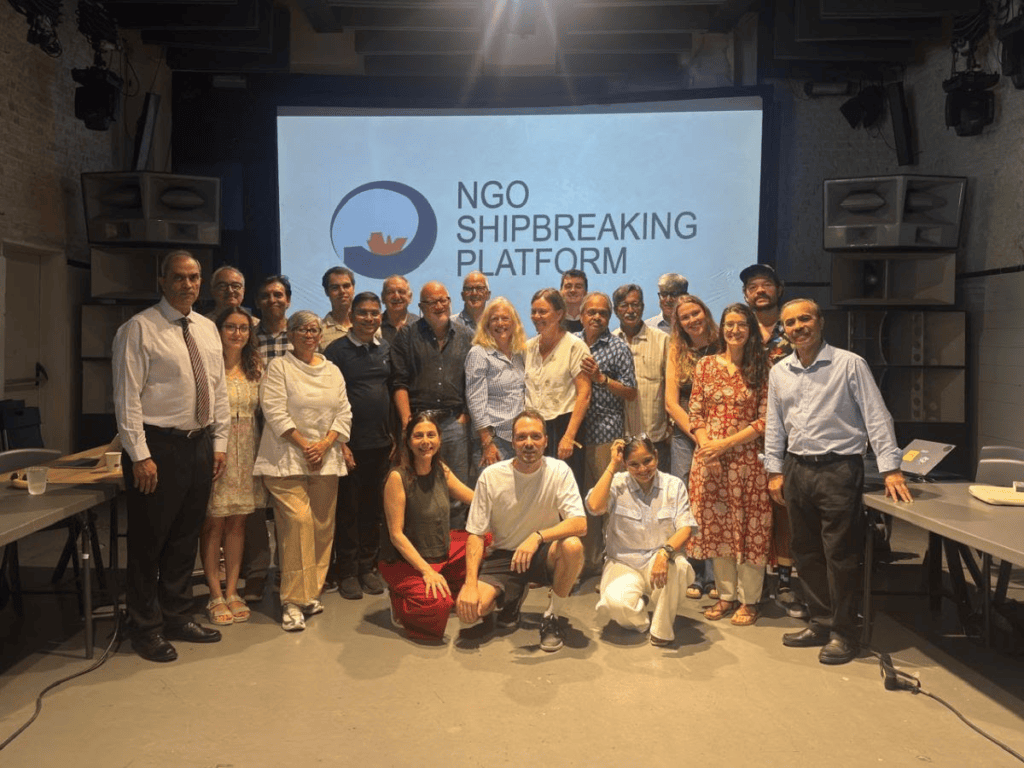
Discussions were focused on the global policy landscape for ship recycling, including the Hong Kong International Convention and its relationship with the Basel Convention, as well as ongoing advocacy to uphold high environmental and labour standards. Participants also shared regional updates from Turkey and South Asia, where the Platform continues to monitor shipbreaking practices and campaign for safer and more sustainable ship recycling.
The meeting explored emerging opportunities linked to the circular economy and maritime scrap steel, preparations for the third edition of the Ship Recycling Lab in Marseille, and the Platform’s policy and communications strategies. Marking its 20th anniversary, the NGO Shipbreaking Platform welcomed two new members to its global coalition: the Nexus3 Foundation from Indonesia and European Environmental Bureau (EEB), further strengthening its international network advocating for safe and environmentally sound ship recycling worldwide.
We would like to thank Reporters United for hosting us and covering the shady practices of Greek shipowners.
You can check the LinkedIn publications here and here.
Ship Recycling. The Hong Kong and Basel Conventions. Side Event Basel Convention Open Ended Working Group 15
The Basel Convention Open Ended Working Group gathered in Geneva in June, developing guidelines, operational policies, and work plan for the Basel Conference of Parties. NGO Shipbreaking Platform had an honour to organise a Side Event on Ship Recycling framework, namely the alleged ‘mismatch’ between the Hong Kong and the Basel Conventions, with the objective to directly contradict the shipping industry’s attempt to evade their Basel obligations when it comes to the dismantling of their end-of-life ships.
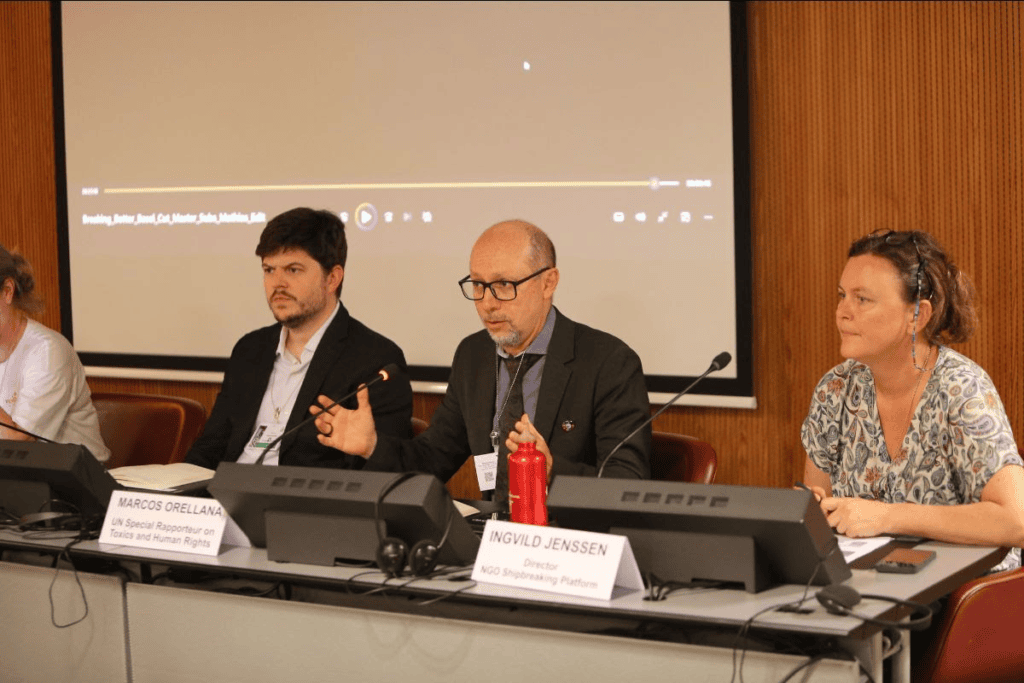
Ingvild Jenssen, our Executive Director and Founder, presented our position on these laws:
– There is no ‘conflict’ between the Hong Kong Convention (HKC) and the Basel Convention, and since both of them are binding laws, they must be implemented simultaneously;
– The HKC does not provide an “equivalent level of control” as required by Basel Convention Article 11, which is another argument for keeping Basel in place;
– The HKC does not ensure safe and environmentally sound recycling of vessels as it does not ban beaching and stops at the facility gate.
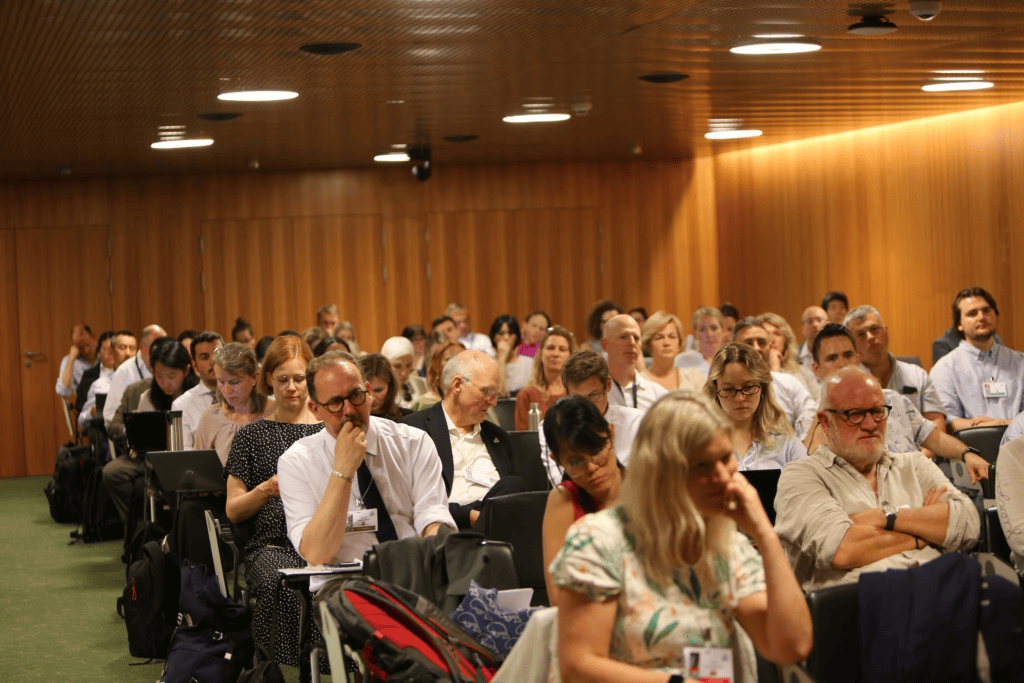
Thank you Nicolas ENCAUSSE and Marcos Orellana for your firm support to our position. Thank you BIMCO, Gudrun Janssens and David Loosley for your participation in the event.
You can read our LinkedIn note here.
EU updates: Circular Economy Act, Industrial Maritime Strategy and European Ocean Act
We recently published our position on important European documents that are currently being prepared. Let’s start with the Circular Economy Act.
The Circular Economy Act’s goal is to establish a pan-European framework and for circular economy, and is expected to build a single market for secondary raw materials and stimulate demand for high-quality recycled content. Yet, without unlocking new material streams such as ship recycling, it will fall short its objectives.
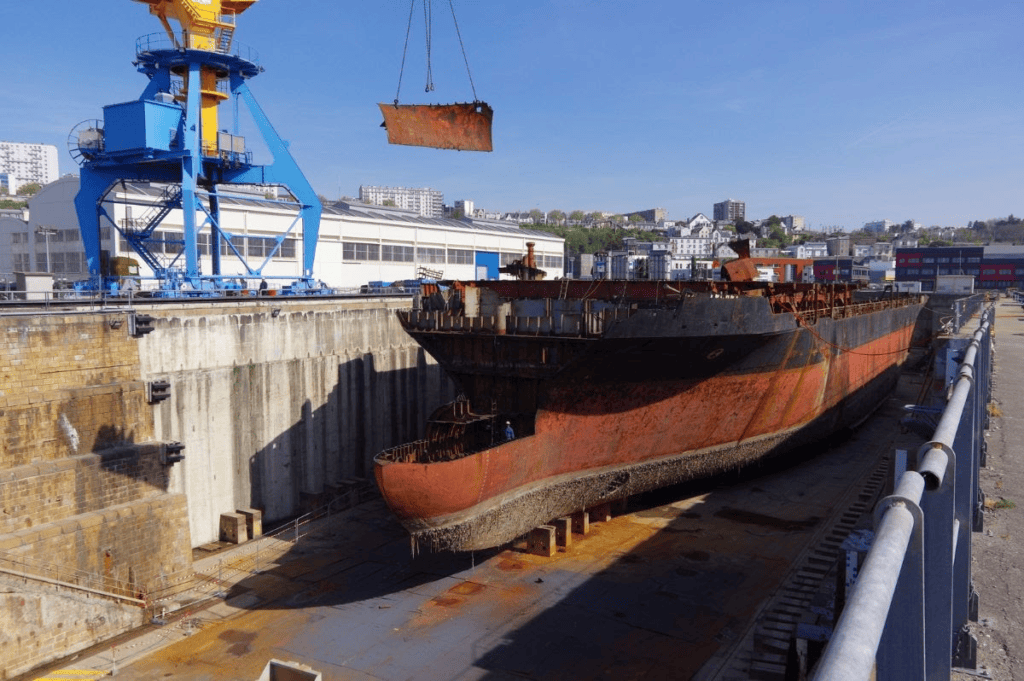
The current Commission’s proposal can hardly be called revolutionary, focusing primarily on waste management and recycling, while not addressing higher levels of the circularity hierarchy, prevention, reuse, repair and refurbishment. We are disappointed that a largely untapped material bank, end-of-life ships, risks being omitted, missing the opportunity for further decarbonisation of steel sector, and strengthened material resilience.
We know what we’re saying!
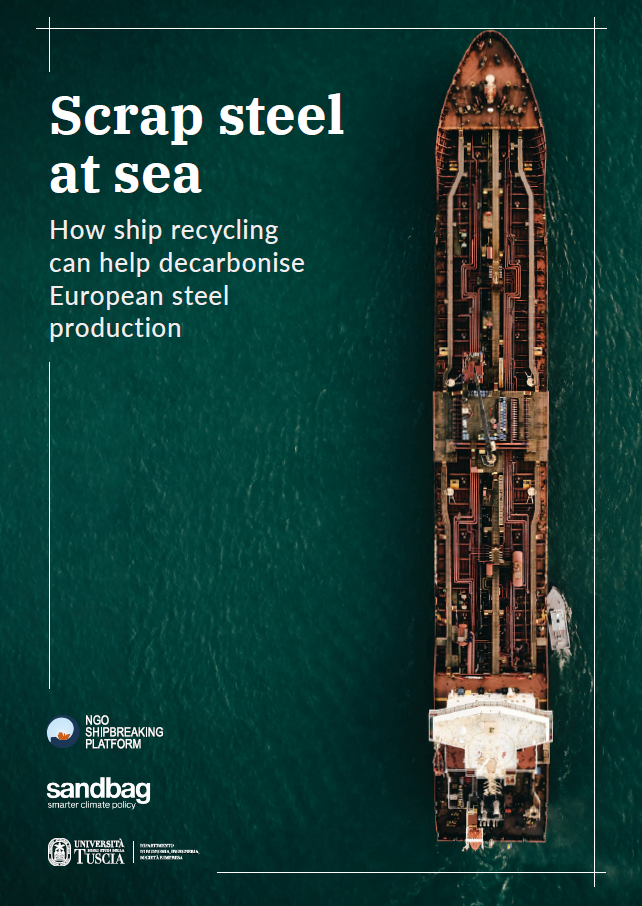
– Our research shows that EU/EFTA-owned ships could supply up to 12 million tonnes of high-quality steel scrap per year to the European economy over the next decade;
– Up to 95% of a ship’s weight can be recovered as high-quality scrap;
– EU/EFTA-based companies own about one-third of the world’s fleet, placing Europe in a pivotal position to lead the transition.
Want to know more? Check our position here.
We also participated in the Circular Economy Act public hearing in the European Parliament. This was an occasion to check the legislation progress, and of course reiterate our position. We urge the European Commission to set upstream targets, create real market conditions for circular investment and make sure the EU Ship Recycling Regulation is part of this conversation. End-of-life ships are valuable resource that cannot be left out.
You can read our LinkedIn note here.
The Council of the European Union approved its conclusion on the proposed EU Industrial Maritime Strategy – a strategic document setting the course of actions for innovative and competitive maritime and shipping sectors in the Union.
We particularly endorse the creation of the EU Industrial Maritime Value Chains Alliance, boosting cooperation across value chains, and support for regional maritime hubs that could incorporate several activities, including innovative recycling of ships. We also welcome the Council’s firm support for the Basel Convention. With the Basel Ban Amendment, banning exports of hazardous waste such as end-of-life ships to non-OECD countries, this means the EU decision-makers will support internal EU ship recycling capacities.
You can read our LinkedIn note here.
While the EU Industrial Maritime Strategy calls for boosting EU capacities, what is needed now is governance coherence. This means the European Ocean Act must break policy silos and treat ship recycling as the strategic industrial transition, supporting green jobs, skills retention, and high-quality material recovery in European yards. Europe has an obligation and an opportunity not to export its end-of-life vessels to South Asian beaches, but to transform them into an industrial asset.
You can read our LinkedIn note here.
EUROFER, Recycling Europe and NGO Shipbreaking Platform urge the EU to put a stop to the double standards in the shipbreaking sector
As the European Commission is currently working on reviewing technical guidance for third-country shipbreaking facilities, the NGO Shipbreaking Platform, EUROFER and Recycling Europe call for a clear ban of beaching and landing methods and the guarantee of a real level playing field for the ship recycling sector.