





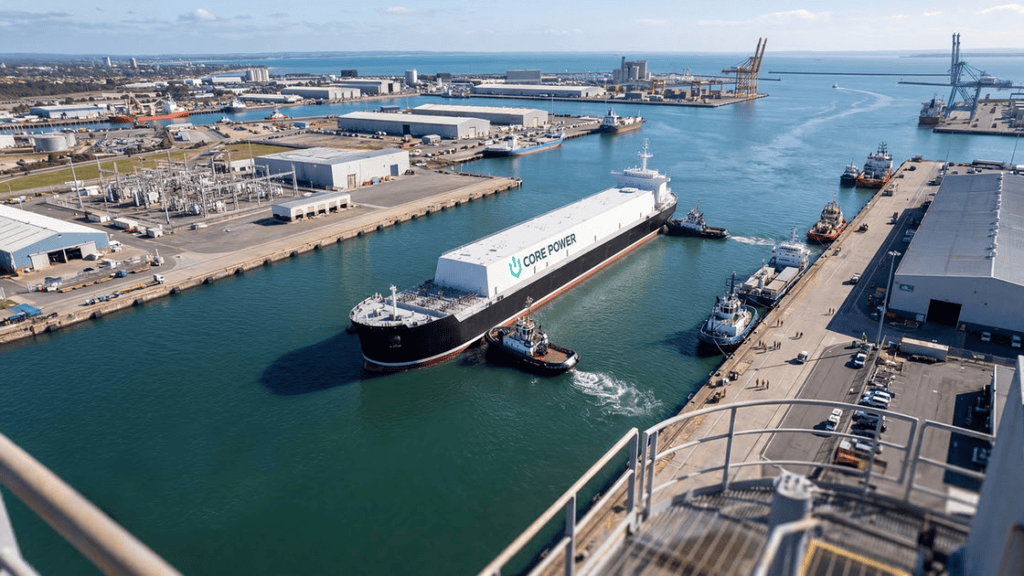
For ports, reliable electricity is becoming more than an operational requirement. It could increasingly influence where new industries choose to invest, expand and build.
Ports already sit at the center of trade, logistics and industrial activity. Access to dependable, scalable power could strengthen that position further, supporting everything from shore power and industrial tenants to clean fuel production, desalination and wider regional development.
That creates a different way to think about port infrastructure: not simply in terms of moving goods, but as part of a connected energy ecosystem capable of attracting and supporting the industries of tomorrow.
Floating nuclear power plants could provide one route to delivering firm power close to coastal demand. For ports, that could mean turning access to energy into a tool for industrial expansion, competitiveness and long-term growth.
U.S. Department of Energy Funding Accelerates World-First Molten Chloride Reactor Experiment

The Molten Chloride Reactor Experiment (MCRE), in which CORE POWER is a partner, is moving closer to a major milestone in advanced nuclear development.
Following new cost-shared funding from the U.S. Department of Energy, MCRE is expected to achieve first criticality as early as 2027, with the aim of becoming the world’s first fast-spectrum molten chloride salt reactor experiment to do so.
The data generated will provide real-world evidence on fuel behaviour, reactor operation and performance, helping reduce uncertainty around future reactor design, licensing and commercial deployment. For CORE POWER, that evidence could also help inform the longer-term pathway towards advanced maritime nuclear applications.
If you missed the announcement earlier this week, you can read the full release below.
Maritime nuclear explained: the energy behind global trade

| New nuclear in the newsStay up to date with the latest news and insights on new nuclear developments below. |
Feedback
Help us improve future editions of the newsletter
