





CORE POWER’s final CONVOY event of 2025 brought together international maritime and nuclear experts to address what many consider the most critical enabler for the maritime nuclear sector: developing a qualified, safety-focused workforce at the scale needed to support this emerging industry.
The session featured presentations from CORE POWER’s Dr. Rory Megginson, the International Maritime Organization’s Bingbing Song and maritime education leader Jerry Paul, providing a comprehensive view of the workforce challenge, existing regulatory frameworks and concrete pathways forward.
The workforce requirement spans three distinct categories: nuclear operators to oversee specific systems on board, marine crew needing enhanced nuclear safety training and the wider maritime nuclear ecosystem including shore-based management, port workers and regulatory personnel.
While the US and UK nuclear navies provide a gold standard for training – with 14,000 reactor years of impeccable safety record – the scale of potential maritime nuclear deployment means the industry cannot rely solely on naval veterans.
However, timing and regulatory convergence has created a unique opportunity. IMO recently launched a comprehensive review of the STCW Convention while simultaneously developing standards for ships using alternative fuels and new technologies – including nuclear. In June 2025, IMO member states agreed to update the Code of Safety for Nuclear Merchant Ships to be technology-agnostic and goal-based.
Jerry Paul outlined several risk factors that must be addressed: failing to start soon enough, underestimating costs, regulatory complexity and the unique challenge that “you won’t know for sure that you’ve got training right until you’re operating vessels.” Unlike reactor design or insurance frameworks that have built-in validation gates, training effectiveness may only be proven during actual operations or, worse, during a failure event.
To address these challenges, CORE POWER has assembled a Red Team of 5-6 experts from diverse sectors including former US Nuclear Navy officers, US NRC commissioners, Coast Guard admirals, NNSA officials, maritime academy leadership and government experts. Initial recommendations are expected in Q1 2026, with an iterative refinement process through industry summits and stakeholder feedback.
The final CONVOY event of 2025 demonstrated that while the workforce challenge is substantial, the pathway forward is becoming clear. With nearly 2 million seafarers currently working globally, proven training models in both maritime and nuclear sectors and a unique regulatory window at IMO, the industry has the foundation to build the maritime nuclear workforce – if action begins immediately.
| New nuclear in the news |
| Stay up to date with the latest news and insights on new nuclear developments below: GOV.UK: GBE-N Appoints Chief Executive Officer Nuclear Newswire: INL makes first fuel for Molten Chloride Reactor Experiment DOE: Energy Department Announces $11 Million in Awards to Develop HALEU Transportation Packages |
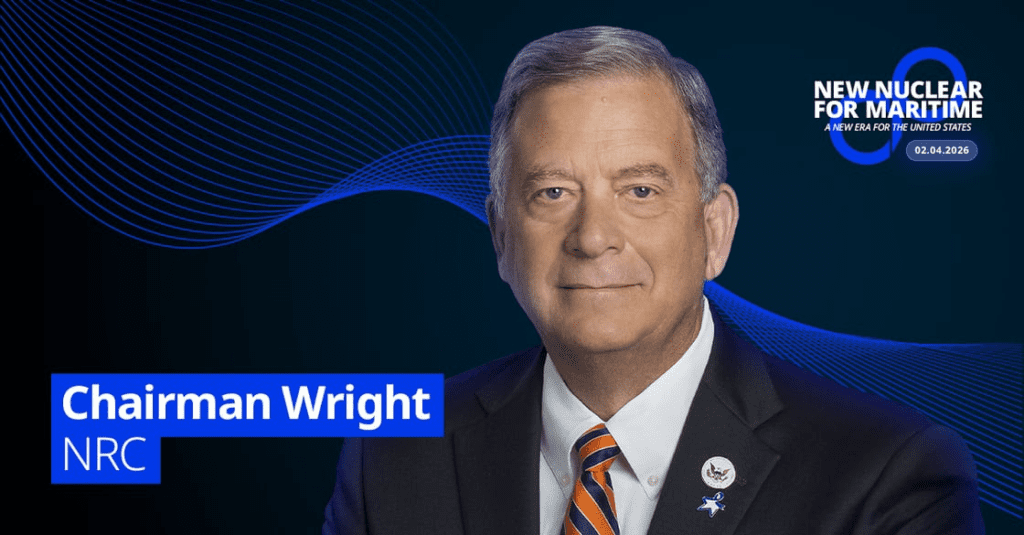
We’re pleased to confirm that the honourable David A. Wright, Chairman of the U.S. Nuclear Regulatory Commission, will join the DC Nuclear for Maritime Summit this February.
Chairman Wright was appointed Chair of the NRC in July 2025 and is serving a five-year term through June 2030, following his tenure as an NRC Commissioner from 2018 to 2025. He leads the independent federal agency responsible for regulating civilian nuclear energy in the United States, with oversight spanning reactor safety, licensing, security and waste management.
Before joining the Commission, Chairman Wright was Owner and President of Wright Directions, LLC, a strategic consulting firm focused on energy and water policy. His earlier career includes senior roles in utility regulation and public service, including serving as Chairman of the South Carolina Public Service Commission and President of the National Association of Regulatory Utility Commissioners.
At the summit, Chairman Wright will take part in the panel From Policy to Practice: Key Regulatory Milestones, sharing his perspective on the regulatory frameworks required to support the safe and responsible development of nuclear technologies for maritime applications.
Upcoming events
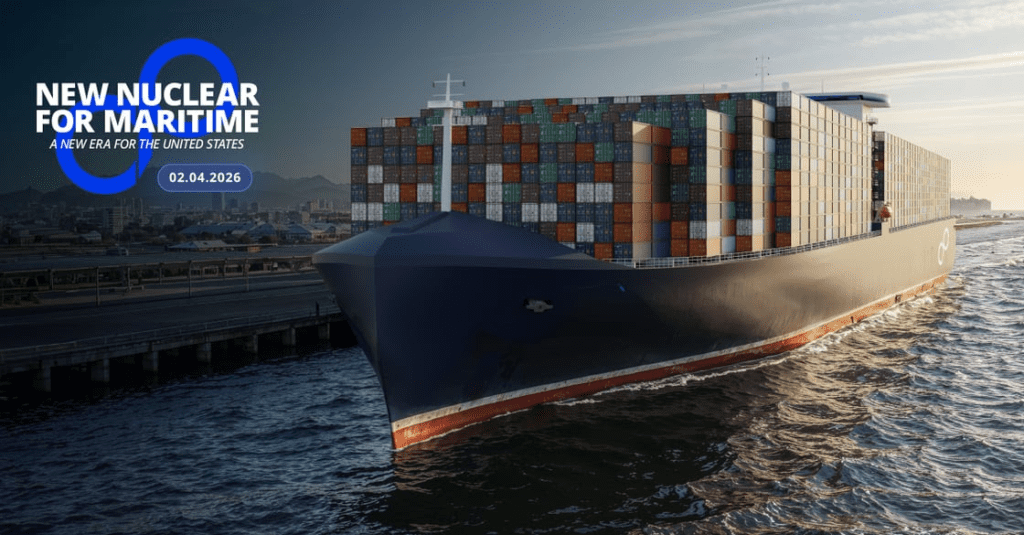
PANEL ANNOUNCEMENT | New Nuclear for Maritime: A New Era for the United States – Fission at Sea: The Future of Shipping
Global shipping is entering a period of significant change, driven by new technologies, shifting trade patterns and rising demands for reliable, low-carbon energy.
Long established as a source of dependable power on land, nuclear fission is now being considered in a maritime context. This panel brings together voices from maritime operations, nuclear innovation, policy and infrastructure to examine how advanced nuclear technologies could influence the future of commercial shipping – from vessel performance and operating economics to long-term resilience at sea.
