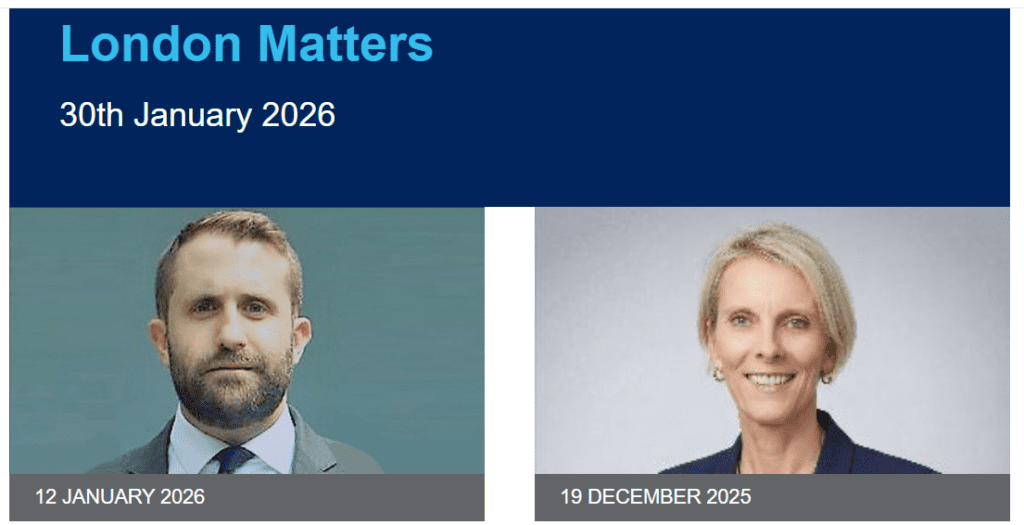
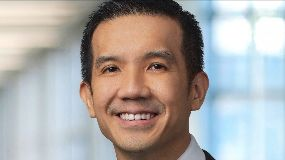
Maritime London Chief Executive Jos Standerwick has moved to a new role as Head of Membership at the Baltic Exchange as part of a pre-agreed succession strategy. Over the next six months, Jos will continue to provide consultancy services to Maritime London, with the full support of the Maritime London Directors to ensure that Maritime London’s activities and services remain unaffected.
In the meantime, the recruitment process for a new Chief Executive is under way. The search is being undertaken by Maritime London board member Phil Parry, from shipping recruitment specialists Spinnaker.
Maritime London Chair Harry Theochari said: “Jos joined Maritime London in 2017 and has helped navigate the organisation through an unprecedented period of regulatory and geopolitical change. Jos has been an exceptional and highly respected CEO and the Directors and all at Maritime London are tremendously grateful for all that he has done during his time as CEO. We all look forward to continuing to work with Jos in his new role at the Baltic and wish him every success for the future.”
Baltic Exchange Chief Executive and Vice Chair of Maritime London Mark Jackson said: “We are delighted to welcome Jos to the Baltic Exchange team as our new Head of Membership. Having already been working with our team to support our Know-Your-Customer platform and customers, Jos’s extensive background, knowledge of key maritime trends, and vital shipping network will be a huge asset to the Baltic and our entire global membership. His appointment is a clear example of how Baltic Exchange is continuing to support its broad and global membership with a commitment to integrity, transparency and excellence.”
In addition to his new role at the Baltic Exchange, Jos is a Council Member of the Baltic Exchange, Chair of the London International Shipping Week Steering Group and a Trustee of the Maritime London Officer Cadet Scholarship.
Maritime London appoints Philippa Charlton as a Director
Maritime London is pleased to announce the appointment of Philippa Charlton as a Director.
Philippa is Chief Marketing Officer at Lloyd’s Register and a member of its Executive Leadership Team, where she plays a central role in shaping the organisation’s global strategy, market engagement and thought leadership across the maritime sector.
She is also a Director of Lloyd’s Register’s Maritime Decarbonisation Hub and MERC – the Maritime Emissions Reduction Centre in Athens – supporting industry-wide collaboration to accelerate emissions reduction, innovation, and the deployment of new technologies in shipping.
Through her work at Lloyd’s Register, Philippa is closely engaged with shipowners, operators and regulators across the global maritime value chain. Philippa not only brings to the board a critical perspective from the classification sector, but her experience of marketing and strategic communications will provide vital insight.
Commenting on the appointment, Harry Theochari, Chair of Maritime London, said: “Philippa’s leadership at Lloyd’s Register, her involvement in global decarbonisation initiatives, and her marketing and communications expertise make her a highly valuable addition to the Maritime London Board of Directors. Her insight and perspective will support our mission to continue to promote and to maintain the UK’s position as the world’s leading maritime professional services hub.”
Welcoming her new role, Philippa Charlton said: “Maritime London plays a vital role in convening industry and government at such a critical moment for global shipping as the sector continues to navigate decarbonisation, digitalisation and regulatory change.
“I am delighted to be joining the board and look forward to contributing to Maritime London’s work in supporting collaboration, innovation and practical progress to deliver a safe, sustainable and just maritime energy transition.”
UK-led maritime consortium sets out plan for nuclear-powered fleet
The UK is taking a decisive step towards leading the global race to decarbonise shipping with the launch of the Maritime Nuclear Consortium.
Convened by Lloyd’s Register (LR), the group unites leading expertise from the nuclear, maritime, insurance and regulatory sectors to set the highest international standards for safe, secure and commercially viable nuclear-powered ships.
Maritime nuclear power is a proven, advanced and safe energy source that can tackle one of the toughest challenges in the energy transition. The next generation of advanced modular reactors (AMRs) will allow ships to sail for years without refuelling, with zero carbon emissions and rigorous safety built in from the start.
Nuclear produces no CO₂. Reactors run for years, not weeks. With no need to trade efficiency for emissions standards, ships can run at full design speed instead of slow steaming. The core membership includes:Lloyd’s Register (Lead, Safety & Secretariat)Rolls-Royce (Reactor Design)Babcock International Group (Ship Design, Construction and Support)Global Nuclear Security Partners (Security & Safeguards)Stephenson Harwood (Legal & Regulatory)NorthStandard (Insurance)Nick Brown, CEO of Lloyd’s Register, said: “Decarbonisation demands cleaner power, higher standards and a duty to the generations that follow. Nuclear is ready to meet that test.”Mike Salthouse, Head of External Affairs, NorthStandard and a director of Maritime London, said: “Insurance plays a critical role managing the risks associated with, and fostering confidence in, new technologies. At the heart of that confidence are people. By bringing deep expertise in risk assessment, safety, and regulatory compliance, NorthStandard can provide industry with the assurance it needs to explore the potential of innovative new applications for technologies such as civil nuclear marine.”
Lloyd’s List Intelligence partners with SynMax to boost satellite-based maritime intelligence
Lloyd’s List Intelligence and SynMax Intelligence have announced a new partnership. The collaboration brings together Lloyd’s List Intelligence’s trusted maritime data and insight with SynMax’s advanced satellite analysis and analyst-led interpretation of vessel behaviour.
The partnership reflects a shared commitment to improving clarity, confidence, and decision-making across maritime risk, compliance, legal, and insurance workflows. By combining authoritative maritime intelligence with SynMax’s blend of technology and human-led analysis, the collaboration aims to support customers navigating increasingly complex challenges such as dark activity, spoofing, and high-stakes incident investigations.
In addition to satellite-derived insights, SynMax’s approach integrates experienced analysts who contextualise imagery and behavioural data, ensuring outputs are accurate, defensible, and operationally relevant. Together, the two organisations will also collaborate on joint content initiatives, thought leadership, and industry education to address evolving regulatory and commercial pressures.
Nicky Marlin, Chief Product Officer, Lloyd’s List Intelligence said: “Through our partnership with SynMax, Lloyd’s List Intelligence customers can now gain access to Satellite Intelligence Reports that go well beyond traditional imagery. By directly linking satellite data to individual vessels, this ensures customers have deeper visibility, stronger evidence, and greater confidence when investigating incidents or uncovering increasing deceptive shipping practices. We’ve valued working with SynMax’s expert team and are excited to make this powerful new capability available to our customers through Seasearcher.”
Eric Anderson, CEO of SynMax, commented: “This partnership combines the decades of expertise and respected authority of Lloyds List Intelligence with the AI innovation and sensor capabilities of SynMax into an offering that has never existed before. Together, we are expanding what maritime intelligence can be, giving our customers deeper insight, stronger validation, and greater confidence into the increasingly opaque and complex maritime domain”
Baltic Exchange congratulates SGX and EEX on a successful transfer of Panamax FFAs
SGX and EEX successfully completed the transfer of all open interest in the Baltic Panamax 4TC (P4TC) index to the Panamax 5TC (P5TC) index on 16 January 2026, with the migration executed smoothly and without market disruption. This milestone concludes the transition from the long-established 74,000 dwt Panamax vessel specification to the updated 82,500 dwt standard.Throughout 2025, Baltic Exchange worked closely with the Clearing Houses (CCPs) to prepare the industry for this change. This included market forums, direct stakeholder engagement, and the publication of official circulars outlining the transition process and timeline.Following the successful migration of open interest to the P5TC, the Baltic will cease publishing the P4TC index, with 30 January 2026 set as the final publication day. For many years, the P4TC has been derived from the P5TC through a fixed differential ($1,336), and although it will no longer be published, the Baltic will continue to provide a calculated P4TC value under licence upon application.The P5TC superseded the P4TC after the Baltic completed its Panamax vessel‑review process, raising the standard vessel from 74,000 dwt to 82,500 dwt, following consultation with the market and in accordance with the criteria set out in the Guide to Market Benchmarks. As an FCA-regulated benchmark administrator, Baltic Exchange follows defined regulatory protocols in transitioning from one index to another to ensure transparency, governance, and market continuity.“This transition brings the derivatives market fully in line with the physical benchmark that has been in place since 2020. We updated the Panamax standard vessel and timecharter average in 2020 to reflect changes in the global fleet makeup and better represent the underlying trade. By discontinuing the outdated P4TC index and working closely with our CCPs to ensure the P5TC is the industry standard, we are ensuring that the physical and paper markets are now trading on the same contract,” said Stephen Aitchison, Senior Freight Market Assessor at Baltic Exchange.
The Commercial, Corporate and Finance Team at Campbell Johnston Clark (CJC) recently assisted Yangzijiang Maritime Development (YMD) to secure its primary listing on the Main Board of the SGX-ST. The successful listing resulted in a market capitalisation for YMD of around S$2.15 billion. CJC’s London-based team was led by James Clayton, Partner and head of the Commercial and Finance practice, and Consultant Alastair Macaulay.
“This project was a real highlight for our commercial team in 2025, and offered an excellent demonstration of CJC’s capabilities across a broad range of requirements as English, Marshall Islands and Liberian legal counsel in bringing YMD to market,” said Clayton. The process also called for CJC to liaise with lead counsel Rajah & Tann Singapore, with Carey Olsen Singapore as British Virgin Islands counsel, DeHeng Law Offices advising on PRC law and Arias Fabrega & Fabrega as counsel on Panama law.
Incorporated in Singapore, maritime-focused company YMD invests in vessels for charter and sale, offers financing solutions such as sale-and-leasebacks, pre-delivery loans, and secured loans through joint ventures and leasing models. Bringing YMD to the SGX-ST market follows the earlier listing of Yangzijiang Shipbuilding (in 2007) and Yangzijiang Financial Holdings (in 2022).
In an official statement following the listing, Ren Yuanlin, Executive Chairman and CEO, Yangzijiang Maritime Development Ltd., said: “We see tremendous growth opportunities for Yangzijiang Maritime. This milestone reflects our vision in the potential of our maritime platform, as we continue to create long-term value and work toward sustainable and transformative growth.”
Maritime decarbonisation experts at legal firm Stephenson Harwood say that final policy decisions made by the UK Government this summer will, if enacted as law, lead to new emissions costs for vessels sailing to, from and between United Kingdom ports from 1 July 2026.The policy decisions follow industry consultations initiated in November 2022 and 2024 concerning expansion of the UK Emissions Trading Scheme (ETS) to emissions from shipping. While decisions on numerous details are still pending, the UK Government’s interim response to the consultations constitutes the first firm outlining of the UK ETS for maritime and, importantly, communicates to the industry what it needs to start preparing for.Going forwards, if sailing to, from or between UK ports shipping entities will need to:accommodate the UK ETS in their compliance and contractual regimes, andpay the UK ETS costs arising.This recent development should be particularly noted by registered owners (including banks and financiers) as, like the EU ETS, the registered owner of a vessel will be the party with the compliance obligation by default, notwithstanding that the obligation may be shifted to the ISM company if certain criteria are met.The development is also significant for the offshore sector. The sector position is somewhat uncertain pending the UK Government’s final consultation response. However, the intention appears to be that offshore vessels will fall within the UK scheme albeit there could be provision for the rules to apply differently. If so, this will mean offshore ships will be subject to the UK ETS ahead of the EU ETS, which extends to include offshore ships of and above 5,000 GT from 1 January 2027 pursuant to EU monitoring and reporting obligations becoming applicable this year. The development is also significant for the offshore sector. The sector position is somewhat uncertain pending the UK Government’s final consultation response. However, the intention appears to be that offshore vessels will fall within the UK scheme albeit there could be provision for the rules to apply differently. If so, this will mean offshore ships will be subject to the UK ETS ahead of the EU ETS, which extends to include offshore ships of and above 5,000 GT from 1 January 2027 pursuant to EU monitoring and reporting obligations becoming applicable this year.
Moreover, whilst the UK Government’s proposals have consistently been orientated toward the capture of domestic, rather than international, emissions (i.e. those emissions produced on journeys between UK ports only), the UK Government’s decision to include all emissions produced in UK ports will bring vessels performing international voyages within the scheme – even if only in relation to UK port emissions and not the emissions of international voyage. A further notable aspect of the policy decisions is the start date of 1 July 2026. This means the industry will need to prepare for compliance with new obligations quickly, whilst also continuing to wrestle with the first verification period of the EU ETS, the first reporting period of FuelEU Maritime and the prospect of the potentially forthcoming IMO NZF regulations. Whilst adaptations made to accommodate the EU ETS will stand the industry in good stead, it will be important for shipping entities to recognise that the UK scheme, whilst exhibiting similarities to the EU scheme, will be separate and in some respects fundamentally different, and that compliance and contractual regimes will need to be re-designed and re-visited accordingly.
Shipping’s decarbonisation strategy dominates agenda at GSCC 2026 Vasilopita
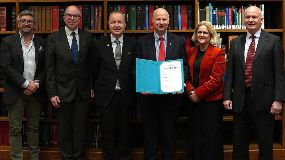
On January 22, London-based Greek Shipping Co-operation Committee (GSCC) held a traditional Vasilopita cake-cutting ceremony to mark the New Year 2026 in the beautiful setting of the Staple Inn Hall, with GSCC Chairman Haralambos J. Fafalios (pictured, centre) and IMO Secretary-General Arsenio Dominguez (right) addressing the audience.
Welcoming the guests, Mr Fafalios said that 2026 was the 91st year of GSCC’s life… an eventful year with the Gaza conflict receding and the Ukrainian war getting worse. We are also seeing the waters around Venezuela becoming quite a high-risk environment.
He then alluded to the fact that shipping markets were generally prospering and shipbuilding yards full despite ongoing geopolitical uncertainties. But he added: “Of these new ships a certain proportion are being built to be multi-fuel suitable but without knowing if there will be sufficient green fuels available to supply them. Supply of green fuels to shipping will only be available after shore-based demand is satisfied! A larger number of vessels are being designed to be very fuel efficient using existing and new technologies and therefore making significant strides to becoming truly greener.
“Shipping needs global solutions and tramp shipping in particular, which encompasses the largest part of the world shipping fleet, cannot rely on haphazard solutions which are not yet there in terms of reliability and more importantly, in terms of safety.
“The carbon-free solution is still not around and will not be so for the next 10-20 years and therefore levying more taxes will not encourage a cleaner world. Those who are levying these taxes should be responsible for finding the real solutions.
“No member of the environmental lobby has come up with a workable solution for our future fuel needs. All stick and no carrot.
“With regards to IMO NZF, unless the world shipping industry can be directly involved in the drafting of this legislation, it cannot be anything more than window dressing. More taxes only mean a greater burden for the consumer since it is they alone who will pay.”
Miller, a leading independent specialist (re)insurance broker, is pleased to announce the appointments of Elisabeth Chalon Lambertin and Toni Beltzer to further expand Miller’s Surety offering in Europe. Both will be based in Paris and will report into Arnaud Froideval (Head of Credit & Surety and Political Risks Miller Europe).Elisabeth and Toni join from Transitions, a surety broker specialising in surety, construction & real estate, which they co-founded in 2023.Prior to founding Transitions, Elisabeth was Head of Surety for Aon France, after having held Chief Legal Officer positions at a number of insurance groups including Groupama & Natixis for over a decade. Alongside roles in broking, underwriting & legal, Elisabeth draws on experience gained in both public & private sectors, in the surety bond and financial guarantee market, focusing on the construction & real estate industry.Toni similarly joins with a breadth of experience in surety & finance products for the construction and property development industry, having held roles at Groupama, and BPCE.Elisabeth will head up Miller’s surety offering in Europe, with France as a particular focus, supported by Toni as Producer Broker and Elodie Dancette as Account Executive.Miller’s Surety offering will be applicable across a variety of sectors, including construction, real estate, energy, renewable energy, and commodity trade finance, with solutions deployed locally or internationally.Arnaud Froideval, Head of Credit, Surety and Political Risks, at Miller, said: “As the surety market continues to evolve, Elisabeth and Toni will be excellent additions to the team as we further build on our Credit, Surety and Political Risk offering. Working in collaboration with our well established Surety team in London, we are excited to expand the range of solutions and services we can provide to clients in the European market, offering a valuable alternative to bank guarantees.”
ABS and Siemens Energy launch joint development project to enhance battery safety through advanced simulation
ABS and Siemens Energy have signed a joint development project (JDP) to advance the understanding of thermal runaway in lithium-ion batteries through modeling and simulation, supporting safer and more reliable energy storage systems for the marine and offshore industries.
The JDP brings together ABS’s technical expertise in classification, verification, and standards development with leadership from Siemens Energy in digital simulation and industrial technology innovation. The collaboration aims to create new insights into how lithium-ion battery systems behave under extreme conditions, ultimately enhancing design verification, safety assurance, and risk mitigation for next-generation applications.
“Safety and technical assurance are at the core of what we do. By combining ABS’s experience in safety standards with Siemens Energy’s advanced modeling capabilities, we are helping the marine and offshore industries move forward with greater confidence in the design and operation of next-generation energy storage technologies,” said Michael Kei, ABS Vice President, Technology.
Over the course of the project, ABS and Siemens Energy will use simulation-based validation to evaluate battery pack behavior, identify design improvements, and strengthen safety assurance across the energy storage lifecycle.
Spinnaker’s 30 under 30: Celebrating the next generation of maritime talent
In 2025, maritime people experts Spinnaker ran a campaign to find 30 individuals aged under 30 to shine a spotlight on.
This 30 Under 30 initiative was created to celebrate and spotlight the talent, enthusiasm and initiatives that young professionals are already bringing to the shipping industry. These individuals are not waiting for permission to make an impact; they are actively shaping the industry and challenging the status quo in meaningful ways through their ideas, their work and their values.
Last year’s 30 Under 30 highlighted several inspiring themes. Many nominees spoke about the importance of staying curious, a reminder that shipping is a specialist, constantly evolving industry where asking questions and challenging the norm is essential. We also saw a clear shift in how maritime roles are enabling individuals to make meaningful contributions to the planet. Once largely associated with the cruise sector, ESG and sustainability-focused roles are now embedded across the wider industry, from technical and legal to finance, marketing, operations and commercial functions. In 2026, Spinnaker’s 30 Under 30, nominations are invited from all sectors in the industry. Managers and colleagues are invited to nominate peers and team members.
From the final Top 30, Spinnaker will also select five individuals whose profiles stand out for the significance of their work, the initiatives they are leading, or the impact they are having within their organisations and beyond. These five will be featured on the Spinnaker website and LinkedIn page and invited to join us at our Maritime People & Culture Conference on the 13 & 14 May to be part of the wider conversation shaping the future of shipping.
Maritime London runs inaugural UK-China Shipping Forum
Maritime London held the inaugural UK-China Shipping Forum, as part of the Pudong International Shipping Week 2025, at Jinmao Tower in Shanghai in early December.The event provided a platform to discuss how the industry has responded to current commercial and regulatory environment and the practical solutions to the industry’s decarbonisation. Maritime London’s Chief Executive Jos Standerwick commented: ‘Most importantly, the event was a physical example of how China and the UK can collaborate.”Organised in partnership with Silverstream, a London headquartered market-leading maritime clean technology company specialising in hull air lubrication for commercial shipping, the event was supported by the UK Department for Business & Trade, Beyond Shipping, China Shipping Association of London and Xinde Marine.Henry Oliver, Deputy Head of Civil Maritime at the UK Department for Business & Trade welcomed the audience passing the floor to Ms Liu Xiaodan, Director of Shipping Service Department of Shanghai Pudong New Area Commission of Commerce, who delivered an Opening address.Xu Chen, Assistant Director, Transportation Logistics Research Centre, Xinhua Indices delivered a presentation, which talked about what it is that the world’s leading international shipping centres got right to get to and hold leading positions in the Xinhua-Baltic International Shipping Centre Development Index (ISCDI).Mark Assaf, Chief of Human Resources Development, TRAINFORTRADE at the United Nations Conference on Trade and Development (UNCTAD) delivered a presentation summarising the latest edition of the Maritime Transport report 2025 Report published annually by UNCTAD.Jos Standerwick moderated the ‘Navigating regulatory and trade uncertainties’ panel discussion. The speakers included Mark Assaf of UNCTAD, Jin Yu Cheong, Head of Asia Baltic Exchange, Janice Lee, Partner at Hill Dickinson Hong Kong and Vineet Puri, Head, Global Shipping & Logistics, Asia Pacific, Citi.The panel explored how freight markets, the contractual landscape, asset financing and the maritime labour force have responded to the increasingly complex trading and regulatory landscape.The second session focused on how Energy Efficiency Technologies (EETs) bridge the transition to alternative fuels, enhance vessel performance, and reshape commercial relationships through shared efficiency gains, and importantly, extend the commercial lives of assets in a tight freight market.Moderated by Guy Platten, Advisor, Non-Executive Director and former Secretary General, International Chamber of Shipping (ICS), the panel included Dimitris N. Monioudis, Chairman – Technical Committee of Intercargo, Noah Silberschmidt, Founder and CEO of Silverstream Technologies, Nikos Tsatsaros, Head of China Technical Performance Group at Lloyd’s Register and Zhang Zhuo, Deputy Director, Ship Type Expert, Senior Naval Architect at CSSC Innovation Center (SDARI).
Nikos Kakalis appointed Managing Director of Maritime Emissions Reduction Centre
The Maritime Emissions Reduction Centre (MERC) has appointed Nikos Kakalis as its new Managing Director.
Kakalis, who currently serves as Lloyd’s Register’s Global Bulk Carriers Segment Director, succeeds Stelios Korkodilos in leading the Athens-based non-profit industry collaboration.
The MERC was co-established by the Lloyd’s Register Maritime Decarbonisation Hub and leading shipowners Capital Group, Navios Maritime Partners, Neda Maritime Agency, Star Bulk and Thenamaris (Ships Management) Inc., with enabling support from Lloyd’s Register.
The centre is focused on accelerating the reduction of greenhouse gas emissions of the global shipping fleet by identifying, validating and promoting technology and operational solutions that can deliver efficiency and scalable impact and ensure existing vessels contribute to global decarbonisation efforts.
Since its inception, the MERC has developed its impact strategy around several research and development pillars, including optimising hydrodynamic efficiency, benchmarking wind assisted propulsion solutions, exploring alternative auxiliary power generation, and scoping a data programme to integrate technical and commercial use of performance data to drive emissions reduction optimisation and benefit sharing.
As managing director, Kakalis will drive the centre’s strategy, develop further its network of industry partners, and align its programmes with emerging regulatory and market developments shaping the energy transition.
Nikos Kakalis said: “Decarbonising the existing fleet is the defining challenge facing the maritime industry. The MERC provides a unique platform to bring together owners, operators, class and technology providers to deliver solutions that work in practice. I am excited to assume this role and to build on the strong foundation established by all of our partners.”
The Britannia Group announces that Mike Hall has formally taken up his post as Chief Executive Officer as of 1 January 2026, succeeding Andrew Cutler, who has now stepped down from the role.
Mike joined the leading P&I Club in 2008 as an underwriter and went on to serve as the Britannia Group’s Chief Underwriting Officer from 2014 to 2022, before being appointed Deputy CEO. He was also Chair of the International Group of P&I Clubs’ (IG) Reinsurance Committee until the end of last year. Mike brings extensive experience, deep knowledge of the global P&I market, and a long-standing commitment to delivering exceptional service to Britannia’s Members worldwide.
Andrew Cutler left the Britannia Group on 31st December 2025 following a distinguished career spanning nearly two decades. Andrew joined the Group in 2006 becoming CEO in 2012. He also served as Chair of the IG for three years, concluding his term in November 2025.
The Britannia Group’s Chair, Egied Verbeeck, commented: “It has been a real pleasure and honour having worked alongside Andrew who has been an exceptional leader for Britannia. He leaves the Club in a position of real strength, and the Board is deeply grateful. We are delighted to appoint Mike as CEO; his experience, values and understanding of Britannia’s mutual culture position him ideally to lead the Club into its next phase, ensuring that our Members remain at the heart of everything we do.”
Mike Hall said: “It is a great honour to take on the role of CEO of the BritanniaP&I Club. Britannia has a long-standing reputation for excellence, integrity and Member focus and I look forward to working closely with the Board, our Members and our global team to build on these strengths. At a time of significant change for the maritime industry, my priority will be to ensure Britannia continues to deliver outstanding service, financial resilience, and long-term value for its Members.”
Reed Smith strengthens Asia-Pacific finance offering with hire in Singapore
Global law firm Reed Smith announced the appointment of banking and finance partner Dr. Gregory Xu to its Singapore office. Xu, who joins from Stephenson Harwood, where he led the general banking and project finance offering in Southeast Asia and served on the firm’s Supervisory Council, its executive committee, will join Reed Smith’s Transportation Industry Group. With over 15 years of experience, Xu advises on high-value, cross-border transactions across a wide range of sectors, including transportation — shipping, aviation, and logistics — trade, life sciences, energy, and technology. He regularly acts for financial institutions, funds, export credit agencies, leasing houses, asset owners, and Fortune 500 companies on complex financing, restructuring, and enforcement matters. Xu has a strong track record in green and sustainability-linked lending and advises on multi-jurisdictional insolvency-related enforcement and restructuring matters. He also brings extensive experience in general corporate and commercial matters. Richard Hakes, chair of Reed Smith’s Transportation Industry Group, said: “Gregory is an outstanding addition to our team, bringing deep knowledge of ship finance, aviation finance, and banking throughout Southeast Asia. His arrival further strengthens our capabilities in Singapore and reinforces our commitment to the maritime, aviation, and broader transportation sectors across the Asia-Pacific region and beyond. Working closely with our shipping teams in Hong Kong and Shanghai and our aviation team in Singapore as part of our global Transportation Industry Group, Gregory will enhance our ability to provide seamless, cross-border support to clients operating in one of the world’s most dynamic industries.”
NorthStandard has appointed Steve Cockburn as Chief Executive Officer (CEO) of NorthStandard Europe – the Dublin-based subsidiary which has oversight of around 40 per cent of the global marine insurer’s book.
The appointment follows the formal integration of two Dublin-based legacy companies previously representing the ‘North P&I’ and ‘The Standard Club’. Before their merger in 2023, North and Standard were the only P&I clubs established in Ireland.
Bringing them together creates a significant European insurance company in a centre of commerce with enduring appeal for global businesses.
Cockburn, who will relocate from Newcastle to Dublin, has over 20 years’ experience working with NorthStandard and spent nearly six years chairing the International Group’s Compulsory Insurance Committee. He was previously Chief of Geographical Sectors, with global responsibility for blue-water membership and operations. He also acted as the business integration lead for the merger between North and Standard.
Cockburn will continue as a member of NorthStandard’s Executive Leadership Team, and his new role is significant for the marine insurer’s structure and global ambitions. Beyond CBI Pre-Approval Controlled Function reporting, NorthStandard’s Dublin based heads of claims, underwriting, finance and risk will now report directly to Cockburn.
“By bringing together and growing our activities in Ireland, NorthStandard is establishing Dublin as a centre of excellence for marine insurance and signalling its intention to develop in this location as part of our global business,” said Cockburn. “Success will be built around the strength of our existing team, which we will cultivate and expand with a blend of internal and external talent, drawing on industry leaders and experts, ambitious local professionals and those attracted to relocate to Dublin as a focal point for insurance.”