





By James Brewer
Tracey Emin lives for art. Grateful for flourishing in what she calls her second life, having survived the ordeal of major surgery – surgeries – in 2020 for cancer, the acclaimed artist dispenses warmth and generosity.
Her Tate Modern show is all about courage and candour and her impulse for very personal storytelling.
At the peak of her fame, now reinforced by this expansive London exhibition, she is spending her money on buying property for conversion to non-profit studios and projects for young artists.
In the Tate endeavour as in all she does, Tracey Emin unflinchingly lays bare her emotional and physical being as the source and subject matter of her art, scornful of the negativity with which some would react to such exposure of body and soul,
Appointed in the King’s 2024 birthday honours a Dame Commander of the British Empire for services to art, she retraces her passion, pain, and healing over a 40-year career.
She is never lost for words, nor for new works since recovering her creativity after a hiatus induced in the early 1990s by physical difficulties from two traumatic miscarriages. To her, art is everything. She refuses to be cynical about it; she always responds mordantly to challenge.
Her resilience and unabashed self-expression are spelled out across paintings, videos, monoprints, drawings, sculpture and embroidery… and in her unapologetic cries from the heart in her distinctive handwriting in neon signage.
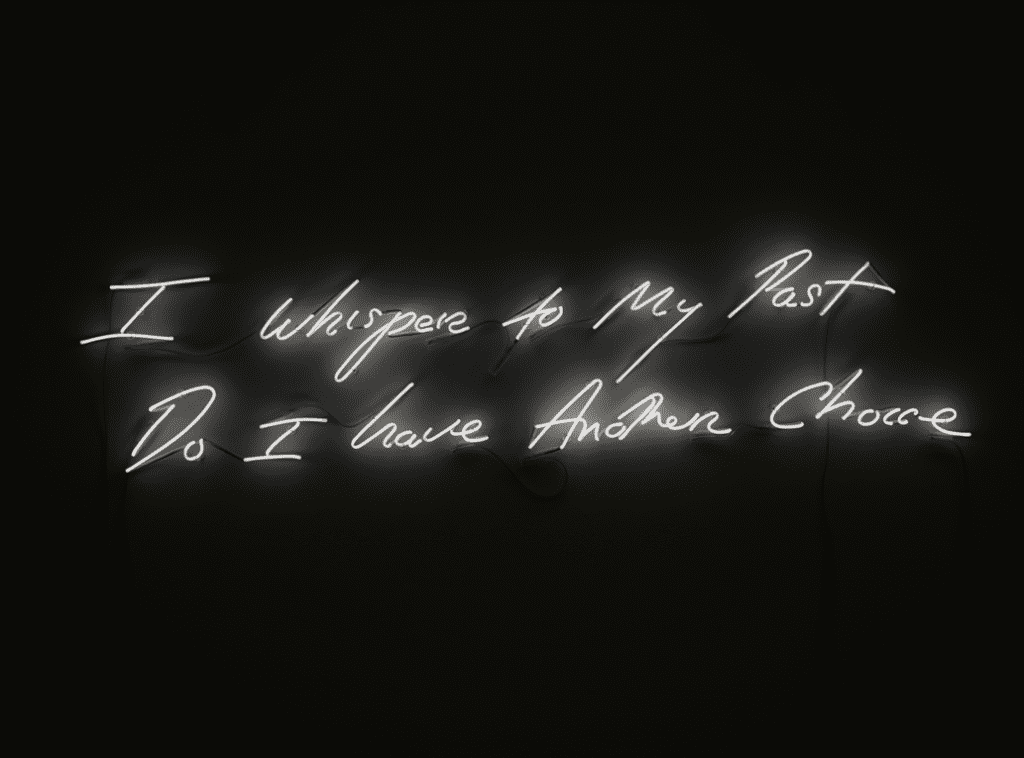
The neon texts are stark, such as I whisper to my past, do I have another choice (2010). In 2011 she made a gift to the UK government of her neon work More Passion but asked for it to be taken down after the “shameful” partying at Downing Street during Covid lockdown came to light.
She has refused to feel ashamed about the abuse she has suffered from men; she says she will instead make art about it, and talk about it, and strongly advises the new generations to turn away from nihilism.
The Tate exhibition plays on the ambience – a rare combination of open-ness and intimacy – of her art which in the late 1990s swept aside the boundaries of what was considered acceptable: her scandalous impertinences were being frank about sex, pregnancy, abortion and mental health. Today her continuing wielding of the female body as a symbol of strength excites resonances at a time when women’s rights are being pushed back around the world.
Her standpoints are enmeshed in her two most famous installations, one centred on her unmade bed – still widely pictured as her calling card — and another of a tent embroidered with the names of everyone she had ever slept with (including, without sin, family members). In an interview in the Winter 2025 edition of the Tate etc magazine, she says: “I didn’t want everyone to think who I’d slept with. I wanted them to think about who they’d slept with. It’s the same thing. I don’t want them to think about my life. I want them to think about their own life.”
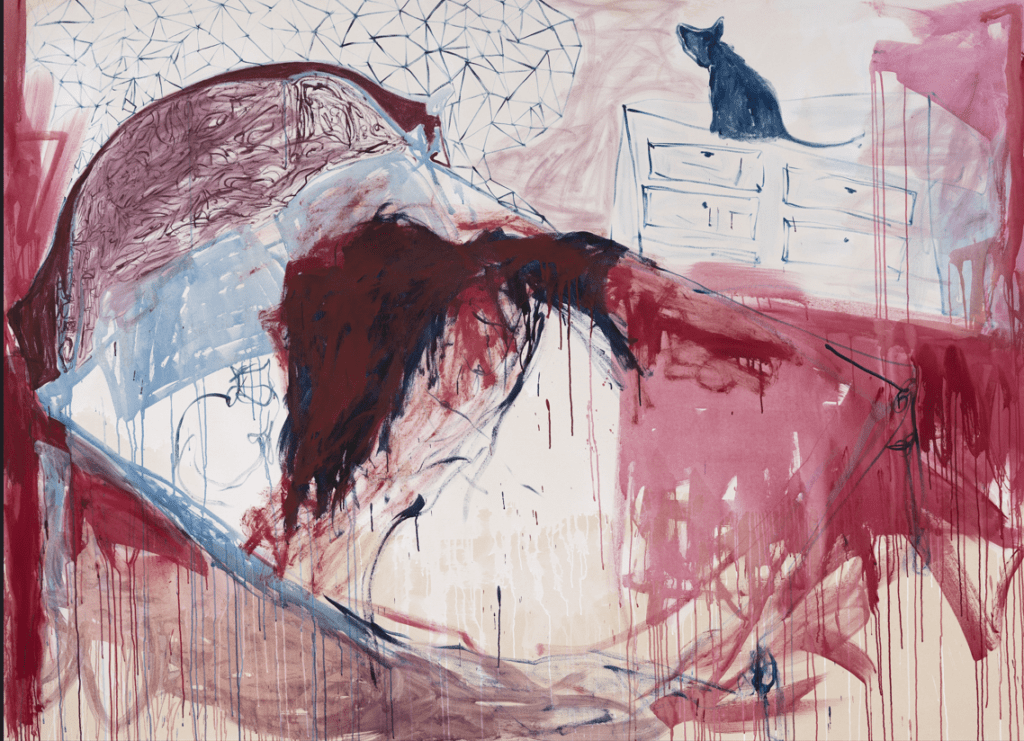
Now ‘bed’ for her has a further significance, as her health problems confine her to spending much of her time prone. Her bladder and parts of her intestine were removed after her cancer diagnosis and she underwent a hysterectomy. She was fitted with a stoma (an opening in the abdomen to dispose of waste) which is tiring but, she says, “the good news is I’m still here.”
She told Charlotte Higgins, arts correspondent of The Guardian: “I reckon that I was going to die and then they, whoever they are [she glances heavenwards] they said, ‘I don’t think she’s all bad. Let’s give her another go, see what she can do.’”
In conversation for Tate etc with outgoing Tate director Maria Balshaw, she adds: “So, my second life is this, now. Sometimes I think I died, and this is heaven. And my heaven is what I’m creating, this amazing art world, this world of art and art school, in a town [the coastal resort of Margate, Kent] that I knew, that I grew up in, that’s completely changed… I have done more in the last five years than I have done in the whole rest of my life.” Note, she says, she is talking about a second life and not a resurrection.
She feels her commitment to art so deeply that “when I am painting, I don’t have any physical problems.” As she paints, she constantly reworks the canvas, physically “fighting” with her initial drafts.
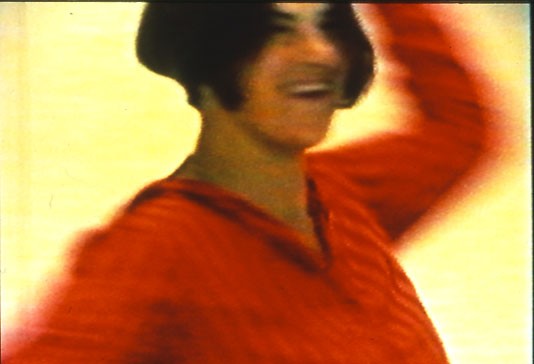
The Tate exhibition ranges from sex scenes – which she says are better described as love scenes – to a video made when she was first living in Margate. The 1995 video is titled Why I Never Became A Dancer and in it she dances solo to a 1970s disco hit by singer Sylvester called You Make Me Feel (Mighty Real). She was trying to qualify for the British Disco Dance Championship and saw the video as a riposte to the abuse, physical and verbal, she had suffered from men in the seaside town. The film ends with scenes of Margate’s “amusements” quarter; she says, “I’m getting out of here,” as a bird soars high into the sky.
Her memory of the town’s night-time lights is the origin of her technique of using neon to spell out her feelings in several of her best-known works. She has a dedicated team collaborating with her since the 1990s to produce the large-scale neons.
Margate has had its dark side for her, but she loves what she sees as its romantic setting and beautiful pink and crimson sunsets, as she told the presenter and musician Jools Holland on his BBC radio programme Earlier.
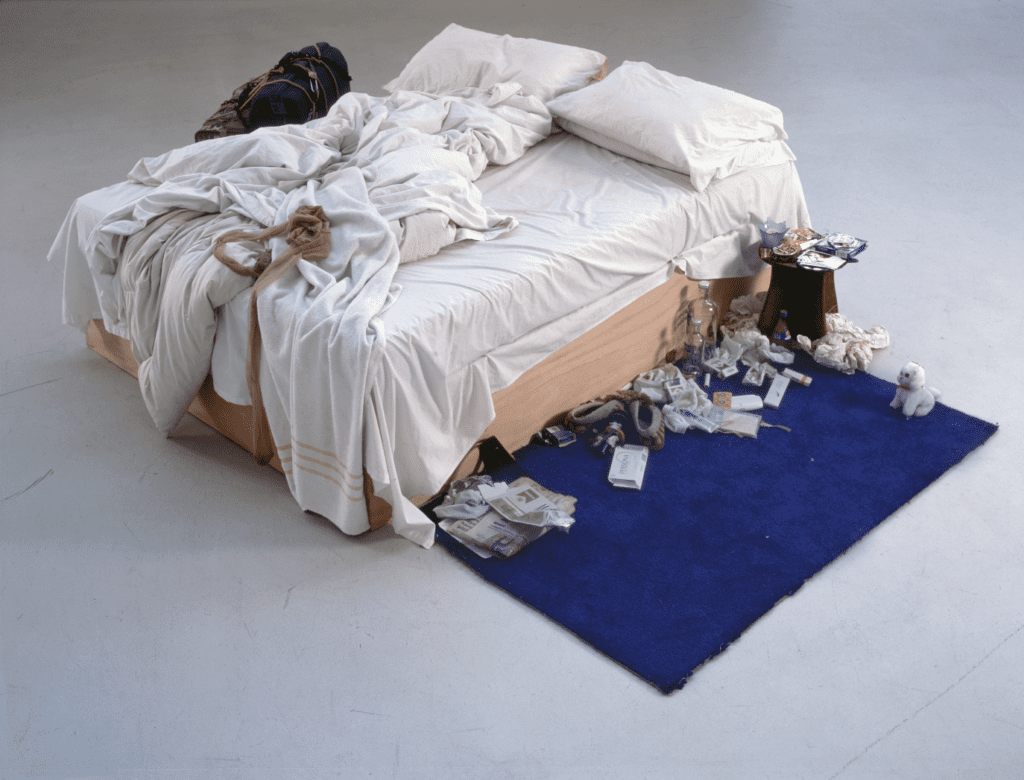
Tracey came to prominence when My Bed was shortlisted for the 1999 Turner Prize. The defiantly non-conformist montage came about when it dawned on her that the state of her bed artistically characterised her emotions during four days of alcohol-fuelled response to a relationship breakup.
Thus My Bed rather than being the representation of a sexual liaison points to its far-reaching aftermath, like a spare and direct monologue.
Galleries and trend-setters quickly identified My Bed as an image of troubled and vulnerable womanhood and a longing for connection. Charles Saatchi, a leading contemporary art collector, bought My Bed for £150,000, and in 2014 sold it by auction to support the work of the Saatchi Gallery Foundation. With buyer’s premium it went for £2.5m to the German industrialist Count Christian Duerckheim who then loaned it to Tate on long-term basis.. Tracey said: “The sale of the bed [to Saatchi] was my deposit for a house. Something I never dreamt would be possible.”
The startling piece can be shown only once every five years or so – to preserve its fabric and accoutrements from deterioration. Despite its rumpled appearance, the work is meticulously curated for each public showing, with all the components carefully arranged by the artist herself, transforming unsightly bedside stuff and waste into an integral part of a sculpture. And of course, the whole thing is insured.
The origin of My Bed was not Tracey’s first breakdown. Exorcism of the Last Painting I Ever Made from1996 documents the three weeks when she locked herself in a gallery in Stockholm trying to come to terms with her relationship with painting, which she had abandoned for six years after her experience of abortion.
The Tate show begins with works from her first solo exhibition at the private gallery White Cube, My Major Retrospective (1982-93), a series of tiny photographs of her art school paintings which she had destroyed. White Cube has had a close working relationship with her for many years. To coincide with the new Tate exhibition, her 2022 monumental bronze sculpture The Mother has been on view in the courtyard at White Cube Bermondsey.
Tracey continues to be a beacon for contemporary art, and several recent paintings and bronze sculptures are on display at Tate for the first time, among more than 90 works.
She was born in 1963 to a British mother and Turkish Cypriot father. She keeps a collection of Turkish Cypriot textiles; and a video Emin & Emin (1996) in the current exhibition shows her and her father Enver playing in the Mediterranean Sea off Cyprus.
She spent many of her early years in Margate, which she left when she was 15, returning there before moving to London in 1987 to study at the Royal College of Art from which she holds an honorary doctorate, as she does from other institutions including London Metropolitan University and the University of Kent.
Margate has always been on her mind. The turbulent years she spent there are spelled out in handstitched comments, letters and drawings of Mad Tracey From Margate: Everybody’s Been There. In 2005 she even built a model of the wooden rollercoaster in the town funfair Dreamland as a reflection of her anxieties. She called the model It’s Not the Way I Want to Die.
The exhibition addresses the artist’s experience of being sexually violated, including the neon I could have Loved my Innocence from 2007 and the embroidered calico Is This a Joke from2009.
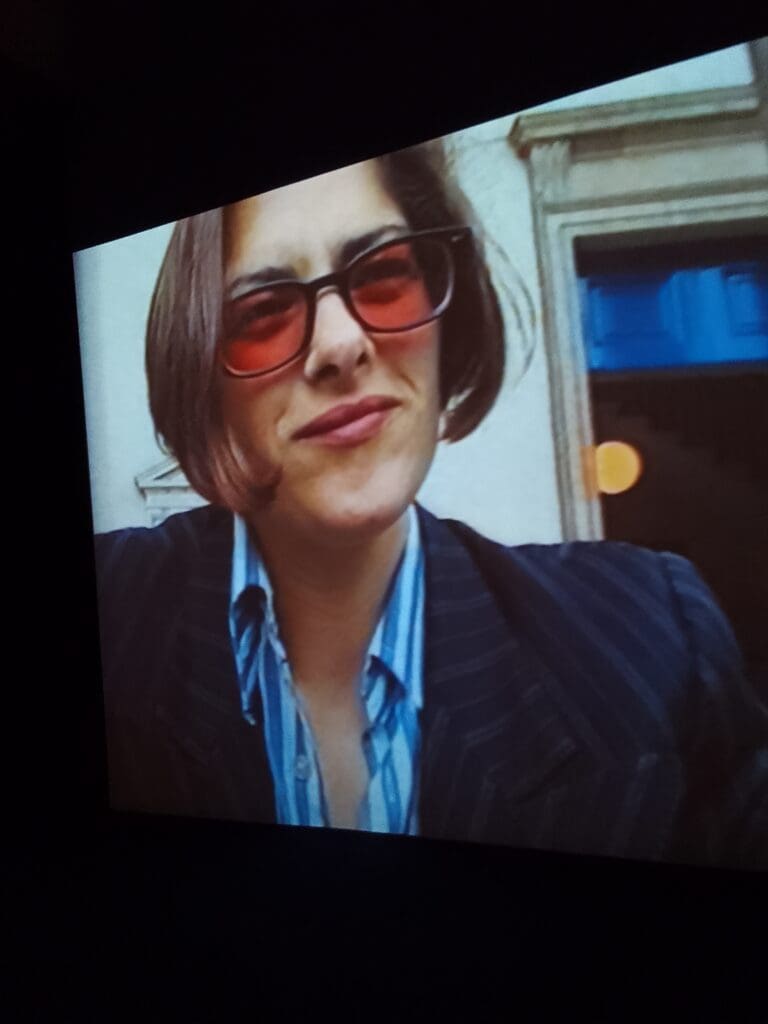
Two rooms focus on abortion. Tracey had two traumatic operations in the 1990s. In one of her most personal video productions How It Feels from 1996, she stands in the street, detailing an abortion that went wrong, institutional neglect, the physical and psychological implications of refusing motherhood, and misogyny. It is a kind of guide for women who are faced with severe challenges of that kind. On the same theme is a large quilt shown publicly at Tate for the first time The Last of the Gold from 2002 embroidered with an ‘A to Z’ of advice over the predicament.
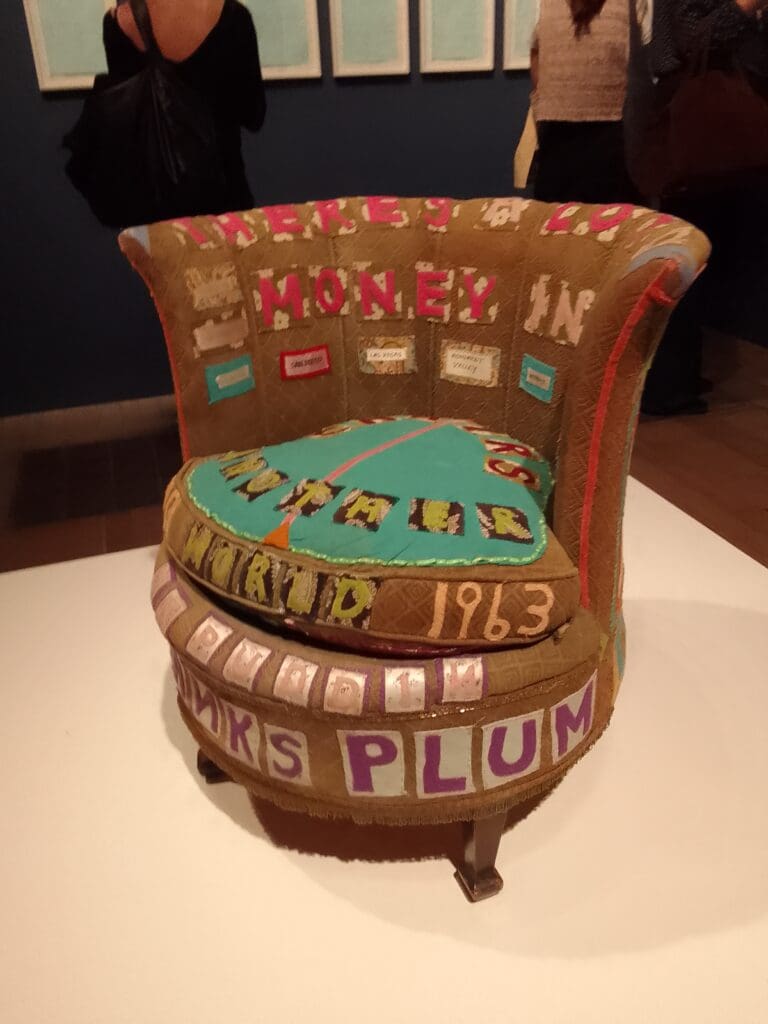
In her blankets and armchairs, Tracey suffuses quilt-making with the character and bright colours of her paintings.
In 1994, she embroidered There’s a lot of money in chairs on the armchair she inherited from her great-grandmother. It was her grandmother who made that comment, meaning that people used to stuff money down the back of armchairs. Tracey appliquéd the saying on the chair, commenting: “It’s not what you inherit. It’s what you do with your inheritance.”
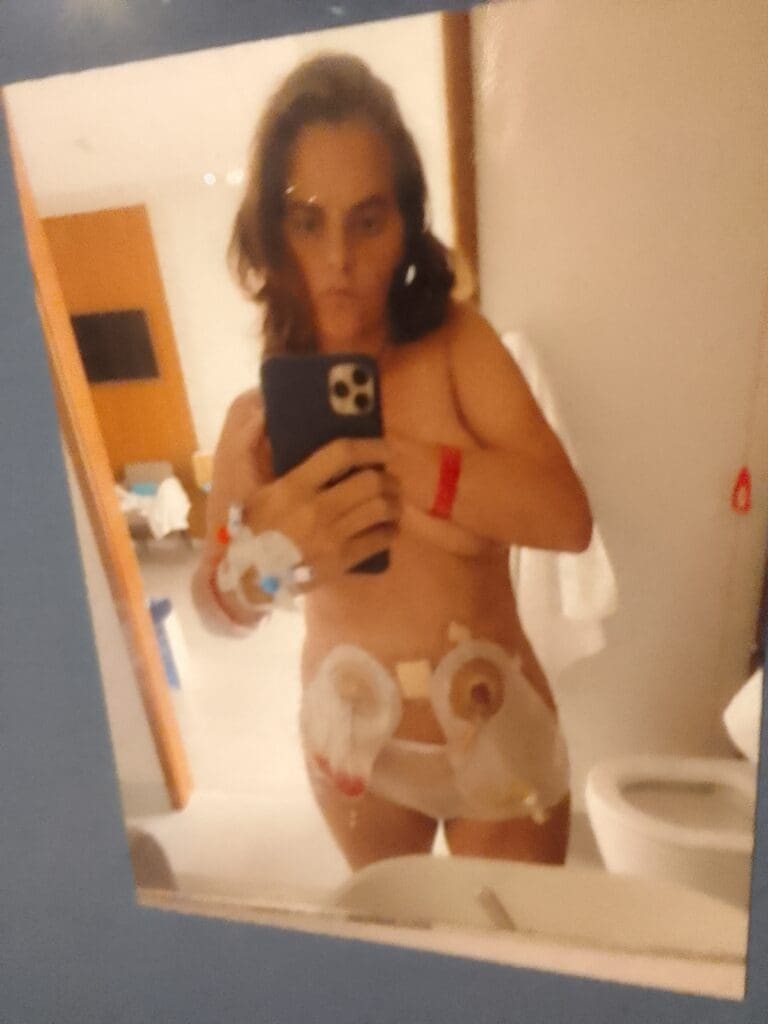
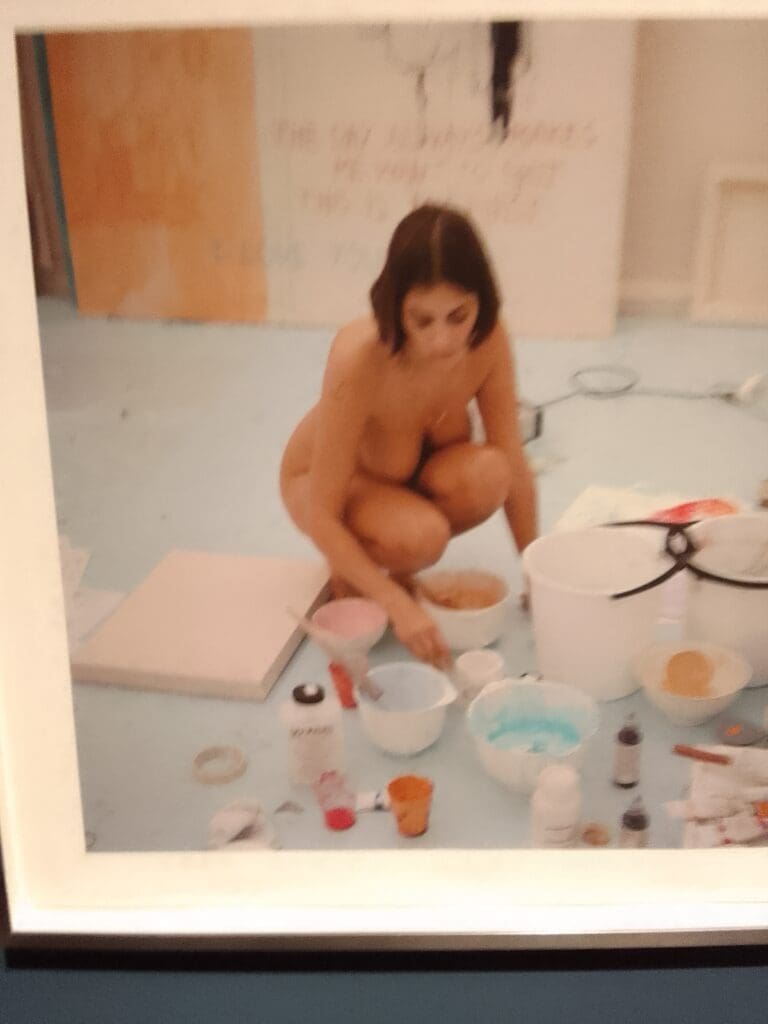
In the corridor gallery at Tate are displayed the 10 Polaroids of Self-Portrait 12-11-01 showing her naked while intent in 2001 on painting, surrounded by materials. Ten more recent photos include her body shown immediately after surgery and her stoma.
Her recent bronze sculpture Ascension, which explores her new relationship with her body following the major surgery, is accompanied by new photographs showing the stoma she lives with.
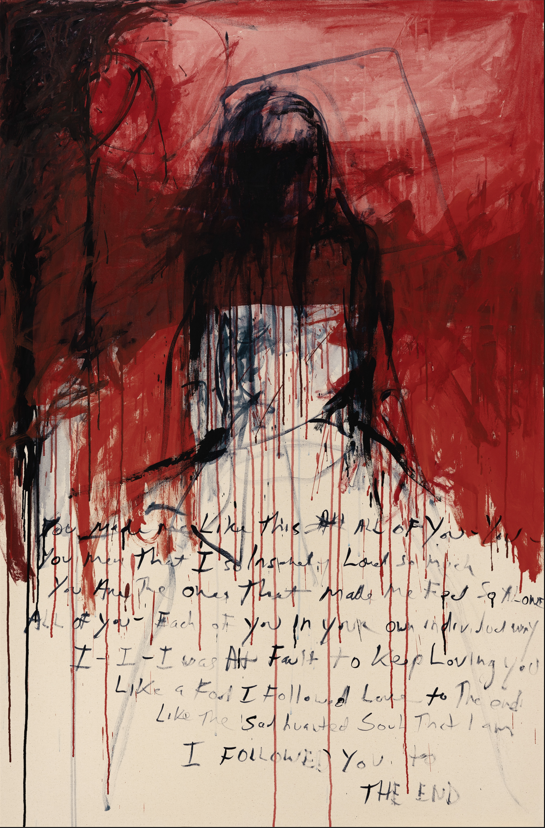
The indoor exhibition culminates with the artist determined to live in the present, although among expansive paintings illustrating a life lived to the full sits the 2002 sculpture Death Mask. Beyond the walls of the Tate Modern, the huge 2023 bronze I Followed You Until The End continues her response to the anguish of love. To the men who have mistreated her she inscribes: “You made me like this. All of you – you – you men that I so insanely loved so much. You are the ones that made me feel so alone. Like a fool I followed love to the end.
In Margate she has established the Tracey Emin Foundation, buying neglected buildings to turn into community assets in which artists live at low rent: a determined reversal of the general deterioration in the UK of the fabric of public life. TKE Studios (named after her full name Tracey Karima Emin) provides affordable workspace and a residency for young artists. The enterprise is admired by the singer Madonna whom Tracey first met at the 1999 Turner prize exhibition – and Madonna loves Margate, saying it is her “idea of heaven.”
Tracey’s ambition complements the major gallery in the town, the charity-run Turner Contemporary which was inspired by the great JMW Turner who loved the skies and light of Margate. Since 2011 it has hosted 72 exhibitions featuring more than 387 international artists.
Dame Tracey said that putting the Tate show together had been cathartic. Before cancer and after cancer “changed my life radically. “I’m very excited about having a show at Tate Modern. For me, it’s one of the greatest international contemporary art museums in the world and it’s here in London. This show… A true celebration of living.”
In a new book, My Heart is This: Tracey Emin on Painting (Thames & Hudson, February 2026), the artist in conversation with art critic Martin Gayford tells of her process of putting paint to canvas. She says: “Years ago, for me, painting was difficult, difficult, difficult. Then in 2016, when my mum died, I decided that I was going to stop it from being so difficult… My mind goes on a kind of journey. So my painting isn’t boring for me. It isn’t technical. It’s not an exercise. It’s just me, moving through the canvas and moving through the ideas.”
She asserts: “The bed changed my world. It wasn’t an affectation, it wasn’t me whining, it was real, real, real. My whole life I will have to defend it as a work of art, as a thing that’s important to me, as something precious. So I’m very pleased it’s in the show. Really pleased.”
Tracey has told of the important role of music early in her life. While staying in Amsterdam, she awoke one morning to the sound of Bach’s Brandenburg Concerto which she says inspired her to go to the National Gallery in London to start looking at early Renaissance paintings.
Her illness has affected her hearing and a lot of music “really hurts me” so she prefers when working to listen to relaxing ambient music.
Tracey Emin: A Second Life is presented in Tate’s Eyal Ofer Galleries, in partnership with Gucci. It is curated by Maria Balshaw, director, Tate; Alvin Li, curator, International Art, supported by Asymmetry Art Foundation, Tate Modern; and Jess Baxter, assistant curator, international art, Tate Modern. Maria Balshaw, who has been director of Tate since 2017, has stepped down and is returning to working directly with artists.
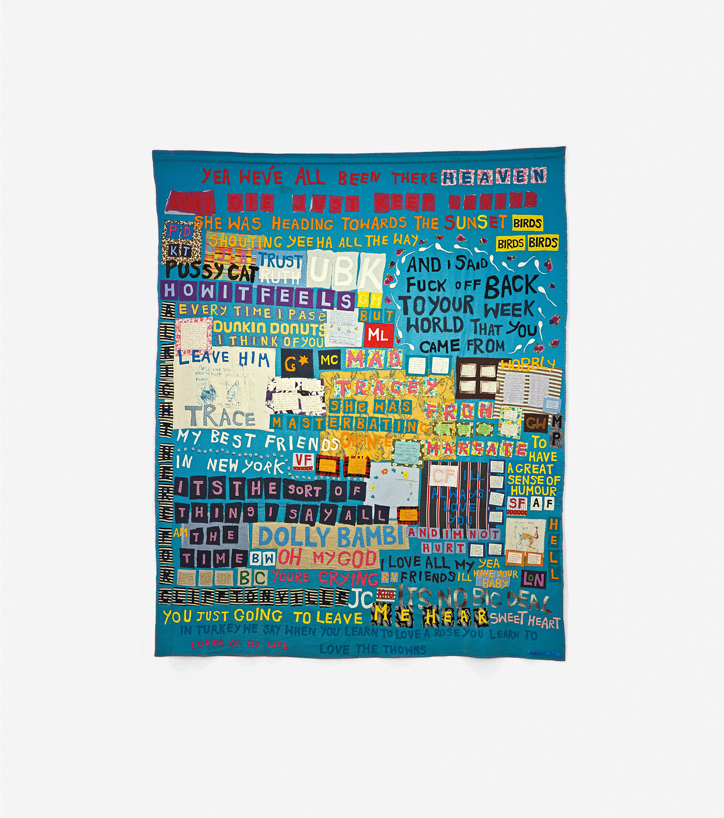
Image captions:
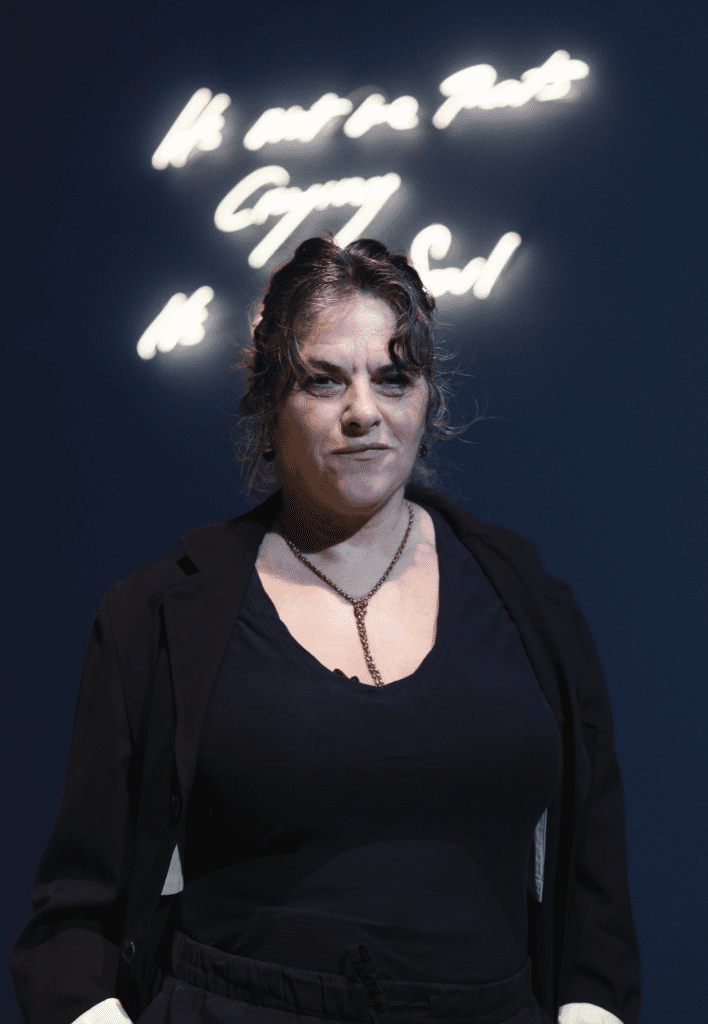
Portrait of Tracey Emin. Tate Modern 2026. (c) Tate (Sonal Bakrania).
My Bed, 1998. By Tracey Emin. © Tracey Emin. All rights reserved, DACS 2026. Photo credit: Courtesy The Saatchi Gallery, London / Photograph by Prudence Cuming Associates Ltd.
I whisper to My Past Do I have Another Choice, 2010. By Tracey Emin. © Tracey Emin. All rights reserved, DACS 2026.
Why I Never Became a Dancer, 1995. © Tracey Emin. All rights reserved, DACS 2026.
I followed you to the end, 2024. By Tracey Emin. Yale Centre for British Art. © Tracey Emin. All rights reserved, DACS 2026.
The End of Love, 2024. By Tracey Emin. Tate © Tracey Emin. All rights reserved, DACS 2026.
Detail from Self-portraits 2020-25. By Tracey Emin. Inkjet print on paper.
Naked photos – life model goes mad. I of III, 1996. By Tracey Emin.
There’s a lot of money in chairs, 1994. By Tracey Emin. Appliquéd armchair.
Tracey Emin in video tells of abortion experiences.
Mad Tracey from Margate. Everyone’s been there, 1997. By Tracey Emin. © Tracey Emin. All rights reserved, DACS 2026.
Tracey Emin: A Second Life, is at Tate Modern, until August 31, 2026
