HomeHRAirline IndustrySharkskin-inspired technology, more efficient operations, and lighter design: some of the measures LATAM uses to reduce more than 1 million tons of CO2 per year
Sharkskin-inspired technology, more efficient operations, and lighter design: some of the measures LATAM uses to reduce more than 1 million tons of CO2 per year
The company, ranked among the five most sustainable airlines in the world by S&P Global, is advancing a series of operational and technological adjustments that, although imperceptible to passengers, have a significant impact on the efficiency of its operations.
LATAM Airlines Group avoids more than 1 million tons of CO₂ emissions per year thanks to a set of operational and technological measures that optimize fuel consumption in its daily operations. These are often adjustments that go unnoticed by passengers, but together generate a meaningful impact on the company’s environmental footprint.
This achievement —equivalent to the emissions generated by approximately 200,000 people globally— is the result of initiatives based on data usage, operational efficiency, and technological innovation, which improve environmental performance without affecting the passenger travel experience.
“Sustainability in aviation does not only depend on large-scale transformations, but also on daily operational decisions that, when combined, have a significant impact. Many of these measures are invisible to our passengers, but they are key to advancing toward a more efficient and responsible operation,” said Stephano Gachet, head of LATAM Group’s operational efficiency program.
Recognized among the five most sustainable airlines in the world and ranked number one in the Americas by S&P Global in the 2025 Corporate Sustainability Assessment (CSA), LATAM Group has implemented multiple initiatives that demonstrate how operational efficiency has become a key lever for advancing the decarbonization of the industry.
From a sharkskin-inspired coating to cabin redesigns and more efficient operational practices, these are some of the innovations currently helping reduce the company’s environmental footprint:
Ground efficiency: single-engine taxiing
When operational conditions allow, aircraft can taxi using only one engine while moving toward the runway or after landing en route to the gate. This practice, known in the industry as Single Engine Taxi (SET), is applied under strict safety standards and operational procedures. It allows LATAM to reduce more than 100,000 tons of CO₂ annually, making it one of the highest-impact efficiency initiatives.
AeroSHARK: innovation inspired by shark skin
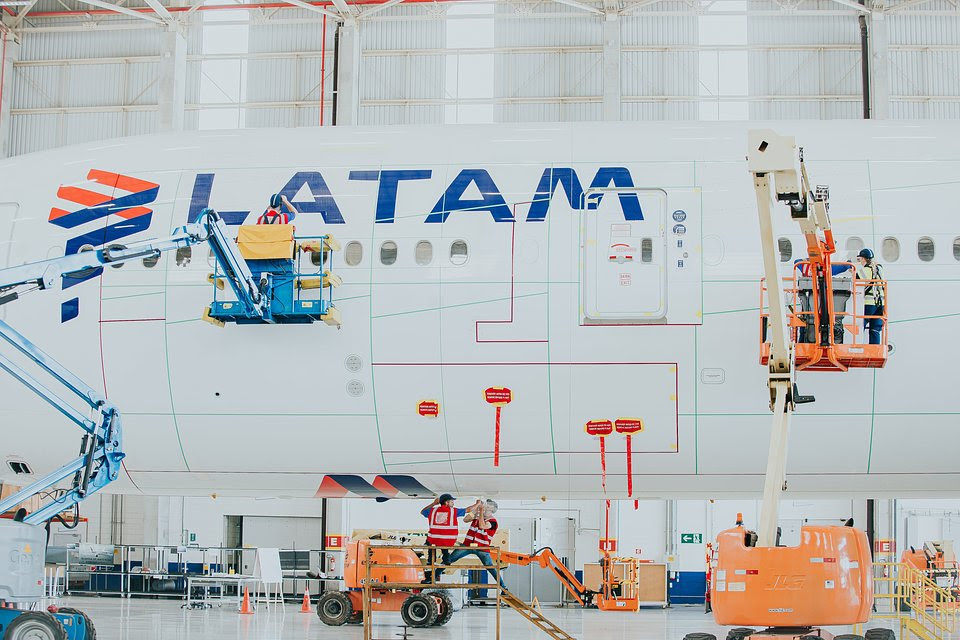
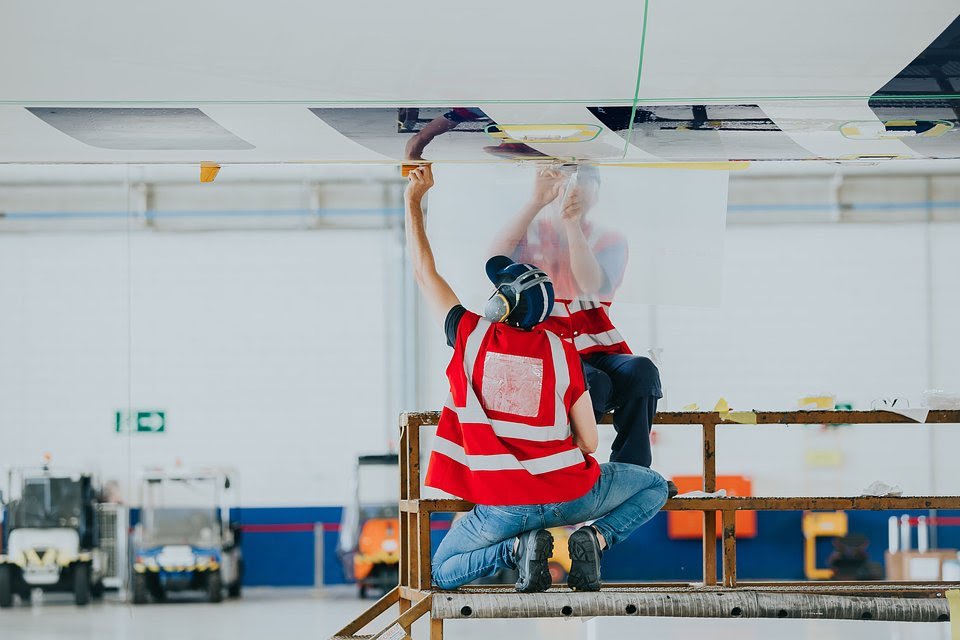
LATAM is expanding the use of AeroSHARK across its Boeing 777-300ER fleet. This coating technology, inspired by shark skin, reduces aerodynamic drag. Through microscopic riblet structures—similar to scales—that align with airflow, the solution enables more efficient aircraft movement. After validating close to a 1% reduction in fuel consumption during operations, the company is progressing with its implementation, which is expected to avoid up to 12,000 tons of CO₂ annually once fully deployed by 2027.
Lighter seats
The new Airbus A320neo and A321neo aircraft incorporated into the fleet since October 2025 feature next-generation seats that are collectively 200 to 250 kilograms lighter per aircraft. While the difference may seem small, its cumulative impact is significant: this improvement reduces approximately 5,000 tons of CO₂ annually, while also generating savings of around US$1.5 million due to more efficient operations. This advancement is achieved while maintaining LATAM’s standards of comfort and service, without compromising the passenger experience.
Removal of unused overhead screens
Another initiative has been the gradual removal of legacy shared cabin screens installed in some single-aisle aircraft, which became obsolete following the introduction of personal entertainment systems. This measure reduces unnecessary aircraft weight, avoiding nearly 7,000 tons of CO₂ per year and generating savings of over US$2 million.
These initiatives are part of LATAM Group’s Fuel Efficiency Program, which has improved operational efficiency by 7%, avoiding the consumption of more than 2.4 million barrels of fuel annually and preventing over 6.5 million tons of CO₂ emissions.
This is equivalent to the emissions generated by LATAM’s operations in Ecuador, Colombia, and Chile combined in one year, or approximately 1.3 million people globally. The group continues advancing toward its roadmap to achieve net-zero emissions by 2050, combining innovation, operational efficiency, and data-driven decision-making.
ABOUT LATAM GROUP
LATAM Airlines Group S.A. and its subsidiaries are the leading airline group in Latin America, with presence in five domestic markets in the region: Brazil, Chile, Colombia, Ecuador and Peru, in addition to international operations within Latin America and to Europe, Oceania, Africa, the United States and the Caribbean.
The group has a fleet of Boeing 767, 777, 787, Airbus A321, A321neo A320, A320neo and A319 aircraft. LATAM Cargo Group, LATAM Cargo Colombia and LATAM Cargo Brazil are the LATAM group’s cargo subsidiaries,In addition to having access to the bellies of the passenger affiliates’ aircraft, they have a fleet of 20 freighters. These cargo subsidiaries have access to the group’s passenger aircraft, and operate within the LATAM group network, as well as on exclusive international routes for cargo transportation. In addition, they offer a modern infrastructure and a wide variety of services and support options to meet the needs of its customers.