





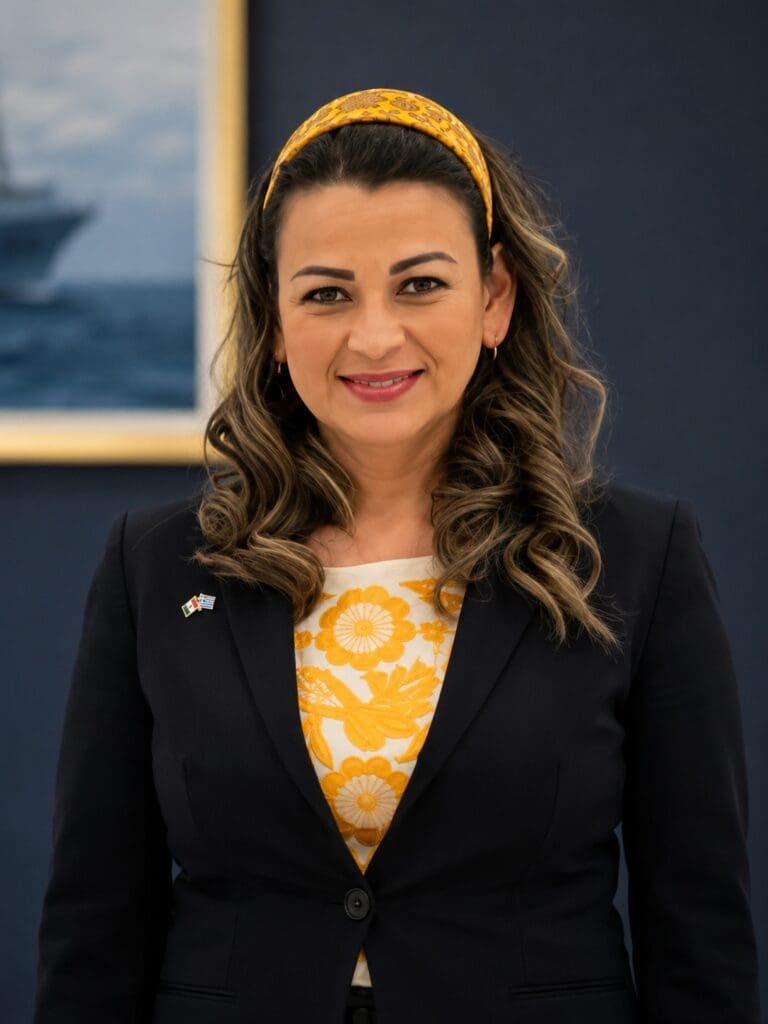
by Nadya Delgado*
For decades, Greek shipowners have built their success by identifying opportunities before they become obvious. Today, global shipping is entering another period of transformation, driven by supply chain diversification, nearshoring, geopolitical realignments and the search for more resilient logistics networks. In this changing landscape, one market deserves far greater attention from the Greek maritime community: Mexico.
Traditionally perceived as a Latin American destination, Mexico has rapidly evolved into one of the world’s most important manufacturing and logistics hubs. Its strategic location, connecting the Pacific Ocean, the Gulf of Mexico and North America’s largest consumer market, has positioned the country at the center of a new industrial era.
For Greek shipowners, however, the opportunity extends far beyond transporting cargo.
Mexico is investing heavily in port modernization, logistics infrastructure, industrial expansion and international trade connectivity. These developments create opportunities not only for shipping companies, but also for port operators, ship managers, marine engineering firms, offshore service providers, maritime technology companies and investors seeking long-term growth.
The recently modernized EU–Mexico Global Agreement reinforces this momentum by creating a more predictable business environment, facilitating trade, investment and regulatory cooperation between European companies and Mexico. As commercial flows increase, maritime transport will inevitably become one of the principal beneficiaries.
The question is therefore no longer whether Mexico will become a major logistics platform.
The question is whether the Greek maritime industry will position itself early enough to become part of that transformation.
Mexico: A Maritime Nation Hidden in Plain Sight
While Mexico is widely recognized as a manufacturing powerhouse, far fewer people appreciate its maritime dimension.
Mexico has more than 11,000 kilometers of coastline, access to both the Pacific and Atlantic Oceans, over 100 ports and terminals, and some of the busiest container ports in Latin America. More importantly, it is becoming one of the principal beneficiaries of the global nearshoring movement, attracting billions of dollars in industrial investment that will ultimately move by sea.
Mexico’s Strategic Ports: Gateways for Trade and Maritime Cooperation
Mexico’s port network connects the Pacific and Atlantic Oceans with the industrial and consumer markets of North America. For Greek shipping and maritime companies, its importance lies not only in cargo volumes, but in the diversity of commercial opportunities created by each port.
On the Pacific coast, Manzanillo is Mexico’s principal container gateway and a key link with Asian supply chains, while Lázaro Cárdenas offers strong potential in containers, automotive logistics, steel, bulk cargo and heavy industrial projects. Ensenada complements this network through its proximity to the United States and its role in regional logistics and manufacturing supply chains.
On the Gulf and Atlantic side, Veracruz remains Mexico’s natural maritime connection with Europe, handling containers, vehicles, agricultural products and general cargo. Altamira is closely linked to the petrochemical, energy and industrial sectors, creating opportunities in tanker operations, project cargo and specialized logistics. Progreso, serving the Yucatán Peninsula, is gaining relevance in regional trade, tourism, food products and infrastructure development.
Beyond Cargo: Where Greek Maritime Companies Can Create Value
The growing trade relationship between Europe and Mexico will naturally generate additional demand for maritime transport. However, the greatest opportunities for Greek companies extend well beyond moving cargo from one port to another.
Bulk and Industrial Shipping. Mexico’s expanding manufacturing base requires a continuous flow of raw materials, including steel, minerals, chemicals, fertilizers and industrial equipment. At the same time, exports of cement, automotive components, processed metals and agricultural products continue to grow, creating opportunities for bulk carriers and specialised logistics operators.
Container and Ro-Ro Services. As one of the world’s leading vehicle manufacturers and a major exporter of electronics, household appliances and medical devices, Mexico depends on efficient container and roll-on/roll-off shipping. Greek operators with experience in integrated logistics and international shipping networks can play an increasingly important role in supporting these supply chains.
Energy and Offshore Logistics. Mexico’s Gulf Coast remains one of the country’s most important energy corridors. The continued development of LNG, refined petroleum products, petrochemicals and offshore activities creates demand for tanker operations, offshore support services, marine engineering and specialized maritime logistics.
Energy and Offshore Logistics. Mexico’s Gulf Coast remains one of the country’s most important energy corridors. The continued development of LNG, refined petroleum products, petrochemicals and offshore activities creates demand for tanker operations, offshore support services, marine engineering and specialized maritime logistics.
Maritime Services and Technology. Perhaps the greatest long-term opportunity lies in the export of Greek maritime expertise. Port digitalization, ship management, marine engineering, fleet optimization, environmental compliance, maritime consultancy and training are areas where Greek companies have earned an international reputation. As Mexico continues to modernize its maritime infrastructure, these capabilities can become the foundation for strategic partnerships, joint ventures and long-term commercial cooperation.
Ultimately, the opportunity is not simply to transport more cargo between Greece and Mexico. It is to build a broader maritime partnership in which Greek experience and Mexican industrial growth complement each other, creating value on both sides of the Atlantic.
Exporting Greece’s Greatest Maritime Asset: Know-How
Mexico is entering a period of significant maritime transformation. Public and private investments are modernizing ports, expanding logistics infrastructure and strengthening connectivity with global markets. As this transformation continues, demand will grow not only for ships, but also for the specialized knowledge required to operate modern maritime ecosystems efficiently and sustainably.
This creates opportunities for Greek companies to establish partnerships with Mexican port authorities, logistics operators, universities, shipyards and private investors. Joint ventures in maritime technology, digital port management, marine engineering, environmental compliance, training programmers and technical consultancy could become an important new dimension of bilateral cooperation.
For Greece, this represents an opportunity to export one of its most valuable competitive advantages: maritime knowledge. For Mexico, it offers access to decades of international experience that can support the development of a more competitive, innovative and resilient maritime sector.
The future of Greece–Mexico maritime cooperation should therefore be measured not only in tons of cargo transported, but also in expertise shared, technology transferred and strategic partnerships built for the decades ahead.
The Modernized EU–Mexico Agreement: A New Catalyst for Maritime Business
The modernized EU–Mexico Global Agreement marks more than an update to a long-standing trade relationship. It provides a stronger framework for investment, regulatory cooperation and market access, creating greater certainty for European companies seeking to expand in Mexico.
For the maritime sector, the implications are significant.
As trade and investment between the European Union and Mexico continue to grow, so too will the demand for shipping, logistics, port infrastructure and specialized maritime services. Increased industrial production requires the movement of raw materials, machinery and intermediate goods, while expanding exports generate new cargo flows across the Atlantic.
For Greek shipping companies, this represents an opportunity to strengthen their presence in a market that is becoming increasingly integrated into global supply chains. Beyond freight transport, the agreement also encourages closer cooperation in areas such as logistics, engineering, technology and sustainable infrastructure—fields where Greek companies possess internationally recognized expertise.
Equally important, the agreement sends a strong signal to investors. Greater legal certainty and a more predictable commercial environment encourage long-term business planning, making Mexico an increasingly attractive destination for strategic partnerships and maritime investment.
As Europe seeks to diversify its economic relationships and Mexico continues to consolidate its position as North America’s manufacturing platform, the maritime sector will inevitably play a central role in connecting both economies.
For Greek maritime companies, the timing could hardly be more favorable. The convergence of trade policy, industrial growth and logistics investment is creating conditions that may not only increase cargo volumes but also open the door to a broader and more sophisticated maritime partnership between Greece and Mexico.
Looking Ahead: A New Maritime Partnership
Mexico should no longer be viewed by the Greek maritime community as a distant or secondary market. Its industrial growth, strategic access to both oceans, expanding port infrastructure and integration with North American supply chains are steadily increasing its relevance to global shipping.
The opportunity for Greece is clear. Greek companies can contribute not only vessels and transport capacity, but also expertise in ship management, marine engineering, logistics, port operations, digitalization, training and sustainable maritime development. These are areas in which long-term partnerships can generate greater value than freight alone.
For maritime communities such as Chios, whose history is defined by entrepreneurship, international vision and the ability to recognize opportunity beyond familiar routes, Mexico represents a market worth serious consideration. It offers the scale, geography and industrial momentum to support a broader relationship with Greek shipping and maritime services.
The foundations are already emerging: expanding trade, modernizing ports, stronger investment conditions and a renewed framework between Mexico and the European Union. What remains is for companies on both sides to convert that potential into concrete projects, joint ventures and commercial partnerships.
The Atlantic should not be seen as a distance separating Greece and Mexico, but as the route connecting their complementary strengths.
The next chapter of Greek–Mexican maritime cooperation will belong to those prepared to explore it first.
___
*Nadya Delgado is President of the Hellenic Mexican Business Association (HMBA), where she leads initiatives to strengthen trade and investment between Greece and Mexico. Her work focuses on developing strategic business partnerships across sectors including maritime, logistics, agribusiness, manufacturing and foreign direct investment.
