




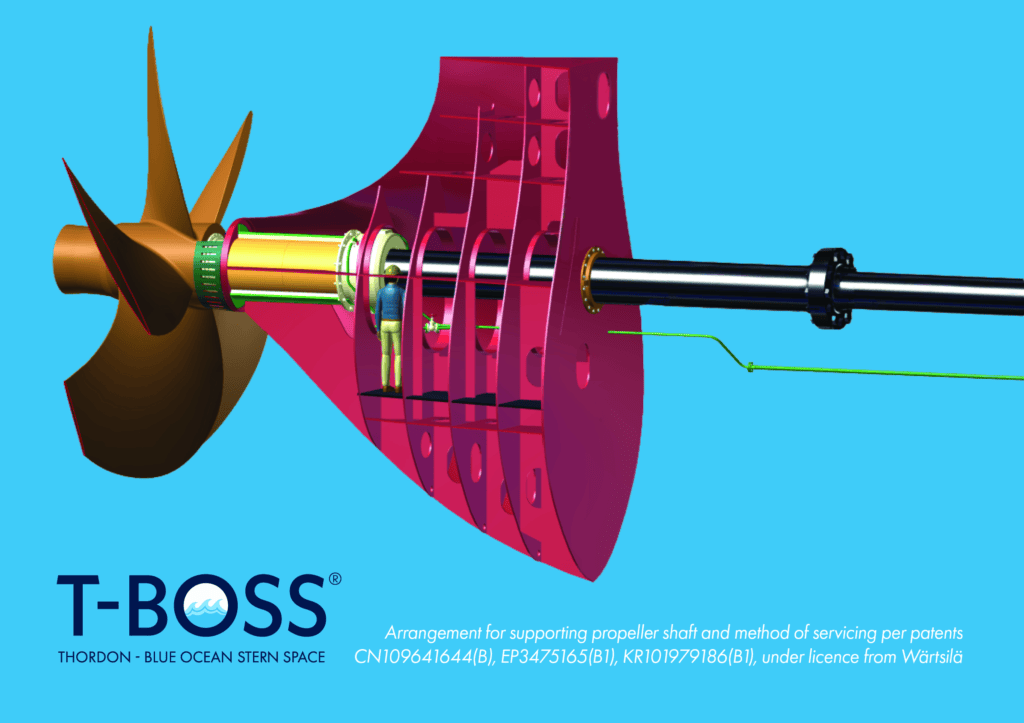
An in-depth evaluation study based on reference data from a Suezmax crude oil tanker has demonstrated the benefits of using Thordon Bearings’ innovative T-BOSS® shaftline solution instead of a conventional oil lubricated sterntube system.
The comprehensive study assessed the CAPEX for a sterntubeless T-BOSS® (Thordon – Blue Ocean Stern Space) system installed on a 274m (899ft.)-long tanker, assuming a shaft diameter of 670mm (26”) as the baseline. The study established that the T-BOSS® provides substantial benefits for ship designers and shipbuilders, including improving shipyard design flexibility with a shorter shaft length, the ability to lower labour and installation costs, and facilitating a more attractive stern arrangement to sell to shipowners through “distinct design wise, operational and lifetime economic benefits”.
The study compares all shipbuilding disciplines including sealing systems, piping, structural works, shafting, outfitting, painting, electrical systems, testing, and regulatory aspects. The comparisons demonstrate that labour and installation costs are lower with a T-BOSS® system across the board.
The T-BOSS® also delivers significant design flexibility by shortening the propeller shaft, creating up to 660m³ (23,308ft³) of additional cargo space in the Suezmax tanker study. This enables naval architects and shipbuilders to “enhance layout flexibility at the early newbuild design stage”, the study notes. As a result, shipowners can allocate more onboard space for cargo or reposition the ship’s main engine, enabling the installation of a shaft generator – which would help to cut greenhouse gas emissions and increase the ship’s opportunities to secure carbon credits. This design flexibility also helps naval architects to deliver more attractive and comfortable vessel designs for customers, both inside and out.
Beyond design flexibility, shipbuilders and naval architects can offer buyers a more desirable ship due to additional OPEX savings. The whitepaper states: “A notable cost element is the expense of the sterntube lubricating oil purchase, which is eliminated with the adoption of the T-BOSS® seawater-lubricated solution.” In addition to avoiding initial purchase oil costs of around US$33,000, the owner would save an estimated US$11,500 per year in operating costs. Additionally, polymer bearings have lower friction than traditional oil-lubricated metal bearings, thereby reducing shaftline drag. This would produce annual fuel savings of approximately US$5,100 for the vessel in this case study. Furthermore, by removing the risk of oil pollution, the T-BOSS® system also minimises regulatory compliance costs by removing the need to purchase expensive Environmentally Acceptable Lubricants (EALs), making compliance with strict IMO environmental regulations easier.
The T-BOSS® system also simplifies maintenance procedures thanks to its unique sterntubeless design and dry inspection chamber. Engineers can inspect and replace the COMPAC bearings without withdrawing the propeller shaft or removing the propeller, keeping the vessel afloat and making costly drydocking unnecessary. This reduces downtime and maintenance expenses over the vessel’s life cycle.
These combined benefits – lower CAPEX costs, reduced complexity, greater design flexibility, and a more sought-after ship design for buyers – make the T-BOSS® design a compelling option for shipbuilders and naval architects worldwide and a “valuable contributor to the transition toward innovative greener and safer ship design”.
The T-BOSS® system was jointly developed by Thordon Bearings, Wärtsilä Shaft Line Solutions, CSSC – Shanghai Merchant Ship Design and Research Institute (SDARI), classification society ABS, and the National Technical University of Athens (NTUA).
The full study was based on research conducted by Hydrus Engineering of Greece, supplemented by data from JBL Tech Service, ABS and Thordon Bearings.
To access the free whitepaper in English, Chinese or Korean, visit: T-BOSS Whitepaper

