





By James Brewer
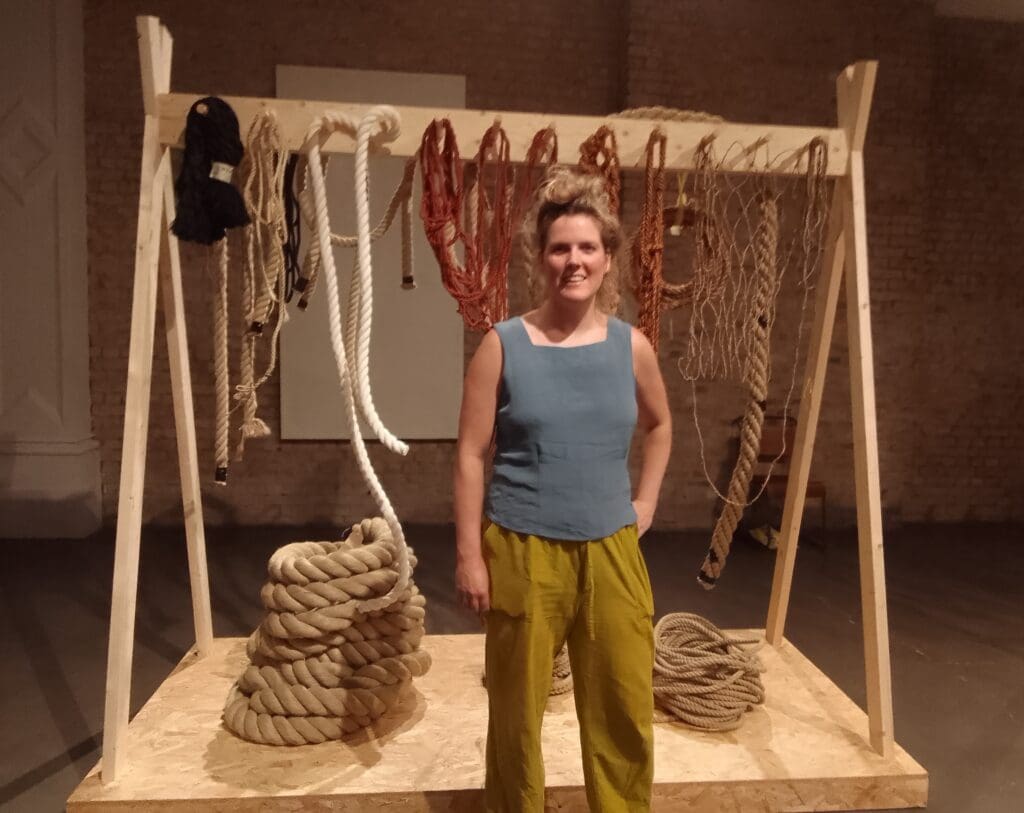
Rope making – which had plants as its prime original source – may have been humanity’s first technology, says Sanne Visser, a Dutch designer and researcher of the craft who is based in London.
Dating back many thousands of years rope is hardware that, for example, predates pottery, she emphasises. Almost from the beginning the skill has been unbreakably linked to the development and safety of that key global industry – maritime venture and carriage.
During eight weeks of summer 2026, Whitechapel Gallery, a star cultural attraction of east London, hosted The Ropery, an exhibition taking inspiration from the fascinating histories of rope making in locations just a short distance from the gallery. The once bustling industrial belt enriched the capital as it facilitated global trade.
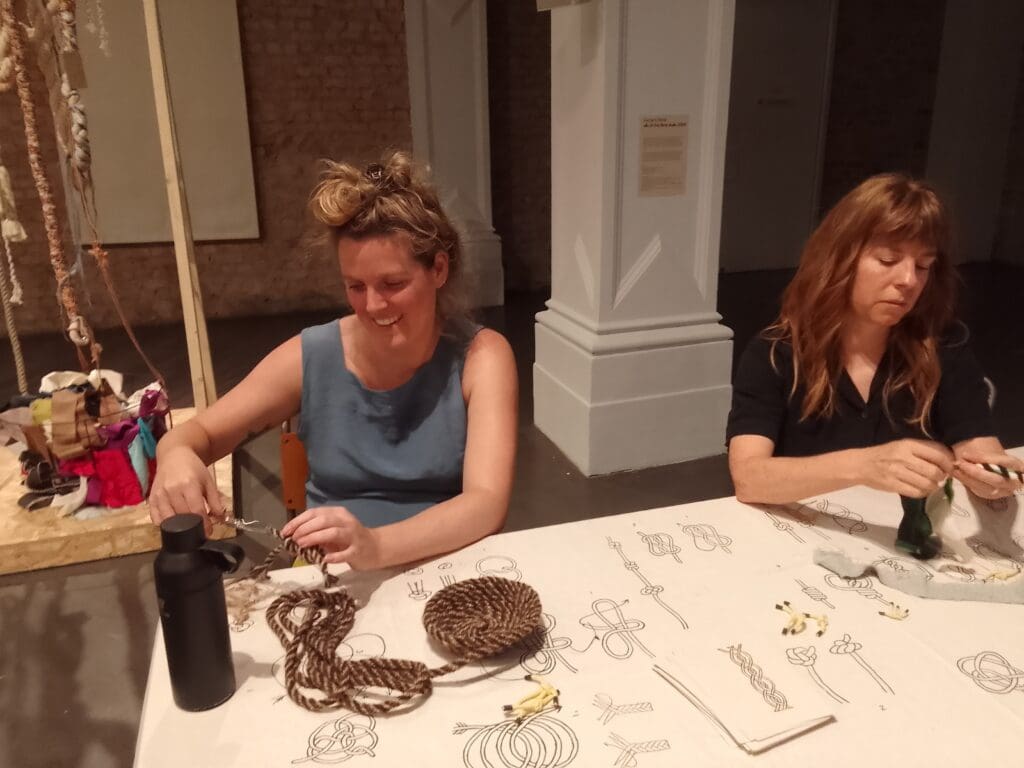
The Ropery set out to explain the significance and material processes of the fundamental but endangered craft of rope makers.
It was part of a broader festival that Whitechapel called Backyard Biennial: East which connected closely with communities in the area. It underlined how rope making was driven by shipping and the docklands of east London between the 18th and 20th centuries.
Although the London infrastructure of the industry has long been replaced by domestic housing, the local street names, including Cable Street and Twine Court in Shadwell or Ropery Street in Mile End, remain to mark what had been substantial activity.
Under the guidance of Sanne Visser, visitors of all ages were invited to engage hands-on in making rope, string and braiding, spinning and twisting, contributing to what became a growing installation. They could turn their hand to making rope from repurposed materials and learn the fundamentals of knotting. Relax, twist, knot! was the cry.
A specially made film by London-based videographer and director Samara Addai evoked the ‘poetry’ of these processes and explored the legacies of the craft in east London.
The exhibition acknowledged the tangled histories of global trade, industrial heritage and the lives of thousands of people involved in an industry that in east London spanned more than 200 years until the mid-1900s. In the UK, only five rope making companies have survived.
The ethos of the new project at Whitechapel was to reengage in “embodied learning” as our contemporary lives move us ever further from a material understanding of the world. In this instance rope is applied as functional and decorative, using hyperlocal materials.
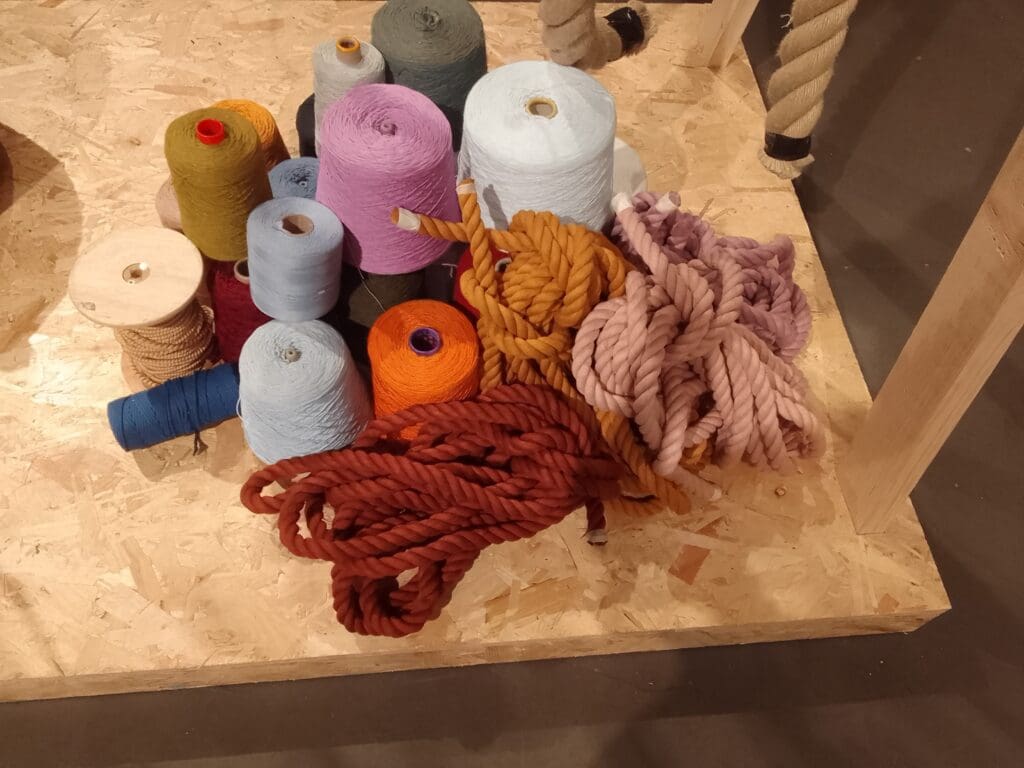
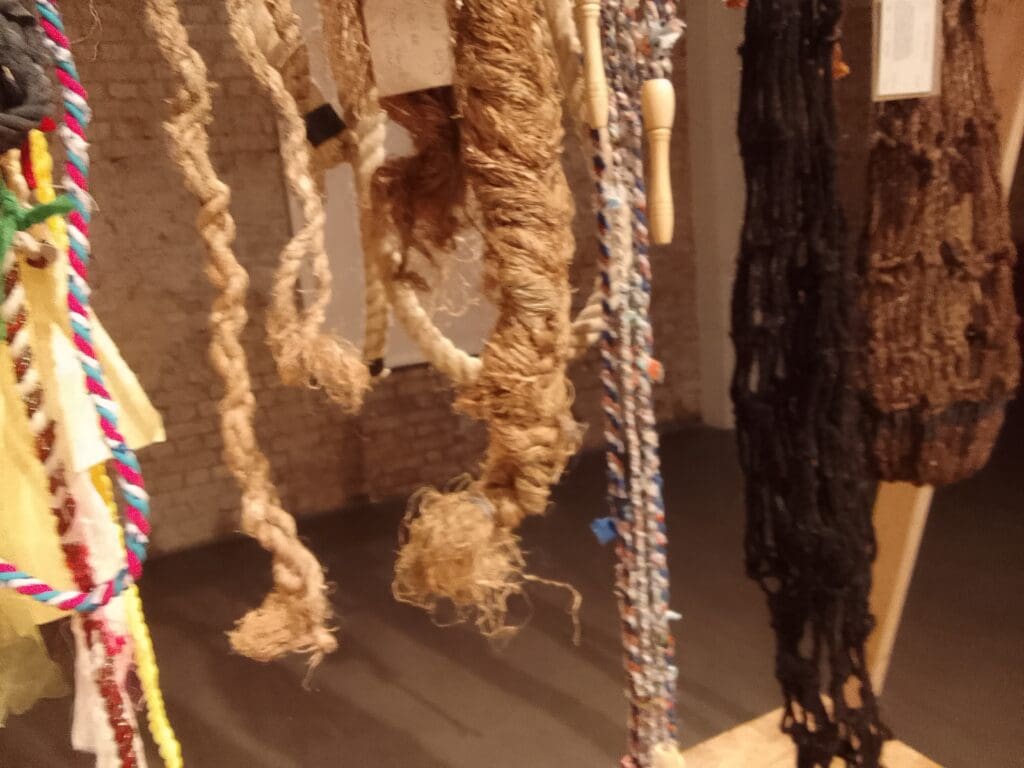
Sanne notably introduced visitors to an immense colourful variety of ropes, from strong cables to thin twine.
She is enthusiastic about the traditions maintained at Chatham Dockyard, where a limited company named Master Ropemakers continues a process of rope making that on the site dates back more than 400 years. It manufactures and sells rope to the trade and customers around the world. Artisan craftsmen and women in the speciality are known as Master Ropemakers.
The company, a wholly owned subsidiary of Chatham Historic Dockyard Trust, provides natural and synthetic rope for anything from rigging the world’s mightiest historic vessels, to fenders and battle ropes. Customers include film production companies, theatres, interior designers, garden designers, sports clubs and gymnasiums, adventure playgrounds, churches and cricket clubs.
The company has supplied historic sailing ships including Gannet, Citty Sark and HMS Victory in Britain, and the Australian barque Endeavour.
Its Ropery Gallery relates the lives of ropery workers, past and present, and visitors step out onto its double ropewalk a quarter of a mile (346 metres) long. Built in 1790, the ropewalk was designed to enable the production of continuous ropes by hand. It was used to create much rigging for Royal Navy ships, including all 31 miles of rope for the Victory, the world’s oldest naval vessel still in commission. The Victory was ordered for the Royal Navy in 1758 and was Nelson’s flagship.
Chatham is the only one of the original four Royal Navy Ropeyards still in operation.
In addition to promoting the history and practice of rope making, Sanne focuses on the future. She specialises in regenerative design and sustainable solutions – such as projects involving human hair.
Internationally recognised for her work with human hair as a material resource, Sanne develops yarns, ropes, textiles, composites and open-source devices, often through collaborations with other disciplines. Since 2025, she has led HairCycle, a community initiative in the London Borough of Newham that turns human hair into innovative materials.
HairCycle aims to change perspectives on the value of waste, focusing on the locally abundant resource of human hair. Working with the borough of Newham, HairCycle develops and tests methods for collecting, recycling and regenerating human hair waste from local hairdressers and barbershops.
The aim is to combat waste while generating value “for people and planet to thrive within their local, circular bioeconomy.”
Sanne uses ancient techniques like spinning and rope making to turn the abundant material into high-quality objects such as bags and mirrors. She has collaborated with institutions and brands including the Design Museum, Science Gallery, the TextielMuseum in the Netherlands, Nike, Horniman Museum, British Council, V&A and Newham Council.
In 2022, she was named in connection with ‘101 Jobs to Save the World’ by UK Research and Innovation, a government body with a budget of public money to invest.
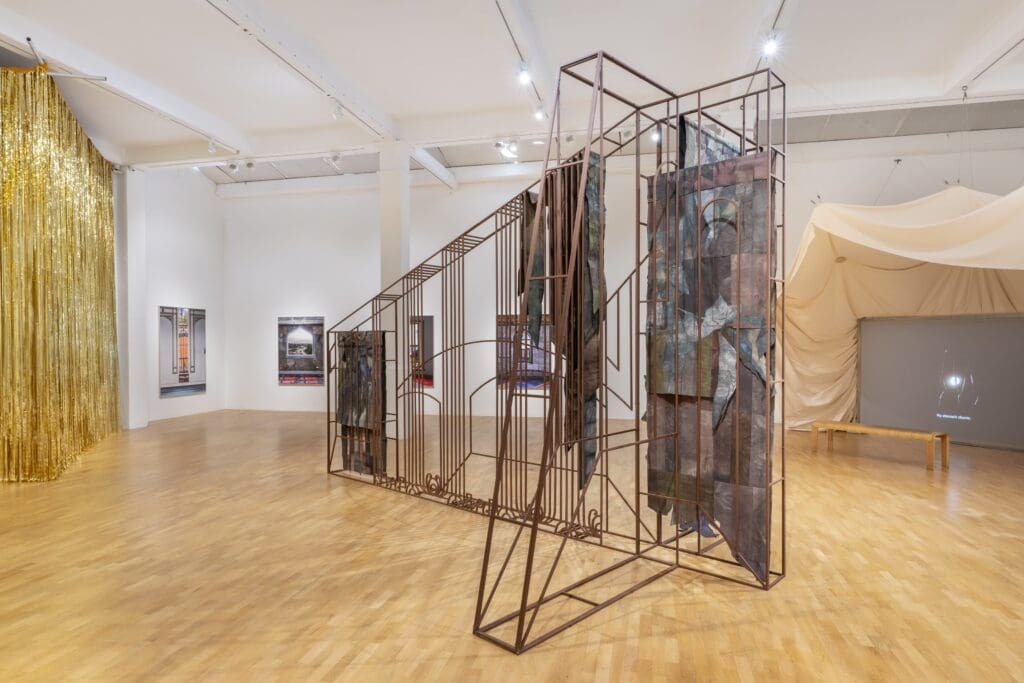
Part of Backyard Biennial: East was entitled East of the Aldgate Pump, taking its inspiration from the water pump at the edge of the City which for centuries marked an informal boundary to the East End. As a colloquial term, East of the Aldgate Pump alludes to the crossing of a threshold, and to a place of diaspora communities and cultures, and refers to the Gallery’s longstanding connection to both local and global society.
The Aldgate Pump exhibition explored migratory stories, using patchwork as a physical practice – stitching, splicing, collaging, and layering – and as a framework to examine and uncover hidden and fragmented histories. It reflected artists’ responses to city life and kinship and considered food and its connection to heritage and tradition, migration and belonging.
A flagship of Whitechapel Gallery’s 125th anniversary year, Backyard Biennial: East, a new, free arts festival, took place over several East London venues and in collaboration with more than 40 local partners. Whitechapel Gallery was founded in 1901 by philanthropists and social reformers Canon Samuel and Henrietta Barnett, with the aim of presenting “the finest art of the world for the people of the East End, London.”
