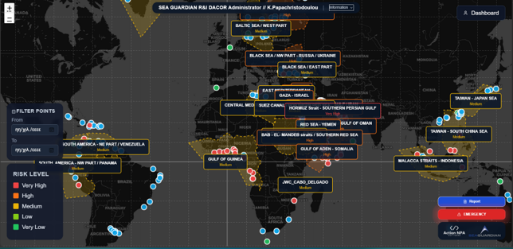
According to Sea Guardian observations, evolution in diplomacy, military presence, and sanctions are causing rapid changes in the environment at vital choke points, while an upsurge in piracy, criminal activity, and cyber-attacks is posing greater disruption risks to energy and cargo flows, calling for flexible routing and enhanced physical-cybersecurity on all involved routes.
News finds this week (top three most important)
– Control of Hormuz navigation by Iran: The need for tankers to follow their routes due to threats, makes this navigation zone more dangerous in terms of legal and incident threats. – Persistent presence of Chinese coast guard east of Taiwan: The constant presence of the Chines Coast Guard east of Taiwan turn the area to a more vulnerable in grey-zone operations. – Militarization of Baltic-Arctic theater: The establishment of the new NATO command center and the Arctic cutter program make this area more fragile due to great power competition.
Corporate conclusions
In sum, the current trends reveal that chokepoints and strategically important maritime routes are becoming more affected by coercive measures taken by coastal states in the form of gray-zone operations and militarization.
The observer
Next week, conditions will be fragile and fluid. Political actions and sanctions can swiftly bring changes in chokepoints regulations, while the ongoing conflicts increase the risk of indirect disruptions. Trade routes become unstable due to tight security in Hormuz, Suez, and WIO (Western Indian Ocean) coupled with piracy, while organized crime operates in poorly governed regions.