





Further Ventures Debuts in Athens at the Opening of Posidonia Weekend
New Greek-anchored think tank initiative for maritime leadership draws a full house to an unfiltered conversation on who owns the consequences of AI-influenced decisions in shipping
ATHENS — Further Ventures, a new think tank style initiative being built in Greece for and with maritime leadership, marked its first public expression on Friday, May 29, at the Hellenic American Union, drawing a full house of commercial shipping industry operators on the day Panathēnea closed and Posidonia weekend began.
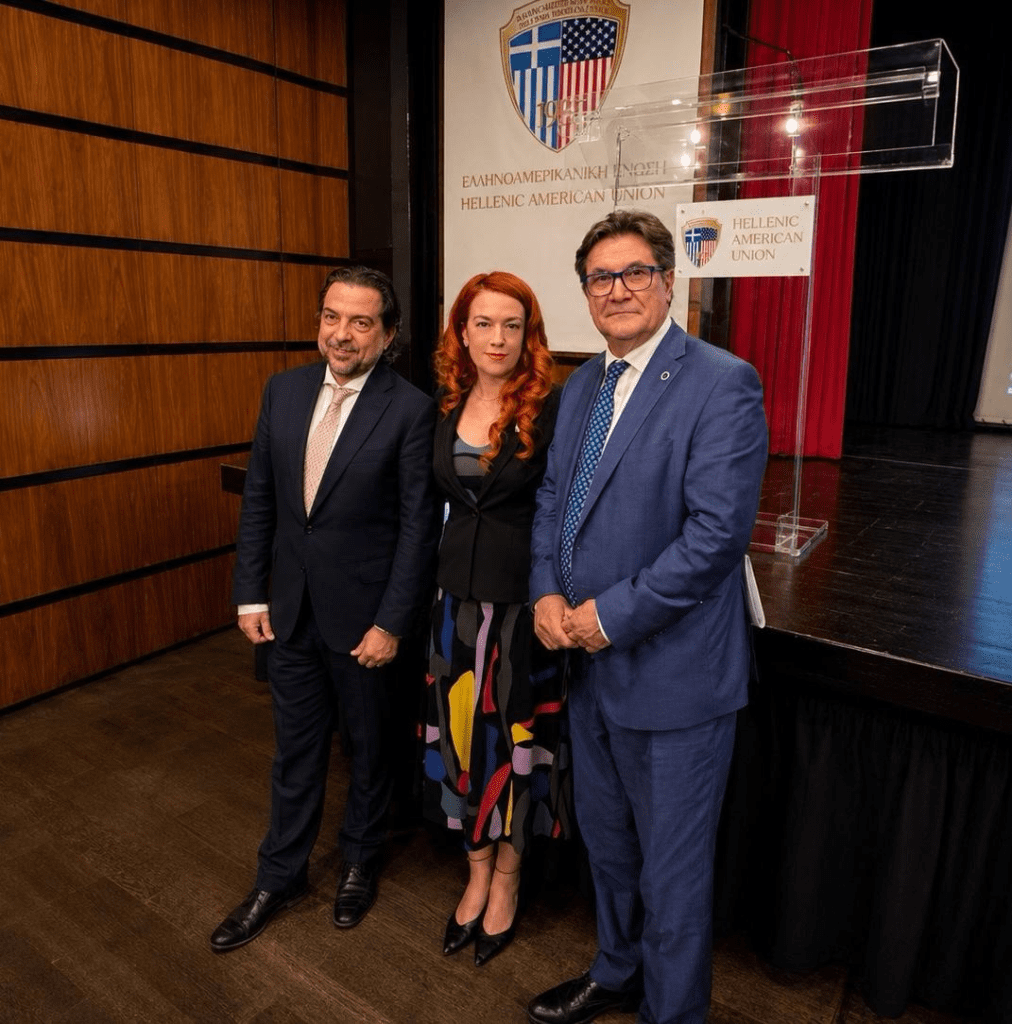
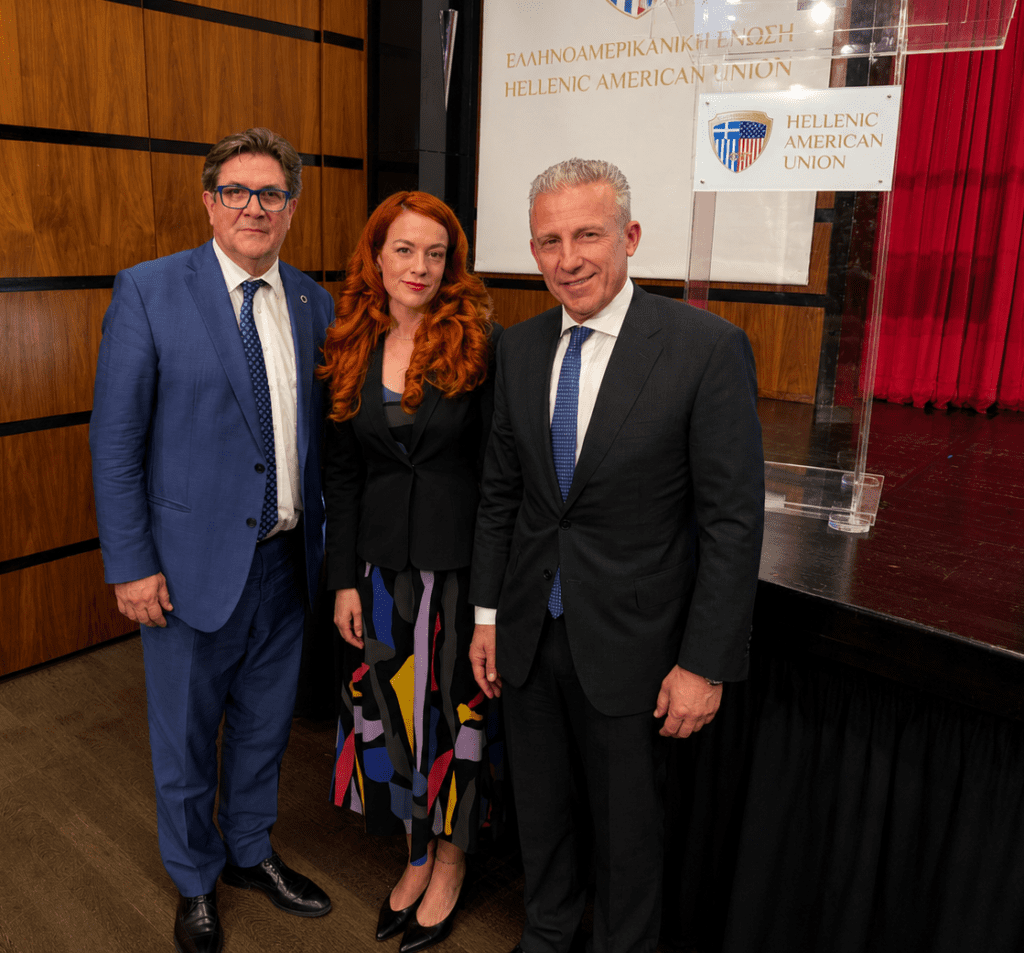
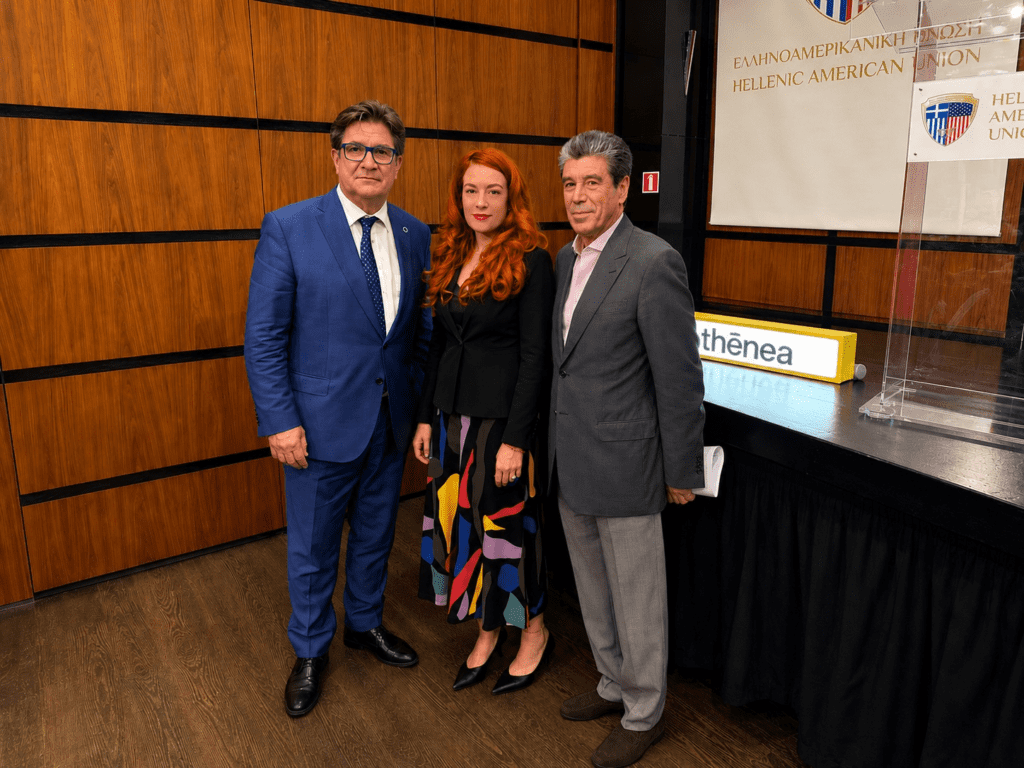
Held under the auspices of the Hellenic Chamber of Shipping and supported by the Association of Banking and Financial Executives of Hellenic Shipping, the first expression opened with remarks from George Alexandratos, President of the Hellenic Chamber of Shipping; Costis Frangoulis, President of the International Propeller Club Port of Piraeus and Founder and CEO of Franman; and Akis Tsirigakis, Founder and CEO of Stellar V Capital Corp and co-CEO of Nautilus Energy Management, all of whom remained in the room well into the session that followed. They were joined in opening the day by Emma Collier, Founder and Managing Partner of Further Ventures and the force behind the initiative, and George Xiradakis, co-founder of Further Ventures and President of the Association of Banking and Financial Executives of Hellenic Shipping.
Collier opened with the question: “Who owns the consequences of AI-influenced decisions?” Then the unpacking. “Who defines what good looks like, where these systems are used, whether they are actually working, and who steps in when they are not.”
She offered the room a different mental model for what they are dealing with. “AI is a strategic hire, not a tool. When you call AI a tool, you import a whole set of assumptions about how tools behave. Tools tend to do the same things every time. They don’t learn, and you don’t onboard a hammer. The word tool tells the brain this is a static, bounded, predictable thing, and that mental model is precisely wrong for a system that is probabilistic and context-sensitive.” The framing was carried into Splash 247’s “Inside shipping’s AI bubble” feature shortly after.
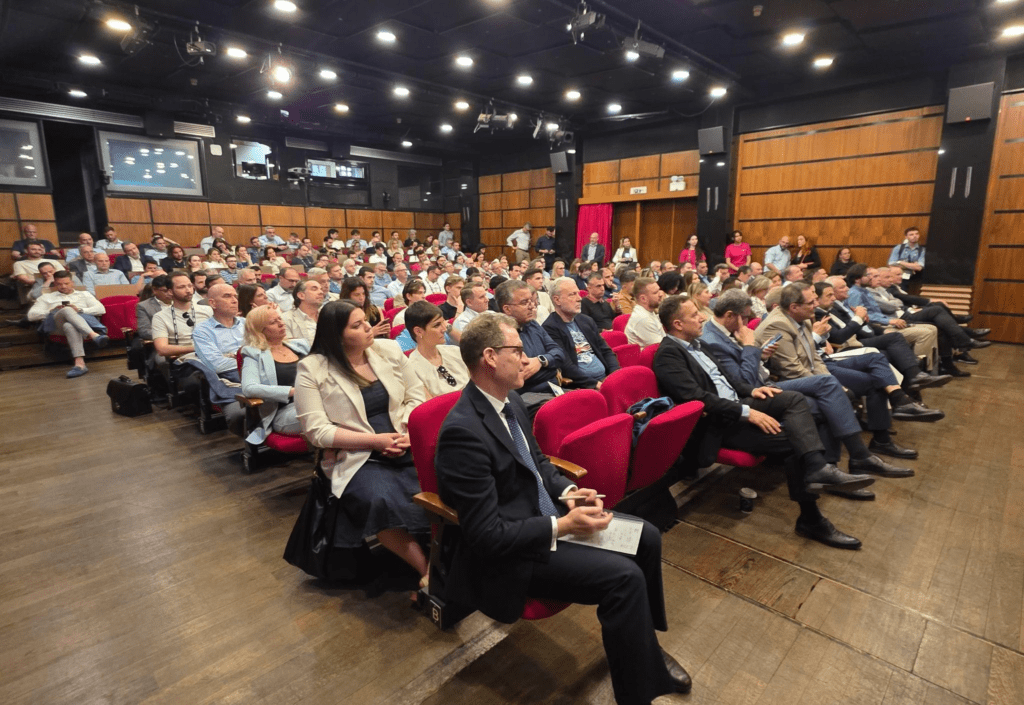
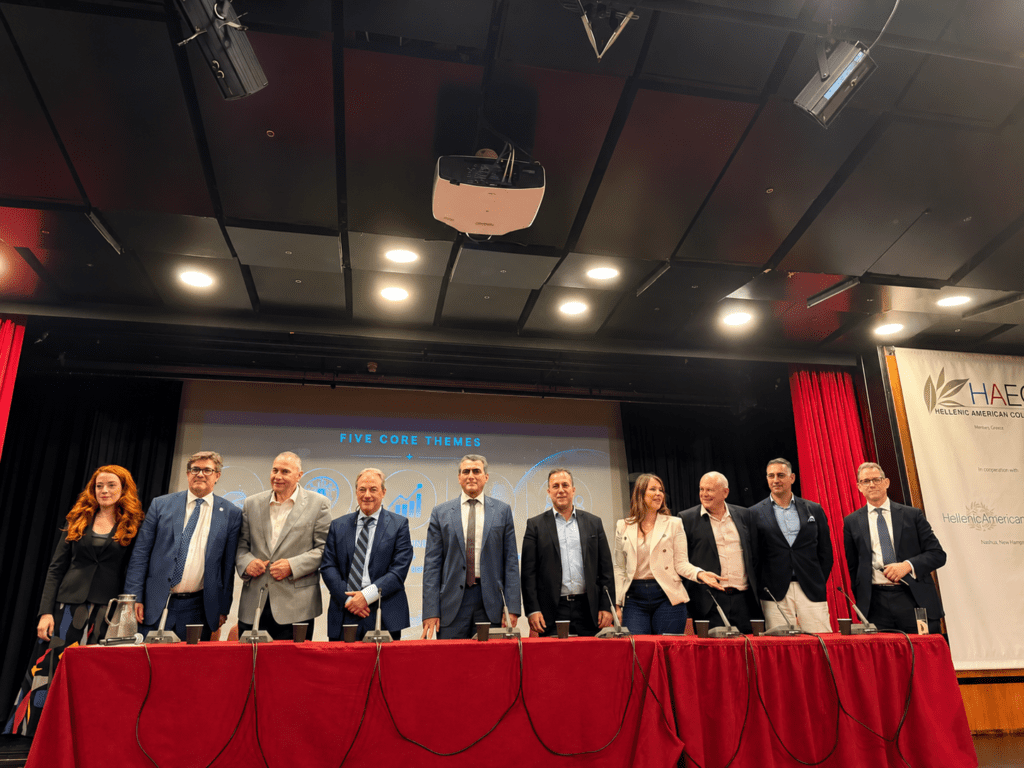
After the opening remarks, the event moved into a fireside chat between Stylianos Papageorgiou of Lomar Labs and Nikolas Pyrgiotis of Signal Ventures, then into the unfiltered, unscripted, symposium-style conversation the room had been promised across five themes: Maritime Data Possibility, AI as a Strategic Hire, Investing Into Maritime, Geopolitics, Geoeconomics & AI, and The Human Element Evolves. The open panel, moderated by Collier and Robin Russel, CEO of Satva Trust, moved fluidly between data, strategy, investment, geopolitics, and the human dimension, with the room steering the direction as much as the panelists. On the panel: Mike Konstantinidis (Further & Further, VP Corum Group), Vasilis Mouyis (Doric Shipbrokers), Dr. Athanasios Platias (University of Piraeus), Peter Schellenberger (LEDGID, Novomaxis), Alketas Drosos (EOS Marine), Monica Polemitis (TKI), and Yannis Pastellas (Deep Wave Maritime Technologies Group).
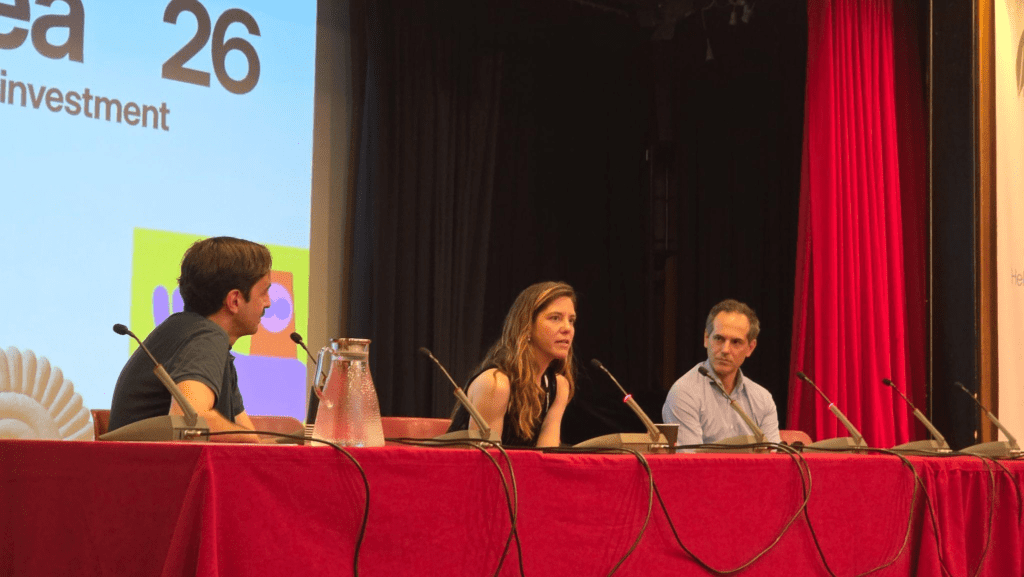
That question of ownership ran through the panel. Konstantinidis brought it back to the discipline required inside companies: “AI is changing how maritime software gets built, but it still needs a captain. The real value comes when a domain owner can turn operational friction into clear use cases, measurable outcomes, and adoption. Without that ownership, speed becomes another source of fragmentation.”
The clearest measure of how the room received it came from what attendees wrote afterward. Luis Benito of Wallem Group described the conversation as “Provocative. Refreshing. Insightful. Brave. Determined. Real,” closing with “Exciting. Refreshing. Hopeful.” He captured “a full house speaking openly and honestly about the AI Revolution, as one of the speakers baptised it.” Among the lines he carried away from the room: “Maritime survives all revolutions because it adapts, reads the environment well, and is able to make good judgement under uncertainty.” “This moment is not simply about software, but leadership capacity.” “Tech without accountability becomes organised irresponsibility.” “Institutional readiness is not moving at the same pace as technology development.” “Industries collapse when leadership fails to think alongside the technology.” “At Greek shipping, we have desire, and with desire comes creativity, and the use of creativity generates supremacy.”
Konstantina Maltezou, who attended, framed it as “a data and people problem. Shipping doesn’t have an AI problem. It has a decades-old institutional problem that AI is now putting under a spotlight.” Darcey Stickley of The Mission to Seafarers called it “a frank discussion on the future of shipping technology and how companies are choosing to invest, all set within the historic Hellenic American Union building.” Evangelos Boulougouris of the University of Strathclyde noted the substance of the discussions on maritime tech, AI, and the investment landscape required to support both.
Further Ventures is anchored in Athens by design. Greek shipping represents over twenty percent of the global fleet, and the concentration of maritime decision-makers, capital, and operational experience already exists in the city. The initiative will move forward as a recurring membership-based body, with the next sessions to be announced. Throughout Posidonia week, attendees and others who had heard about the first expression approached the founders about taking part in what comes next.
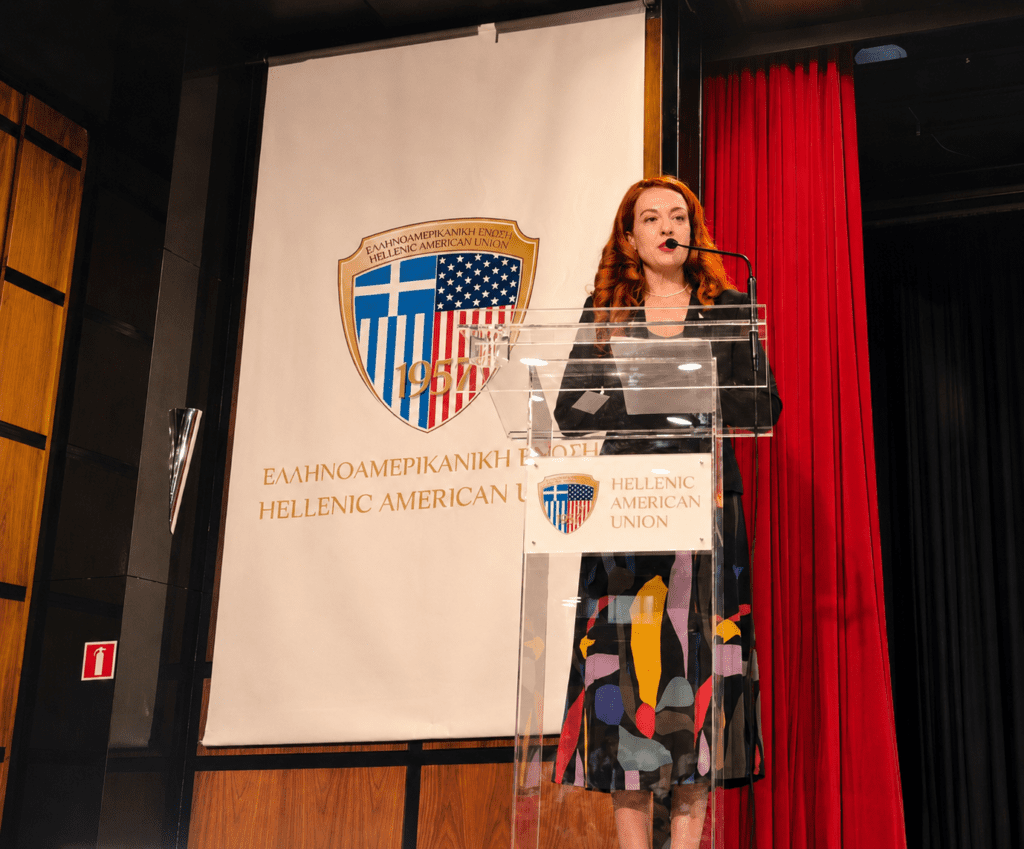
“Making the conversation onstage worth engaging with rather than just attending was the point,” Collier said. “This is how we know it works.”
Co-founder George Xiradakis, well known in maritime leadership circles for his charisma, summed it up afterward: “This was just the beginning of this new journey. You will not want to miss the continuation.”
Further Ventures is founded by Emma Collier, George Xiradakis, Mike Konstantinidis, Christiana Aristidou, and Dimitris Orfanos.
About Further Ventures
A new think tank style initiative being built in Greece for and with maritime leadership. Venture in the original sense, a bold undertaking. Unfiltered, unscripted entrepreneur-to-entrepreneur conversation that arrives at clarity on how to govern, map, measure, and manage AI inside the company, with equal participation between panelists and the room. Built to separate signal from noise rather than add to it.
