





THREAT & RISK ASSESSMENT BRIEF UPDATE
Brief Update No 25/19 Date: 18 September 2025
STATEMENT
This document has been approved for distribution by SEA GUARDIAN S.G. Ltd / Operations Department. The provided Intel and Information derive from open sources, the Institute for the Study of War (ISW), the Joint Maritime Information Center (JMIC) and United Kingdom Maritime Trade Operations (UKMTO), respective Web Pages and products retrofit the company’s Strategic / Operational and Security situational awareness processes, for risks and threat assessment/impact to the Security of Maritime operations. All rights reserved, “no part of this Risk assessment may be reproduced in any form (electronical, mechanical, paper or other means) without written permission by SEA GUARDIAN S.G. Ltd” which maintain the rights for personal data of this document writers. Under no Circumstances can SEA GUARDIAN S.G. Ltd be held responsible for any loss or damage caused by a reader’s reliance on information obtained by this Assessment, especially on its firms, company’s management or individual decision-making.
Objectives

To provide in a 15-day cycle, the maritime industry and Security Stake or Shareholders with:
- Major maritime security incident summary and analysis in Geo-strategic frame for Operational Security and Security of shipping for the period 28 August – 16 September, 2025.
- Threat assessment updates concerning military operations – terrorism – piracy and cargo theft, smuggling, stowaways, ships fired and crew loses.
- Overview of risk assessment and relevant information, in order to support operational planning and decision as well as the needs for assuredness (impact for insurance or special security needs) after threats and risks Analysis.
- SEA GUARDIAN, pursues innovative approach by analyzing Maritime Security in accordance with international standards and a certain frame of Geo-policy. Security assessment deals not only with the risks but also with the threats and international security gaps, in order to maintain our clients well informed.
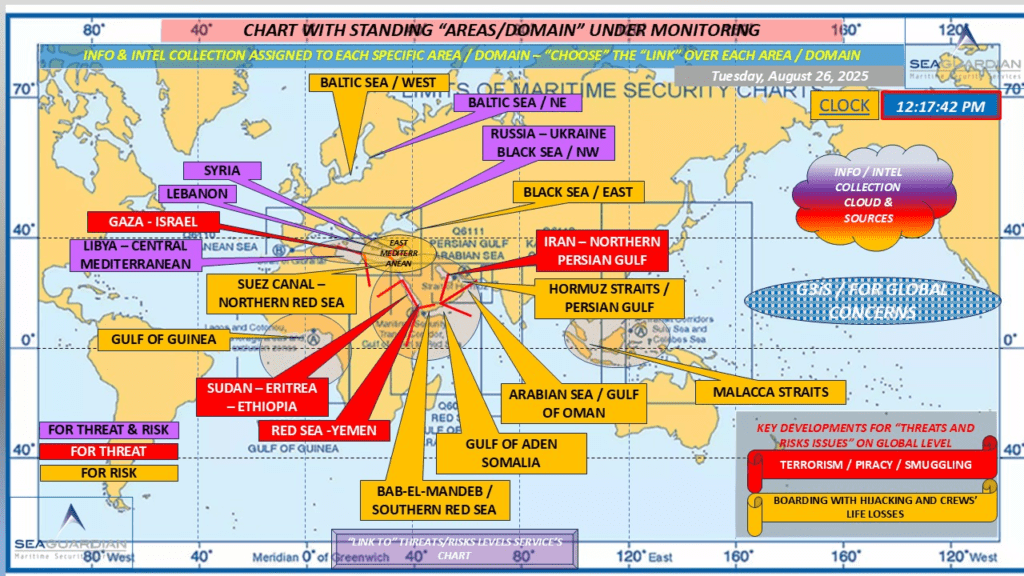
Political / Strategic-Operational Intel/Info collection “app’s chart snap”
- SEA GUARDIAN have planned and organized the areas / domains of info/intel collection in a systematic method, supported by an app which is a chart of near-real time map snapshots, available to be provided as a live service, upon request:
Make a call or e-mail us for a free trial period:
E: intelsec@sguardian.com CY: +357 25 351125 | GR: +30 210 9703322
info@sguardian.com | www.sguardian.com
Sea Guardian SG Ltd Intel & Security
RECENT KEY DEVELOPMENTS
- On August 29, it was stated that for over a decade, India has styled itself as a key node in a new multipolar world order: one foot in Washington, another in Moscow, and a wary eye on Beijing. But the scaffolding is buckling. Donald Trump’s America has turned from cheerleader to critic, accusing India of bankrolling Moscow’s war chest with discounted oil purchases. Delhi now faces the sting of Trump’s public rebuke and higher tariffs. With multipolarity fraying, many say Prime Minister Narendra Modi’s planned meeting with Xi Jinping in Beijing on Sunday looks less like triumphal diplomacy and more like pragmatic rapprochement. Yet, Delhi’s foreign policy is at an uneasy crossroads.
- On August 29, it was published that the Indonesian Army (TNI AD) has decided to deploy soldiers from the Jakarta Regional Military Command (Kodam Jaya) to assist the National Police (Polri) in maintaining order and security during protests in the capital. “We are fielding personnel from Kodam Jaya, which is responsible for the capital’s security,” the head of the TNI AD Information Office Brigadier General Wahyu Yudhayana told ANTARA in Jakarta, on Friday.
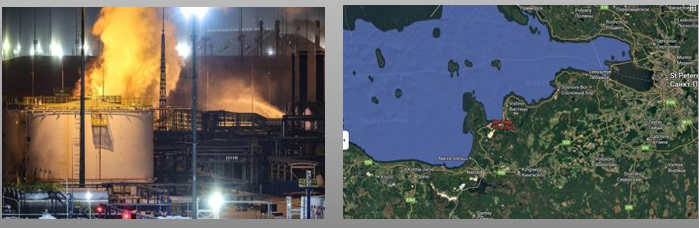
- On August 29, it was stated that repairs at the Novatek plant in the port of Ust-Luga on the Baltic Sea, which was hit by drones late last week, are expected to take several months (The Moscow Times) citing Reuters. At the plant, which processes gas condensate (LPG), one of the three processing units suffered significant damage, and its repair could take up to six months. A second unit sustained minor damage, and its repair is expected to take a few weeks. The third unit, which Novatek commissioned at the end of August 2024, as well as the hydrocracking unit, were not damaged and are likely to resume operations in the coming days.
- On August 30, Khaled Haftar (east Libya),
Chief of Staff of his father’s forces, arrived in Russia
to meet Russian officials and discuss strengthening the defense cooperation. A statement by Haftar’s forces announced that the Russian Deputy Defense Minister Lt. Gen. Yunus-Bek Yevkurov received Khaled Haftar in an official ceremony. The statement explained that this visit comes within the framework of strengthening cooperation between the two sides and discussing prospects for joint coordination in the areas of training, exchange of expertise, and development of defense capabilities. Russia is a key ally to Haftar and has forces stationed in eastern and southern Libya. - On August 31, the Japanese Foreign Ministry announced that will provide $5.5 million in aid to help rebuild essential infrastructure in slums and informal settlements in the Syrian cities of Aleppo and Homs. According to the Japanese agency Kyodo News, the assistance program was signed on Aug 12, between Japan and the United Nations Human Settlements Program (UN-Habitat) and will focus on restoring services in the two war-ravaged cities. The ministry noted that Aleppo and Homs remain among the most severely affected areas in Syria, where the humanitarian crisis continues to worsen.
- On August 31, Prime Minister Mostafa Madbouly announced that Egypt has allocated additional land in the Suez Canal Economic Zone to Chinese industrial developer TEDA to accelerate development, attract investment, and reinforce the zone as a hub for strategic industries. The decision has been taken during meetings in Tianjin on the sidelines of the Shanghai Cooperation Organization Plus (SCO+) Summit, which the PM attended on behalf of President Abdel-Fattah El-Sisi.
- On September 01, the UK has temporarily closed its embassy in Cairo after Egyptian authorities removed security barriers outside the building, amid a diplomatic row over the arrest of an activist. The UK Foreign Office said its main embassy building in the Garden City district at Cairo would remain shut “while the impact of these changes is reviewed”, adding that the embassy remains operational. The decision follows growing calls in the country for a retaliatory response to the UK’s handling of a protest in London, reports say.
- On September 01, UN Secretary General Antonio Guterres has called for the “immediate and unconditional release” of 11 UN staff arrested by Houthi authorities in Yemen. The workers were detained by security forces in raids on the World Food Programme (WFP), children’s charity Unicef and the World Health Organization (WHO), news agencies and the UN said. Sunday’s raids took place in the capital, Sanaa, and the port city of Hudaydah, UN Special Envoy for Yemen Hans Grundberg said.
- On September 01, it was published that the vessels Russia uses to bypass sanctions are often over 20 years old—well beyond their intended lifespan. Their deteriorating condition significantly increases the risk of accidents, oil spills, and catastrophic marine pollution. In January 2025, the Russian cargo ship Eventin, a vessel over 30 years old, drifted uncontrollably in the Baltic Sea after a mechanical failure. While the incident did not result in an environmental disaster, it exposed the vulnerability of European waters to these “rust buckets”. Even more alarming, many of these ships lack proper insurance, meaning that in the event of an oil spill, the financial burden of cleanup would fall on coastal states. The Baltic, Mediterranean, and English Channel—all ecologically sensitive regions—could suffer irreversible damage.
- On September 02,Indonesia’s President Prabowo Subianto that will soon launch the National Labor Welfare Council (DKBN), a new government body aimed at improving worker welfare and preventing layoffs, labor leaders said Monday after a meeting at the Presidential Palace. Andi Gani Nena Wea, head of the All-Indonesian Workers Union Confederation (KSPSI), said the DKBN will set up a special task force focused on stopping mass layoffs.
- On September 02, Russia and Ukraine have agreed to stop attacking ships in the Black Sea after intense negotiations with the US in Saudi Arabia. It is not the full ceasefire Donald Trump is continuing to push for three years into Vladimir Putin’s invasion of Ukraine, but the move is seen as progress by the White House. The details of the agreement have been announced by the White House, agreement which is similar to a 2022 deal to allow safe transit on the Black Sea that was halted in 2023.
- On September 03, it was announced that Russia will deliver oil to Brunei via the Northern Sea Route for the first time this September, expanding its export reach through the strategic Arctic passage, two sources familiar with the shipping data told Reuters. Until now, NSR shipments have been limited to China due to its proximity to Russia’s Far East. Moscow has been actively promoting the route, which is shorter and less costly than moving crude through the Suez Canal, to other partners including India and the U.S.
- On September 04, Russia has flatly rejected the prospect of any talks that consider the deployment of foreign troops in Ukraine. Ministry of Foreign Affairs spokeswoman Maria Zakharova said that Moscow would not entertain discussion of an international post-conflict security force “in any format”.
- On September 04, the United Arab Emirates has warned Israel that annexing the occupied West Bank would cross a “red line” and undermine the spirit of the Abraham Accords that normalized relations between the two countries. A senior Emirati official, Lana Nusseibeh, said such a move would be the death knell of the two-state solution to the Israeli-Palestinian conflict. The Palestinian Authority’s foreign ministry said it welcomed the UAE’s position.
- On September 05, United Nations human rights chief Volker Turk has rejected United States sanctions on Palestinian rights groups as “unacceptable”, calling for them to be revoked amid global outrage against the US move. Turk, on Friday, lauded the work of the nongovernmental organizations (NGOs) targeted by the US for their cooperation with the International Criminal Court – Al-Haq, the Palestinian Centre for Human Rights (PCHR), and Al-Mezan Center for Human Rights.
- On September 05, Sweden has accused Russia of being behind a significant rise in instances of GPS signal jamming recorded over the Baltic Sea, raising concerns for aviation in the region. The Swedish Transport Agency (STA) said reports of disruptions have risen over the past few years, but had now become an almost daily occurrence. It recorded 733 incidents so far in 2025, up from 55 across the whole of 2023.
- On September 05, Nigeria’s 650 thousand-barrel-per-day Dangote refinery’s petrol unit may have to remain offline for two to three months, which could lead to a tighter market. It was shut down on August 29, following catalyst leaks and is due to restart on September 20. But industry monitor, IIR Energy, says major repairs and equipment replacement could keep the gasoline unit shut for months. Since it began processing crude oil in January last year, the refinery has reshaped global gasoline trade flows, reducing imports from the European Union and United Kingdom.
- On September 05, the UN General Assembly on Friday voted to resume a high-level international summit on the two-state solution on September 22, reviving a process that was suspended during the summer amid escalating violence in the Middle East. It followed a proposal by Saudi Arabia and France, that was adopted despite strong objections from Israel and the US, both of which disassociated themselves from the decision and described the initiative as politically motivated and harmful to peace efforts.
- On September 05, Thailand’s parliament has chosen business tycoon Anutin Charnvirakul as the country’s prime minister – the third in two years, after yet another leader was removed from office. Paetongtarn Shinawatra, who belongs to Thailand’s most powerful political dynasty, was removed by the constitutional court last week for ethical violations over her handling of the border dispute with Cambodia.
- On September 06, Congo’s armed forces and Rwanda-backed M23 rebels have committed crimes including gang rape, sexual slavery, torture, killings of civilians and other “horrific” atrocities in eastern Congo over the last year, the U.N. human rights office said, accusing the governments of both countries as responsible. A new report by a fact-finding team of experts that visited the region between March and August, warned of the prospect of war crimes and crimes against humanity that may have been committed since late 2024 and since the decades-long conflict escalated in January 2025, when M23 fighters seized the strategic eastern city of Goma.
- On September 06, Libya has participated in a ministerial-level meeting of the Arab League in Cairo, where foreign ministers focused on the Palestinian cause and a wider regional security, represented by Al-Taher Al-Baour, the Acting Foreign Minister. The Foreign Ministry of Libya said talks centred on efforts to secure recognition of a Palestinian state, stop Israel’s assault on Gaza and support the Palestinian resilience politically, economically and socially. Ministers also discussed regional challenges and ways to bolster Arab security and protect shared strategic interests.
- On September 07, Israeli public broadcaster Kan and multiple international outlets report that Israel’s Strategic Affairs Minister, Ron Dermer, is expected to meet with the Syrian Foreign Minister Asaad al-Shibani this week in a U.S.-mediated initiative- aimed at de-escalating tensions in southern Syria. This follows a rare direct encounter that took place on August 19 in Paris, where the two officials met to address regional stability, security arrangements, and non-interference in each other’s internal affairs.
- On September 07, Sudan has presented evidence to the UN Security Council proving the United Arab Emirates’ involvement in recruiting Colombian mercenaries to fight alongside the Sudanese Rapid Support Forces (RSF). According to the Sudanese News Agency, the documents showed that the mercenaries were transported from the UAE to Somalia, then to Benghazi, Libya, under the supervision of officers loyal to Khalifa Haftar, before being moved through Chad into Sudan.
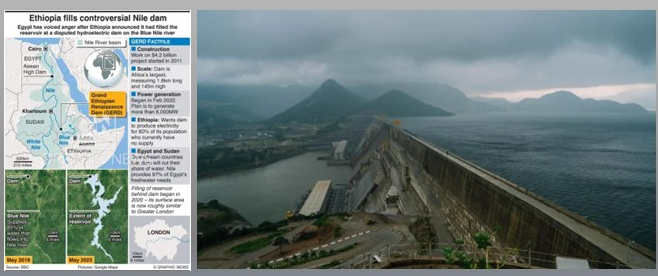
- On September 07, after outfoxing Egypt on the diplomatic stage for more than a decade, Ethiopia is set to officially inaugurate one of the world’s biggest dams on a tributary of the River Nile, burying a UK colonial-era treaty guaranteeing the North African nation the lion’s share of its water. The dam – built on the Blue Nile at a cost of about $5bn (£3.7bn), with a reservoir roughly the size of Greater London – has led to a surge in Ethiopian nationalism, uniting a nation often polarized along ethnic lines and mired in conflict.
- On September 08, Israel and India have signed a bilateral investment agreement to expand mutual trade during far-right Israeli Minister of Finance Bezalel Smotrich’s trip to the South Asian country, which deepened its ties with Israel under Hindu nationalist Prime Minister Narendra Modi. The agreement, signed in New Delhi by Smotrich and the Indian Minister of Corporate Affairs Nirmala Sitharaman, aims to boost trade and investment flows between the two countries. Sitharaman stressed the need for greater collaboration in “cybersecurity, defence, innovation and high-technology”.
- On September 08, the UN Secretary-General’s Special Representative and Head of the United Nations Support Mission in Libya (UNSMIL), Hanna Tetteh, briefed Ambassadors of EU member states on her efforts with Libyan parties to implement the political roadmap she announced on August 21. EU Ambassador to Libya Nicola Orlando said on X that Tetteh informed them of her intensive efforts with all relevant Libyan parties, institutions, and civil society across the country to move forward with the political roadmap she set out to lead Libya toward national elections, with the aim of unifying institutions and restoring their legitimacy.
- On September 09, Syria has “strongly condemned” Israeli attacks on several sites in and around Homs city in the west of the country and around the coastal city of Latakia. The Israeli air strikes in the early hours of Tuesday September 9, represent “a blatant violation of the sovereignty of the Syrian Arab Republic”, the country’s Ministry of Foreign Affairs said in a statement.
- On September 09, Indonesia’s President Prabowo Subianto has replaced five ministers in a lightning cabinet reshuffle after deadly protests rocked the Southeast Asian nation of 285 million people in recent weeks. The cabinet shake-up follows rising public dissatisfaction with Prabowo’s administration and parliament’s perceived insensitivity over economic hardships affecting everyday people, which led to mass protests breaking out at the end of August.
- On Tuesday afternoon September 09, the Israeli military targeted Hamas leaders in Doha, drawing near universal condemnation and, according to analysts, crossing all previous red lines. The attack reportedly targeted Khalil al-Hayya, the group’s exiled Gaza leader and main negotiator, who has risen up the ranks after Israel assassinated Yahya Sinwar in Gaza and Ismail Haniyeh in Tehran last year. Qatar has hosted Hamas’s political office since 2012 at the request of the United States, according to Qatari officials.
- On September 10, according to an analysis, the Piraeus port has chosen the strategy of “quality over quantity”. Based on the data presented, the Greek port is now attracting larger ships, but with fewer approaches, seeking to maintain a high level of service, even if the total nominal capacity has declined. This choice is also reflected in Lloyd’s List data, where Piraeus records a 6.1% drop in container traffic in the first half of 2025, reaching 4.79 million TEUs and occupying 43rd place worldwide. However, despite the downturn, the financial results of the Greek port, under the management of COSCO, registered new records, showing resilience in the face of unprecedented instability. Long-term reliability is Piraeus’ goal.
- On September 10, the NGO Human Rights Watch released a new report that warns of a rising number of attacks on civilians from Islamic State-affiliated militants in Niger. Drawing on around thirty testimonies collected between May and July 2025, Human Rights Watch (HRW) has published a new report detailing an escalating number of attacks from the Islamic State in the Sahel Province (IS Sahel) against civilians. According to the findings, the IS Sahel executed more than 127 civilians in five attacks in the Tillabéri region in western Niger. The extremist group reportedly also looted homes and burned them to the ground.
- On September 10, at least nine people have been killed after Israel carried out air strikes in the Yemeni capital, Sanaa, and al-Jawf governorate, a day after targeting Hamas leaders in the Qatari capital, Doha. Yemen’s Ministry of Health said that 118 people were wounded in Israeli aggression on Sanaa and al-Jawf. It described the figures as a preliminary toll, warning the number could rise as rescue teams continue to search for victims.

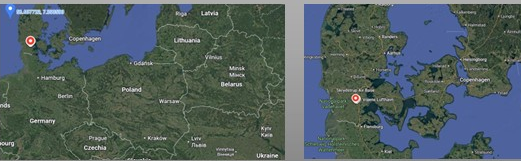
- On September 10, it was revealed that Ukraine is setting up production facilities for some
of its most potent weapon systems outside its borders to protect them from strikes by Russian missiles and drones. According to The Wall Street Journal, the Ukrainian company Fire Point has announced the relocation of its solid rocket fuel production facility to Denmark. The new facility, located near the Skrydstrup Airbase in Vojens—where key NATO infrastructure is also based—is expected to begin production in December. Copenhagen is reportedly funding the project with $78 million. Fire Point has recently drawn attention as the developer of the Ukrainian Flamingo FP-4 cruise missile, which is claimed to have a range exceeding 2,900 kilometers and a warhead weighing up to 1,100 kilograms.
- On September 11, the Israeli attack against Hamas leaders in Qatar has prompted familiar headlines in the United States about the president being unhappy with Israel. Over the past two years, as the US has provided Israel with billions of dollars to help fund the war on Gaza, there have been numerous stories about the White House – under both Joe Biden and Donald Trump – being frustrated with Israeli conduct. But the attack on a US partner that works closely with Washington on various issues and hosts one of the largest US military bases in the Middle East was a major escalation.
- On September 11, the Syrian transitional government’s decision to postpone parliamentary elections— originally scheduled for mid-September in Suwayda, Hasakah, and Raqqa—until “appropriate conditions and a safe environment” are in place, has drawn mixed reactions across political and social circles. Legal and cultural experts have criticized the move as a case of “deliberate exclusion” of large parts of Syria, arguing that it renders the electoral process “devoid of legitimacy”.
- On September 12, Russia says it downed 221 Ukrainian drones launched on its territory overnight, in one of the largest aerial assaults since May 2025. More than half of the drones were intercepted over the Bryansk and Smolensk regions, south-west of Moscow, where Lukoil facilities were reportedly targeted, the defence ministry said. Authorities in the Leningrad region said 28 drones were brought down and that a fire had broken out on a vessel in the Baltic port of Primorsk, Russia’s largest oil terminal. They added that the blaze was extinguished without casualties or leaks.
- On September 12, in the heart of a region shadowed by conflict, Cairo became the stage for a significant diplomatic breakthrough, as months of quiet, intensive Egyptian mediation culminated in an agreement between Iran and the International Atomic Energy Agency (IAEA) to resume cooperation over Tehran’s nuclear programme. The deal, signed in the Egyptian capital, represents a vital step towards de-escalation, carefully engineered by Cairo to pull key players back from the brink and reopen the door for dialogue.
- On September 13, Iran’s authorities are discussing what comes next following an agreement with the global nuclear watchdog, as they urge the region to go beyond issuing statements in reaction to Israel’s attack on Qatar. Iranian Foreign Minister Abbas Araghchi is heading to an emergency meeting of the parliament’s national security commission on Saturday evening September 13, with hardline lawmakers looking for answers as to whether the International Atomic Energy Agency (IAEA) will be allowed to access nuclear sites bombed by the United States and Israel last June.
- On September 14, the Global Sumud Flotilla (GSF) has begun sailing out of Tunisia, with organizers and participants saying they are determined to break Israel’s siege on Gaza and deliver urgently needed humanitarian aid. The convoy sailed from the northern port city of Bizerte with activists from more than 40 countries aboard. Its departure was delayed after two flotilla vessels came under attack earlier this week.
- On September 14, Romania says a Russian drone has breached its airspace – the second NATO country to report such an incursion. Ukrainian President Volodymyr Zelensky said the incursion could not be a mistake – it was “an obvious expansion of the war by Russia”. Moscow has not commented on the Romanian claims. Poland said it had shot down at least three Russian drones which had entered its airspace.
- On September 15, Israeli Prime Minister Benjamin Netanyahu has not ruled out further strikes on Hamas leaders following last week’s attack in Qatar, saying they would not have immunity “wherever they are”. Speaking at a joint press conference with US Secretary of State Marco Rubio in Jerusalem, Netanyahu said every country had the right “to defend itself beyond its borders”.
- On September 15, Libya’s Foreign Minister, Taher al-Baour, took part in a closed meeting of Arab and Islamic foreign ministers in the Qatari capital, Doha. The Libyan Foreign Ministry said the talks were dedicated to finalizing the draft of the closing statement to be adopted at Monday’s emergency Arab-Islamic summit. It added that Libya’s participation reflects its commitment to strengthening joint action and unifying Arab and Islamic positions in solidarity with Qatar, following last week’s “unprecedented Israeli assault” on Doha.
MARITIME SECURITY INCIDENTS: August 28-September 16, 251
| INCIDENT No | INCIDENT Type | INCIDENT TIME | INCIDENT DETAILS |
| 029-25 | ATTACK | 31 AUG / 1730 UTC | Source Master UKMTO has received a report of an incident 40NM southwest of Yanbu, Saudi Arabia. A Master has reported to UKMTO that they witnessed a splash in close proximity to their vessel from an unknown projectile and heard a loud bang. All crew are safe and the vessel continues on its voyage. Authorities are investigating. Vessels are advised to transit with caution and report any suspicious activity to UKMTO. |
| 030-25 | SUSPICIOUS ACTIVITY | 04 SEP / 0310 UTC | Master UKMTO has received a report of an incident 178NM northwest of Al Hudaydah, Yemen. An unknown projectile was seen to hit the sea some distance from the vessel. The Master also reports severe electronic interference in the area. Master reports vessel and crew are safe and proceeding to their Next Port of call. |
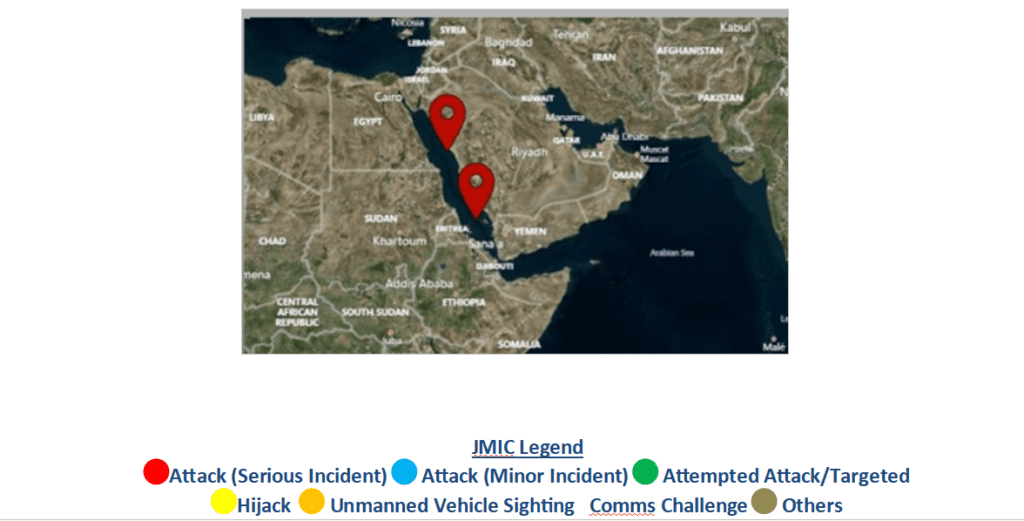
1 In accordance to JMIC and/or UKMTO sources
| GEOPOLITICAL AWARENESS / ASSESSMENTS SECTIONS (CONTEXT TABLE) | |||
| VICINITY / AREA / DOMAIN | OVERALL | THREATs section | RISKs section |
| THE GEOPOLITICAL PROFILES & INTERNATIONAL SECURITY (G3is) | X | – | – |
| Libya – Central Mediterranean | – | X | – |
| Syria | – | X | – |
| Lebanon | – | X | – |
| Gaza-Israel | – | X | – |
| Sudan-Eritrea–Ethiopia | – | X | – |
| Red Sea – Yemen | – | X | – |
| Northern Persian Gulf / Iran-Israel conflict | – | X | – |
| Russia – Ukraine / Black Sea NW part | – | X | – |
| Terrorism – piracy and also cargo theft, smuggling, stowaways | X | X | – |
| Gulf of Guinea | – | – | X |
| Central Mediterranean Sea – Libya | – | – | X |
| East Mediterranean Sea | – | – | X |
| Suez Canal – Northern Red Sea | – | – | X |
| Bab-el-Mandeb Straits – Southern Rea Sea | – | – | X |
| Gulf of Aden – Somalia | – | – | X |
| Arabian Sea – Gulf of Oman | – | – | X |
| Hormuz Straits – Persian Gulf | – | – | X |
| Malacca Straits | – | – | X |
| Black Sea / East Part | – | – | X |
| Baltic Sea / NE part | – | – | X |
| Baltic Sea / West part | – | – | X |
| Piracy – Boarding conditions, kidnapping, firing, electronic harassment | X | – | X |
| OVERALL ASSESSMENT – CONSULTING | X | – | – |
| Useful documents and manuals for GNSS interference | X | – | – |
| Strategic-Operational Threat/Risk Assessment Levels | X | – | – |
THE GEOPOLITICAL PROFILES & INTERNATIONAL SECURITY (G3is)
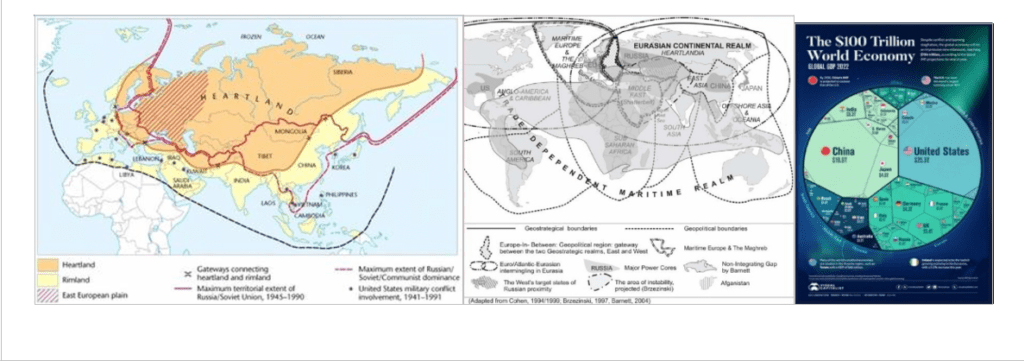
- Geo-political / Geo-Strategic profile: There are no changes in the Geo-political terrain as described in the previous security assessment in relation to transformation of the geopolitical scene in a multi-polar world. In addition, however, it should be emphasized that the opening of the Arctic Circle to shipping transforms Russia from a “heartland” into one of the “world islands” that will compose the multi-polar scene, which is the inherent clear sign that we are rapidly moving into the new Geo-political scene of multi-polarity. As for the SE Asia region, for the time being from a Geo-strategic point of view, China and India, although in Geo-economic matters they seem to complement each other, are a key pair of adversaries.
- Geopolitical / Geo-economic Profile: There are no significant changes to what has already been reported in the SEAGUARDIAN SECURITY ASSESSMENT 25/17, August 13, in terms of signs of power realignment. In Southeast Asia, India seems to have its Geo-economic footing resting on Russia and its Geo-strategic footing on the US, while China will continue to pursue its Geo-political interests through Geo-economics (it is already considered a superpower in this), not being able to confront the superpowers (Russia-US) at the Geo-strategic level, for the time being. As for India, supporting its geo-economic power in Russia, while continuing to support its geo-strategy in the US, is also the answer to the question, in some circles, why the US imposes higher tariffs on its ally, compared to China, which is considered an adversary and geo-strategic support to Russia, although this is doubtful in some other circles.
- International Security / Strategic sector: There are no significant changes in the Strategic Area of International Security compared to what was described and analyzed in the SEAGUARDIAN SECURITY ASSESSMENT 25/18, August 27. In addition, it should be noted that the likely increase in illegal immigration during the upcoming “Southern Summer” will intensify, the re-entry into a period of operations between Israel-Iran may be repeated, the coastal countries in the Gulf of Guinea will continue to be in political instability, Indonesia will suffer from internal political conflicts and Libya may be destabilized, as well as Syria, creating threats and risks for Shipping and beyond. Additionally, a significant change in this sector is the handover of UN security council presidential duties to Russia on October 01, which possibly commence a change in the agenda, could consequently adding pressure to the other members of the Security Council to finalize the pending issues with Iraq, Palestine and Ukraine, before the handover.
- Global Maritime Security profile: As highlighted in the SEAGUARDIAN SECURITY ASSESSMENT 25/18, August 27, traditional threats to Shipping are re-emerging, but with a new “asymmetric profile.” In general, a profile is being created where threats from military/paramilitary actions and terrorism, together with traditional risks, constitute a “composite threat” and mainly for Western world Shipping. This situation creates an additional reason for Shipping companies to evaluate the threats and risks generated in relation to the areas where occurred, focusing on what presents the greatest threa. Shipping companies should weigh the cost of using larger shipping routes with the possibility of minimizing risks by using security services on the traditional shipping routes, so as not to create unfair competition with the freight rates of companies that are not targeted by the threats so far (mainly from Southeast Asia).
THREAT ASSESSMENT UPDATE:
Military Operations
- At present, no events related to new political and economic issues in Libya have been made public, while the ones so far have been described in the SEAGUARDIAN SECURITY ASSESSMENT 25/18, August 27 and their development is expected from mid-September. On the contrary, there is now evidence that Eastern and Western Libya, instead of dealing with the resolution of their internal issues, are intensifying their efforts to create international allies and presence, with Russia being the pursuit of Eastern Libya and the Arab League being the pursuit of the internationally recognized government of the West.
- Also, the issue of the continental shelf settlement and the so-called Turkish-Libyan Memorandum, which must be voted on by the HOR (House of Representatives) / Haftar Government to be valid, is currently being used as a tool for contacts with countries such as Greece and as a lever of pressure/negotiation. Also, some operations by the security forces are announced in international media as an indication that the effort for normalization and legitimacy in the country is progressing, while it hides the acquisition of central control by Haftar throughout Eastern Libya.
- SEA GUARDIAN estimates that these moves are deepening the gap between Eastern and Western Libya and advises Shipping to be careful and avoid the use of both Western and Eastern Libyan ports at the same time, since that approach increases dramatically the levels of threats and risks.
- Triggers that will influence the escalation or de-escalation remain as initially cited in SEA GUARDIAN SECURITY ASSESSMENT 25/15, July 10.
- Threat assessment due to “military actions – terrorism like” is maintained MEDIUM.
- It is now obvious that the efforts for a unified Syria have weakened, if not stopped. Nevertheless, the effort of consolidation continues to have the support of the international community and from countries outside the Western world such as Japan. The interim government is trying to internationalize in the region by entering into various partnerships, mainly with Lebanon.
- However, it is now clear that Israel’s pursuit is the “DAVID’S CORRIDOR”, as shown in the following map, while the areas of the Mediterranean coast (Latakia, Tartus) are in a phase of non-integration under the interim government. The situation has become more complicated not for Israel, but for everyone else in the region and especially, after the recent Israeli airstrike, much further north in the Latakia region, where mainly Alawites live, with the strike limited to the area of the Air Base. In the current two-year conflict in the region, this is the first time that such a strike has been carried out, and it is expected that it will be translated. For the time being, however, it is certain that Israel will deprive the interim Syrian government of any possibility of developing further military power and its direct access to the Mediterranean.

- SEA GUARDIAN, for the time being, considers that the ports of Latakia and Tartus (not to forget that Russia continues to maintain its military bases in the region), may end up being in a “free trade” type area, making them attractive for medium-sized commercial activity, as for some decades after World War II, while the measures in their use should be at ISPS 2 level, at least in the medium-term.
- Triggers that will influence the escalation or de-escalation remain as initially cited in SEA GUARDIAN SECURITY ASSESSMENT 25/15, July 10.
- The threat assessment due to “military actions – terrorism like” is MEDIUM.
- Indicators able to altering the “risks levels” are as initially cited in SEA GUARDIAN SECURITY ASSESSMENT 25/17, August 13.
- On the coasts of Syria, the overall risk for incidents is “MEDIUM” which is analyzed in: “borderline of terrorism, attempts for piracy, robbery” as “NSR” / for “Hijacking, opening fire, crews’ life loses” as “MEDIUM” and for “Cyberattacks, electronic harassment of Nautical aids” as “NSR”.
Lebanon
- The biggest issue of internal unrest in Lebanon, which is the disarmament of Hezbollah, has not made any progress, on the contrary, it appears to be intensifying, especially while it is in its first stage, which is the control of the movement of weapons from region to region. Also, the condition set by Hezbollah for Israel to withdraw from their borders in order to begin disarmament does not seem to be met, making any progress almost impossible.
- SEA GUARDIAN estimates that the attempt to find international assistance for the implementation of the disarmament plan will not help significantly in this regard. It also advises Shipping to consider the ports of Lebanon as of high “uncertainty”, constantly assessing the threat, since the situation is on a not visible tightrope.
- Triggers remain unaltered as initially cited in SEA GUARDIAN SECURITY ASSESSMENT 25/15, July 10.
- The threat assessment due to “military actions – terrorism like” is “MEDIUM” due to the applying of Hezbollah disarmament creating serious political tensions, so far.
- Indicators altering the “risks levels” are as initially cited in SEA GUARDIAN SECURITY ASSESSMENT 25/17, August 13.
- On the coasts of Lebanon, the overall risk of incidents is “MEDIUM” which is analyzed in: “borderline of terrorism, attempts for piracy, robbery” as “NSR” / for “Hijacking, opening fire, crews’ life loses” as “MEDIUM” and for “Cyberattacks, electronic harassment of Nautical aids” as “NSR”.
Gaza-Israel
- The situation is developing according to what has been described in SEA GUARDIAN SECURITY ASSESSMENT 25/18, August 27, while in accordance with the recent facts, after the ban of Abas entering USA, the issue of recognizing a Palestinian state was not even raised in the UN General Assembly, a topic that was referred to an International Conference on September 22. The Arab world is in turmoil with the UAE and the UN Human Rights Commission at the forefront.
- SEA GUARDIAN estimates that Israel won the extension of the deadline for its initiatives, with the silent tolerance of the international community, having USA on its side. Israel will not accept a Palestinian authority related to the previous political leadership and will draw the borders of the next day, entering into any possible future negotiation, having Gaza under occupation.
- SEA GUARDIAN advises shipping to maintain Israel’s ports of call, as they will be attractive when Gaza reconstruction activities begin, bearing in mind, at least in the medium term, the relevance to the threat in the Red Sea and participation in the “shadow fleet”, which appear to be of a permanent nature and arise from shipping cooperation with Israel or the transport of Russian oil, two diametrically opposed threats but against the same goal, the free cooperation of the Western Maritime world with the rest of the world (World South, China, Russia etc).
- A special permit continues to be required to approach ports in the Gaza Strip or Israel.
- Triggers and risks indicators remain unaltered as initially cited in SEA GUARDIAN SECURITY ASSESSMENT 25/15, July 10.
- The threat assessment due to “military actions – terrorism like” is “HIGH”.
- The overall risk of incidents is “HIGH” which is analyzed in: “borderline of terrorism, attempts for piracy, robbery” as “NSR” (No Serious Report) / for “Hijacking, opening fire, crews’ life loses” as “MEDIUM” and for “Cyberattacks, electronic harassment of Nautical aids” as “NSR”.
- The situation has not improved compared to the two previous assessments, of SEA GUARDIAN SECURITY ASSESSMENT 25/18, August 27. On the contrary, it appears that there are indications that the conflicts in the region may extend to Kenya. In addition, regarding the possible involvement of mercenaries from Colombia via the UAE, a relevant demarche was made to the UN, with the provision of detailed information.
- There is also a crisis with Egypt, which is related to the dam on the Nile, on the Sudan-Ethiopia border, an issue that we have reported a month ago and may increase tensions in the region, even the involvement of Egypt. In general, the West Coast of the Red Sea is in turmoil and although this does not create direct risks to Shipping, it creates uncertainty, highking up the “threshold” of the general threats and risks in this “triangle”.
- SEA GUARDIAN advises that the use of security teams by ships sailing in the region or having a port of call in these countries be strictly adhered to. The geography of the region does not allow for anything else since the Houthi threat exists on the Eastern coast of the Red Sea.
- Triggers and risks indicators remain unaltered as initially cited in SEA GUARDIAN SECURITY ASSESSMENT 25/15, July 10.
- The threat assessment due to “military actions – terrorism” is HIGH.
- For the ports’ security at the most and the coasts, the overall risk of incidents is considered “MEDIUM”, analyzed as follows: “borderline of terrorism, attempts for piracy, robbery” as “NSR” / for “Hijacking, opening fire, crews’ life loses” is estimated “LOW”. For “Cyberattacks, electronic harassment of Nautical aids” as “NSR”.
- The situation has not changed compared to what was described in the SEA GUARDIAN SECURITY ASSESSMENT 25/18, August 27, while in an ill-advised attack that occurred against a merchant vessel in Northern Eritrea, the capture and detention of UN personnel, with the Secretary-General making statements for their immediate and unhindered release, enhances the “uncertainty” in the area.
- SEA GUARDIAN estimates that in addition to the attacks occasionally carried out against Israel in support of Hamas in Palestine as Houthis claim, and the attacks against Shipping, they are collecting negotiating tools to continue receiving financial assistance from the UN, in addition to their unspecified donors. It cannot be excluded that personnel in captivity by the Houthis could be used as human shields, especially as long as Israel maintains its operations against them.
- SEA GUARDIAN also advises the Shipping Industry to read the situation correctly as the Houthis currently maintain their aggressiveness regarding any relationship between Shipping Companies and Israel, which was also clarified in their warning letter last month. Frequent evaluation is required in order not to push rates excessively in favor of Chinese Shipping and Far East shipping in general.
- Triggers and risks indicators remain unaltered as initially cited in SEA GUARDIAN SECURITY ASSESSMENT 25/15, July 10.
• The threat assessment due to “military actions – terrorism like” is HIGH.
- The overall risk of incidents is “HIGH” which is analyzed in: “borderline of terrorism, attempts for piracy, robbery” as “MEDIUM” / for “Hijacking, opening fire, crews’ life loses” as “HIGH” and for “Cyberattacks, but electronic harassment of Nautical aids” is “MEDIUM”.
Northern Persian Gulf / Iran-Israel conflict
- The situation in relation to what was analyzed in the previous assessment, has not changed.
- SEA GUARDIAN, monitors the current situation and the flow of information constantly, analyzing the processes producing the present under the “light” of triggers and indicators for the region. It also estimates that the absence of international control of Iran’s nuclear program, the sanctions that have been imposed on it, as well as new pressures such as the announcement of the Armenia-Azerbaijan corridor agreement, are reasons for the recurrence of conflicts. The current recession is likely to be simply the preparation for a new conflict, as the reasons (triggers) have not ceased to exist and appear frequently, as usual.
- The “triggers” that could create escalation are: Security incident involving the Houthis and civilian or military vessels/target in the Red Sea or Gulf of Aden, not to underestimate the stalemate in UN-brokered peace talks on Yemen. Finally, the ongoing Israeli urban warfare to take over the whole Gaza city and the violent deportation of Palestinians creates unpresented turmoil.
- Threat assessment due to “military actions – terrorism like” against merchant vessels is “MEDIUM”.
- The threat overall risk of incidents is “MEDIUM” which is analyzed in: “borderline of terrorism, attempts for piracy, robbery” as “NSR” / for “Hijacking, opening fire, crews’ life loses” as “NSR” and for “Cyberattacks, electronic harassment of Nautical aids” as “LOW”.
Russia – Ukraine / Black Sea NW part
- Following the introduction of this particular area into the Security Assessment system and its first assessment in the previous report, SEA GUARDIAN considers that the area presents different threats compared to other areas, mainly due to the higher technology of the belligerents, “without an obvious direct attack against Shipping”.
- The military/paramilitary and/or terrorist threat is expressed mainly through underwater attacks and strong GNSS interference, affecting not only Shipping but also Aviation, as recently happened. On the other hand, there is an initiative for an understanding between Russian and Ukrainian authorities on the non-harassment of Shipping with attacks. The outcome of the war is unclear. International community is constantly dealing with the issue and various articles are seeing the light of day. The main thing is that the Kremlin clearly repeated something it had declared 4 months ago -approximately during the first approach of the US for peace- that it would not accept European security troops in Ukraine which will be targeted of Russian forces. The US, through Trump’s statements, announced that it will extend sanctions in order to weaken Russia’s economic ability to continue the war.
- SEA GUARDIAN, however, believes that Shipping must take its measures to control reefs from underwater threats, for readiness to deal with boarding by individuals who may represent official authorities and readiness for traditional Shipping, as a major crackdown on Russia’s export activities is controversial, whatever the sanctions from the Western world.
- It also advises shipping to be careful with the companies under sanctions, which Ukraine has announced and are posted on a website, even if there is no actions declared against violations (the link is given at the end of this assessment).
- The threat assessment due to “military actions – terrorism like” is HIGH.
- Indicators which altering the “risks levels” are the proof of military/paramilitary actions against shipping by military/paramilitary groups, conflict over the control of coasts and ports, the escalation of the use of underwater means on attack incidents, the enforcement of US and EU sanctions over Russia oil exports, the reaction of international market of oil provision deficiencies and the spectrum of anti-terrorism/piracy/hijacking reaction by using Maritime Security capabilities.
- The overall risk of incidents is “HIGH” which is analyzed in: “borderline of terrorism, attempts for piracy, robbery” as “NSR” / for “Hijacking, opening fire, underwater strikes, crews’ life loses” as “MEDIUM” and for “Cyberattacks, electronic harassment of Nautical aids” as “HIGH”.
Terrorism – piracy and also cargo theft, smuggling, stowaways
• As reported and analyzed in SEA GUARDIAN SECURITY ASSESSMENT 25/15, July 10, actions bordering on terrorism in terms of pirate attack methods constitute the next future nature of threats, which suggests a revision of the approach to dealing with threats.
- It is highlighted that the period of Monsoon in the South seas (Indian Ocean, Arabic Gulf and Gulf of Aden) is going to its end creating a friendly environment for small boats operations, adding one more factor in the risk of piracy and smuggling arise.
- Triggers that signal the increase or decrease in the threat remain the same, as mentioned in the previous assessment, as well as the differentiated level of risks for vessels of the Western World and Far East Shipping.
- There is also a need now, in the context of high-level communication between Maritime Security and Shipping companies, to continuously analyze threats, especially those that may appear to be accidents but raise suspicions of terrorist activity, using the capabilities of Maritime Security companies, such as, for example, reef inspection with ROV, which ensures the absence of a threat that manifests itself in a time-programmed manner.
RISK ASSESSMENT
- To the situation described in SEA GUARDIAN SECURITY ASSESSMENT 25/18, August 27 are added the UN allegations of crimes against humanity committed by the Congolese armed forces and Rwandan rebels, as revealed by an investigation that lasted from March to August of this year.
- Also, with regard to Nigeria, oil production is expected to be significantly reduced for the next three months due to malfunction in its refinery systems while crime remained stable. During the period covered by this report, we noticed the re-emergence of a piracy attempt which was stopped by the ship’s crew in collaboration with the local authorities. It was confirmed to be from Tonga, for which we have underlined in a series of previous assessments that they are aggressive against crew-members, if they manage to board a vessel.
- Indicators which altering the “risks levels” as initially cited in SEA GUARDIAN SECURITY ASSESSMENT 25/17, August 13.
- The overall risk of incidents is “HIGH”, which is analyzed in: “Borderline of terrorism, attempts for piracy, robbery” as “HIGH” / for “Hijacking, opening fire, crews’ life loses” as “HIGH” and for “Cyberattacks, electronic harassment of Nautical aids” as “NSR”.
- There are no significant changes related to the SEA GUARDIAN SECURITY ASSESSMENT 25/18, August 27.
- For the time being, oil production has remained stable, unaffected by any developments within Libya. The characteristics of oil extraction and export control structures have not changed, with production being under the Eastern and Western National Oil Company (NOC), while control of the ports, which are typically under the Libyan Port Company, is exerted by local security authorities under differentiated rules for each port.
- SEA GUARDIAN estimates that the threat of military/paramilitary actions as well as terrorism directly affects the risks, which are sudden and undefined in their manifestation, while the situation does not seem to be normalizing. On the other hand, the need for oil transport activity is not decreasing.
- SEA GUARDIAN also advises shipping to always keep vessels north of 33N when navigating in the area to avoid interference with the relevant shipping control rule set by Libya.
- Indicators which altering the “risks levels” as initially cited in SEA GUARDIAN SECURITY ASSESSMENT 25/17, August 13.
- The overall risk of incidents is “MEDIUM” which is analyzed in: “borderline of terrorism, attempts for piracy, robbery” as “NSR” (No Serious Report) / for “Hijacking, opening fire, crews’ life loses” as “MEDIUM” and for “Cyberattacks, electronic harassment of Nautical aids” as “LOW” but “MEDIUM”, at the western coasts of the Libyan Gulf.
- The risks in the Eastern Mediterranean stem from the composition of the threat analysis for each state separately, according to what has been mentioned in the threat analysis section of this report.
- Although the general situation in the Eastern Mediterranean has not changed in relation to what was mentioned in the SEA GUARDIAN SECURITY ASSESSMENT 25/18, August 27, it is now clear that whatever the situation is, land trade routes under development need to be connected to the sea. More specifically, the coastal ports of Syria with risks emanating from conflict of local interests, the ports of Lebanon with risks coming from illegitimate control (Hezbollah-Iran) and the ports of Israel with risks coming from international terrorism. Those risks are not necessarily only within the mentioned ports, but also at their approaches.
- SEA GUARDIAN advises Shipping to perform analysis at a Strategic / Operational level during its decision-making process in its activities in the region in the near medium-term.
- Indicators which altering the “risks levels” as initially cited in SEA GUARDIAN SECURITY ASSESSMENT 25/17, August 13.
- The overall risk of incidents is “MEDIUM” which is analyzed in: “borderline of terrorism, attempts for piracy, robbery” as “VERY LOW” / for “Hijacking, opening fire, crews’ life loses” as “HIGH” and for “Cyberattacks, electronic harassment of Nautical aids” as “NSR”.
- The threat from military/paramilitary actions on the East coasts of Mediterranean is “MEDIUM” due to the conflicts in Gaza strip, Syria and Lebanon uncertainties related to the disarming of Hezbollah.
- There are no significant changes in relation to SEA GUARDIAN SECURITY ASSESSMENT 25/18, August 27.
- Nevertheless, it is now apparent that the creation of facilities within the management and service areas of the Suez Canal is being intensified by countries in SE Asia, and especially China, following the invitation campaign for collaborations that SCA has conducted in recent months.
- SEA GUARDIAN believes that China will try to control as many trade routes as it can on land and sea, and the Red Sea/Suez is no exception in its geopolitical/economic thinking, especially since in the seas of the Arabic Peninsula, in the medium term, does not face any risks for its Shipping.
- The threat assessment due to “military actions-terrorism like” is “MEDIUM” due to the threat of Houthi’s attacks in the Northern Red Sea.
- Indicators altering the “risks levels” as initially cited in SEA GUARDIAN SECURITY ASSESSMENT 25/17, August 13.
- Due to the uncertainty on the coasts of East Mediterranean, in the Suez Canal and in the Northern Red Sea, the overall risk of incidents is “MEDIUM” which is analyzed in: “borderline of terrorism, attempts for piracy, robbery” as “NSR” / for “Hijacking, opening fire, crews’ life loses” as “MEDIUM” and for “Cyberattacks, electronic harassment of Nautical aids” as “NSR”.
Bab-el-Mandeb Straits – Southern Rea Sea
- There are no significant changes in relation to SEA GUARDIAN SECURITY ASSESSMENT 25/18, August 27.
- The threat level, however, remains unchanged as its sources have not been eliminated. So, the risks created are high, with the uncertainty of a sudden attack being taken into account. Nevertheless, after the traffic in the strait enjoyed a continuous increase for two weeks (39.4% in the week 25-31 August and 5,1% in the week 01-07 September), the last week presented a slight decrease of 5.4%.
- Indicators altering the “risks levels” as initially cited in SEA GUARDIAN SECURITY ASSESSMENT 25/17, August 13.
- The threat from military/paramilitary actions due to the Yemen’s Houthis is “MEDIUM”.
- Due to the unstable situation in the Middle East and the Northern Red Sea (Sudan-Eritrean-Ethiopia) as well as the Houthi’s aggressive behavior,the overall risk of incidents is “MEDIUM” which is analyzed in: “borderline of terrorism, attempts for piracy, robbery” as “MEDIUM” / for “Hijacking, opening fire, crews’ life loses” as “LOW” and for “Cyberattacks, electronic harassment of Nautical aids” as “MEDIUM”.
- There are no significant changes in relation to SEA GUARDIAN SECURITY ASSESSMENT 25/18, August 27.
- The threat from military/paramilitary actions in the Gulf of Aden is “MEDIUM” due to no-direct relation with the conflict in the area.
- The threat level, however, remains the same since its sources have not been eliminated. So the risks created are high, with the uncertainty of a sudden attack being taken into account. It is also noted that the risks can now come from various sources, geographically dispersed and technologically upgraded. To address the breadth of attack methods and the dispersion of their sources, the presence of security teams is now necessary. The withdrawal of the veil of war will bring traditional threats back to the surface.
- The threat from military/paramilitary actions due to the Yemen’s Houthis is “MEDIUM”.
- Indicators altering the “risks levels” as initially cited in SEA GUARDIAN SECURITY ASSESSMENT 25/17, August 13.
- The overall risk of incidents is “MEDIUM” which is analyzed in: “borderline of terrorism, attempts for piracy, robbery” as “LOW” / for “Hijacking, opening fire, crews’ life loses” as “MEDIUM” and for “Cyberattacks, electronic harassment of Nautical aids” as “NSR”.
- There are no significant changes in relation to SEA GUARDIAN SECURITY ASSESSMENT 25/18, August 27.
- The Arabian Sea does not currently present any new threat, other than the general uncertainty. Any risk may arise from a possible increase of threat due to Iran’s involvement in new military adventures.
- Indicators altering the “risks levels” as initially cited in SEA GUARDIAN SECURITY ASSESSMENT 25/17, August 13.
- In the Arabian Sea and the Gulf of Oman, the overall risk of incidents is “LOW” which is analyzed in: “borderline of terrorism, attempts for piracy, robbery” as “VERY LOW” / for “Hijacking, opening fire, crews’ life loses” as “VERY LOW” and for “Cyberattacks, electronic harassment of Nautical aids” as “MEDIUM” due a possible unexpected and sudden re-escalation even if the number of attacking proposes the opposite.
- There are no significant changes in relation to SEA GUARDIAN SECURITY ASSESSMENT 25/18, August 27.
- SEA GUARDIAN advises the Western world’s shipping industry to always take measures against traditional threats even if the overall threat to shipping is low, given that any application of strict rules or restrictions on movement will also affect the shipping sector that transports oil exports from Iran.
- Indicators altering the “risks levels” as initially cited in SEA GUARDIAN SECURITY ASSESSMENT 25/17, August 13.
- In the Strait of Hormuz and the Persian Gulf, the overall risk of incidents is “MEDIUM” which is analyzed in: “borderline of terrorism, attempts for piracy, robbery” as “LOW” / for “Hijacking, opening fire, crews’ life loses” as “MEDIUM” and for “Cyberattacks, electronic harassment of Nautical aids” as “HIGH” due to the conjunction with the attempt of small boats with armed crew to board ships, pretending official services claiming inspection rights, promoting the use of any help against traditional threats, except from the threat of war.
- There is no relief in the intensity of political conflicts and piracy/ship theft in the region. Although the Independence Day passed smoothly, about a week later there were demonstrations/clashes and destruction in Jakarta, resulting in the intervention of the army. Also, in neighboring Thailand there is general political instability, creating great uncertainty about the control of the authorities in the region.
- SEA GUARDIAN estimates that threat due to an increase in crime taking advantage of the current situation including attacks on shipping, cannot be excluded. This particular region is one of the two areas where there has been an attempt at piracy/ship theft, recently.
- Indicators altering the “risks levels” as initially cited in SEA GUARDIAN SECURITY ASSESSMENT 25/17, August 13.
- The overall risk of incidents is “HIGH” which is analyzed in: “borderline of terrorism, attempts for piracy, robbery” as “VERY HIGH” / for “Hijacking, opening fire, crews’ life loses” as “MEDIUM” and for “Cyberattacks, electronic harassment of Nautical aids” as “NSR”.
Black Sea / East Part
- The attempt to reach an understanding between Russia and Ukraine regarding non-aggression in shipping will positively affect all shipping activity in the Black Sea, and mainly in its Eastern part, for which there are no significant reports of underwater aggression.
- Indicators altering the “risks levels” as initially cited in SEA GUARDIAN SECURITY ASSESSMENT 25/18, August 27.
- The overall risk of incidents is “LOW” which is analyzed in: “borderline of terrorism, attempts for piracy, robbery” as “NSR” / for “Hijacking, opening fire, crews’ life loses” as “LOW” and for “Cyberattacks, electronic harassment of Nautical aids” as “LOW”.
Baltic Sea / NE part
- There are no significant changes in relation to SEA GUARDIAN SECURITY ASSESSMENT 25/18, August 27.
- On the contrary, activity of transporting Russian oil using ships of dubious quality in terms of their maritime safety, increases the risks of an accident that would cause major ecological destruction in coastal countries. Such an event creates sources of tension and can dynamite the already burdened climate in European-Russian relations.
- In addition, the effects of drone attacks on a large natural gas processing plant, the re-opening of which will take place after several months, creates additional tension on the Russian side.
- SEA GUARDIAN advises shipping to be very careful in its voyages in the Baltic Sea, even if does not border the Ukrainian front, as it is considered as a secondary field of the Russia-Ukraine conflict.
- Triggers which would escalate or de-escalate the “threat levels” and Indicators altering the “risks levels” as initially cited in SEA GUARDIAN SECURITY ASSESSMENT 25/18, August 27.
- The threat assessment due to “military actions – terrorism like” is “HIGH”.
• The overall risk of incidents is “HIGH” which is analyzed in: “borderline of terrorism, attempts for piracy, robbery” as “NSR” / for “Hijacking, opening fire, crews’ life loses” as “MEDIUM” and for “Cyberattacks, electronic harassment of Nautical aids” as “HIGH”.
Baltic Sea / West part
- There are no changes in the level of electronic interference in the region, compared to the assessment of SEA GUARDIAN SECURITY ASSESSMENT 25/18, August 27.
- From time to time, accusations are raised by regional states in publications against Russia as the cause of these interferences, due to their increased intensity and frequency. Regional states, such as Germany, demonstrate high military readiness by announcing and carrying out aeronautical exercises in the Northern and Western regions of the Baltic.
- SEA GUARDIAN estimates that the western part of the Baltic is safer, but nevertheless, checks for underwater threats with reef inspections are considered necessary in many cases.
• Indicators altering the “risks levels” are as initially cited in SEA GUARDIAN SECURITY ASSESSMENT 25/18, August 27.
• The overall risk of incidents is “MEDIUM” which is analyzed in: “borderline of terrorism, attempts for piracy, robbery” as “NSR” / for “Hijacking, opening fire, crews’ life loses” as “LOW” and for “Cyberattacks, electronic harassment of Nautical aids” as “HIGH”.
Piracy – Boarding conditions, kidnapping, firing, electronic harassment
• The indicators that differentiate the “risks levels” remain the same as in SEA GUARDIAN SECURITY ASSESSMENT 25/18, August 27.
- The standardization of piracy types threats/risks are as reported in SEA GUARDIAN SECURITY ASSESSMENT 25/18, August 27.
- The possible positive meteorological conditions (such as the end of Monsoon period) for small boat operations which increasing the threat of piracy accompanied by crew and property’s losses, would be an issue of risks owing to be mitigated when we plan the security measures for specific shipping-routes.
- Although there have been no arrests of ship crew members so far, the Southern Red Sea, the coasts of Yemen and the Gulf of Aden continue to present inherent uncertainty in criminal activities. Crew members arrest and hostage-taking is frequent in cases of succeeded onboarding.
OVERALL ASSESSMENT – CONSULTING
- SEA GUARDIAN is issuing assessments from a western security point of view, by calculating threat and risk levels at the various “hot spots” in the light of the general geo-political situation, the nature of the threat sources and the type of threats as they manifest. Therefore, it advises the Shipping Industry to approach the threat environment in a similar way, as it is not possible to separate aggression against states by specific groups from aggression against their Shipping assets.
- The four groups of threats that SEA GUARDIAN has standardized and analyzed (1. Terrorism / Military / Paramilitary actions, 2. Piracy / Robbery, 3. ship arrests / hostages / gunfire against commercial vessels by civilian actors / personnel losses and 4. electronic interference of maritime systems / Cyber-threats), compose a general picture that is different for each geographical sector.
- As mentioned in the previous assessment, the Suez Canal Authority (SCA) continues its campaign to attract shipping from the Far East, with the first results being visible, as countries such as China increase their presence in the region by creating permanent facilities to service their shipping in principle.
- Container traffic has increased considerably in the last decade (of the order of 8.1%), causing rapid development of ports mainly in the Far East, while the continuation is in doubt, mainly due to various tariffs and the foreign policy of the US, which has entered an aggressive trajectory towards other countries, something that is also signaled by the change of the title of the US Ministry of Defense to the US Ministry of War.
- Tensions in the Eastern Mediterranean, in Sudan-Eritrea-Ethiopia which shows signs of expansion towards the South in Kenya, and in Libya do not seem to be limited at least in the medium term. In addition, tensions in the Black Sea and the Baltic Sea which are due to the Russia-Ukraine war, create uncertainty, while there are several publications about the fears of environmental disasters in the Baltic Sea due to the use of ships with outdated technology. SEA GUARDIAN seeks to collect critical data for all these areas and mainly for the Baltic and the Black Sea, informing the shipping industry accordingly beyond this assessment, many of which it cites as references in this assessment.
- As noted in the previous assessment, the GOG and Malacca/Indonesia regions represent the most increasing trends in piracy and theft at sea as the events of the recent weeks concern exclusively those areas. Due to the internal conflicts in the coastal countries of these two regions and the political instability, there should always be a readiness to increase security measures. A continuous assessment of the threats and risks should be a priority, taking into account that political upheavals create conditions for the release of prisoners for political reasons, whose imprisonment is often related to criminal offenses, under the guise of some political reaction in the past.
- From time to time, electronic harassment in various regions increases in intensity and frequency, and the Black Sea and the Baltic are among the areas with the greatest intensity of the phenomenon. Recent publications from coastal countries in those seas as well as European bodies, blamed Russia for the intensity of the phenomenon. SEA GUARDIAN believes that the inclusion of this risk should now be taken into account in various regions of the planet as an apparent confusing phenomenon related to inherent areas threats, that could create conditions for a maritime or air accident.
Usefull links for conflict indexes and picture of piracy attacks in:ACLED and IMB/ICC.
Useful documents / manuals and links
a. For GNSS interference:
/1/ G1082 Ed2.1 An Overview of AIS June 2016
/2/ EUROCONTROL Guidelines on a Process for Civil and Military GNSS Interference Testing
/3/ Global Navigation Satellite System GNSS Radio Frequency Interference
/4/ ICAO GNSS RFI MITIGATION PLAN
b. For other shipping issues:
Companies under sanction by Ukraine (Black Sea):Database Of Legal Entities Under Sanctions
Strategic-Operational Threat/Risk Assessment Levels for areas / domains under permanent monitoring
- SEA GUARDIAN evaluates and reviews periodically (24/7) or intermediately after a serious incident / significant change of triggers and indicators the Strategic/Operational Threat and Risk Levels in conjunction with a systematic and Strategic/Operational intel & info collection. The following snapshot chart represents the outcome of its app which provide a near-real time picture could be provided as external service after a request.

Make a call or e-mail us for a free trial period:
E: intelsec@sguardian.com CY: +357 25 351125 | GR: +30 210 9703322
info@sguardian.com | www.sguardian.com
Sea Guardian SG Ltd Intel & Security
Sea Guardian S.G. Ltd / Intel Department (www.sguardian.com / +30 6944373465)
can support your operational planning, assist in determining the risk assessment and provide assistance in decision making by producing tailor-made assessments upon request on ports in the region, on routes, on cargos and specific merchant vessels. You can refer to our previous Threat & Risk assessment analysis briefs for more information and background analysis on the events and situation in the region.
www.sguardian.com / info@sguardian.com / tel. +302109703322
Viewers can log here below and see Sea Guardian’s previous report:
