





Brief Update: No 08-2/2026 Date: May 19, 2026
This report/bulletin is based and in continuity with the SEA GUARDIAN Threat & Risk Assessment 16 to 30 April 2026 published by the All About Shipping UK (https://allaboutshipping.co.uk/), refreshed through the near-real-time DACOR system intelligence process, while world news and incidents is being considered.
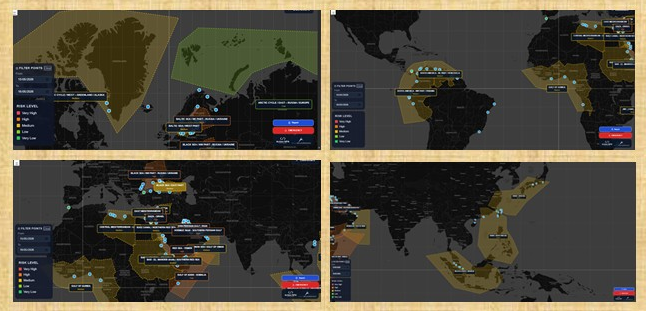
International – G3iS
The international outlook continues to present risks at the medium level, influenced by diplomatic negotiations among major powers, CO2 shipping agreements, disputed narratives about Iran-Russia sway, U.S. – Brazil security arrangements, political developments in Hungary, cross-border smuggling investigations, increased piracy activity in Somalia, and rising shipping container costs.
ARCTIC CYCLE / BALTIC SEA
Baltic Sea
Volatile region due to recurring incidents involving drones, GNSS jamming/spoofing, and frequent aerial engagements between NATO and Russia; support from Ukraine and enhanced Baltic stances mitigate, but fail to lower volatility.
Arctic Region (Pan-Arctic)
Strategic yet low-risk region for maritime traffic; Russian buildup of coast guard and icebreaker capabilities increases control over the NSR, while existing risks are predominantly related to the environment and governance.
Arctic West – Greenland / Alaska
Moderately risky region due to competition regarding resources and access; increased U.S. involvement in the energy sector, coupled with security collaboration between Canada and the Nordic states, raises military presence.
SOUTH AMERICA – NW AFRICA / LIBYA
Venezuela – Guyana (Caribbean)
Despite the Repsol-PDVSA production agreement, Venezuela remains a medium-high risk due to sanctions and governance challenges. Meanwhile, Guyana projects increased energy importance but leaves sea routes unaffected.
Panama Canal (Hormuz Spillover)
With medium risk due to crime and traffic jams, priority transits at higher rates ensure transit for redirected energy flows amid regional troubles.
Libya / North Africa (Sahel – Tunisia and corridors)
Corridors through Tunisia carry medium risk, owing more to crime, weak governance, and spillover from Libya and the Sahel region rather than to maritime concerns.
Gulf of Guinea
Medium-risk level, despite high piracy and abduction risks due to poorly enforced regulations and corruption.
BLACK SEA – EAST MEDITERRANEAN (IPPALOS RIVER)
Black Sea
The passage poses moderate risks, considering the Russia-Ukraine conflict brings insurance issues, rerouting, disruption of GNSS, and strikes at ports into account, as Georgia continues its export activities. At the same time, Ukraine uses drones and unmanned surface vessels (USVs) to attack Russia’s oil industry and other infrastructure from a distance.
Eastern Mediterranean / Syria
The larger Eastern Mediterranean area retains a medium-risk status. Still, the situation can be controlled with a powerful naval force, occasional crackdowns in Turkey aimed at organized crime groups, and increased oil truck traffic between Iraq and Syria via reopened border crossings.
Israel – Gaza – Lebanon
Israel-Gaza-Lebanon forms a high-risk zone, where flotillas remain detained and activists are freed. Hezbollah and IDF continue their exchanges, negotiating within Lebanon, despite Hezbollah’s threats against government officials.
RED SEA – GULF OF ADEN (IPPALOS RIVER)
Suez Canal/Northern Red Sea
Medium risk: The waterway is stable but exposed to elevated levels of war risk, disruptions to GPS, and additional security along strategic ports by Egypt in case any of the conflicts nearby erupt.
Sudan/regional corridors
Sudan is a high-risk due to conflict between the RSF paramilitary force and the Sudanese army, UAV attacks, and the humanitarian crisis; however, the most crucial cross-border commercial links remain partially disrupted by mediation efforts within the region.
Yemen/Central and Southern Red Sea
Houthis continue to threaten navigation in the region, even though there aren’t ballistic attacks against shipping. It seems that they interfere in piracy and hijacking incidents for obvious political reasons in relation with the Somaliland project, which is the latest assessment of SEA GUARDIAN.
Bab al-Mandeb/Gulf of Aden-Somalia-Somaliland
Bab al-Mandeb is considered medium risk because of its well-monitored condition, while the adjacent Gulf of Aden/Somalia-Somaliland waters pose high risks of hijacking and kidnapping-related piracy against redirected vessels.
PERSIAN GULF – ARABIC SEA
Arabian Sea / Gulf of Oman
US actions against Iranian-flagged tankers and the resumption of transit by a significant Chinese oil tanker reflect contested sea control and strategic communication.
Hormuz Strait – South Persian Gulf
The Hormuz Strait is an important strategic chokepoint with risks and concerns of potential impacts on global economic flows, attacks on vessels passing through, rerouting due to potential closure through Saudi Arabia and Oman, and profits for Aramco from alternate pipelines.
North Persian Gulf / Iran
Tensions created by aggressive language, maritime mishaps, and mine casualties in the border regions continue to define a volatile environment near Iran’s shores.
EAST ASIA – MALACCA STRAIT / TAIWAN
Indonesia / Strait of Malacca
The maritime choke point of Indonesia relies on the export-oriented economy and faces medium-level threats/risk with heightened concerns about ICC/piracy incidents.
Taiwan Strait
Signaling has increased between the US and Japan due to China’s strong reaction against the passage of the JS Ikazuchi through the Strait, even if commercial activities and energy flows continue normally with medium-level risks.
South China Sea
China’s aggressive behavior and enhanced cooperation between the US and the Philippines create grey-zone tensions near strategic shipping routes. While diversification of shipping routes and deterrence mitigate commercial and energy transport threats and risks, the maritime industry ought to sail with high alertness in the region.
Global – Transportation networks and resource supply chains
Key vulnerabilities are being tested, including Hormuz route disruption and diversion through Saudi Arabia and Iraq, carbon dioxide transportation agreements, icebreaker operations in the Arctic, disputes in the Malacca Strait, and increased Chinese port confiscations.
Global – Piracy, organized crime, and boarding conditions
The threat of maritime crimes remains intense, involving Somali pirate attacks in the waters off Yemen and Somalia, kidnapping in the Gulf of Guinea, mass smuggling incidents, and corrupt investigations, despite some improvements due to crackdowns.
THREAT / RISK LEVEL IN SEA GUARDIAN ACCESSED AREAS

For viewers’ easy reference here below is the last fortnight report by Sea Guardian:
