





Brief Update: No 26/06 Date: April 02, 2026
Executive summary
- This document has been approved for distribution by SEA GUARDIAN S.G. Ltd / Intelligence Department. The provided Intel and Information derives from open sources, the Institute for the Study of War (ISW), the Joint Maritime Information Center (JMIC) and the United Kingdom Maritime Trade Operations (UKMTO) respective Web Pages. Additional products retrofit the company’s Strategic/Operational and Security situational awareness processes, for risks and threat assessment and impact to the Maritime Security. All rights reserved, “no part of this risk assessment may be reproduced in any form (electronic, mechanical, paper, or other means) without written permission by SEA GUARDIAN S.G. Ltd, which maintains the rights for personal data of the document writers”. Under no circumstances can SEA GUARDIAN S.G. Ltd be held responsible for any loss or damage caused by a reader’s reliance on information obtained by this assessment, especially on its firms, company’s management, or individual decision-making.
Objectives
- To provide the maritime industry and Security Stake or Shareholders in a 15-day cycle, with:
- Major maritime security incident summary and analysis in Geo-strategic frame for Operational Security and Security of shipping for the period April 01 to 15, 2026.
- Assessment updates concerning military operations – terrorism – piracy and cargo theft, hijacking and detentions, smuggling, stowaways, ships fired, crew losses and Cyber-threats, covering a wide spectrum of threats/risks from Maritime Security to Navigational Safety.
SEA GUARDIAN, pursues innovative approach by analyzing Maritime Security in accordance with international standards and a certain frame of Geo-policy, including synergies with a subject matter expert (SME) entity for Cyber-defense, adding a new section in the assessment including the most important sectors of policy, methods and training to mitigate cyber threats and risks.
- Important notes:
1. The Assessment is produced by the R&I team in a global sense covering 23 different regions and giving to readers the capability to study it as a whole, or focusing on areas of interest through the context table, as it extends to more than 30 pages.
- You can navigate directly to:
[MARITIME SECURITY INCIDENTS] or [ASSESSMENT’s SECTIONS CONTEXT TABLE]
Recent Key Developments
April 01,
- Georgia’s economy grew by 8.8% in February 2026, while the average growth for January-February reached 8.4%, according to official statistics. The Ministry of Economy and Sustainable Development of Georgia notes that, despite external shocks and regional tensions, the economy continues to show resilience. In February, the largest contributions to growth came from the information and communication, transport and storage, financial and insurance, manufacturing, education, mining, and healthcare sectors. Foreign trade also supported growth, with exports rising 22.9% to 1.03 billion USD. Domestic exports (excluding re-exports) increased 70% to 659.7 m USD.
April 02,
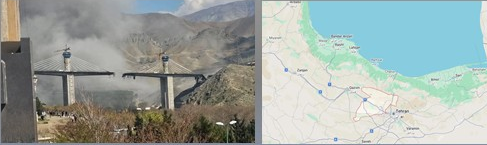
- Amajor bridge near Tehran was struck today by what Iran has said were U.S.-Israeli strikes. The B1 bridge in Alborz province, one of the tallest in the Middle East, was hit in two waves of attacks, separated by around an hour, Iranian state TV reported. The bridge provides a critical link between Tehran and Karaj. The attack comes a day after U.S. President Donald Trump’s threat to bomb Iran “back to the Stone Ages.”
- The Islamic Resistance in Lebanon reported that it targeted, at various times on Thursday, infrastructure, a bulldozer, several Israeli army troop concentrations, vehicles, and a settlement in the occupied territories. In 12 consecutive statements obtained by the Yemeni News Agency (Saba), the Resistance detailed these operations, emphasizing that they were carried out in defense of Lebanon and its people, within the framework of Operation Protective Edge. In statement number 34, it was reported that at 7:00 AM, Islamic Resistance fighters targeted a gathering of Israeli soldiers and vehicles at Tell Friz in the town of Ainata with three volleys of rocket fire. Statement number 35 further reported that at 7:00 AM and 3:00 PM, they targeted gatherings of Israeli soldiers and vehicles at Tell Friz and Tell Ghadmatha in the town of Ainata with volleys of rocket fire.
- It was published that three Ghanaian men left Cote d’Ivoire with the intention of travelling to Europe by illegally boarding a vessel headed that way. However, the vessel stopped in Nigeria, and the three cousins came out thinking they had arrived in Europe and got arrested. Ghanaians on social media shared their varied thoughts, with most people criticizing the men for such an act.
April 03,
- Latin America’s average EMBI spread closed Q1 2026 at 308 basis points — completely flat from end-2025 — while the global emerging markets index rose 30 points to 261, driven by Iran-related risk aversion. Venezuela’s EMBI (Emerging Market Bond Index) fell roughly 50% (from ~12,741 to 6,371) after the US captured Maduro in January, though its bonds remain in default and the spread is still the highest in the world. Uruguay (78 bps) and Chile (102 bps) remain the safest sovereigns in the region — while Argentina’s spread rose 55 points to 616, and El Salvador and Dominican Republic both saw notable increases.
- U.S. Secretary of State Marco Rubio charged China with ‘bullying’ by holding up Panama-flagged ships at its ports. Panama earlier accused Beijing of retaliation after it seized control of terminals run by a Hong Kong company at ports near the Panama Canal. The detentions for short periods of time involve dozens of Panama-flagged vessels. The country maintains the world’s largest registry covering nearly 9,000 ships, many operated by the biggest container lines. “China’s decision to detain or impede Panama-flagged vessels engaged in lawful trade destabilizes supply chains, raises costs, and erodes confidence in the global trading system,” Rubio said on media.
April 04,
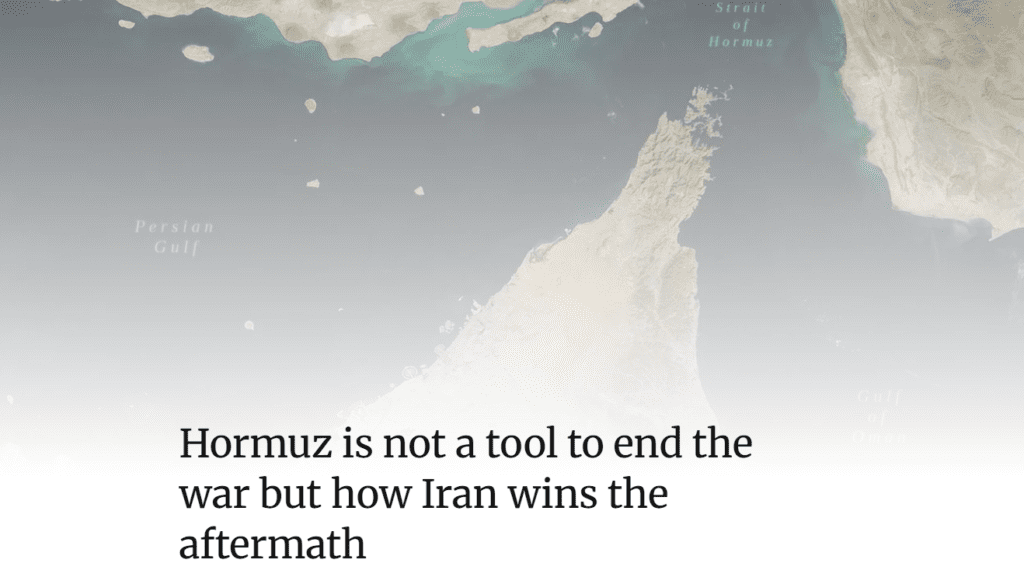
More than a month into the second U.S.-Israeli war on Iran, two facts have become clear. First, the conflict is now fundamentally about the future of the Strait of Hormuz. Second, the dilemma of the Strait of Hormuz has no military solution. The risks of any operation to open the straight far exceed what American planners likely imagined, and the odds of a decisive success appear low. As French President Macron recently said, “This was never an option we supported, because it is unrealistic.” Trump has miscalculated again. He is trying to win the battle; Iran is focused on winning the war. In Tehran’s plan, the strait is not a tool to end the war, but a permanent fixture for its aftermath.
The chemical tanker Flora 1, suspected of belonging to Russia’s “shadow fleet,” remains under detention by Swedish authorities as investigations continue into an 8-mile oil spill in the Baltic Sea, Swedish officials said. Contrary to earlier reports, the EU-sanctioned vessel has not been released. Moa Hörnquist, communications officer at the Swedish Prosecution Authority, confirmed to Svenska Dagbladet and Sydsvenskan that the tanker is still suspected of environmental crimes. Furthermore, a preliminary investigation regarding a lack of seaworthiness is currently ongoing.
April 05,
- It was stated that, China could learn from Iran’s closure of the Strait of Hormuz and control trade in the Taiwan Strait during a regional conflict, according to Stanford University Hoover fellow, Eyck Freymann. Freymann argued in a Financial Times opinion article last week that China could follow in Iran’s footsteps with a similar strategy without firing on merchant ships. Beijing could declare the right to control all goods entering and leaving Taiwan, he said. To make good on its threat, China could fire missiles or bullets, but not at ships, and declare specific “exclusion zones.” If the region is deemed too risky, private carriers will avoid Taiwan’s waters and airspace, Freymann said. The US would then have to decide between accepting Beijing’s control over Taiwan’s trade or escalating to economic war or an actual military conflict, he said.
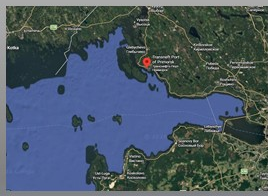
Ukrainian drones hit yet again Russia’s Baltic Sea port of Primorsk in the early hours of April 5, regional governor Alexander Drozdenko confirmed. The strike damaged a section of an oil pipeline “The blocked pipeline is being safely burned out,” Drozdenko said. Primorsk is Russia’s fourth-largest port.
April 06,
- Russia’s internet regulator Roskomnadzor announced that it recorded a record surge in DDoS attacks in February and March. Analysts at the Public Communications Network Monitoring and Management Center, which operates under Roskomnadzor, found a direct link between the news cycle and the intensity of cyberattacks, RIA Novosti reported. “After media reports appeared about a possible full restriction on Telegram, the load on Roskomnadzor’s resources grew dozens of times over,” the agency stated.
- Libya’s location should make it strategically valuable to the global oil trade. Its crude oil loads at terminals on its northeastern coast reaches Italian refineries in 48 hours on routes that – unlike oil coming from the Gulf at war times – require no military escorts, no war-risk premiums and no detour around Africa. Libya also produces the light, sweet grades of oil that European refiners now need. In late March, Egypt formalized what markets were already signaling, announcing it was securing roughly 1 million barrels a month from Libya to offset Hormuz disruptions.
- Colombian President Gustavo Petro asked Brazil to extend its instant payment system Pix to Colombia and questioned U.S. financial sanctions in a message posted on X, amid Washington investigations into the Brazilian system. In his post, Petro called for regional integration of the Pix system and criticized international financial control mechanisms, particularly the Office of Foreign Assets Control, the U.S. Treasury agency responsible for enforcing economic sanctions. “I ask Brazil to extend the Pix system to Colombia and hopefully stop considering the OFAC list, which no longer works,” Petro wrote Saturday.
April 07,
- Military and civilian prosecutors filed prosecutors’ declarations ahead of indictments against two IDF officers and a civilian suspected of exploiting humanitarian aid trucks to smuggle prohibited goods into the Gaza Strip for profit, in a growing wartime cluster of Gaza-smuggling cases. According to the joint statement by the Shin Bet Agency, Israel Police and the IDF, the suspects are accused of trying to move contraband into Gaza in exchange for hundreds of thousands of shekels.
- Vice President Kashim Shettima has assured Nigerians that the security challenges facing the country would be surmounted, calling on all Nigerians to cooperate with the police and other security agencies. Speaking at the 2026 National Police Day Grand Parade and Procession in Abuja, Shettima said: “Our institutions reformed, and our people are reunited. The road ahead may be long, but this nation is not stranded. So long as duties still answer when distress calls, and so long as we continue to choose reform over our nation, Nigeria shall continue to prevail,” he said.
- HMS Dragon, which has been dispatched to protect Britain’s air bases in Cyprus amid the Iran war, has docked in the Mediterranean after suffering technical issues. The Royal Navy type-45 destroyer will still be able to sail at short notice “if required”, the Ministry of Defence said. “HMS Dragon is undertaking a routine logistics stop and a short maintenance period in the eastern Mediterranean, allowing the ship to take onboard provisions, optimize systems and conduct maintenance,” an MoJ spokesperson said.
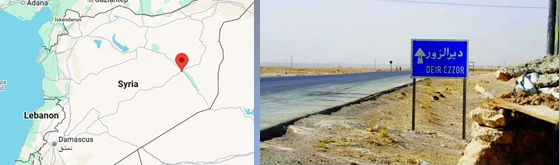
- The Islamic State (ISIS) group claimed responsibility for the killing of a guard at an oil facility in the eastern countryside of Deir ez-Zor, eastern Syria. On Monday 6, unidentified gunmen shot and killed a guard working at an oil installation in the town of al-Shuhail, according to local sources. The attack was later claimed by ISIS through its affiliated Amaq News Agency, which published a statement saying that “fighters of the group targeted, with machine guns, an apostate Syrian regime element in the town of al-Shuhail in eastern Deir ez-Zor.”
April 08,
- Ethiopian police said they arrested a “dangerous international human trafficker” and nine accomplices accused of smuggling over 3,000 people to Libya, where they were held hostage and, in some cases, tortured, raped, or killed. The human trafficking network has been under investigation since 2018, police said in a statement posted on Facebook, recruiting young people from Ethiopia, Sudan, Eritrea, Djibouti, Kenya, and Somalia who hoped to migrate to Europe through Libya. The ring operated five warehouses in Libya, holding victims hostage while forcing their families to pay huge ransoms. Those who couldn’t pay were given only one meal a day, beaten, whipped with rubber/electric cables, and had their hands/feet chained, police added. Some victims were burned with plastic water bottles, women were raped, and many died during the torture.
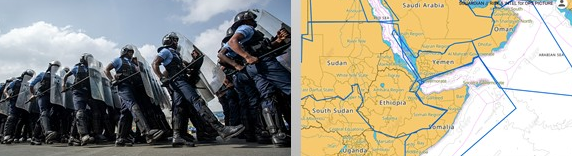
Hours after Iran’s Islamic Revolutionary Guard Corps (IRGC) threatened to target the US and its partners’ infrastructure, a senior Iranian source told Reuters, that if the situation gets out of control, Tehran’s allies will also close the Bab El-Mandeb Strait. Citing the source, the report added that while the US and Iran continue to exchange messages via Pakistan, Tehran will not show flexibility as long as Washington continues to demand its “surrender under pressure”. According to an Al Jazeera report, if the Bab El-Mandeb were to close, the consequences would extend far beyond the current conflict. It could intensify the global energy supply crisis triggered by the war, worsening the economic strain already being felt in factories, households, and fuel stations worldwide.
- Resolving the Taiwan question is a matter for the Chinese people themselves, with no room for external interference, Zhu Fenglian, a spokesperson for the State Council Taiwan Affairs Office, told a press briefing, in response to a question from a Global Times reporter regarding the “joint statement” issued after the meeting between Japanese Prime Minister Takaichi and French President Macron, who claimed the importance of peace and stability in the Taiwan Straits and was thanked by the Taiwan island’s so-called “foreign affairs department.” The so-called “joint statement” makes irresponsible remarks on the Taiwan question and interferes in China’s internal affairs, which we firmly oppose, said Zhu.
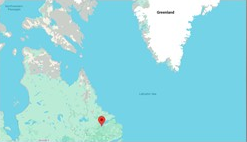
- Multiple Canadian policies have focused on securing and developing the Arctic (Canada’s Arctic Foreign Policy and Arctic and Northern Policy Framework) including for resource extraction, and major projects like the planned over-the-horizon missile defense radar and the expansion of the Churchill Manitoba port. In March the Prime Minister’s Office announced plans for tens of billions in spending on Arctic and Northern infrastructure and defense, beginning to translate policy into tangible action. This was followed in April by the announcement of up to $8 billion in improvements at the 5 Wing Canadian Forces base at Goose Bay, Newfoundland which is slated to be part of Canada’s NORAD Northern Basing Infrastructure (NNBI) modernization. These efforts signal a continued push by Canada to take more control over its own security in the region.
April 09,
- The Russian frigate “Admiral Grigorovich” escorted two oil tankers through the strait (English Channel). Peskov called it protection against piracy in response to British sanctions. Russia sent a Navy frigate to escort sanctioned tankers – the Kremlin speaks of “piracy”, stating that Russia has the right to defend its vessels from “piracy” after reports of sanctioned tankers being escorted by a warship through the English Channel, reported by Reuters. According to media reports, the Russian frigate “Admiral Grigorovich” escorted two oil tankers – Universal under the Russian flag and Enigma under the Cameroonian flag – through the strait. Kremlin spokesman Dmitry Peskov stated that Moscow considers its actions justified and related to the protection of its economic interests.

The leader of Yemen’s Houthis, Abdel-Malik al-Houthi, has described the recently agreed ceasefire between the US and Iran as a “great victory” for Tehran and the so-called “axis of resistance”, a network of Iran-aligned groups across the Middle East. “The announcement of the ceasefire in and of itself is a great victory for the Islamic Republic in Iran, for the countries of the axis of resistance, for the Islamic nation, and for the free people of the world,” the Houthi-affiliated Al Masirah TV station quoted. In a video statement, al-Houthi added that the war had helped restore deterrence in Iran’s strategic posture.
Türkiye’s advanced deepsea drilling vessel Cagri Bey has arrived off the coast of Somalia, officially launching Ankara’s first‑ever offshore drilling operation abroad. Energy and Natural Resources Minister Alparslan Bayraktar confirmed the arrival on social media, describing the moment as the opening of “a brand‑new chapter in the energy history of both Türkiye and Somalia.” The vessel is set to drill at the Curad‑1 well over a 288‑day campaign, operating at depths of approximately 7,500 meters (over 24,600 feet).

Adm. Ossama Rabiee, Chairman and Managing Director of the Suez Canal Authority, announced today the success of the SCA’s maritime salvage units in responding to the distress call of the barge SUEZ 2 which is affiliated to the petroleum services company “Rakeen”. That is in addition to conducting the necessary salvage works as well as rescuing its crew and transferring its shipment after the fire had broken out, during the barge’s presence in the waiting area outside the Canal’s navigation waterway western of the Gulf of Suez. He explained that immediately upon the Main Traffic Control Center received the call from the Shipmaster of the vessel RAWAN that a fire has broken out on board the barge SUEZ 2 as it was completing the transfer operation of an oil shipment to his ship in the waiting area E10 outside the Canal’s navigation waterway. The SCA immediately took the necessary procedures and deployed its marine units to handle the emergency.
April 10,
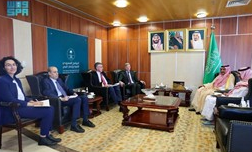
- Saudi Ambassador to Yemen and General Supervisor of the Saudi Development and Reconstruction Program for Yemen (SDRPY), Mohammed Al-Jaber, met on with UN Secretary-General’s Special Envoy for Yemen, Hans Grundberg, the Saudi Press Agency reported. During the meeting, they discussed the latest developments in the region and in Yemen, as well as joint efforts to address the issue of detainees, abductees, and prisoners. They also highlighted the positive progress achieved in this humanitarian file.
- Australia will continue to get the maximum amount of fuel it can from Singapore following global volatility in oil markets. Prime Minister Albanese and Singaporean counterpart Wong inked an agreement to continue trading large amounts of fuel and gas between the two countries, following a visit by the Australian leader to the Asian city-state. The agreement stated the countries will “make maximum efforts to meet each other’s energy security needs” at a time when fuel prices have skyrocketed and many service stations face shortages due to the conflict in the Middle East.
- The European Union paid an estimated €2.88 billion for liquefied natural gas (LNG) from Russia’s Yamal Arctic LNG project in the first quarter of 2026, as a surge in global gas prices triggered by conflict in the Middle East delivered a windfall to Moscow, according to a new analysis. Data compiled by advocacy group Urgewald based on Kpler ship-tracking, shows the EU imported 69 cargoes of Yamal LNG in the January–March period, accounting for roughly 97% of the project’s total exports, underlining Europe’s continued central role in sustaining Russia’s flagship Arctic gas operation. The payments were significantly inflated by a sharp rise in benchmark gas prices in March, following the effective closure of the Strait of Hormuz that disrupted global energy markets.
April 11,
- The Ministry of Energy and Minerals of Oman has said it continues to intensify efforts to maximize the value of the Sultanate’s natural resources by adopting advanced technologies and innovation to improve production efficiency and sustainability, while adhering to strict occupational safety and environmental standards. The ministry emphasized that its approach aligns with its broader vision of enhancing hydrocarbon value and supporting sustainable economic growth through an integrated resource management system. A key focus of these efforts is the use of Enhanced Oil Recovery (EOR) technologies, which are considered a strategic pillar in boosting output from mature oil fields across Oman. These techniques help increase the amount of oil extracted after conventional production methods reach their limits.
“In a swift humanitarian operation, the Pakistan Navy successfully rescued and evacuated 18 crew members, including nationals of China, Bangladesh, Myanmar, Vietnam and Indonesia, following a distress call from the MV Gold Autumn, operating in the North Arabian Sea at 200 nautical miles off Pakistan’s coast,” the statement said. It added that upon receiving the emergency alert, the Pakistan Maritime Security Agency (PMSA) activated its Maritime Rescue Coordination Centre (MRCC) and promptly initiated response protocols.

April 12,
- Within hours of each other, two statements emerged about the same war against Iran, the same adversary, and the same strategic moment. Yet they sounded as if they were describing different realities. On one side was Prime Minister Netanyahu, addressing the Israeli public on Saturday night, after days of criticism at home from opposition leaders, claiming that the war had yielded little to show for it. On the other side was US Vice President JD Vance, stepping before reporters in Islamabad on Sunday morning after 21 hours of negotiations with the Iranians that had ended without an agreement. Then Trump changed the frame. Within hours of Vance’s remarks, the US President announced that he was ordering a naval blockade of the Strait of Hormuz – a dramatic escalation coming shortly after the failed round of negotiations.
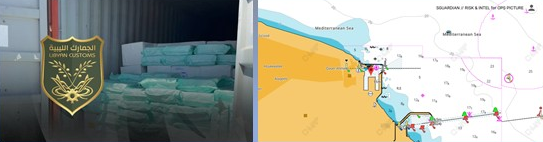
- The Misrata Free Zone Port Customs Center has thwarted an attempt to smuggle a large shipment of highly dangerous psychotropic substances, consisting of approximately 4.5 million pregabalin tablets, which were concealed inside a container arriving from India. The Customs explained in a statement on its Facebook page that the operation was based on precise intelligence. The container was tracked and investigated from the moment it arrived before being inspected, leading to the discovery of the prohibited shipment, which consisted of 300 cartons containing a large quantity of the narcotic tablets.
- “The group Handala claimed a major cyberattack against the UAE, targeting Dubai Courts Department, Dubai Land Department, and Dubai Roads and Transport Authority. They alleged destroying 6 petabytes of data and stealing 149 TB of sensitive information, framing the attack as retaliation and a warning to regional governments, though such claims remain unverified. “In response to the blatant betrayal of the Resistance Axis by the Epsteinist leaders of the UAE, and as a serious, preemptive warning to all treacherous governments in the region, Handala has launched one of its most powerful cyberattacks against the country’s critical infrastructure.” the group wrote on its Tor website. “During this operation, 6 petabytes of data have been completely destroyed…”
April 13,
- Hungary’s incoming Prime Minister Péter Magyar has indicated that he will not block the EU’s €90bn loan for Ukraine, as the decision was already taken, but confirmed that Hungary will not take part in it. Magyar was answering a question about the loan for Ukraine blocked by Hungary’s current Prime Minister Viktor Orbán. “I am not sure what exactly we are even talking about. Because in December, at the European Council meeting, Orbán voted for Hungary not to take part in this loan, and the European Council voted in favor of it. Hungary, Czechia and Slovakia are not taking part in the €90 billion loan, so it does not concern our country. That is how it was approved,” Magyar said at a press conference with foreign media in Budapest.
- After a week of being kidnapped in Baghdad and her release following complex negotiations, independent American journalist Shelly Kittleson found herself facing a new chapter of security risks—this time during efforts to evacuate her from Iraq. Kittleson had been kidnapped on March 31 by Kataib Hezbollah, which is designated on the U.S. list of terrorist organizations, before being released on April 7. A source in Iraqi intelligence told Alhurra that “the attacks targeted the American security convoy that was transporting Kittleson to Baghdad International Airport,” which consisted of diplomats and American security personnel, some of whom were from the Federal Bureau of Investigation (FBI), along with an accompanying Iraqi force.
- Israeli Prime Minister Benjamin Netanyahu did not limit himself to promoting his achievements in the war from southern Lebanon. Less than 24 hours later, he reiterated ahead of anticipated talks between Israel and Lebanon in Washington that the central front in the war is against Lebanon. At the same time, conflicting reports circulated in Israel about developments on the front with Hezbollah. Some cited U.S. pressure to scale back Tel Aviv’s attacks on Lebanon, potentially leading to a halt, while others insisted on continuing the fighting, particularly in Bint Jbeil and other locations.
April 14,
- The Kremlin has declared that it was “never friends” with outgoing Hungarian prime minister Viktor Orban, as it braces for a new era of relations with Budapest following his landslide loss to a pro-EU candidate. Orban, who enjoyed warm relations with Russian president Putin and was a persistent thorn in Ukraine’s side as it sought financial backing for its war effort from a divided Europe, was swept aside by Peter Magyar of the Centre-right Tisza party. What the future holds for the Russia-Hungarian relationship is unclear, but in light of Orban’s collapse in public support, Moscow now appears to be distancing itself and playing down the loss of its most influential ally in the European Union.
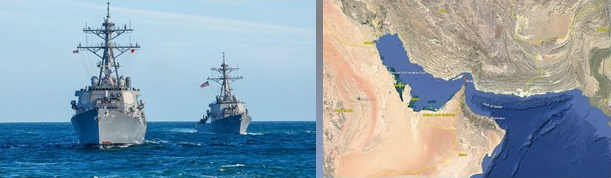
- A day into the U.S.-imposed military blockade of the Strait of Hormuz, several ships have apparently transited the narrow waterway, including at least two that reportedly had previously stopped at Iranian ports. However, U.S. CENTCOM is pushing back against claims that vessels ran the blockade. As we noted yesterday, CENTCOM said the maritime exclusion operation would be “enforced impartially against vessels of all nations entering or departing Iranian ports and coastal areas, including all Iranian ports on the Arabian Gulf and Gulf of Oman.” Meanwhile, there are indications that the U.S. and Iran may continue seeking a diplomatic offramp to the crisis, which began Feb 28, when America and Israel began bombarding the Islamic Republic. We will analyse that in greater detail later in this story.
[return to Objectives]
MARITIME SECURITY INCIDENTS: April 01-15, 20261
| INCIDENT No | INCIDENT Type | INCIDENT TIME | INCIDENT DETAILS | |
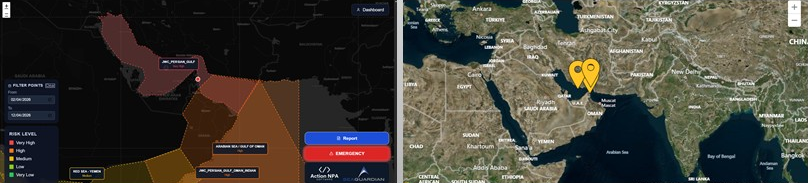
| UKMTO 031-26 | WARNING | April 05, 2026 | UKMTO has received a report of an incident in Khor Fakkan Port, United Arab Emirates. The Master reports witnessing multiple splashes from unknown projectiles, in close proximity of his container ship, whilst alongside conducting loading operations. Vessels are advised to transit with caution and report any suspicious activity to UKMTO, whilst authorities continue investigating. | |
| UKMTO 032-26 | WARNING – SUSPICIOUS ACTIVITY | April 07, 2026 | UKMTO has received a time late report of an incident 25NM south of Kish Island, Iran. The container vessel was struck by an unknown projectile which has caused damage above the waterline. The crew are safe and accounted for. No environmental impact has been reported. Authorities are investigating. | |
1 In accordance to JMIC and/or UKMTO sources


[return to Objectives]
The Geopolitical Profiles & International Security (G3IS)
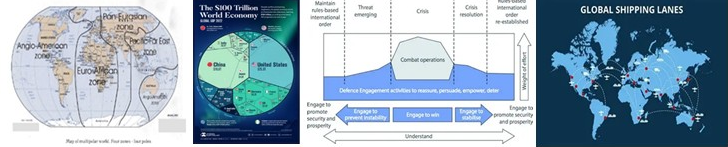
- Geo-political / Geo-Strategic profile:
- The world in 2026 is shifting to a multipolar system where the U.S., China, Russia, and regional powers like Turkey and Iran compete without triggering full‑scale war, instead managing overlapping crises from Taiwan and Ukraine to the Strait of Hormuz and Gaza. Multipolarity amplifies these tensions by fragmenting influence, enabling local actors to exploit rivalries, and pushing states toward deterrence, new security alliances, and “de‑risking” rather than stable cooperation, leaving the global order more interconnected yet more fragile.
- Geopolitical / Geo-economic Profile:
- The present-day reality is characterized by two faces of multipolar geo-economy: on one hand, strategically significant choke points like the Strait of Hormuz create situation of high stake and costs, associated with disruptions that impact energy trade, maritime transport, and global logistics, whereas, on the other hand, regional infrastructural projects, for instance, those supported by AUDA-NEPAD in Africa, provide an exception from the trend towards long-term development and integration. Indeed, capital flows and commerce become channeled into isolated blocs and security-oriented corridors with states and companies seeking diversified supplies and sources of finance to mitigate political risks. At the same time African and Third World economies benefit from pitting great powers against each other to attract investments.
International Security / Strategic sector:
- The international security situation in 2026 is characterized by fragmentation and instability, due to regional disputes, struggles among major powers, and hybrid challenges, which create an increasingly risky world order, as we are at a transition phase of the global system. Tension over maritime areas such as the Strait of Hormuz, as well as attacks against key infrastructure, like Iran’s Bushehr nuclear power plant, pose threats to escalating military conflict and disrupt the global flow of energy and trade. The problem of insecurity is also spilling over into the regions of West Africa and Europe, where internal differences, along with links to Russia and other states, make the distinction between internal and external threats less defined.
Global Maritime Security / Navigational safety profile:
- Maritime security risks are high in 2026, especially at the Strait of Hormuz (now a High Risk Area with attacks on tankers) and the Red Sea (ongoing Houthi drones/missiles disrupting 12% of global trade). Narrow channels, jamming, and rerouting around Africa raise collision, delay, and cost risks. Mitigation of risks consists of registering with UKMTO, using security guards, avoiding clusters, and diversifying routes. New tensions for maritime security and safety seem to have appeared in the English Channel, as the UK has decided to strengthen measures against the grey/shadow fleet. Russia, on the other hand, is defending its shipping, as if it is threatened by piracy-like actions, by sending warships to the area to protect its shipping interests.
[return to CONTEXT TABLE]

- As the Arctic Circle enters the list of assessed regions, it should be understood not only as an emerging maritime corridor, but as a new theatre of hybrid competition. The Arctic is becoming strategically relevant because of access, presence, logistics, energy interests and great-power rivalry. In such an environment, cyber and OT vulnerabilities acquire greater significance. Maritime operations in the region rely heavily on communications, navigation systems, remote support, digital coordination and infrastructure with limited redundancy. This means that even minor cyber interference can have disproportionate operational effects, especially where distance, weather and isolation reduce reaction time and margin for error.
- For maritime operators, the strategic lesson is clear: in the Arctic, cyber readiness is part of operational readiness. A suspicious anomaly in navigation data, degraded communications, abnormal system behavior or compromised remote access may no longer be viewed as a routine technical matter. In a contested region, such events may form part of a wider hostile pattern. This is why trained people matter. Crews, shore teams and operators must be prepared to identify unusual signals early, escalate them correctly and respond in a coordinated manner under pressure. In the Arctic, resilience will depend not only on technology and infrastructure, but on the human ability to recognise hybrid threat conditions before disruption becomes crisis.
Two-line risk snapshot
* Hybrid cyber / OT disruption risk in Arctic maritime operations: HIGH
* Readiness of crews and operators in remote, contested northern conditions: CRITICAL
[return to CONTEXT TABLE]
THREAT ASSESSMENT UPDATE:
Libya – Central Mediterranean
- Tunisia is moving ahead with its plans for the development of “Africa Gateway”, a land corridor that will run in partnership with Libya, with the intention of establishing connections with sub-Saharan Africa despite ongoing insecurity and disintegration in Libya. The proposed corridor will be built from a logistics center located in Ben Guerdane and will continue into Libya through Ras Jedir before continuing south into countries such as Niger, Chad, Mali, Burkina Faso, and the Central African Republic.
- This multimodal trade corridor will be developed using an efficient road system, logistics facilities, and border facilities, which will allow the flow of exports from northward and southward trade directions. The exports from northward will be mainly agricultural and mineral products, whereas manufactured goods and oil exports will be heading southwards.
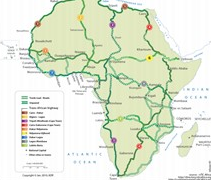
Nonetheless, this plan poses great risks because of issues related to poor governance and insecurity in Libya as well as tensions inside sub-Saharans states such as Niger.
- Libya continue to try showing a dense operational activity against smuggling at ports, but low governance seems not to unify the effort for a unified security environment across all the Mediterranean coasts.
- Overall threat/risk level: “MEDIUM” // Analyzed in: Military/Paramilitary/Terrorism: “HIGH” – ICC/Piracy: “MEDIUM” – Hijacking/Fired/Kidnapping: “LOW” – GNSS interference: “LOW”.
- Triggers for threat appearance and escalation are, Global Rerouting Surges (Red Sea/Hormuz Spillover), Oil Price/Volatility Windfalls, State Fragility & Coups, Asymmetric Tech Proliferation, Patrol/Resource Gaps, Environmental/Economic Catalysts.
- Risk indicators escalation are, Piracy/Kidnapping Upticks, Shadow Fleet/Illicit Bunkering, IUU Fishing & Trafficking Surges, Regional Instability Spillover, Cyber/Infra Attacks, Patrol Gaps.
[return to CONTEXT TABLE
Lebanon (Middle East issue in East Mediterranean region)
- Southern Lebanon is considered a war zone due to the ongoing strikes by the Hezbollah group on Israeli troops using rockets. Hezbollah justifies these strikes as part of its military campaign and as measures that are defensive in nature.
- Israeli counterstrikes have led to a spiral of escalation and continue to keep the area at the border unstable and prone to more confrontation.
- In general, the situation can be described as one of the strangest situations in the Middle East, as there is no open conflict between Lebanon and Israel, but the IDF is executing operations inside the territories of Lebanon against Hezbollah, which is directly connected with IRGC. Even that, Netanyahu lately follow a rhetoric that Lebanon is the adversary with the two leaderships having had called in Washington for negotiations.
- Overall threat/risk level: “HIGH” // Analyzed in: Military/Paramilitary/ Terrorism: “VERY HIGH” – ICC/Piracy: “NSR” Hijacking/Fired/Kidnapping: “HIGH” – GNSS interference: “HIGH”.
- Triggers and risks indicators remain unaltered per area as initially cited in SEA GUARDIAN SECURITY ASSESSMENT 25/23, November 13.
[return to CONTEXT TABLE]
Gaza-Israel (Middle East issue in East Mediterranean region)
- The level of instability in the region is still quite high due to the complex nature of conflicts raging between Israel, Gaza, Hezbollah, and Iran, with threats to security and strategic economic arteries.
- In light of this situation, the government of Israel is working on indicting persons, including soldiers from the IDF, who have been implicated in smuggling contraband into Gaza by using humanitarian cargo shipments as conduits.
- SEA GUARDIAN assesses that high levels of regional instability are coupled with wartime crime syndicates to produce a very rare synthesis of maritime security and navigational safety threats and risks.
- Overall threat/risk level: “HIGH” // Analyzed in: Military/Paramilitary/Terrorism: “VERY HIGH” – ICC/Piracy: “NSR” – Hijacking/Fired/Kidnapping: “HIGH” – GNSS interference: “HIGH”.
- Triggers and risk indicators remain unaltered per area as initially cited in SEA GUARDIAN SECURITY ASSESSMENT 25/23, November 13.
[return to CONTEXT TABLE]
Sudan – Eritrea – Ethiopia
- According to Ethiopian authorities, they have succeeded in disbanding one of the most notorious trafficking syndicates operating in the region and responsible for moving thousands of people towards Libya, where the victims would often be detained and subjected to torture before their relatives were threatened to pay ransoms to get them freed.
- Simultaneously, with Sudan experiencing a civil war on its territory, there are fears that the conflict can spread to the sea trade corridors in the region, making the situation much worse. These two stories are clearly indicative of a broader security deficiency that involves the whole region, posing the heightened risk of measures against criminality as it is creating a trend for hijacking and kidnapping, while the region provides areas for detentions that are difficult to control.
- Overall threat/risk level: “MEDIUM” // Analyzed in: Military/Paramilitary/Terrorism: “HIGH” – ICC/Piracy: “NSR” – Hijacking/Fired/Kidnapping: “LOW” – GNSS interference: “LOW”.
- Triggers and risk indicators remain unaltered as cited in SEA GUARDIAN SECURITY ASSESSMENT 25/15, July 10.
[return to CONTEXT TABLE]
- Tensions among Iran, Saudi Arabia, and the Houthis in Yemen have not abated, even while humanitarian dialogue regarding Yemen go on.
- Houthi leadership maintains its alignment with Iran through political calculations regarding regional events while maintaining a clear stance in the international community that has not abandoned its bloc, even if it seems that Saudi Arabia has managed to keep them out of attacking against shipping in the Red Sea. This stance has been referred by SEA GUARDIAN to its previous Security Assessment.
- At present, there is stability at sea in the Red Sea region with regard to ship attacks, although the possibility for quick escalation exists based on rivalries in the region and instability in Yemen.
- Overall threat/risk level: “MEDIUM” // Analyzed in: Military/Paramilitary/Terrorism: “MEDIUM” – ICC/Piracy: “MEDIUM” – Hijacking/Fired/Kidnapping: “MEDIUM” – GNSS interference: “MEDIUM”.
- Triggers and risks indicators remain unaltered as in SEA GUARDIAN SECURITY ASSESSMENT 25/15, July 10.
[return to CONTEXT TABLE]
Northern Persian Gulf / Iran’s region
- Military Situation: The US and Israel launched precise attacks on essential Iranian facilities, including the Bushehr nuclear power station (with one death and 163 evacuations), the B1 bridge that connects Tehran and Karaj, and petroleum industries. These attacks demonstrate that infrastructure weaknesses, followed by Trump’s “Stone Age” comment, highlight a trend of Iran’s demolition, that has responded by blocking the Strait of Hormuz, disregarding UN resolutions vetoed by Russia and China.
- Diplomatic: Iran calls for permanent peace by tying de-escalation to the end of the Gaza and Lebanon wars during ongoing military operations, while peace talks through Pakistan, Egypt, and Turkey failed. Even if the US-Iran conditional truce was welcomed by shipping associations with pleasure, providing an occasional escape window for 20,000 sailors from this blockade, the whole navigational freedom remains uncertain.
- Other: The approximately 20% oil deficiency remains, escalating the depletion of possible reserves in each state. There is also a mess in container shipping and general cargo lines. The widening of international markets, governments, and states’ involvement could turn the situation totally unresolved, making the situation very complicated towards a permanent truce.
- Overall threat/risk level: “HIGH” // Analyzed in: Military/Paramilitary/Terrorism: “VERY HIGH” – ICC/Piracy: “NSR” – Hijacking/Fired/Kidnapping: “HIGH” – GNSS interference: “MEDIUM”.
- Triggers that could create escalation are: further Iranian missile and drone attacks against Arab Gulf countries, a prolonged blockage of Hormuz Straights and the will of the new Iranian leadership to declare Jihad. Potential acts of terrorism in the seas and ports cannot be ignored.
[return to CONTEXT TABLE]
Black Sea / NW part (RUSSIA – UKRAINE WAR)
- Nevertheless, the area continues to be under serious risk owing to the existing Russia-Ukraine tension that is causing instability in the maritime field in terms of the disturbance of transportation routes, energy resources, and other logistical operations through the Black Sea.
- In addition, cyber-attacks against infrastructural targets have become more intense, indicating the rising threat of electronic warfare that affects communication and navigation systems utilized in maritime operations.
- Despite continuing diplomacy through consultations held among Ukraine, Turkey, and Russia, there have been no significant outcomes towards a peaceful resolution and de-escalation of the situation.
- Overall threat/risk level: “HIGH” // Analyzed in: Military/Paramilitary/Terrorism: “VERY HIGH” – ICC/Piracy: “NSR” – Hijacking/Fired/Kidnapping: “HIGH” – GNSS interference: “MEDIUM”
- Triggers and indicators per area remain as in the SEA GUARDIAN SECURITY ASSESSMENT 25/20, September 30 and SEA GUARDIAN SECURITY ASSESSMENT 25/19, September 16 .
[return to CONTEXT TABLE]
Terrorism – Piracy, cargo theft, smuggling, stowaways, organized crime/drugs trafficking
- Middle East Conflict Overview: The United States and Israel attack the B1 bridge in Iran near Tehran, the Bushehr nuclear power station, and petrochemical installations due to Iran’s takeover of the Strait of Hormuz, rejecting ceasefires in exchange for irrevocable assurances. In Lebanon, rockets target Israeli troops; ISIS assassinate Syrian oil security guards; Gaza examines smuggling aid operations; Zelensky makes an official trip to Turkey following the Primorsk drone strike incident.
- Global Terrorism Overview: Global terrorism increases in the number of countries impacted, lone wolves are most common in Western nations (93% lethal attacks), ISIS is the most lethal group, TTP fastest expanding; global fatalities decrease, but intensity increases.
- Maritime Security Threats Overview: Piracy incidents skyrocket (116 cases in early 2025) in the Gulf of Guinea, Singapore Strait, and West Africa; organized crime uses shipping for narcotics/smuggling through weak inspection.
[return to CONTEXT TABLE]
Risk Assessment update:
- There is still an elevated level of risk in the Gulf of Guinea due to the prevalence of piracy, crime, corruption, and insurgency within the region. In Nigeria, Vice President Kashim Shettima stated that security issues in the country would be overcome by means of reforms and working together. Nonetheless, this is contrary to the existing situation, with the killing of dozens of people by gunmen or bandits in Niger, Kebbi, and Plateau States.
- In Cameroon, the Foreign Affairs Minister, Lejeune Mbella Mbella, admitted that some nationals died while fighting on behalf of Russia in the ongoing Russia-Ukraine War, posing new questions about the issue of foreign fighters.
- On the other hand, there have been notable financial allocations for infrastructure, water, and sanitation initiatives across Africa during the presidency of João Lourenço.
- Overall threat/risk level: “MEDIUM” // Analyzed in: Military/Paramilitary/Terrorism: “MEDIUM” – ICC/Piracy: “MEDIUM” – Hijacking/Fired/Kidnapping: “HIGH” – GNSS interference: “LOW”
- Military threat analysis for Gulf of Guinea states:
| Nigeria | Cameroon | Ghana | Congo | Ivory Coast | Angola |
| Very High | High | Medium | High | High | Medium |
- Indicators which altering the “risks levels” are, piracy Incident Upticks, Petro-Piracy & Cargo Theft Spikes, IUU Fishing/Trafficking Surges, Great-Power Naval Competition, Governance/Patrol Breakdowns, Tech/Opportunity Escalators.
[return to CONTEXT TABLE]
- Volatility in the East Mediterranean and Levant arises from energy disputes, conflicts, and power tensions, compounded by HMS Dragon’s routine docking near Cyprus. The UK destroyer remains fully ready to protect British air bases amid the Iran war.
- SEA GUARDIAN assesses that the region has been under control by stabilized domestic and external forces for years now. Still, the stake of the region remains under high-density interests from regional and external states pursuing some kind of domination or trying to further extend their domination in such a way that maintains an uncertainty – of course lower than the Middle East – but amid the long-term tensions on its Eastern Coasts.
- Overall threat/risk level: “MEDIUM” // Analyzed in: Military/Paramilitary/Terrorism: “MEDIUM” – ICC/Piracy: “NSR” – Hijacking/Fired/Kidnapping: “LOW” – GNSS interference: “MEDIUM”.
- Indicators altering the “risks levels” as in SEA GUARDIAN SECURITY ASSESSMENT 25/22, November 12, 2025.
[return to CONTEXT TABLE]
Suez Canal – Northern Red Sea
- Suez Canal operations continue, but regional threats and potential Houthi attacks keep shipping risky and costly.
- SEA GUARDIAN’s internal app system which analyzes the traffic performance through the Canal, shows a steady increasing in traffic from the beginning of this current year reaching around 8%. Even if the number of passages has not reached the number of ships passed the canal three years ago, it is the first time when the rise is advanced steadily while the rise of “port calls” inside the Red Sea is higher, reinforced by the number of Northbound ships from Bab El Mandab”.
- Overall threat/risk level: “MEDIUM” // Analyzed in: Military/Paramilitary/Terrorism: “LOW” – ICC/Piracy: “LOW” – Hijacking/Fired/Kidnapping: “LOW” – GNSS interference: “HIGH”.
- Indicators altering the “risks levels” as initially cited in SEA GUARDIAN SECURITY ASSESSMENT 25/17, August 13.
[return to CONTEXT TABLE]
Bab-El-Mandeb Straits – Southern Rea Sea
- The Bab al-Mandeb Strait and the south of the Red Sea are still extremely vulnerable to the dangers posed by the Houthis, piracy, and smuggling despite various protective measures in place.
- The tension between the parties has increased after recent threats related to the Islamic Revolutionary Guard Corps, as Iran warned about possible disruptions of the strait and even shutting down it in case of escalation of war.
- The situation is complicated but stabilized. It was proved that Saudi Arabia had established stronger connections with Yemen before the clash of war among the US, Israel, and Iran in order to keep the Suez Canal and Bab El Mandab free for navigation for oil exports, redirected through the East-West Saudi pipeline.
- The latest threats from Iran for the expansion of war to close this choke point are not imminent. The situation remains steady but uncertain.
- Overall threat/risk level: “MEDIUM” // Analyzed in: Military/Paramilitary/Terrorism: “LOW” – ICC/Piracy: “HIGH” – Hijacking/Fired/Kidnapping: “LOW” – GNSS interference: “NSR”.
- Indicators altering the “risks levels” as initially cited in SEA GUARDIAN SECURITY ASSESSMENT 25/17, August 13.
[return to CONTEXT TABLE]
Gulf of Aden – Somalia / Somaliland
- Somalia and Somaliland remain high-risk areas due to piracy, militancy, and regional tensions affecting maritime security.
- Amid this environment, Türkiye has expanded its energy ambitions as its drilling vessel Cagri Bey arrived offshore Somalia to begin its first overseas deep-sea drilling operation. Announced by Energy Minister Alparslan Bayraktar, the project marks a significant step in Türkiye–Somalia cooperation, with drilling set to take place at extreme depths over an extended campaign.
- Though there is no open clash between Somalia and Somaliland, during this period while the paramilitary activities in the Eastern regions of Somaliland exist amid the steady threat of piracy.
- SEA GUARDIAN highlights the incidents of piracy on the East / South-East coast of Somalia; the level of shipping alertness has to be maintained.
- Overall threat/risk level: “HIGH” // Analyzed in: Military/Paramilitary/Terrorism: “MEDIUM” – ICC/Piracy: “HIGH” – Hijacking/Fired/Kidnapping: “HIGH” – GNSS interference: “NSR”
- Indicators altering the “risks levels” as initially cited in SEA GUARDIAN SECURITY ASSESSMENT 25/17, August 13.
[return to CONTEXT TABLE]
- Rising Tensions: There is rising tension in the Arabian Sea, Gulf of Oman, and western Indian Ocean and raising dangers for ships and flights.
- Stability in Oman:
Oman remains fairly stable, assuming a diplomatic mediating position, even as a first-ever incident indicates broader dangers.
Minister Saeed Al-Maawali confirmed there are no transit charges within the Strait of Hormuz according to international pacts signed by Oman.
The United States and Iran, missing some signatures, have legal loopholes; Oman’s Foreign Ministry seeks solutions while the ministry of Energy and minerals trying to intensify the efforts for maximizing its natural resources through sustainable new technologies.
- Risk Assessment: Immediate danger to Omani shipping corridors remains low, although uncertainties and ripple effects require precautionary action. Shipping companies can use Security Guarding even in ports after consultation with Omani authorities in advance while neighboring navies such as Pakistan’s trying to support Safety at Sea.
- Overall threat/risk level: “HIGH” // Analyzed in: Military/Paramilitary/Terrorism: “MEDIUM” – ICC/Piracy: “HIGH” – Hijacking/Fired/Kidnapping: “MEDIUM” – GNSS interference: “MEDIUM”.
- Indicators altering the “risks levels” as initially cited in SEA GUARDIAN SECURITY ASSESSMENT 25/17, August 13.
[return to CONTEXT TABLE]
Hormuz Straits – Persian Gulf
- The Strait of Hormuz continues to be a sensitive strait due to security reasons. This has become especially so due to the tension created by Iran-U.S. relations. Nations within the region, including Oman and the UAE—which cannot protect itself from military or diplomatic channels—have failed to defend the strait.
- The security challenges in the area are mostly offensive in character, whereas the risk emanates from the uncertainty surrounding a peaceful settlement between the conflicting entities.
- Energy flow security is still highly dependent on transit through the Strait of Hormuz. While some Persian Gulf states have established alternative routes, these alternatives cannot provide sufficient supply capacity to cover the whole market’s needs in long-term.
- In summary, the scenario exemplifies deterrence in action: threats remain high, periodic unrest occurs, but the waterway avoids closure entirely due to economic interests and international reactions. Moreover, the implications for international norms governing the strait after the war remain unclear.
- Overall threat/risk level: “VERY HIGH” // Analyzed in: Military/Paramilitary/Terrorism: “VERY HIGH” – ICC/Piracy: “NSR” – Hijacking/Fired/Kidnapping: “NSR” – GNSS interference: “HIGH”.
- Indicators altering the “risks levels” HAS BEEN LEFT INTENTIONALLY BLANK DUE TO WAR CONDITIONS and unpredictable actions by all involved parties.
[return to CONTEXT TABLE]
Malacca Straits
- Indonesia’s economy is growing steadily, driven by resource use, energy diversification, and stronger global partnerships, including moves toward advanced energy development. However, geopolitical uncertainty and risks around key shipping routes such as the Malacca Strait continue to pose constraints.
- Regionally, rising energy volatility has increased cooperation on fuel and gas trade to strengthen supply security and resilience across the Asia-Pacific, especially with Australia.
- Overall threat/risk level: “MEDIUM” // Analyzed in: Military/Paramilitary/Terrorism: “NSR” – ICC/Piracy: “HIGH” – Hijacking/Fired/Kidnapping: “LOW” – GNSS interference: “MEDIUM”
- Indicators altering the “risks levels” as cited in SEA GUARDIAN SECURITY ASSESSMENT 25/20, September 30.
[return to CONTEXT TABLE]
Black Sea / East Part
- High geopolitical risks exist in the Black Sea maritime industry due to the conflict between Russia and Ukraine. Nevertheless, there is a high flow of goods, albeit at elevated rates for insurance and increased routing flexibility.
- In general, the Black Sea maritime industry is still functioning, although in a fragile way, with logistics networks adjusting and cargo demand being driven by excellent exports from the region, especially Georgia’s.
- However, sustained progress will require better security conditions in the region for the future due to the open issue for international corridors remains yet unresolved.
- Overall threat/risk level: “MEDIUM” // Analyzed in: Military/Paramilitary/Terrorism: “LOW” – ICC/Piracy: “NSR” – Hijacking/Fired/Kidnapping: “MEDIUM” – GNSS interference: “MEDIUM”.
- Indicators altering the “risks levels” as initially cited in SEA GUARDIAN SECURITY ASSESSMENT 25/18, August 27.
[return to CONTEXT TABLE]
Baltic Sea / West part
- There is a very high security and environmental risk in the maritime sphere of the Baltic Sea. There are cases of violations concerning the discharge of oil as well as investigations related to the condition of the ships and crews, which are elevating the risks associated with environmental damage and the legality of tanker vessels.
- On the other hand, NATO countries, along with the European countries, are also stepping up their surveillance and control to enforce the implementation of international law and sanctions violations for ensuring maritime security in the region. The Russian side ensures oil exportations through military escorting and other methods.
- Thus, at the moment, the region maintains its operability, but tension is maintained.
- Overall threat/risk level: “HIGH” // Analyzed in: Military/Paramilitary/Terrorism: “MEDIUM” – ICC/Piracy: “NSR” – Hijacking/Fired/Kidnapping: “NSR” – GNSS interference: “HIGH”.
- Indicators altering the “risks levels” as cited in SEA GUARDIAN SECURITY ASSESSMENT 25/20, September 30.
[return to CONTEXT TABLE]
Taiwan – Japan Sea
- In reaction to the increasing tension in the Taiwan Straits, Japan is strengthening its relationship with the U.S. based on deterrence policy, while China is increasing its assertiveness regarding Taiwan, stating no outside interference, taking counteraction against Japan’s political leadership, and reminding the world that Taiwan remains a red line for China.
- The above-mentioned factors have contributed to an increase in friction among China, Japan, and other outside actors who have called for stability in the Taiwan Straits.
- However, the geopolitical situation does not produce signs to affect the energy supply due to diversification and stable sources, with negligible risk from sources like Qatar.
- Overall threat/risk level: “MEDIUM” // Analyzed in: Military/Paramilitary/Terrorism: “LOW” – ICC/Piracy: “NSR” – Hijacking/Fired/Kidnapping: “NSR” – GNSS interference: “MEDIUM”.
- Indicators that distort the “risk levels” as in SEA GUARDIAN SECURITY ASSESSMENT 25/21, October 16.
[return to CONTEXT TABLE]
Taiwan – South China Sea
- The South China Sea is increasingly getting more volatile because of the presence of increased military actions from China, coupled with territorial claims. In response to such developments, the Philippines is working to enhance its military alliances and increase the use of drones and surveillance to ensure maritime safety.
- There are also fears for the stability due to China’s attempts to control the major shipping routes, especially in the vicinity of Taiwan, as tactics that can limit movement without going to war pose a significant threat to international shipping.
- In all, there is militarization, increased readiness, and insecurity regarding freedom of navigation in the region.
- Overall threat/risk level: “MEDIUM” // Analyzed in: Military / Paramilitary/ Terrorism: “NSR” – ICC/Piracy: “MEDIUM” – Hijacking/Fired/ Kidnapping: “LOW” – GNSS interference: “LOW”.
- Indicators that distort the “risk levels” in SEA GUARDIAN SECURITY ASSESSMENT 25/21, October 16.
[return to CONTEXT TABLE]
South America / NE part – VENEZUELA
- Despite Venezuela’s default status, the country’s economic situation is still very volatile due to its default status and political instability since Nicolás Maduro’s arrest. The governance under Delcy Rodríguez appears uncertain and lacks constitutional stability, as indicated by Reuters and Associated Press.
- While bond prices have reacted positively to the anticipation of change, investor sentiment still faces limitations. The restructuring of the oil industry is aimed at attracting investments from foreign entities, yet unclear contracts and the deterioration of infrastructure hamper recovery, according to Reuters.
- In general, the overall economic situation is poor, and Venezuela remains the riskiest sovereign state in the region.
- Overall threat/risk level: “MEDIUM” // Analyzed in: Military / Paramilitary/ Terrorism: “NSR” – ICC/Piracy: “LOW” – Hijacking/Fired/ Kidnapping: “NSR” – GNSS interference: “MEDIUM”.
- Indicators that distort the “risk levels” in SEA GUARDIAN SECURITY ASSESSMENT 26/06, March 19..
[return to CONTEXT TABLE]
South America / NW part – PANAMA
- There has been an escalation of threats to the broader sense of the Panama Canal region due to crimes, smuggling activities, and legal and political conflicts, thus putting the Panama Canal region at risk of shipping disruptions. The current disputes are frequently referred to as stand-by ports law discontinuities for Panama Canal passage, shipping registration laws, and other forms of pressure among superpowers, such as the US President’s intention to regain control of Panama, have contributed significantly to this risky environment.
- In addition to these disputes, other tensions in the region involve financial and trade mechanisms where alternative financial and shipping policies have been sought instead of using the US-led financial measures and other similar measures.
- The aforementioned has resulted in a highly politicized Panama Canal corridor, covering a rising uncertainty in the mid-term future.
- Overall threat/risk level: “MEDIUM” // Analyzed in: Military / Paramilitary/ Terrorism: “NSR” – ICC/Piracy: “LOW” – Hijacking/Fired/ Kidnapping: “NSR” – GNSS interference: “MEDIUM”.
- Indicators that distort the “risk levels” in SEA GUARDIAN SECURITY ASSESSMENT 26/06, March 19..
[return to CONTEXT TABLE]
ARCTIC CYCLE / EAST – RUSSIA / EUROPE
- In terms of geopolitics, the Arctic is a small reflection of the wider international arena. Although there is little space between the powers, even distant countries, such as the UK, try to gain some foothold in the area.
- The political conduct is determined in accordance to the geopolitical doctrine, geography and people’s behavior. Geography remains stable, but history and experience fundamentally formulate fundamentally the strategic approach of each state.
- In contrast to the western Arctic, the eastern part is characterized by the presence of a dominant power on its coast—Russia. The relative navigability of the Arctic waters makes it an important waterway for international transport.
- Consequently, the geopolitics of the area relies on the idea of land power. Russia is a major force behind the creation of this new route as an alternative to the unreliable transport routes in areas like the sea lanes around the Arabian Peninsula.
- This period, according to SEA GUARDIAN, the route is not under high stress. However, since the beginning of the new millennium, issues of security, cybercrime, and poor international law enforcement have remained pertinent to its future development.
- Overall threat/risk level: “LOW” // Analyzed in: Military / Paramilitary/ Terrorism: “LOW” – ICC/Piracy: “NSR” – Hijacking/Fired/ Kidnapping: “NSR” – GNSS interference: “LOW”.
- Indicators that distort the “risk levels” are Freight/Transit Surges with Permit Denials, Sino-Russian Deepening, Russian Enforcement Spikes, Middle East Spillover, Gray-Zone Incidents, Infrastructure/Tech Probes
[return to CONTEXT TABLE]
ARCTIC CYCLE / WEST – GREENLAND / ALASKA
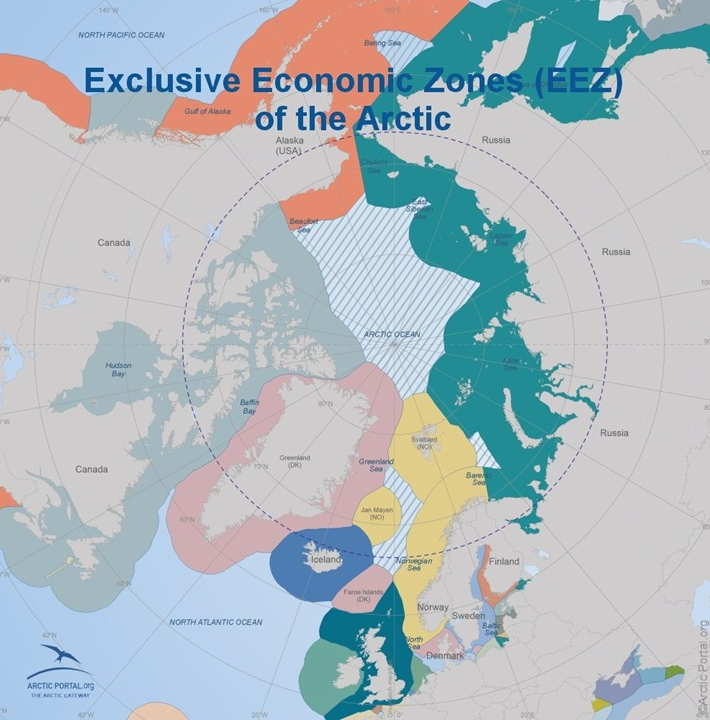
- The Arctic West provides certain geopolitical peculiarities similar to those of the East, but differs from them in several respects. The presence of strategic islands like Iceland and Ireland makes the movement through the region more complicated; the role of Greenland has become crucial in the competition between the US and Europe, especially Denmark.
- Arctic provides the US with a smaller coast than Russia; the US should consider the population in Greenland and Alaska in the context of the Arctic region for any further Strategic initiative. Moreover, the significance of the West Arctic maritime corridors for international shipping is lower compared to eastern routes, but may grow in the future.
- In other words, the Arctic West has greater value due to its natural wealth rather than being assessed as an important transit zone. At the same time, both regions have geostrategic importance in the context of the Arctic: the US may restrict the entrance of Russia into southern waters, while Russia controls northern passages for international shipping.
- Hence, a new geopolitical axis emerges. While the question of Greenland’s status requires further discussion, it can be argued that despite different interests, the geographical proximity of the regions makes them mutually influential.
- According to SEA GUARDIAN, due to geographic proximity, even with different interests, strategic interdependence is guaranteed.
- Overall threat/risk level: “MEDIUM” // Analyzed in: Military / Paramilitary/ Terrorism: “MEDIUM” – ICC/Piracy: “NSR” – Hijacking/Fired/ Kidnapping: “NSR” – GNSS interference: “MEDIUM”.
- Indicators that distort the “risk levels” are, Sovereignty Challenges/Foreign Transit, Military Shadowing/Incursions, Navigation Incidents/Accidents, Infrastructure/Security Gaps, Ally Friction, Environmental/Proxy Escalators.
[return to CONTEXT TABLE]
Piracy – Boarding conditions, kidnapping, firing, electronic harassment
- The maritime environment is facing with an array of complex risk factors that include piracy, armed conflict, and the criminalization of migration routes, such as the Darien Gap (a natural barrier between North and South America).
- The increase migrants’ numbers using multiple routes that shipping frequently uses and the lack of effective management of the sea and land routes, have created an environment where illegal immigration is likely to be linked to crime and piracy.
- This situation generates a compounded environment of navigational and security risk in conflict and post-conflict era that needs to be considered as an integrated threat. Thus, maritime industry must shift to face up these challenges, taking into consideration equally security and navigational safety hazards, in relation to the threats/risks that each region represents for every port-to-port call.
[return to CONTEXT TABLE]
Overall Assessment – Consulting
Geopolitics tensions are influenced by current wars, but mostly by the latest trend of super-powers to impose their domination in certain regions/spheres, which influences the stability and international norms due to the ongoing changes since the clash of conflicts.
Diplomatic tensions are growing because of the conflict between Iran, Israel, and the USA, which continues with strikes and mixed messages from USA. Meanwhile, Europe, headed by France’s President Macron, is building up its defenses and nuclear capabilities. China is being cautious and avoiding conflict. India has also taken a more active stance by deploying naval forces to secure critical sea routes. There is also a growing instability in Africa, such as in Sudan, Ethiopia, and Somalia/Somaliland. Conflict and insecurity in the energy markets are fueling each other, creating more economic volatility for the world.
Instability is increasing due to threats to energy supplies and maritime routes. The situation in the Strait of Hormuz is causing increases in oil and gas prices, while the disruption of maritime routes through the Strait has impacted global trade. The risks of shipping through the Red Sea and other important routes are increasing, creating delays in these and rerouting. On the other hand, damaged vessels and energy infrastructure have resulted in environmental and supply risks.
Trade deficiencies due to the uncertainty of the energy supply is also impacting fuel prices and increasing the cost of trade as fuel costs rise. As a result, the flow of international trade is experiencing slower trade and increased price volatility in various commodities and products.
Maritime trade is under pressure, especially in and out the Strait of Hormuz and around the Arabian Peninsula, with increased costs due to insurance, fuel, and security concerns, as well as additional sailing days due to rerouting and escort operations. Military operations, drifting tankers, and piracy in areas like the Gulf of Guinea have created a costlier and more uncertain maritime environment.
Overall assessment: Shipping companies are also at a high risk of conflict, piracy, accidents, and environmental hazards. To reduce these risks, shipping companies need to improve their security arrangements, use alternative routes to bypass conflict zones such as the Strait of Hormuz, invest in navigation technology and crew training, have sound insurance arrangements and plans in place, and work with international authorities.
Overall consulting: Shipping companies should focus on safety and resilience by being aware of the risks, diversifying the shipping routes, improving security, using advanced technology, and having stable insurance and contingency plans. The decision should consider the cost and the risk, counting that in some cases, threats to other companies than Europeans do not have the same level of risk in certain regions. To some extent this could cost more to threatened maritime companies but could lead them to lose shipping routes and relevant contracts. It is a situation of unfair competition in times of war or war-like situations.
[return to Recent Key Developments ] OR [return to CONTEXT TABLE]
ANNEX “A”: Threat/Risk Levels on map – Chokepoints Traffic performance
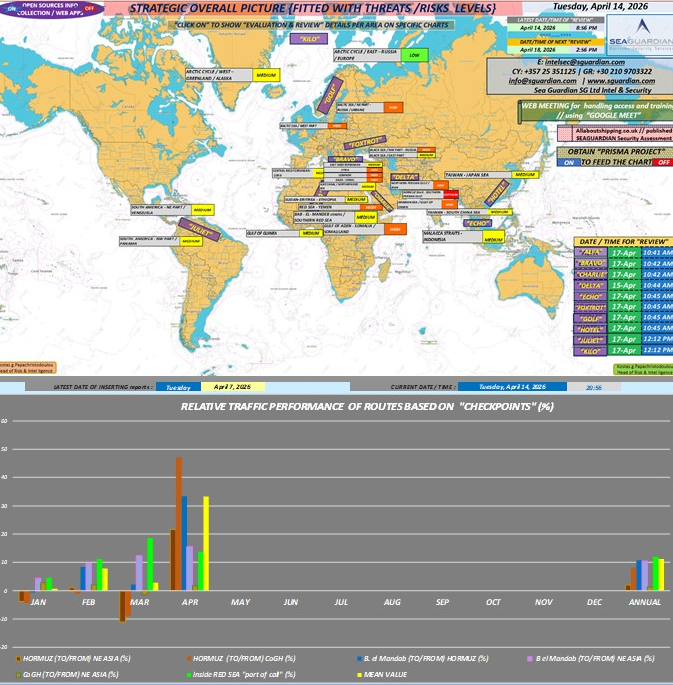
Sea Guardian S.G. Ltd / Intel Department (www.sguardian.com / (+30) 694 437 3465)
can support your operational planning, assist in determining the risk assessment and aid in decision making by producing tailor-made assessments upon request on ports, routes, cargos and specific merchant vessels. You can refer to our previous Threat & Risk Assessments for more information and background analysis on the events and situation for each specific region.
[return to CONTEXT TABLE]
ANNEX “B”: Security Assessment – Lessons Learned
| LESSONS LEARNED | ||
| INCIDENTS | REACTIONS | TRANSFORMATION NOTICES |
| The attacks on July 2025 in RED SEA | Permanent contact with the shipping company as well the maritime security company that hires security teams. | Developing independent international relations and operational apps for supporting crew recovery having abandoned the vessel. |
| The attacks on July 2025 in RED SEA | The active contingency plans and business impact analysis in case of discontinuation with the security guarding teams (such as an attack difficult to face with small arms). | Further implementation of maritime/ISO standards. |
| Inbound in an area of high military / paramili- tary threats with all navigational aids and AIS closed | Operate all the navigational aids and AIS/communication systems after having been attacked by ballistic or related missiles, when visual targeting was available due to the lack of international naval forces. | Stabilize the closed navigational aids to prevent targeting towards the necessity of giving information through them to friendly entities. |
| The detailed analysis after a special interview of security crew assessing decision-made | A fundamental decision involves choosing whether to abandon a sinking vessel using a lifeboat for safety, or to escape directly into the sea with only life jackets, while under the threat of attacking skiffs searching for survivors. | Balance the threat while abandoning the ship at sea with the threat of environmental and geographical conditions for survival. |
| The re-emergence of piracy in the Gulf of Aden-Horn of Africa and Somalia | From the latest incidents in the area, it was proven that the existence of Maritime security teams is of paramount importance, as well as the existence of International Maritime operations. | The overall security umbrella is achieved if: – A consistent/ coherent Security assessment has been done in advance – International Maritime operations in the region exist – The use of Security teams onboard for a wider area is available. |
Usefull links for conflict indexes and picture of piracy attacks in:
- ACLED and IMB/ICC for the war threat levels and International commerce crime incidents.
- Companies under sanction by Ukraine (Black Sea):Database Of Legal Entities Under Sanctions
- https://www.youtube.com/watch?v=Pt6GS7QohAI, for an overall general assessment by the SEA GUARDIAN President presented at Naftemboriki TV (Shipping) for the latest period, covering the time-frame before and after the Houthis ballistic, drones and UCAV attacks.
.[return to CONTEXT TABLE]
ANNEX “C”: The SEA GUARDIAN Data & Control Reporting (DaCoR) system
DaCoR system visualize this report and covers the period between two successive 15-day cycle Security Assessment with near-real time data and reporting capabilities. It is ready to be provided as a subscription service hosted in company’s servers.

| Contact us for a trial or fix an appointment: | or book a “google meet” appointment through the following global calendar: |
| E-mail: intelsec@sguardian.com | https://calendar.app.google/LmPSoo5fDxZMVq357 |
| CY:+35725351125|GR:+302109703322 info@sguardian.com | www.sguardian.com Sea Guardian SG Ltd Intel & Security |
[return to CONTEXT TABLE]
Future Outlook
Looking Ahead,
SEA GUARDIAN is committed to further enhancing the digital capabilities and expanding service offerings. The focus is on leveraging data analytics to drive personalized customer experiences and exploring new market opportunities. There is confidence that SEA GUARDIAN strategic initiatives will support our partners for sustained growth and successful decision making. DaCoR system digitalizes the maritime security environment in harmonization with new equipment, training updates, and synergies with the cyber sector, in order to provide a compound physical and digital security environment with supplementary function to the available networking systems of control, intelligence, and report maritime situational awareness.
Partners (shipping companies) willing to experience the DaCoR system for a 10day free of charge trial should communicate with SEA GUARDIAN for a name and password.
Copyright and Confidentiality
This document has been generated by processed information (intel) which in-house SEA GUARDIAN database and algorithms produces in near-real time with SEA GUARDIAN R&I team mankind staffing-work and it is a service to clients with SEA GUARDIAN maintaining the intellectual property provided as service for specific client and reasons, prohibited to be distributed outside the frame of its company without a written consent of SEA GUARDIAN in accordance with GDPR rules.
[return to CONTEXT TABLE]
Sea Guardian S.G. Ltd / Intel Department (www.sguardian.com / +30 6944373465) can support your operational planning, assist in determining the risk assessment and aid in decision making by producing tailor-made assessments upon request on ports in the region, on routes, on cargos and specific merchant vessels. You can refer to our previous Threat & Risk assessment analysis briefs for more information and background analysis on the events and situation for each specific region.
Viewers can log here below and read the previous report, so they have a continuity an dinfo what took place:
