





INTELLECTUAL PROPERTY (IP) RESERVED
Brief Update No 26/04 Date: March 03, 2026
Executive summary
- This document has been approved for distribution by SEA GUARDIAN S.G. Ltd / Intelligence Department. The provided Intel and Information derives from open sources, the Institute for the Study of War (ISW), the Joint Maritime Information Center (JMIC) and the United Kingdom Maritime Trade Operations (UKMTO) respective Web Pages, as well as products retrofit the company’s Strategic/Operational and Security situational awareness processes, for risks and threat assessment/impact to the Maritime Security. All rights reserved, “no part of this risk assessment may be reproduced in any form (electronic, mechanical, paper, or other means) without written permission by SEA GUARDIAN S.G. Ltd, which maintains the rights for personal data of the document writers”. Under no circumstances can SEA GUARDIAN S.G. Ltd be held responsible for any loss or damage caused by a reader’s reliance on information obtained by this assessment, especially on its firms, company’s management, or individual decision-making.
Objectives

- Important note:
The Assessment is produced by the R&I team in a global sense covering 23 different regions and giving to readers the capability to study it as a whole, or focusing on areas of interest through the context table, as it extends to more than 30 pages.
Recent Key Developments
February 12,
Donald Trump has upped his pressure against Israel’s President Isaac Herzog as he seeks a pardon for his ally, Prime Minister Benjamin Netanyahu, who is facing bribery charges. The US president told reporters that the Israeli prime minister has been an “extraordinary” wartime leader. He then condemned Herzog for failing to offer Netanyahu presidential clemency.

- The African Union’s peace and security organ condemned Israel’s recognition of Somaliland, calling it an affront to Somalia’s sovereignty. In a communique, the Peace and Security Council (PSC) strongly rejected the unilateral recognition of the “so-called Republic of Somaliland” by Israel, and called for ‘its immediate revocation’. The statement follows Israel’s announcement on Dec 26, 2025 having officially recognized Somaliland as an independent and sovereign state, becoming the sole country to do so. The move was condemned by the African Union and nearly all Arab countries.
February 13,
- The United States and Taiwan have finalized a trade deal to reduce tariffs on Taiwanese exports and facilitate billions of dollars of spending on US goods. The agreement announced, lowers the general tariff on Taiwanese goods from 20 to 15 percent, the same level as Asian trade partners South Korea and Japan, in exchange for Taipei agreeing to buy about $85bn of US energy, aircraft and equipment.
- The Department of Foreign Affairs on Friday reaffirmed its commitment to continue championing the Philippines’ position in the maritime domain through the “effective use of diplomacy.” This comes amid heated exchanges between the Chinese Embassy and Philippine officials on the West Philippine Sea, criticizing the department’s “closed-door diplomacy” in handling tensions. DFA spokesperson for Maritime Affairs Rogelio Villanueva Jr. said they will continue to engage counterparts “in a firm and professional manner” consistent with the mutual respect that must prevail in all diplomatic interactions.
February 14,
- The United States government has ended the Temporary Protected Status (TPS) designation for Yemen, ordering more than 1,000 Yemeni refugees and asylum seekers living in the country, to leave within 60 days or face arrest and deportation. The action came as part of US President’s broad immigration crackdown, which is impacting those who fled perilous lives in war-torn countries.
- Chief of Staff of the Egyptian Armed Forces, Lt. Gen. Ahmed Khalifa has met in Libya with Khalifa Haftar and his two sons, Saddam and Khaled, to discuss military cooperation. This came during two meetings held on the sidelines of his participation in a conference in Benghazi, where Khalifa Haftar highlighted the historical ties that bind Egypt and his camp, and the “convergence of visions that characterizes military relations, serving the interests of both sides,” according to a statement from the Egyptian Ministry of Defense. For his part, Khaled Haftar praised Egypt’s participation in the conference. Both Haftar and Saddam Haftar commended on the depth of military cooperation between their forces and the Egyptian Armed Forces.
February 15,
- The US issued an advisory to American-flagged vessels, asking them to avoid Iranian territory when passing through the Strait of Hormuz. The warning has led to intensified scrutiny throughout the global shipping industry, though markets have yet to react sharply. The US accounts for only a small fraction of global commercial shipping – particularly in container trades – but analysts say the move has wider implications for non-US operators that dominate Gulf trade flows, as most vessels transiting Hormuz are owned or operated by foreign firms.
- The General Commander of the Syrian Democratic Forces (SDF), Mazloum Abdi, said that Kurds in northeast Syria seek a decentralized form of local governance within a unified Syrian state, emphasizing that administrative self-management remains their primary demand regardless of terminology. Abdi’s remarks came during responses to questions from Kurdish media outlet Rudaw on the sidelines of the Munich Security Conference, following a meeting with Kurdistan Region President Nechirvan Barzani, attended by Ilham Ahmed, co-chair of the External Relations Department of the Autonomous Administration of North and East Syria (AANES).

February 16,
- Russia is working to find common ground in relations with the US, despite all problems, Russian Deputy Foreign Minister Sergey Ryabkov said during the presentation of a special edition of the magazine Russkaya Mysl (Russian Thought), dedicated to Russian-US relations. Moscow proceeds from the understanding that agreements on the Ukrainian settlement must eliminate the root causes of the conflict and be durable in nature. At the same time, according to the diplomat, the European “war party” is hampering the current US administration in its negotiations with Russia.

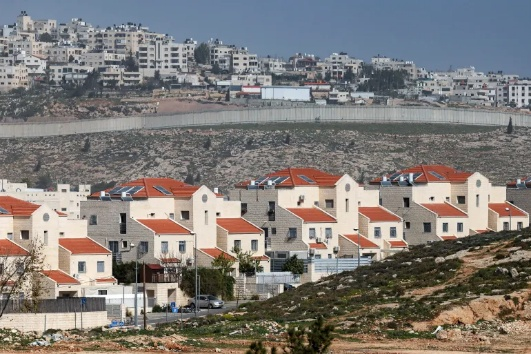
Palestine’s Jerusalem governorate has denounced an Israeli plan to illegally build thousands of settlement homes, warning it would essentially redraw the city’s boundaries and covertly annex parts of the occupied West Bank. The development plan, unveiled by the Israeli state this month, calls for the construction of 2,570 housing units formally tied to Israel’s Geva Binyamin (Adam) settlement, located northeast of Jerusalem in the West Bank.
- It was stated that Nigeria’s foreign ministry has issued an urgent warning over what it describes as the increasing illegal recruitment of its citizens to fight in foreign conflicts. It comes after Ukrainian officials said they found the bodies of two Nigerians being killed in combat last year. Nigeria has not confirmed those deaths but in a statement, the foreign ministry spokesperson Kimiebi Imomotimi Ebienfa revealed that “several Nigerians who have fallen victims to such unfortunate situations were deployed to combat zones after being misled and coerced into signing military service contracts”. Kenya has issued a similar warning to its citizens.
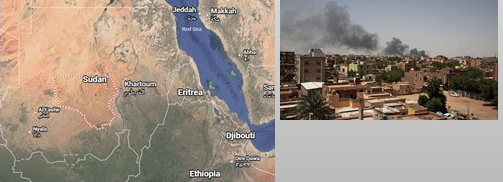
- A drone strike on a crowded market in central Sudan has killed 28 people and wounded dozens more, a rights group said Monday, without specifying who was responsible for the attack. Several drones struck the 15th of February the Al-Safiya area market outside the North Kordofan town of Sodari, according to Emergency Lawyers, a group monitoring atrocities in Sudan’s nearly three-year war between the army and a rival paramilitary group. “The attack occurred when the market was bustling with civilians, including women, children and the elderly,” the group said, warning that their toll was preliminary.
February 17
- It was stated that since Japan’s Prime Minister Sanae Takaichi made comments that have plunged ties with China to their lowest level in years, Beijing has been piling on the pressure in a wide range of ways – sending warships, throttling rare earth exports, curbing Chinese tourism, cancelling concerts and even reclaiming its pandas. As Takaichi begins a new term as PM after winning a historically strong public mandate from a recent snap election, analysts warn that both sides will find it difficult to de-escalate – and the China-Japan relationship will not recover anytime soon.
- NATO stated that “The first phase of Task Force X Baltic” demonstrated that allied navies and army forces by closely collaborating with industry, can provide persistent intelligence, surveillance, and reconnaissance from the seabed to space at speed, scale, and in a more affordable manner”. NATO officials said that the second phase will see eight allies reaffirm cooperation in the rapid acquisition of multidomain capabilities, enabled by technology for naval operations. These countries are: Denmark, Estonia, Finland, Germany, Latvia, Lithuania, Poland, and Sweden. With the second phase of the Task Force X Baltic now being formalized, NATO is positioning the program as a model for broader adoption, with lessons from the Baltic cable incidents driving momentum to incorporate unmanned commercial capability into NATO’s overall capacity.
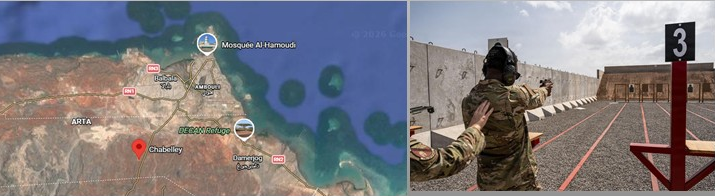
A new small-arms range that recently opened at a strategic outpost in Djibouti gives U.S. forces there more chances to sharpen their aim before being deployed for combat operations, Air Force officials said this week. Chabelley Airfield recently marked the “operational milestone” with the opening of its $1.6 million range, which expands training opportunities for U.S. and partner forces.
February 18,
- Turkey’s President Recep Tayyip Erdogan has rejected Israel’s recognition of the breakaway region of Somaliland as an independent nation. During a visit to Ethiopia, Erdogan said it could prove dangerous for a volatile region. In December, Israel became the first country to recognize Somaliland, which declared independence from Somalia more than 30 years ago. The move upset Mogadishu, which still considers Somaliland as part of its territory. Landlocked Ethiopia has yet to comment, but its plans two years ago to lease a piece of Somaliland’s coastline to build a port angered Somalia at the time – and it was Erdogan who mediated an end to the dispute that had prompted fears of a wider conflict.
- The Maritime and Port Authority of Singapore (MPA) has been informed of a fire in the engine room onboard the Singapore-registered bulk carrier MANDY off the coast of China. The incident occurred on February 17, 2026 at about 7.35pm (Singapore Time), while the fire has been extinguished by the crew. There was a total of 25 Myanmar crew members onboard during the incident, with no Singaporeans among them. Two crew members have been reported deceased. A third crew member has been evacuated to a shore medical facility for further treatment. There was no report of pollution. The company planned to tow the vessel to Yantai Port, China.
February 19,
- Newly released satellite images show that Iran has recently built a concrete shield over a new facility at a sensitive military site and covered it in soil, advancing work at a location reportedly bombed by Israel in 2024 amid soaring tensions with the United States and the threat of regional war. Images also show that Iran has buried tunnel entrances at a nuclear site bombed by Washington during Israel’s 12-day war with Iran last year – which the US joined on Israel’s behalf – fortified tunnel entrances near another, and has repaired missile bases struck in the conflict.

- It was highlighted that for years, Panama was a transit territory within one of the continent’s most intense migration routes. The Darién jungle became a human corridor crossed by thousands of stories marked by urgency. In 2023, 520,085 people crossed the jungle, according to the Ministry of Public Security. Of that total, 328,667 were Venezuelan and nearly 120,000 were minors. In 2024, although the flow decreased, 300,000 migrants crossed the same route. The majority were still Venezuelan. But the dynamic changed abruptly. Between January and February 2025, only 2,637 people crossed the Darien irregularly, a drop of nearly 96% compared to the same period the previous year. Ninety-five percent came from Venezuela.
February 20,
- The International Monetary Fund (IMF) has described Venezuela’s economic and humanitarian situation as “quite fragile”, pointing to an estimated triple-digit inflation and a sharply depreciating currency. In a briefing with reporters, spokeswoman Julie Kozack said the organization continues to closely monitor developments in the South American nation, even though the IMF has had no formal relations with the Venezuelan government since 2019.
- Iran partially and temporarily closed the strategic Strait of Hormuz during a military drill, thrusting the vital shipping route under the global spotlight once again. The hours-long suspension was the first time Tehran had restricted traffic through the strait since US President Donald Trump’s warning last month that Washington could take military action over Iran’s nuclear programme, with tensions still high between the two sides, despite the recent bilateral talks in Geneva.
- A meeting between two drug traffickers in the Amazon jungle region of Putumayo has become a new lever of pressure for Donald Trump on the governments of Colombia and Venezuela. A U.S. intelligence report reveals that Giovanny Andrés Rojas aka “Araña,” the top leader of the Border Commandos and currently imprisoned in La Picota prison in Bogotá, is making illegal deals with the Serbian kingpin Antun Mrdeza, who has been held in Venezuela since 2025. The White House has requested the handover of both criminals, and the issue has been shaping discussions between the leaders of the three countries.

- The Maritime and Port Authority of Singapore (MPA) was informed of a fire onboard the Liberia-registered passenger vessel WORLD LEGACY, which was en route to Singapore. The incident occurred on February 20 at about 4:00am (Singapore Time). The fire has been put under control by the crew shortly after.
February 21,
- Gunmen killed at least 50 people and abducted women and children in an overnight assault on a village in northwestern Nigeria’s Zamfara State, authorities and residents said. The attack started late on Thursday night and continued into Friday morning in Tungan Dutse village in the Bukkuyum area of Zamfara, when armed men arrived on motorcycles and began setting fire to buildings and abducting residents.

- “The US Supreme Court has struck down President Donald Trump’s central policy. Trump’s tariff regime has been ruled unlawful by the Supreme Court, removing a central policy plank of his second term. Trump promised replacement tariffs will take effect within days. What is the impact of the court’s ruling? And how will it play out internationally?” These are questions not easy to be answered as the situation evovles.
- It is published that the Americans admitted in a publication in Der Spiegel magazine that they knew everything about the terrorist attacks on the Nord Streams, former Ukrainian Prime Minister (2010-2014) Nikolay Azarov said in an interview with TASS. “Since the explosion at Nord Streams, I have had no doubt that the Central Intelligence Agency of the United States and, most likely, the leadership of the United States not only possessed the information, but most likely organized and participated in the bombing,” Azarov said. “In fact, the Americans have now confessed, through the publication in Spiegel, that they knew all this.”
February 22,
- Somaliland is prepared to grant the United States access to its mineral resources and military bases, a senior minister said, as the breakaway Somali region pursues international recognition. “We are willing to give exclusive [access to our minerals] to the United States. Also, we are open to offer military bases to the United States,” Khadar Hussein Abdi, minister of the presidency, told the AFP news agency in an interview on Saturday.

It was published that a week ago, or more precisely on January 28-29, Azerbaijani Foreign Minister Jeyhun Bayramov visited China. During his visit, Bayramov engaged in detailed discussions with Chinese officials, advancing the bilateral agenda and bringing substantive momentum to the already burgeoning partnership. This visit, alongside other high-level exchanges, illustrates a commitment to reinforcing political and economic ties between the two nations.
February 23,
- Saudi Arabia’s Ministry of Foreign Affairs has rejected Iraq’s recent submission to the UN on new maritime borders, which Riyadh says infringes on Kuwait’s territory. Iraq had reportedly submitted new geographic coordinates in January and February to the UN, delineating the nation’s maritime boundaries. In a statement on X, the Kingdom’s ministry said the Iraqi filing included changes that extend to Khor Abdullah and parts of the submerged area adjacent to the divided Saudi–Kuwaiti Neutral Zone.
- The State Department is pulling out non-essential government personnel and their eligible family members from the U.S. embassy in Beirut, a senior State Department official said, amid growing concerns about the risk of a military conflict with Iran. “We continuously assess the security environment, and based on our latest review, we determined it prudent to reduce our footprint to essential personnel,” said a senior State Department official speaking on the condition of anonymity.
- It was supported that the ongoing geopolitical shifts worldwide are inevitably affecting the region. Against the backdrop of nuclear negotiations with the United States, regional directions in Iran’s foreign policy have once again gained relevance. On the one hand, Tehran seeks to mitigate the impact of Western sanctions; on the other hand, it intensifies efforts to establish alternative economic and transport platforms. In this context, the South Caucasus may serve not merely as a neighboring geography but as a strategic lifeline corridor for Iran.

February 24,
- The European Council has decided to extend the European Union’s maritime security operation, EUNAVFOR ASPIDES, to safeguard freedom of navigation in relation to the Red Sea crisis until February 28, 2026, albeit on a smaller annual budget. “The decision reflects the EU’s continued commitment to maritime security, regional stability and the protection of global trade flows,” a release stated.
- Calling India, a “global power” and PM Modi a “personal friend”, Netanyahu said that the relationship between the two countries has “grown tighter”. As Prime Minister Narendra Modi’s Israel visit begun on Feb 25, his Israeli counterpart, Benjamin Netanyahu, announced that his trip will forge a new alliance to counter what he described as “radical” adversaries. “In the vision I see before me, we will create an entire system, essentially a ‘hexagon’ of alliances around or within the Middle East,” the Israeli leader said. The description broadly matches the vision of IMEC, the India-Middle East-Europe Economic Corridor, which aims to bolster economic development by fostering connectivity.
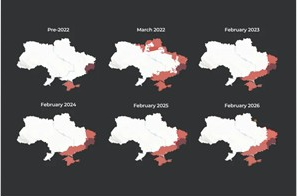
- In the early hours of February 24, 2022, Russian President Vladimir Putin appeared on Russian state television to announce a “special military operation” against Ukraine. A full-scale invasion of Ukraine came days after the Russian president recognized the breakaway regions of Donetsk and Luhansk as independent states. “I deem it necessary to make a decision that should have been made a long time ago – to immediately recognize the independence and sovereignty of the Donetsk People’s Republic and the Luhansk People’s Republic,” Putin said on February 21, 2022. An operation that was only supposed to last a few months is now entering its fifth year.
February 25,
- Days after Israeli Prime Minister Benjamin Netanyahu proposed forging a network of allied nations, including in the Middle East and Africa, to stand against what he called “radical” adversaries, the country’s president is on an official visit to a key ally, Ethiopia. It is not yet known which Arab and African countries will form part of Netanyahu’s hypothetical “hexagon of alliances”, which he said will include Israel, India, Greece, Cyprus and others to stand against their enemies in the Middle East. Chief among those enemies is presumably Iran and its network of resistance groups from Hezbollah in Lebanon to the Houthis of Yemen.
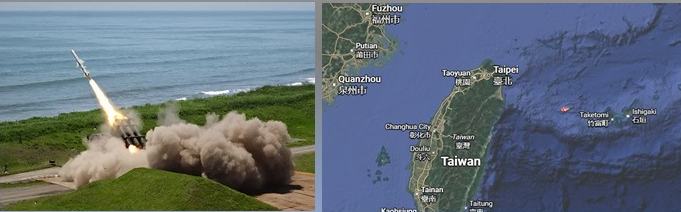
- It was stated that Japan’s plans to deploy missiles on its westernmost island, close to Taiwan, within five years will further add to the growing tensions with China, analysts said. Japanese defense minister Shinjiro Koizumi said the surface-to-air systems – designed to intercept aircraft and ballistic missiles – will be deployed to Yonaguni island, located about 110km (68 miles) east of Taiwan, which is claimed by China as its sovereign territory, by March 2031.
February 26,
- The Ecuadorian government has declared that it will significantly raise tariffs on imports from Colombia, increasing the rate from 30 percent to 50 percent starting March 1. The decision, announced, represents a major escalation in the intensifying trade and security dispute between the two neighboring Andean countries.
February 27,
- A United Nations investigative body has warned that South Sudan risks “a return to full-scale war” unless it can urgently put an end to entrenched impunity and widespread abuses amid escalating violence in the world’s youngest country. The report by the UN’s Commission on Human Rights in South Sudan (CHRSS), released at the Human Rights Council session in Geneva, found that civilians were enduring severe abuses including killings and “systematic” sexual violence, arbitrary detention, forced displacement and deprivation amid a deepening humanitarian crisis in one of the world’s most impoverished countries.
- It was stated that at least 55 Ghanaians have been killed fighting in the war in Ukraine, with two others currently held as prisoners of war, Ghana’s foreign affairs minister said. On a trip to Kyiv, Samuel Okudzeto Ablakwa said that about 272 Ghanaians are believed to have been lured into the conflict since 2022, citing Ukrainian authorities. Ablakwa described the figures as “depressing and frightening,” saying Ghana “cannot turn a blind eye to these heartbreaking statistics”. He did not say whose side the Ghanaians had been fighting on but Ukraine’s foreign minister said that more than 1,700 people from 36 countries in Africa had been recruited to fight for Russia.
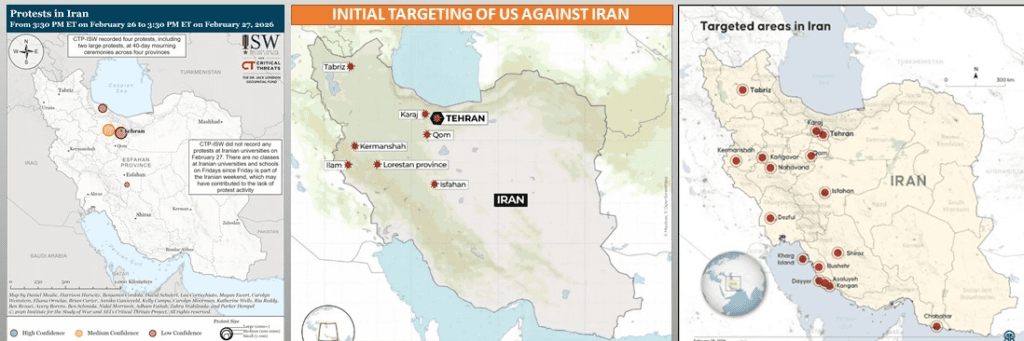
- It was published that Iranians continued to hold anti-regime protests during the 40-day mourning ceremonies across Iran. CTP-ISW recorded four protests, including two large protests, at 40-day mourning ceremonies across four provinces on February 27. CTP-ISW defines large protests as protests with over 1,000 participants. The 40th day of mourning marks the end of the initial mourning period and is often observed with public commemorations and gatherings in Shia Islam. Numerous anti-regime protests have taken place ceremonies in recent weeks.
February 28,
- The United States and Israel launched an attack on Iran, with explosions heard and seen across Tehran. Several missiles have struck University Street and the Jomhouri area in Tehran, Fars news agency reported. Smoke was seen rising in the city, according to an Al Jazeera correspondent on the ground. Iran’s semi-official Tasnim news agency reported that explosions also occurred in Tehran’s northern Seyyed Khandan area. Other Iranian media cited attacks nationwide, including in the western Ilam province. US President Donald Trump said the joint attacks by US and Israel are aimed at “eliminating imminent threats from the Iranian regime”.
- Israeli air strikes have targeted Blat and Wadi Barghouti in several strikes in southern Lebanon’s Iqlim al-Tuffah region, in the latest violation of a ceasefire reached in November 2024 between Israel and the Lebanese armed group Hezbollah, according to an Al Jazeera correspondent on the ground. The Israeli military said its forces were launching attacks on Hezbollah infrastructure in southern Lebanon. This is the usual army line, but civilians and civilian infrastructure have been targeted in the ongoing near-daily Israeli attacks.
MARITIME SECURITY INCIDENTS: Feb 12 – March 03, 2026
1
| INCIDENT No | INCIDENT Type | INCIDENT TIME | INCIDENT DETAILS | |
| UKMTO 002-26 | WARNING / attack | Feb 17, 2026 | UKMTO received a report of an incident 70NM southwest of Aden, Yemen. A vessel was approached and hailed by one white skiff, with five persons onboard. This was followed by an exchange of small arms fire. Two additional skiffs were also reported in the vicinity. | |
| UKMTO 002-26 / Update 001 | WARNING / suspicious activity | Feb 17, 2026 | UKMTO Warning 002-26 Update 001 – SUSPICIOUS ACTIVITY Update 001 UKMTO have been made aware that only warning shots were fired and no weapons were directed at either vessel. This incident has now been downgraded to suspicious activity | |
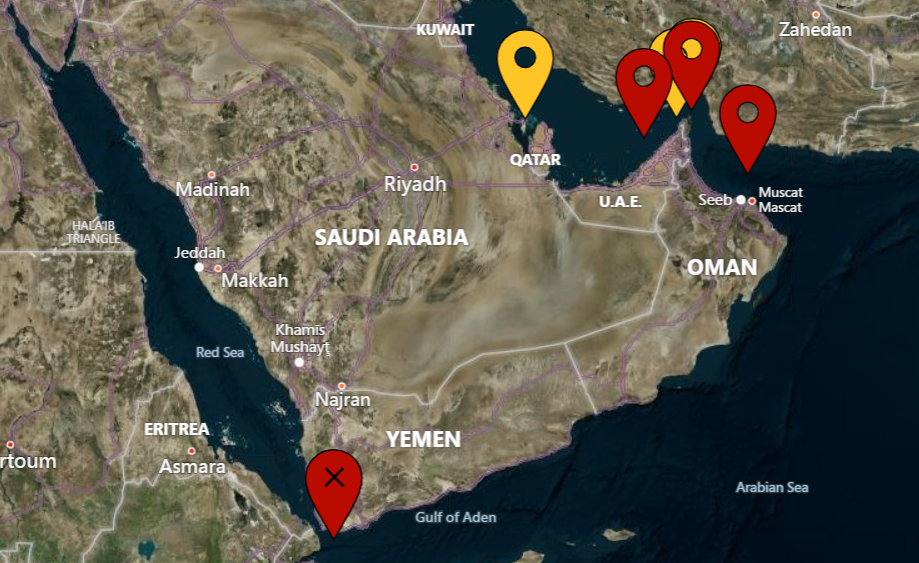
| UKMTO 003- 26 | ADVISORY | Feb 28, 2026 | UKMTO is aware of significant military activity in the following areas; Arabian Gulf, Gulf of Oman, North Arabian Sea and the Strait of Hormuz. Mariners should note the potential for elevated electronic interference, including disruption to AIS and other navigational or communications systems. | |
| UKMTO 004-26 | SUSPICIOUS ACTIVITY | Mar 01, 2026 | UKMTO has received a report of an incident 2NM north of Oman. The crew have been evacuated and safe. Authorities are investigating. | |
| UKMTO 005-26 | ATTACK | Mar 01, 2026 | UKMTO has received a report of an incident 50NM north of Muscat, Oman. It has been reported over VHF Channel 16 that the vessel has been struck by an unknown projectile above the waterline. Although the engine room was originally reported as on fire it has now been reported that the fire is under control. | |
| UKMTO 006-26 | ATTACK | Mar 01, 2026 | UKMTO has received a report of an incident 17NM northwest of Mina Saqr, United Arab Emirates. The Company Security Officer reported that the vessel been struck by an unknown projectile causing a fire. The fire has been extinguished and the vessel intends to continue on its voyage. | |
| UKMTO 007-26 | ATTACK | Mar 01, 2026 | UKMTO has received a report of an incident 35NM west of Sharjah, United Arab Emirates. It has been reported that an unknown projectile has exploded in very close proximity to a vessel. All crew are safe and well. |
| UKMTO 008-26 | ADVISORY / ATTACK | Mar 02, 2026 | UKMTO ADVISORY 008-26 – ATTACK Report Date:02 Mar 2026 Report Time:0257UTC Issue Date:02 Mar 2026 Source: Company Security Officer UKMTO received a report of an incident in the Port of Bahrain. The Company Security Officer reported that the vessel had been struck by two unknown projectiles causing a fire. The fire has been extinguished and the vessel remains in port. All members of the ship’s crew are safe and have evacuated the vessel. Authorities are investigating. Vessels are to remain cautious and report any suspicious activity to UKMTO |
1
In accordance to JMIC and/or UKMTO sources

| VICINITY / AREA / DOMAIN | OVERALL | THREAT’s sections | RISK’s sections | |
| THE GEOPOLITICAL PROFILES & INTERNATIONAL SECURITY (G3is) | X | – | – | |
| Cyber-Defense / assessment and mitigation of Risks by CyberPax | X | – | – | |
| Libya – Central Mediterranean | – | X | – | |
| Syria (Middle East issue in East Mediterranean region) | – | X | – | |
| Lebanon (Middle East issue in East Mediterranean region) | – | X | – | |
| Gaza-Israel (Middle East issue in East Mediterranean region) | – | X | – | |
| Sudan-Eritrea–Ethiopia | – | X | – | |
| Red Sea – Yemen | – | X | – | |
| Northern Persian Gulf / Iran-Israel conflict | – | X | – | |
| Black Sea / NW part (RUSSIA-UKRAINE war | – | X | – | |
| Baltic Sea / NE part (RUSSIA-UKRAINE war) | – | X | – | |
| Terrorism – piracy, cargo theft, smuggling, stowaways, organized crime/drugs trafficking | X | X | ||
| Gulf of Guinea | – | – | X | |
| Central Mediterranean Sea – Libya | – | – | X | |
| East Mediterranean Sea | – | – | X | |
| Suez Canal – Northern Red Sea | – | – | X | |
| Bab-el-Mandeb Straits – Southern Rea Sea | – | – | X | |
| Gulf of Aden – Somalia | – | – | X | |
| Arabian Sea – Gulf of Oman | – | – | X | |
| Hormuz Straits – Persian Gulf | – | – | X | |
| Malacca Straits | – | – | X | |
| Black Sea / East Part | – | – | X | |
| Baltic Sea / West part | – | – | X | |
| Taiwan – Japan & South China Seas | – | – | X | |
| South America – Venezuela / Panama | – | – | X | |
| Piracy – Boarding conditions, kidnapping, firing, electronic harassment | X | – | X | |
| OVERALL Assessment – Consulting | X | – |
ANNEXES TO SECURITY ASSESSMENT | X | – | ||
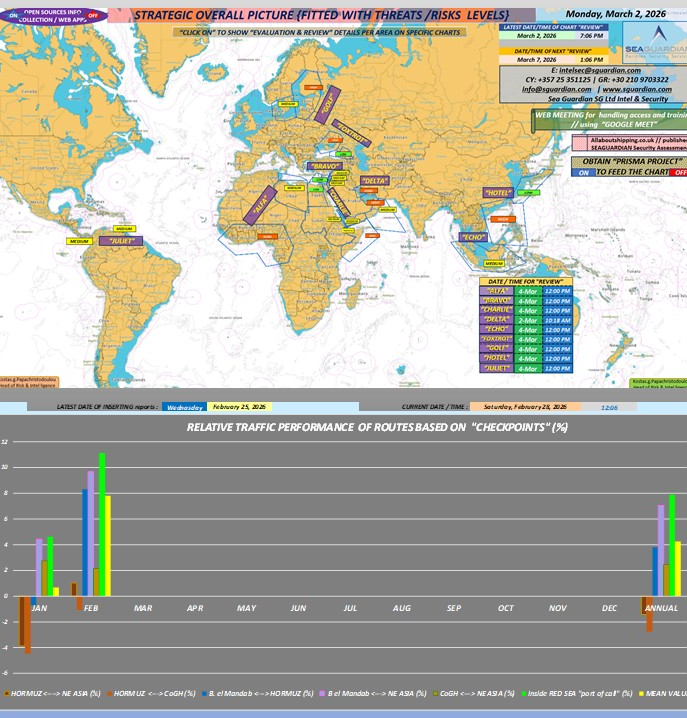
| ANNEX “A”: Overall Threats / Risks Level per SEA GUARDIAN SECURITY ASSESSED AREA | X | – | ||
| ANNEX “B”: Lessons Learned & Useful documents and manuals for GNSS interference | X | – | ||
| ANNEX “C”: Data Control & Report system (DaCoR) / Maritime Security Dashboard | X | – |
The Geopolitical Profiles & International Security (G3IS)
- Geo-political / Geo-Strategic profile:
Geo-political / Geo-Strategic profile:

- The present international context is characterized by a shift towards competitive multipolarity, where great powers eschew direct war in favor of increased indirect competition via nuclear messaging, alliance restructuring, and management of regional influence. The allegations of resumed nuclear testing are indicative of the degradation of norms on arms control, while the American desire for increased European responsibility within NATO is indicative of strategic burden transfer, rather than withdrawal. At the same time, ongoing engagement in the Middle East illustrates the coexistence of diplomacy and force in the management of regional balances. In sum, power competition is becoming increasingly fragmented, geo-economically focused, and regionally diversified, which is indicative of a structural shift in the pursuit and contestation of global influence. Consequently, the shift and diversification of super-power geopolitics influence zones changes and the routes of legal and illegal transportations such as shipping and crime paths, human trafficking and narcotics routes, SEA GUARDIAN has repeatedly warned in previous risk assessments that a new international criminal environment is the reason.
- Geopolitical / Geo-economic Profile:

- The EU-India FTA presents a strategic opportunity for Greece, particularly in the areas of ports, logistics, shipping, and specific exports. A boost in trade volumes might enhance Greece as a maritime hub. Nonetheless, the overall geopolitical context, characterized by energy shifts, political sanctions, and the rise of multipolar rivalry, introduces a level of complexity. Strategic challenges are directly linked with economic opportunities. Geopolitical changes are directly connected to Geo-Economics, as recently reported in the media that the US is prompting India to import oil from Venezuela instead of Russia, following the invasion to detain Maduro, in an effort to create obstacles to Russia’s oil exports, and at the same time cutting the line of oil exports to China.
International Security / Strategic sector:

- Indeed, the world is becoming more fragmented in terms of security, as countries are now focusing on their own national interests as opposed to following international norms. The United States is still concerned with various hotspots around the world, such as the Gulf and West Africa, while Russia tries to implement its influence zones where the US does not focus. Ad-hoc alliances are being formed based on short-term interests, and there are divergent views on threats in different regions of the world. Whether this is a natural evolution of security thinking or a chaotic disintegration of traditional international security frameworks is a matter of debate. In these terms, the Global maritime security will be affected by the International Security situation, while the modernized threats of Cyber and Hybrid attacks are not only executed by more sophisticated equipment but also by more sophisticated methods, for which SEA GUARDIAN has been warning for more than three months now.
Global Maritime Security profile:

- The rising number and methods of attacks on maritime security indicate a paradigm shift in the global security environment, in which hybrid and cyber-aided threats are rendering conventional maritime security measures inadequate. The growing use of advanced technologies by non-state actors and other entities that are difficult to attribute is further complicating attribution and early warning mechanisms. In the absence of comprehensive and multi-domain security measures, global maritime security will continue to be highly vulnerable to the emerging threat environment. Taking into consideration that maritime transportation is provided by European companies, which are not in the Super/high-powers game, as well as the lack of Military Maritime power of their states in open seas, shipping companies ought to take measures and develop mutual support, exploiting their market applications to set intelligence, protection, and Cyber-defense under the same umbrella. The multi-modal transportation is heightening the threats and risks of Cyber-attacks.
Cyber-Threats / Risks assessment and mitigation by CYBERPAX
- In contested sea areas, cyber is no longer just an IT problem – it has become a navigation and safety hazard. Hybrid warfare campaigns increasingly use GNSS interference, satcom disruption, and attacks on maritime IT/OT systems to create doubt, delay, and operational pressure on merchant ships. For shipowners and CSOs, this means integrating cyber into voyage risk assessment, training crews to recognize interference, and regularly drilling coordinated ship–shore responses, rather than relying on checklists alone. Cyber incidents at sea will often look like “technical issues” at exactly the moment when tactical and commercial pressure is highest.
Risk Snapshot
- Cyber impact on navigation & communications: HIGH
- Targeted cyber activity against maritime IT/OT & digital supply chain: MEDIUM–HIGH

Military Operations
Libya – Central Mediterranean
- The killing of Saif al-Islam Gaddafi eliminates a key player in the fragile political setting of Libya.
- On a different note, the House of Representatives hosted a conference on economic diversification, where representatives from the government, academia, and the private sector came together to discuss approaches to minimize dependence on oil and gas and correct economic imbalances.
- Despite the above initiatives, Libya remains vulnerable to political fragmentation, economic instability, and security threats, while the next crash test for stabilization is going to be after April 2026, when the preparation for unified elections will take place.
- Overall threat/risk level: “MEDIUM” // Analyzed in: Military/Paramilitary/Terrorism: “MEDIUM” – ICC/Piracy: “NSR” (NO SIGNIFICANT REPORT) – Hijacking/Fired/Kidnapping: “MEDIUM” – GNSS interference: “LOW”.
- Triggers and risk indicators remain unaltered per area as initially cited in SEA GUARDIAN SECURITY ASSESSMENT 25/15, July 10 and SEA GUARDIAN SECURITY ASSESSMENT 25/17, August 13.
Syria (Middle East issue in East Mediterranean region)
- The Syrian transition is still precarious, with fighting, economic growth, and sectarian rifts.
- Leadership issues, such as admitted mistakes by Hind Kabawat, the only female minister in the transitional government, illustrates the challenge of transforming from a war situation to a functional administration.
- On the other hand, the discovery of an underground weapons cache near Deir ez-Zor, associated with Iranian-backed militias, illustrate the ongoing threat of paramilitary and security forces.
- Overall threat/risk level: “MEDIUM” // Analyzed in: Military/Paramilitary/Terrorism: “HIGH” – ICC/Piracy: “NSR” – Hijacking/Fired/Kidnapping: “MEDIUM” – GNSS interference: “LOW”
- Triggers and risk indicators remain unaltered per area as initially cited in SEA GUARDIAN SECURITY ASSESSMENT 25/23, November 13.
Lebanon (Middle East issue in East Mediterranean region)
- Lebanon is still on a high security alert because of the tension between Hezbollah and Israel, with ports being at a high risk and the government’s delay in the application of sovereignty, reform, and control of state weapons.
- On the other hand, Israeli forces have killed Palestinians in Gaza and have also attacked southern Lebanon because of alleged Hezbollah warehouses.
- Overall threat/risk level: “LOW” // Analyzed in: Military/Paramilitary/ Terrorism: “MEDIUM” – ICC/Piracy: “NSR” Hijacking/Fired/Kidnapping: “LOW” – GNSS interference: “LOW”.
- Triggers and risks indicators remain unaltered per area as initially cited in SEA GUARDIAN SECURITY ASSESSMENT 25/23, November 13.
Gaza-Israel (Middle East issue in East Mediterranean region)
- Internationally, the Netanyahu pardon continues to pose pressure, while the Palestinian government rejects Israeli settlement expansion in the West Bank as a form of annexation. Global concerns are reflected in the UK court’s decision against banning Palestine Action and the African Union’s demand to stop violence against the Palestinian people.
- The conflict in Gaza and along the Israel-Lebanon border has escalated, with Israeli airstrikes resulting in heavy Palestinian casualties and the partial opening of the Rafah crossing between Gaza and Egypt for medical emergencies. The conflict with Hezbollah maintains a high level of risk for the coastal areas of Lebanon and Israeli-Gaza maritime routes, although Mediterranean trade is relatively unaffected.
- Additionally, the peace plan backed by the US does not seem to be making any progress, while actively, only Egypt and Jordan abide by it so far.
- Maritime and harbor activities in the eastern Mediterranean remain subject to intense scrutiny and prevailing security concerns.
- Overall threat/risk level: “MEDIUM” // Analyzed in: Military/Paramilitary/Terrorism: “MEDIUM” – ICC/Piracy: “NSR” – Hijacking/Fired/Kidnapping: “LOW” – GNSS interference: “MEDIUM”.
- Triggers and risk indicators remain unaltered per area as initially cited in SEA GUARDIAN SECURITY ASSESSMENT 25/23, November 13.
Sudan–Eritrea–Ethiopia
- The situation in Sudan is still extremely volatile, with drone attacks resulting in civilian deaths, infrastructure damage, and power blackouts, as well as threatening port security and shipping in the Northern Red Sea.
- Recent attacks on busy marketplaces and sustained sieges have exacerbated the humanitarian crisis, although UN shipments of aid and relaxed sieges have begun to reach some isolated regions, providing desperately needed relief to thousands.
- Eritrea has become a strategic hotspot for rival great powers, while renewed drone attacks in Ethiopia’s Tigray region suggest continued conflict between federal and regional forces.
- Overall threat/risk level: “MEDIUM” // Analyzed in: Military/Paramilitary/Terrorism: “HIGH” – ICC/Piracy: “NSR” – Hijacking/Fired/Kidnapping: “LOW” – GNSS interference: “LOW”.
- Triggers and risk indicators remain unaltered as cited in SEA GUARDIAN SECURITY ASSESSMENT 25/15, July 10.
Red Sea – Yemen
- The Red Sea and Horn of Africa remain highly unstable, with conflicts in Yemen and Somaliland, Houthi missile and drone threats, and ethnic and political tensions that are undermining maritime security and regional stability.
- The humanitarian situation is worsened as Yemeni refugees face deportation from the United States, affecting those who fled conflict and instability at home.
- Following the new decision of the EU Commission, Operation Shield (ASPIDES) will continue to operate in the region for another year to protect shipping, which, on the one hand, indicates that the international community has not yet been persuaded that the military threat has been eliminated. On the other hand, the Western world intends to protect freedom of navigation in the region.
- Overall threat/risk level: “MEDIUM” // Analyzed in: Military/Paramilitary/Terrorism: “MEDIUM” – ICC/Piracy: “MEDIUM” – Hijacking/Fired/Kidnapping: “MEDIUM” – GNSS interference: “MEDIUM”.
- Triggers and risks indicators remain unaltered as in SEA GUARDIAN SECURITY ASSESSMENT 25/15, July 10.
Northern Persian Gulf / Iran in war
- The northern Persian Gulf continues to be extremely volatile, with Iran dominating the Strait of Hormuz.
- The second run of negotiations in Geneva finished with the results for real progress being ambivalent amid the rhetoric from Iran’s supreme leader that any attack by the US would be responded to hard, with the US intensifying its presence in the region over the last fifteen days, while the third run didn’t have any remarkable results for them to negotiate more.
- After the third round of US-Iran negotiations had failed to achieve an agreement, the night of Feb 27 to 28, Israel and the US executed an attack in the northern regions near Tehran province amid the third round of protests in the area. Attacks, for now, seem to have Iran’s regime as a target more than nuclear installations.
- In this sense, after having proved that Khamenei and more than 40 members of his supreme staff have been exterminated, the escalation of war between the US/Israel and Iran was for sure. At the same time, this conflict expanded to the sea, as well as to the neighboring countries in the Persian Gulf and states where the US maintains bases. The outcome of this conflict is highly controversial, as the US and Iran have shown no signs, so far, of withdrawing from their positions as stated during the third round of negotiations in Geneva. There is no next step for escalation except for other countries such as China or Saudi Arabia would actively be involved in the war, while any sign for de-escalation would not be ensued shorter than the next 40 days when the supreme council would vote for Iran’s new supreme leader, considering that demonstrations and uprisings are not so huge to change the constitution.
- Thus, the whole Persian Gulf and Hormuz are characterized as “an area of war” with high consequences to the shipping industry and its insurance fees.
- Overall threat/risk level: “HIGH” // Analyzed in: Military/Paramilitary/Terrorism: “HIGH” – ICC/Piracy: “NSR” – Hijacking/Fired/Kidnapping: “MEDIUM” – GNSS interference: “HIGH”.
- Triggers that could create escalation are: further Iranian missile and drone attacks against Arab Gulf countries, the blockage of Hormuz Straights and the will of the new Iranian leadership to declare Jihad. Potential acts of terrorism in the seas and ports cannot be ignored.
Russia – Ukraine War (Black Sea / NW part)
- The Black Sea continues to be a high-risk region because of the conflict between Ukraine and Russia, with hybrid threats, direct attacks on vessels, and sanctions on shipping. Another significant factor is the lack of progress in peace talks despite prisoner swaps and US-mediated talks.
- Russia has turned its natural gas exports to Asia and is looking for common ground with the US to reach a lasting peace agreement, although opposition from Europe makes negotiations more difficult.
- Recent Russian airstrikes on Ukraine, including the destruction of Odesa’s power infrastructure, illustrate the military, political, and humanitarian challenges in the region.
- The maritime industry will continue to suffer from direct hybrid threats and indirect UAV and USV attacks in the Black Sea, while the end of winter diminishes the difficulties for Ukrainians to continue on the path of war. Underwater hull inspections of vessels before sailing after port calls in the Black Sea are of paramount importance for risk mitigation by shipping companies.
- Overall threat/risk level: “HIGH” // Analyzed in: Military/Paramilitary/Terrorism: “HIGH” – ICC/Piracy: “NSR” – Hijacking/Fired/Kidnapping: “HIGH” – GNSS interference: “HIGH”
- Triggers and indicators per area remain as in the SEA GUARDIAN SECURITY ASSESSMENT 25/20, September 30 and SEA GUARDIAN SECURITY ASSESSMENT 25/19, September 16 .
RUSSIA-UKRAINE war (Baltic Sea / NE part)
- The Baltic Sea remains a high-risk maritime area due to tensions between NATO and Russia, as well as the activities of the shadow fleet. The interception of the Baltic Spirit was one of the most significant incidents, which could have escalated tensions, as the crew was entirely Russian. At the same time, the conflict between Ukraine and Russia continues, with stalled US-mediated peace talks and Russian airstrikes on Ukraine, including attacks on Odesa’s power infrastructure, serving as an example.
- The NATO Defense Ministerial spring summit is not expected to ease tensions. Any factors contributing to de-escalation are more related to the end of the war and the atrocities committed during ship detentions than to any new NATO decisions to increase involvement in the crisis, which is not feasible anyway.
- Overall threat/risk level: “HIGH” // Analyzed in: Military/Paramilitary/Terrorism: “HIGH” – ICC/Piracy: “NSR” – Hijacking/Fired/Kidnapping: “MEDIUM” – GNSS interference: “HIGH”
- Triggers and indicators per area remain as in the SEA GUARDIAN SECURITY ASSESSMENT 25/20, September 30 and SEA GUARDIAN SECURITY ASSESSMENT 25/19, September 16 .
Terrorism – piracy, cargo theft, smuggling, stowaways, organized crime/drugs trafficking
- Shipping today faces complex and evolving threats—such as cyber-attacks, piracy, and smuggling—that require adherence to international standards, frequent updates, real-time information, and proactive planning to remain effective.
- These trends show that both maritime security and human migration demand adaptive, data-informed strategies to anticipate and mitigate risks.
- It has proven lately that organized crime uses sophisticated methods and means to transport drugs while its net is continuously under reform in order avoid investigation authorities in order to achieve their final delivery, while in some cases former war vehicles are used, as well as the hulls of vessels sailing mainly from South American ports.

Gulf of Guinea
- The West African security context is still very susceptible to piracy and other maritime crimes, especially in the Gulf of Guinea. Instability in Nigeria, coupled with tensions in Equatorial Guinea and Guinea-Bissau, increases the threat of criminal spillage into the coastal regions.
- In northern Nigeria, there have been attacks by armed groups on villages that have resulted in the deaths of dozens of people. There have also been warnings about the illegal recruitment and forceful conscription of Nigerians into foreign conflicts, which underscores the transnational nature of the insecurity threat.
- The interplay between internal conflict and transnational crime networks heightens the vulnerability of the region and underscores the need for enhanced maritime security cooperation and preventive strategies.
- Overall threat/risk level: “HIGH” // Analyzed in: Military/Paramilitary/Terrorism: “HIGH” – ICC/Piracy: “HIGH” – Hijacking/Fired/Kidnapping: “HIGH” – GNSS interference: “VERY LOW”
- Military threat analysis for Gulf of Guinea states:
- Nigeria Cameroon Ghana Congo Very High High Medium High
- Indicators which altering the “risks levels” as in SEA GUARDIAN SECURITY ASSESSMENT 25/26, December 29, 2025.
East Mediterranean Sea
- The Eastern Mediterranean and the Levant are still volatile because of geopolitical and military threats in and around Lebanon, Syria, and Gaza. Israeli actions in Gaza and southern Lebanon, continued settlement expansion in the West Bank, and Kurdish calls for decentralized administration in northeast Syria are just some of the political and security issues.
- Iranian-backed groups and regional blocs, such as Hezbollah, and US-led cooperation with Greece, Cyprus, Israel, and Egypt, add to the complexity of the situation that demands caution for civilian protection, maritime security, and regional stability.
| Country | Key Energy Resources | Economic Performance | Constraints / Risks |
| Greece | Natural gas, wind/solar | Moderate growth | Regional tensions, infrastructure limits, EEZ claims from others |
| Cyprus | Offshore gas | Small, stable | Limited extraction, EEZ claims from others |
| Israel | Natural gas (Leviathan, Tamar) | Strong export growth | Regional conflicts, export security |
| Egypt | Natural gas, LNG hub | Large-scale infrastructure | Political risk, regional and economic instability |
- The new Israeli alliance plan that has been unveiled recently, called “the hexagon,” involves almost all the countries of the Eastern Mediterranean and countries in Africa and the Middle East against what the plan itself describes as “radical” adversaries. The creation of such a coalition is expected to face obstacles from Turkey, which opposes Israel’s strategic pursuits in the region, as well as from the states that are supposed to participate.
- Overall threat/risk level: “LOW” // Analyzed in: Military/Paramilitary/Terrorism: “LOW” – ICC/Piracy: “NSR” – Hijacking/Fired/Kidnapping: “LOW” – GNSS interference: “LOW”.
- Indicators altering the “risks levels” as in SEA GUARDIAN SECURITY ASSESSMENT 25/22, November 12, 2025.
Suez Canal – Northern Red Sea
- The number of vessels passing through the Suez Canal is slightly increasing as the security and usability of the Canal are improving.
- The recent passage of one of the largest container ships in the world through the Suez demonstrates the Canal’s ability to handle large ships and its importance in the East-West trade.
- On the contrary, even if the overall traffic performance shows an increase, the fluctuations from week to week indicate that the shipping companies have not returned to the passage with high trust. The Houthis’ stance after the strikes against Iran has to be monitored and analyzed.
- Overall threat/risk level: “LOW” // Analyzed in: Military/Paramilitary/Terrorism: “NSR” – ICC/Piracy: “NSR” – Hijacking/Fired/Kidnapping: “LOW” – GNSS interference: “LOW”.
- Indicators altering the “risks levels” as initially cited in SEA GUARDIAN SECURITY ASSESSMENT 25/17, August 13.
Bab-el-Mandeb Straits – Southern Rea Sea
- The Bab el-Mandab Strait and Red Sea route remains highly strategic but also very risky because of the threats posed by the Houthi forces and Somalia.
- However, the fact that the US is actively engaged in diplomatic efforts as well as expanding its military installations in the state, which provide support, and that a multinational force is present in the region, helps to reduce the risks.
- Once again, shipping companies should pay attention to the dense yellow tuna-fishery activities by skiffs in the area until the end of March, which could cover approaches by skiffs with armed guards onboard.
- Taking into consideration Houthis recent declarations to restart strikes against US and Israel vessels of interest, shipping companies have to be extremely prudent while operating in the area.
- Overall threat/risk level: “MEDIUM” // Analyzed in: Military/Paramilitary/Terrorism: “LOW” – ICC/Piracy: “MEDIUM” – Hijacking/Fired/Kidnapping: “MEDIUM” – GNSS interference: “LOW”.
- Indicators altering the “risks levels” as initially cited in SEA GUARDIAN SECURITY ASSESSMENT 25/17, August 13.
Gulf of Aden – Somalia / Somaliland
- Somalia and Somaliland are still experiencing instability due to piracy, threats from militants, and inter-regional conflict, as well as the expiration of UAE agreements. Initiatives for improved maritime regulation, disaster response, and food and water security are still ongoing with the help of international organizations, but overall stability is still a concern.
- The African Union has denounced Israel’s recognition of Somaliland, and Turkey has also disapproved of it, fearing it may increase instability in the region.
- It seems that a new terrain of conflict is formulated by overseas powers, such as the UK, being in the area for decades, Israel recently in Somaliland, middle-distance states such as Turkey, and regional states like Saudi Arabia and the UAE. The conflict of interest of the aforementioned countries, in addition to organized crime/piracy and the pursuit of Ethiopia reaching the Red Sea through Somaliland, creates an extremely unstable security situation.
- The project of the Somali Government to rank 100.00 soldiers has been referred to in the previous Security Assessment, Dec 2025, in accordance with an electronic mass media article https://www.eurasiareview.com/07122025-somalia-seeks-recruits-to-stop-al-shabaab/, will definitely affect the balance of powers in the region.
- The situation is assessed as fragile and may be escalated suddenly in case of a wide-scale incident or conflicts in East Somaliland. The US prefers having its base in Djibouti to control the area, even if Somaliland openly calls on the US to establish itself in the area, offering mineral resources and military camps for exploitation.
- Overall, efforts by Somalia and Somaliland to strengthen maritime governance, disaster management, and security remain at an unworkable level and continue to cause uncertainty.
- Overall threat/risk level: “HIGH” // Analyzed in: Military/Paramilitary/Terrorism: “MEDIUM” – ICC/Piracy: “HIGH” – Hijacking/Fired/Kidnapping: “HIGH” – GNSS interference: “LOW”
- Indicators altering the “risks levels” as initially cited in SEA GUARDIAN SECURITY ASSESSMENT 25/17, August 13.
Arabian Sea – Gulf of Oman
- The threat to maritime security in the Arabian Sea, Gulf of Oman, and the western Indian Ocean still exists due to terrorism and regional tensions, but it is relatively less severe compared to neighboring conflict areas. This has increased Oman’s value as a mediator in the international arena.
- The current round of indirect talks mediated by Oman appears positive, and the fact that both Iran and the United States are willing to engage in dialogue, despite the presence of U.S. naval forces in the region, indicates that they are taking a cautious diplomatic approach.
- Overall threat/risk level: “MEDIUM” // Analyzed in: Military/Paramilitary/Terrorism: NSR” – ICC/Piracy: “LOW” – Hijacking/Fired/Kidnapping: “LOW” – GNSS interference: “MEDIUM”.
- Indicators altering the “risks levels” as initially cited in SEA GUARDIAN SECURITY ASSESSMENT 25/17, August 13.
Hormuz Straits – Persian Gulf
- Security risks in the Strait of Hormuz make navigation prohibitive. Underwriters excluded ships sailing in the area from any insurance coverage in the afternoon hours of March 1, due to the clash of war between the US and Iran. In practice, shipping industry had explained the warning of the US. In addition, the advice by the Hellenic Ministry of Maritime Affairs for shipping to avoid sailing in these waters as a message of possible attack by Iran to merchant vessels, came on time just after the first US/Israeli strikes against Tehran.
- A week ago, Iran had also temporarily closed the Strait of Hormuz during its military exercises. Due to the importance of the Strait of Hormuz and the high volume of maritime traffic, the strait has always required very careful planning to navigate through, especially after the 12-day war between Israel and Iran, in which the US was partially involved. Additionally, a very dense control on the strait has been implemented by Iran for years, as shown on the chart on the right.

- Thus, after February 27 to 28, having started the US-Israel attack on Iran, sailing obstacles arose as the IRGC warned that the straits were closed. The international and US forces couldn’t prevent attacks with hybrid vehicles and ballistic missiles against four (4) vessels, even though the US Navy had sunk 9 Iranian naval units. It seems that the attacks were shore-born. Consequently, the straits are prohibited for sailing, and this situation will remain until the end of the war between the US and Iran or the full destruction of shore-based missile arrays against the sea targets. While any temporary pause in attacking doesn’t mean the end of the threat, de-escalation day will be either the end of the war, or the total extermination of Iran’s attack capabilities.
- Overall threat/risk level: “HIGH” // Analyzed in: Military/Paramilitary/Terrorism: “HIGH” – ICC/Piracy: “NSR” – Hijacking/Fired/Kidnapping: “MEDIUM” – GNSS interference: “HIGH”.
- Indicators altering the “risks levels” HAS BEEN LEFT INTENTIONALLY BLANK DUE TO WAR CONDITIONS.
Malacca Straits
- There are no significant updates to the SEA GUARDIAN Security Assessment. Smuggling activities in the Straits of Malacca continue to be high, and the cyber threat to maritime activities remains a significant concern.
- There have been some recent incidents, including a fire on the passenger ship WORLD LEGACY, which was quickly brought under control, and an engine room fire on the bulk carrier MANDY, resulting unfortunately in two deaths. No pollution has been reported.
- In a separate development, the United States and Indonesia have finalized a trade agreement that reduces US tariffs and decreases Indonesian trade barriers.
- Overall threat/risk level: “MEDIUM” // Analyzed in: Military/Paramilitary/Terrorism: “NSR” – ICC/Piracy: “HIGH” – Hijacking/Fired/Kidnapping: “MEDIUM” – GNSS interference: “MEDIUM”
- Indicators altering the “risks levels” as cited in SEA GUARDIAN SECURITY ASSESSMENT 25/20, September 30.
Black Sea / East Part
- The Black Sea region in the east remains a high-risk maritime environment due to the ongoing military activities, exposure to sanctions, and the presence of a shadow fleet. Escalation of the conflict between Russia and Ukraine will continue to disrupt energy and commercial shipping, thereby increasing costs.
- On the other hand, the development of economic relations between Kazakhstan and Pakistan indicates that there are growing ambitions to enhance trade in the region amid the hard efforts of China to establish the middle road of commerce, having already invest significant budget to construct it.
- However, the geopolitical instability in the Black Sea region could limit trade growth and continue to pose high risks to shipping firms.
- Overall threat/risk level: “LOW” // Analyzed in: Military/Paramilitary/Terrorism: “LOW” – ICC/Piracy: “NSR” – Hijacking/Fired/Kidnapping: “LOW” – GNSS interference: “MEDIUM”
- Indicators altering the “risks levels” as initially cited in SEA GUARDIAN SECURITY ASSESSMENT 25/18, August 27.
Baltic Sea / West part
- The Baltic Sea remains a high-risk area due to GNSS interference, hybrid threats, and Russian-linked shadow fleet activity, despite its strategic importance for oil exports.
- In response, NATO is advancing Task Force X Baltic to strengthen intelligence, surveillance, and multidomain naval capabilities through closer allied and industry cooperation, incorporating lessons learned from recent regional incidents.
- Overall threat/risk level: “MEDIUM” // Analyzed in: Military/Paramilitary/Terrorism: “NSR” – ICC/Piracy: “NSR” – Hijacking/Fired/Kidnapping: “LOW” – GNSS interference: “HIGH”.
- Indicators altering the “risks levels” as cited in SEA GUARDIAN SECURITY ASSESSMENT 25/20, September 30.
Taiwan – Japan Sea
- The ruling coalition in Japan, headed by Prime Minister Sanae Takaichi, is moving to consolidate its power, increase military spending, and build closer ties with Taiwan, further straining relations with China.
- China has been applying more pressure through military shows, trade barriers, and other diplomatic efforts.
- On the other hand, the US and Taiwan have agreed on a trade agreement that will see the reduction of tariffs on Taiwanese goods entering the US in exchange for Taiwan buying energy, planes, and equipment from the US.
- Overall threat/risk level: “LOW” // Analyzed in: Military/Paramilitary/Terrorism: “LOW” – ICC/Piracy: “NSR” – Hijacking/Fired/Kidnapping: “LOW” – GNSS interference: “MEDIUM”.
- Indicators that distort the “risk levels” as in SEA GUARDIAN SECURITY ASSESSMENT 25/21, October 16.
Taiwan – South China Sea
- The South China Sea and Taiwan Strait are still considered high-risk regions because of regular Chinese military operations and increasing geopolitical tensions.
- Taiwan is facing serious cyber threats that could affect maritime navigation systems like GNSS, AIS, and ECDIS. Ships in the area should remain vigilant about their surroundings, prepared to stop navigation if necessary, and improve both physical and cyber security.
- In light of regional tensions, the Philippine Department of Foreign Affairs remains committed to promoting the Philippine stance on the West Philippine Sea via strong and professional diplomacy, while countering criticism of “closed-door” diplomacy. In other news, two current Philippine senators have been named “co-perpetrators” in the International Criminal Court trial against former Philippine President Rodrigo Duterte for crimes against humanity, along with several other current and former officials.
- Overall threat/risk level: “HIGH” // Analyzed in: Military / Paramilitary/ Terrorism: “MEDIUM” – ICC/Piracy: “HIGH” – Hijacking/Fired/ Kidnapping: “HIGH” – GNSS interference: “MEDIUM”.
- Indicators that distort the “risk levels” in SEA GUARDIAN SECURITY ASSESSMENT 25/21, October 16.
South America / NE part – VENEZUELA
- SEA GUARDIAN maintains its efforts to support shipping companies, and, prompted by geopolitical/strategy/economy changes, has inserted a new section for South America, mainly due to developments in Venezuela and Guyana.
- Political: Following the arrest of Nicolás Maduro, Vice President Delcy Rodríguez assumed the presidency in a state of emergency. The U.S. has a strong monitoring and influence role, especially concerning oil funds and security cooperation, but does not directly administer the country. The US is prompting India to buy oil from Venezuela and divert from Russia, and to export the country under a new influence zone.
- Economic & Oil:Oil exports continue to be a factor in maintaining stability, with funds affected by U.S. sanctions. The International Monetary Fund has characterized the economy as “quite fragile,” citing triple-digit inflation and a devalued currency. Regional energy projects are ongoing, such as ExxonMobil’s offshore development in neighboring Guyana.
- Humanitarian & Security:More than 7.9 million people require immediate assistance due to widespread poverty and service shortages.
- Maritime security sector: Port calls are considered high-risk due to organized crime and drug smuggling, including drug shipments secured undetected to ship hulls, which introduces deliberate analysis for threats and risks mitigation.
- In summary, Venezuela is a country that is politically unstable, economically volatile, and operationally high-risk, while the neighboring Guyana tends to be included in the frame of oil export competitions.
- Overall threat/risk level: “MEDIUM” // Analyzed in: Military / Paramilitary/ Terrorism: “MEDIUM” – ICC/Piracy: “VERY LOW” – Hijacking/Fired/ Kidnapping: “LOW” – GNSS interference: “MEDIUM”.
- Indicators: Intentionally left blank until the next assessment.
South America / NW part – PANAMA
- The Panama Canal and its approaches are vulnerable to opportunistic maritime crime, primarily theft, due to limited security and weak maritime enforcement in Colombia, Ecuador, and northern Peru. Organized crime networks exploit these gaps, while southern sectors remain the most exposed.
- Migration through the Darién Gap has historically been heavy, primarily by Venezuelans, but recent patterns show a sharp decline, reflecting shifts in regional movement.
- Transnational crime networks in Colombia and Venezuela continue to pose challenges, drawing international attention and diplomatic pressure over trafficking and criminal coordination.
- Overall threat/risk level: “MEDIUM” // Analyzed in: Military / Paramilitary/ Terrorism: “MEDIUM” – ICC/Piracy: “HIGH” – Hijacking/Fired/ Kidnapping: “NSR” – GNSS interference: “LOW”.
- Indicators: Intentionally left blank until the next assessment.
Piracy – Boarding conditions, kidnapping, firing, electronic harassment
- Maritime activities are vulnerable to a range of complex and diverse risks, including military conflicts and various forms of piracy.
- Effective risk mitigation strategies involve prudent security policies and specific contingency plans according to the type and geographical location of the risk.
- Major migration routes, such as the Darién jungle, represent dynamic global risks, as thousands of migrants, mostly Venezuelans and children, travel through this dangerous route. However, recent policies have significantly diminished the number of migrants.
- It has been demonstrated that even if illegal immigration is not directly related to drug trafficking, there is a relation in the sense of origin, especially when the control of sea and land areas is weak. Groups using piracy activities most often are involved in illegal immigration and boardings.

Diplomatic tensions are still high in the Middle East, Eastern Europe, and Africa. US-Iran negotiations have collapsed, while other conflicts in Sudan, Nigeria, Syria, and Gaza are also present. NATO calls on Europe to assume primary defense responsibility.
Instability is high in the Middle East, Africa, and Eastern Europe. Conflicts include US-Iran tensions, Israeli-Palestinian and Israeli-Hezbollah conflicts, Syrian militia, Nigerian armed groups, paramilitary sieges in Sudan, and ongoing battles in Ukraine. Instability in security and ever-changing alliances are significant risks.
Trade is also at risk due to geopolitical instabilities and port vulnerabilities. The US-Indonesia agreement increases exports, while Libya pursues economic diversification. The EU also proposes more stringent regulations for strategic ports. Trade resilience is necessary through adaptable trade and investment approaches.
Maritime trade is at high risk due to geopolitical instabilities, ongoing wars, climate change, cyber threats, and energy risks. The Straits of Hormuz and Bab-al-Mandab as well as strategic ports are vulnerable, while shadow fleets and unclear canal traffic are also at risk. Maritime trade resilience is necessary through constant monitoring, robust security, and adaptable logistics.
Overall assessment The world of maritime trade is a high-risk one. Geopolitical tensions, regional conflicts and wars, cyber threats, climate change, and energy risks pose a threat to key trade routes and ports, and in particular to geopolitical chokepoints such as the Strait of Hormuz and Bab-al-Mandab. Shadow fleets, uncertain canal traffic, and shifting global alliances add complexity to maritime trade.
Overall consulting. The world of global trade and maritime activity is increasingly vulnerable to risks posed by geopolitical tensions, regional conflicts and wars, cyber threats, and climate change. Key trade routes and ports, especially in geopolitical chokepoints such as the Strait of Hormuz, are vulnerable, while political instability, proxy wars, and shifting global alliances create the potential for disruption. Economic resilience is strengthened by trade agreements and diversification policies, but maintaining secure and stable trade requires proactive risk management, flexible logistics, and vigilant monitoring of geopolitical trends.
ANNEX “A”
to Periodic “Security Assessment”
Sea Guardian S.G. Ltd / Intel Department (www.sguardian.com / (+30) 694 437 3465)
can support your operational planning, assist in determining the risk assessment and aid in decision making by producing tailor-made assessments upon request on ports in the region, on routes, on cargos and specific merchant vessels. You can refer to our previous Threat & Risk assessment analysis briefs for more information and background analysis on the events and situation for each specific region.
ANNEX “B”
to Periodic “Security Assessment”
| LESSONS LEARNED | ||
| INCIDENTS | REACTIONS | TRANSFORMATION NOTICES |
| The attacks on July 2025 in RED SEA | The permanent contact with the shipping company hiring maritime security teams. | Developing independent international relations and operational apps for supporting crew recovery after submerging. |
| The defensive actions against the attack on ETERNITY C | The Security management and team’s high standards in decision-making processes in an international environment, respecting the ship’s Captains’ capacity. | Developing of training standards. |
| The attacks on July 2025 in RED SEA | The active contingency plans and business impact analysis in case of discontinuation with the security guarding teams (such as an attack difficult to face with small arms). | Further implementation of maritime/ISO standards. |
| The aftermaths analysis of the ETERNITY C submersion | The possible change in Houthis’ attacking methods not only to destroy but also to seize ships under their internal coast guard rules for ransoms in the form of penalty fees to liberate them. | Specifying and bordering threats/risks analysis for defining when a military response is demanded. |
| Inbound in an area of high military/ paramilitary threats with all navigational aids and AIS closed | Opened all the navigational aids and AIS/communication systems after having been attacked by ballistic or related missiles, when visual targeting was available due to the lack of international naval forces. | Stabilize the closed navigational aids to prevent targeting towards the necessity of giving information through them to friendly entities. |
| The detailed analysis after a special interview of security crew assessing decision-made | A fundamental decision involves choosing whether to abandon a sinking ship using a lifeboat for safety, or to escape directly into the sea with only life jackets, while under the threat of attacking boats searching for survivors. | Balance the threat of being targeted while abandoning the ship at sea with the threat of environmental and geographical conditions for survival. |
| The re-emergence of piracy in Gulf of Aden-Somalia | From the latest incidents in the area, it was proven that the existence of Maritime security teams is paramount, as well as the continuation of military Maritime operations in the area is a necessity. | The overall security umbrella is achieved if: – A consistent/ coherent Security assessment has been done in advance – Military Maritime operations in the region exist – The use of Security teams onboard for a wider area is available. |
Usefull links for conflict indexes and picture of piracy attacks in:
- ACLED and IMB/ICC for the war threat levels and International commerce crime incidents.
- Companies under sanction by Ukraine (Black Sea):Database Of Legal Entities Under Sanctions
- https://www.youtube.com/watch?v=Pt6GS7QohAI, for an overall general assessment by the SEA GUARDIAN President presented at Naftemboriki TV (Shipping) for the latest period, covering the time-frame before and after the Houthis ballistic, drones and UCAV attacks.
Sea Guardian S.G. Ltd / Intel Department (www.sguardian.com / +30 6944373465) can support your operational planning, assist in determining the risk assessment and aid in decision making by producing tailor-made assessments upon request on ports in the region, on routes, on cargos and specific merchant vessels. You can refer to our previous Threat & Risk assessment analysis briefs for more information and background analysis on the events and situation for each specific region.
Viewers can see here below the previous report and connect same with today’s (above):
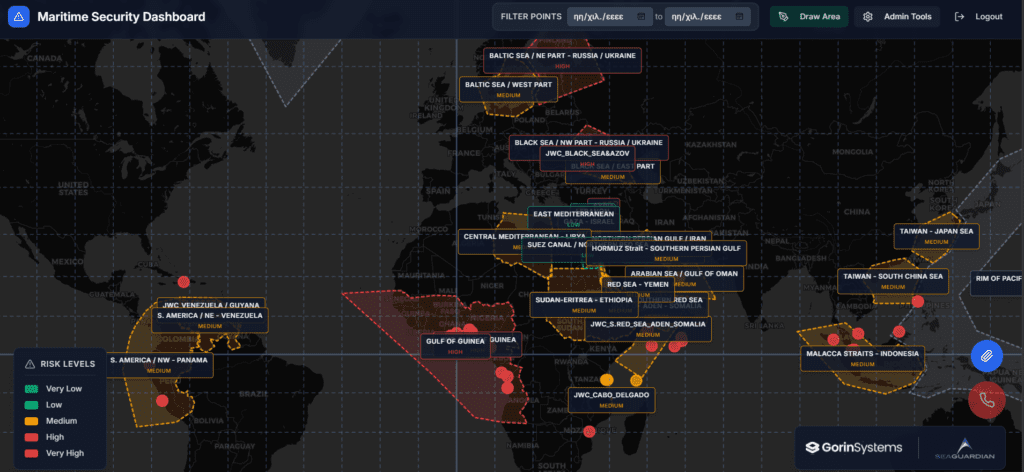
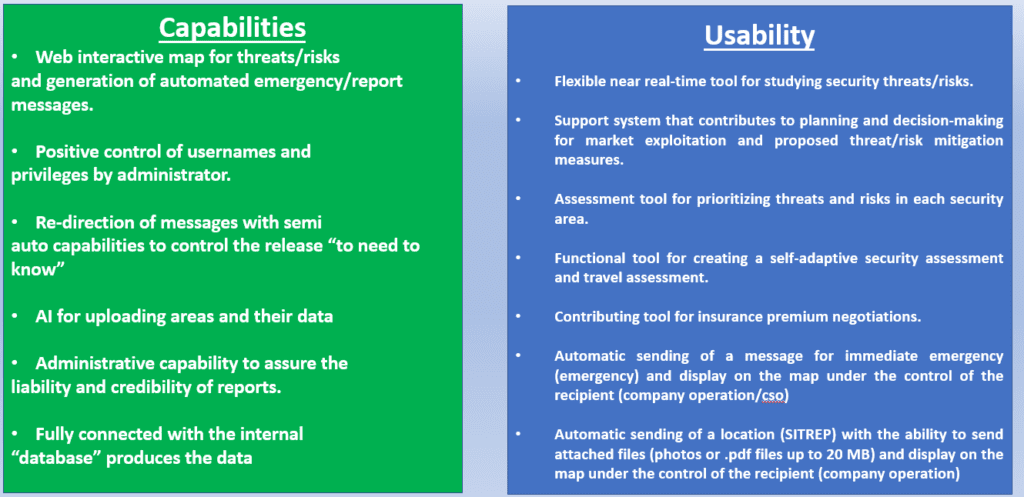
ANNEX “C” Data Control & Report system (DaCoR) / Maritime Security Dashboard
Coverage of period between two successive 15-day cycle Security Assessment with near-real time data and reporting capabilities.
| Contact us for a trial or fix an appointment: | or book a “google meet” appointment through the following global calendar: |
| E-mail: intelsec@sguardian.com CY:+35725351125|GR:+302109703322 info@sguardian.com | www.sguardian.com Sea Guardian SG Ltd Intel & Security | https://calendar.app.google/LmPSoo5fDxZMVq357 |

Viewers can also see here below the previous report:
